Advanced Fiber Laser Integration in Pressure Vessel Fabrication
In the modern industrial landscape, the production of pressure vessels—ranging from air receivers to complex chemical reactors—demands a level of precision that traditional mechanical methods can no longer sustain economically. The adoption of Fiber Laser Cutting technology has transitioned from a high-end luxury to a baseline requirement for facilities aiming for ISO and ASME compliance. Unlike legacy systems, fiber lasers utilize an active optical fiber to amplify light, resulting in a beam with a significantly smaller spot size and higher energy density.
For pressure vessel manufacturers, this translates to a Heat Affected Zone (HAZ) that is virtually negligible. When dealing with thick-walled carbon steel or stainless steel plates, the metallurgical integrity of the edge is paramount. The fiber laser’s ability to deliver concentrated energy ensures that the structural properties of the base metal remain unchanged, which is critical for vessels subject to high internal pressures and cyclic loading.
The Critical Role of Laser Seam Tracking
One of the primary challenges in cutting large-scale cylindrical or spherical components is the inherent geometric irregularity of the workpieces. No large-scale rolled shell is perfectly round. This is where Laser Seam Tracking becomes an indispensable asset. These systems utilize high-speed sensors to scan the surface of the material in real-time, ahead of the cutting head.
The tracking system creates a digital map of the material’s topography, communicating instantaneous height and alignment adjustments to the CNC controller. By maintaining a constant standoff distance (focal length), the machine ensures that the laser beam remains perfectly focused throughout the entire circumference of the vessel. Without this real-time compensation, variations in the plate’s curvature would lead to inconsistent kerf widths, incomplete cuts, or damage to the nozzle components. In the context of pressure vessels, where nozzle fit-up must be airtight and precise, seam tracking eliminates the margin of error associated with manual adjustments.
The Triple-Action Workflow: Punch, Mark, and Cut
Efficiency in a lean manufacturing environment is measured by the reduction of “touches” per part. Integrated fiber laser systems redefine this by combining three distinct operations into a single CNC program:
1. Precision Punching and Piercing
Before the primary cut begins, the fiber laser executes high-speed pulsing to “punch” start holes or small-diameter apertures. Because the fiber laser can be modulated at extremely high frequencies, it creates clean, round pilot holes that serve as the foundation for nozzle insertions. This replaces the need for separate mechanical drilling stations or heavy-duty hydraulic punches.
2. Permanent Part Marking
Traceability is a non-negotiable requirement for Pressure Vessels. Using low-wattage settings, the fiber laser head can etch heat numbers, serial codes, and layout lines directly onto the metal surface. This marking is deep enough to survive subsequent painting or coating processes but shallow enough not to compromise the shell’s wall thickness or structural rating. By performing this during the cutting cycle, the risk of part misidentification is eliminated.
3. High-Speed Profile Cutting
The final stage is the high-speed contouring of the shell or head. The Pressure Vessel Fabrication process benefits from the fiber laser’s ability to handle complex geometries, such as manway openings and reinforced nozzle seats, with a dimensional tolerance often within +/- 0.1mm. The speed of the cut is significantly higher than mechanical sawing, directly impacting the factory’s overall equipment effectiveness (OEE).
Eliminating Secondary Processes: The No-Grinding Mandate
Perhaps the most significant financial benefit of fiber laser technology is the elimination of secondary grinding. Traditional cutting methods often leave behind dross, slag, or heavily oxidized edges that require hours of manual labor to clean before the vessel can proceed to the assembly stage.
Fiber laser cutting, especially when using nitrogen or high-pressure oxygen as an assist gas, produces an edge that is “weld-ready.” The surface roughness is so minimal that the transition from the cutting table to the longitudinal or circumferential assembly station is immediate. For an industrial engineer, this represents a massive reduction in Work-in-Process (WIP) inventory and a significant saving in consumable costs associated with grinding disks and manual labor overhead.
Technical Advantages of Fiber Optics in Large-Scale Manufacturing
The delivery system of a fiber laser is inherently more robust than CO2 counterparts. Since the light is delivered via a flexible fiber cable rather than a series of mirrors, the system is less susceptible to the vibrations and misalignments common in heavy industrial environments.
Furthermore, the electrical efficiency of a fiber laser is roughly 30-40%, compared to the 10% efficiency of older technologies. When calculating the Return on Investment (ROI) for a pressure vessel facility, these energy savings, combined with the lack of moving parts in the laser source (such as turbines or blowers), result in a dramatically lower Total Cost of Ownership (TCO).
Enhanced Material Utilization and Nesting
Modern CAD/CAM software integrated with fiber laser systems allows for “common line cutting” and advanced nesting strategies. Because the kerf (the width of the cut) of a fiber laser is extremely narrow—often less than 0.2mm—parts can be nested much closer together. In the production of vessel end-caps or internal baffles, this can lead to a 5-10% increase in material utilization. Given the rising cost of pressure-vessel grade alloys, these material savings can often pay for the machine’s financing costs over its lifecycle.
Conclusion: The Engineer’s Perspective on Future-Proofing
From an industrial engineering standpoint, the integration of Fiber Laser Cutting with automated seam tracking is not merely an incremental upgrade; it is a fundamental shift in production philosophy. By automating the most variable aspects of the fabrication process—the compensation for material curvature and the preparation of the weld edge—manufacturers can guarantee a level of consistency that manual processes cannot replicate.
The data generated by these machines also feeds directly into Industry 4.0 systems, providing real-time feedback on cutting speeds, gas consumption, and cycle times. This data-driven approach allows for precise cost estimation and scheduling, ensuring that pressure vessel projects are delivered on time and within the stringent safety parameters required by the global energy and chemical sectors. Investing in this technology ensures that a facility remains competitive in a market where precision, speed, and safety are the three pillars of success.
-


LT240S tube laser cutting machine
-
LT120S tube laser cutting machine
-
Sale

Tank Fillet Welding Machine
Original price was: $1,000.00.$900.00Current price is: $900.00. -
Sale

MAK100 tube laser cutting machine
Original price was: $5,500.00.$5,000.00Current price is: $5,000.00. -

portable plasma air cutting machine
$1,200.00 -

2in1 fiber laser cutting machine
-

Air cooling Laser welding machine
-

HF h beam laser cutting machine
-

LT240 laser cutting machine
-

Laser welding machine
-


Cobot Welding Station
-

Gantry welding robot solution
-

Tracked Wheeled AGV Welding robot
-

LFH6020 Fiber laser cutting machine
-
LFP6020
-

robotic welidng machine
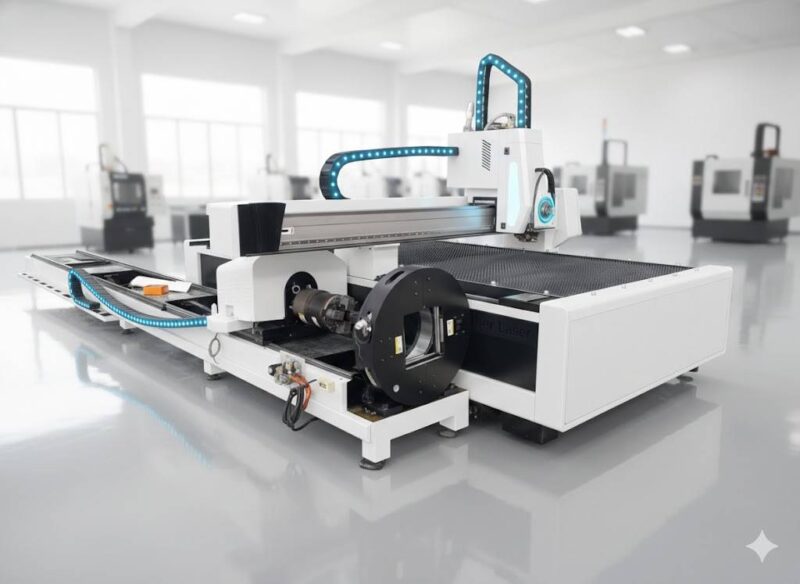
Advanced Fiber Laser Tube Processing Technology
Our CNC Fiber Laser Tube Cutting systems revolutionize metal fabrication by integrating high-precision cutting, punching, and profiling into a single automated workflow. Designed for versatility, this technology handles a wide array of profiles including Round, Square, Rectangular, and Oval tubes, as well as complex L-shaped and U-shaped channels.
- Precision Punching: High-speed hole punching with micron-level accuracy, eliminating the need for mechanical drilling or die-stamping.
- Complex Profiling: Advanced 3D pathing allows for intricate interlocking joints and specialized notch cuts, ideal for structural frames.
- High Material Efficiency: Intelligent nesting software minimizes scrap, reducing raw material costs across large production runs.
- Clean Finish: Delivers oxide-free, burr-free edges that require zero secondary grinding before welding.

Seamlessly processing multiple profiles with consistent precision.
Global Delivery & Logistics



From our high-tech manufacturing facility directly to your global site. PCL WeldCut ensures secure packaging, professional handling, and reliable international logistics to safeguard your equipment throughout the entire journey.