Optimization of Tank Fabrication via Fiber Laser Systems
In the current industrial landscape for the energy sector, the demand for high-integrity Oil & Gas Tanks necessitates a shift toward automated, high-precision manufacturing. Traditional methods often involve multi-stage processing that introduces cumulative tolerances and increases labor costs. The adoption of high-wattage Fiber Laser Cutting Machines represents a significant leap in operational efficiency. These systems are not merely cutting tools; they are integrated platforms that handle the complexities of heavy-gauge plate processing while maintaining the strict dimensional tolerances required for pressurized vessel integrity.
From an industrial engineering perspective, the primary objective is the reduction of non-value-added time. Fiber laser technology achieves this by consolidating the layout, hole-making, and perimeter cutting into a single automated sequence. This eliminates the need for manual marking and the logistical bottleneck of moving workpieces between different machining stations.
The Role of Laser Seam Tracking in Precision Cutting
One of the most critical challenges in cutting large-scale tank components is the inherent variability in material flatness and the curvature of pre-formed sections. Laser Seam Tracking technology, when integrated into a cutting head, serves as the primary sensory input for real-time path correction. Unlike standard capacitive height sensors that only measure distance to the plate, advanced laser tracking systems map the surface topography ahead of the cut zone.
For oil and gas applications, where tank shells or end caps may have slight geometric deviations from the theoretical CAD model, the tracking system identifies the actual position of the material. This ensures that the laser beam remains perfectly perpendicular to the surface at all times. This perpendicularity is vital for maintaining a consistent kerf width and ensuring that the edge bevel (if required) remains uniform across the entire circumference of the tank section. The result is a fit-up quality that far exceeds manual layout methods.
The Tri-Phase Workflow: Punch, Mark, and Cut
The core advantage of the modern fiber laser setup is the ability to execute a tri-phase workflow without manual intervention. This process is essential for precision engineering in tank manufacturing:
1. Precision Punching and Piercing
Fiber lasers utilize high-frequency pulsing to “punch” or pierce through thick carbon steel or stainless steel plates. By modulating the laser’s peak power and frequency, the system creates a clean start point with minimal dross. This replaces mechanical drilling or punching, which can induce localized stresses and require tool changes for different hole diameters.
2. Automated Marking and Traceability
Traceability is a regulatory requirement in the oil and gas industry. The laser can be de-focused or operated at lower power levels to etch heat numbers, part IDs, and assembly marks directly onto the steel surface. This marking occurs in the same coordinate system as the cut, ensuring that labeling is perfectly aligned with the component geometry. This eliminates errors associated with manual stamping or ink marking.
3. High-Speed Final Cutting
The final phase involves the actual separation of the part. High-power Fiber Laser Cutting offers feed rates that are significantly higher than traditional thermal processes on plates up to 30mm thick. The concentrated energy density results in a narrow Heat Affected Zone (HAZ), preserving the metallurgical properties of the tank steel. This is particularly important for vessels that will contain corrosive materials or operate under extreme temperature cycles.
Eliminating Post-Process Grinding
One of the most significant cost-drivers in tank fabrication is the secondary cleaning of cut edges. Mechanical cutting methods often leave rough edges, burrs, or hardened surfaces that must be ground down to meet quality standards. Fiber laser cutting, when optimized with the correct assist gas (typically Oxygen for carbon steel or Nitrogen for stainless steel), produces an oxide-free or high-quality finish that requires zero secondary grinding.
The elimination of grinding not only reduces labor hours but also improves the workplace environment by reducing metallic dust and noise. Furthermore, the absence of mechanical tool marks means that the edges are ready for immediate fit-up and subsequent joining processes, directly accelerating the production cycle time (Takt time).
Material Utilization and Nesting Efficiency
In the production of large-diameter oil tanks, material costs represent a substantial portion of the total expenditure. Fiber laser systems utilize sophisticated nesting software that calculates the most efficient layout for tank plates. Because the laser kerf is extremely narrow—often less than 0.5mm—components can be nested more tightly than with any other cutting method.
Industrial engineers can leverage “common line cutting,” where two adjacent parts share a single cut path. This not only saves material but also reduces the total distance the laser head must travel, thereby shortening the overall cycle time. The precision of the laser ensures that even with tight nesting, the structural integrity of the skeleton remains stable during the process.
Technical Implementation and Calibration
Sensor Integration
The integration of the laser seam tracking sensor requires synchronization with the machine’s CNC controller. The sensor must have a high sampling rate (typically in the kilohertz range) to provide feedback to the servo motors at speeds sufficient to allow for real-time adjustments. This is particularly important when cutting large-radius curves on tank walls where slight misalignments could lead to catastrophic assembly failures.
Thermal Management
While fiber lasers are efficient, the concentrated energy can lead to localized thermal expansion. Engineers must implement “coolant-mist” systems or specific cutting sequences (skipping between different areas of the plate) to manage the thermal profile. This ensures that the plate remains dimensionally stable throughout the entire cutting process, guaranteeing that the first part cut on the sheet is identical to the last.
Conclusion: The Strategic Advantage
The transition to fiber laser cutting with integrated tracking systems is a strategic move for manufacturers of oil and gas tanks. It addresses the three pillars of industrial efficiency: quality, cost, and delivery. By providing a high-precision, multi-functional tool that eliminates secondary operations, companies can achieve a higher OEE (Overall Equipment Effectiveness). The resulting components meet the rigorous safety standards of the energy industry while providing the manufacturer with a clear competitive edge through reduced lead times and optimized material usage.
-


LT240S tube laser cutting machine
-
LT120S tube laser cutting machine
-
Sale

Tank Fillet Welding Machine
Original price was: $1,000.00.$900.00Current price is: $900.00. -
Sale

MAK100 tube laser cutting machine
Original price was: $5,500.00.$5,000.00Current price is: $5,000.00. -

portable plasma air cutting machine
$1,200.00 -

2in1 fiber laser cutting machine
-

Air cooling Laser welding machine
-

HF h beam laser cutting machine
-

LT240 laser cutting machine
-

Laser welding machine
-


Cobot Welding Station
-

Gantry welding robot solution
-

Tracked Wheeled AGV Welding robot
-

LFH6020 Fiber laser cutting machine
-
LFP6020
-

robotic welidng machine
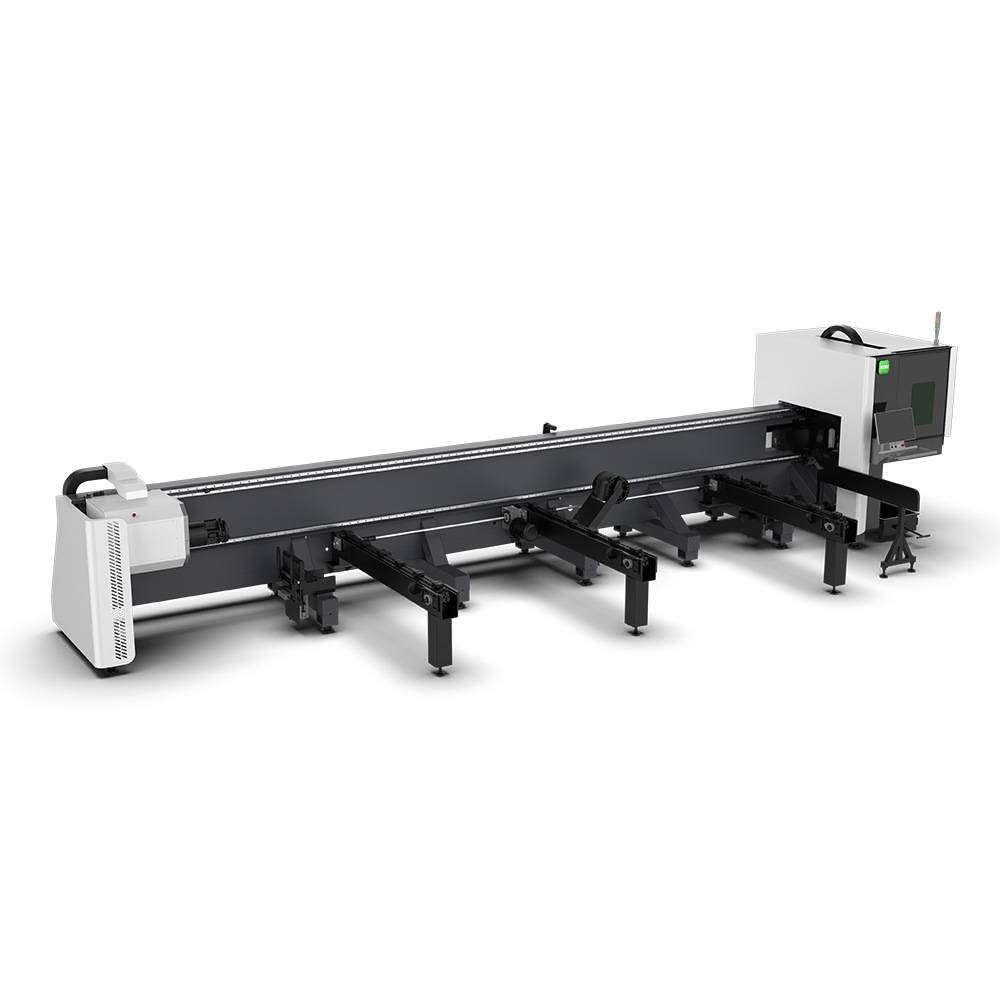
Advanced Fiber Laser Tube Processing Technology
Our CNC Fiber Laser Tube Cutting systems revolutionize metal fabrication by integrating high-precision cutting, punching, and profiling into a single automated workflow. Designed for versatility, this technology handles a wide array of profiles including Round, Square, Rectangular, and Oval tubes, as well as complex L-shaped and U-shaped channels.
- Precision Punching: High-speed hole punching with micron-level accuracy, eliminating the need for mechanical drilling or die-stamping.
- Complex Profiling: Advanced 3D pathing allows for intricate interlocking joints and specialized notch cuts, ideal for structural frames.
- High Material Efficiency: Intelligent nesting software minimizes scrap, reducing raw material costs across large production runs.
- Clean Finish: Delivers oxide-free, burr-free edges that require zero secondary grinding before welding.

Seamlessly processing multiple profiles with consistent precision.
Global Delivery & Logistics



From our high-tech manufacturing facility directly to your global site. PCL WeldCut ensures secure packaging, professional handling, and reliable international logistics to safeguard your equipment throughout the entire journey.