Precision Requirements in LNG Cryogenic Infrastructure
The fabrication of Liquefied Natural Gas (LNG) storage tanks, regasification modules, and specialized transport vessels requires an uncompromising approach to metallurgical integrity. Industrial engineers overseeing these projects face the challenge of processing high-alloy materials, such as 9% Nickel steel and 304/316L stainless steels, which are designed to maintain ductility at temperatures as low as -196°C. Any thermal or mechanical stress introduced during the primary cutting phase can lead to micro-fissures or grain growth, compromising the structural safety of the entire facility.
The implementation of a high-power Fiber Laser Cutting Machine has become the technical benchmark for achieving the dimensional tolerances required in these environments. Unlike legacy thermal cutting methods, the fiber laser utilizes a high-density coherent light beam to vaporize material almost instantaneously. This results in a kerf width that is significantly narrower, often measured in microns, ensuring that large-scale plates for tank shells fit with surgical precision during assembly.
Advanced Laser Seam Tracking for Material Compensation
A critical variable in LNG project fabrication is the sheer scale of the components. Large-format plates, often exceeding 12 meters in length, are susceptible to subtle material warping or uneven positioning on the cutting bed. This is where Laser Seam Tracking integration transforms the cutting process from a static execution to a dynamic, closed-loop system.
The seam tracking system employs optical sensors that scan the material surface ahead of the cutting head. By creating a real-time digital map of the plate’s topography, the system compensates for any deviations in height or lateral alignment. In the context of LNG fabrication, this ensures that the focal point of the laser remains constant relative to the material surface. This consistency is vital for maintaining a perpendicular cut edge across the entire length of a shell plate, which is a prerequisite for high-integrity butt joints in cryogenic tanks.
Eliminating Post-Process Grinding
One of the most significant throughput bottlenecks in industrial engineering is the manual labor associated with edge preparation. Traditional cutting methods often leave dross, slag, or a hardened oxide layer that must be removed via mechanical grinding before any subsequent processing can occur.
Fiber laser technology, particularly when using nitrogen as an assist gas, produces a clean, oxide-free edge. The high energy density allows for a “weld-ready” finish directly from the machine. For LNG Project Fabrication, where thousands of meters of plate edges are processed, the elimination of grinding translates to a 30-40% reduction in labor hours per module. Furthermore, the absence of mechanical grinding removes the risk of surface contamination and grit embedment, which are known catalysts for localized corrosion in LNG environments.
The Integrated Workflow: Punch, Mark, and Cut
Modern fiber laser systems designed for heavy industry have evolved into multi-functional workstations. The ability to perform three distinct operations—punching (piercing), marking, and cutting—within a single CNC program is a game-changer for LNG project management.
High-Speed Piercing and Punching
The “punch” phase refers to the rapid piercing capabilities of high-kilowatt fiber lasers. Using multi-stage piercing cycles, the machine can penetrate thick-walled nickel steel without creating the “volcano” effect of molten material buildup around the entry hole. This maintains the flatness of the plate and allows for internal cutouts to begin immediately with high edge quality.
Layout Marking for Downstream Assembly
LNG projects involve complex internal piping and reinforcement structures. Historically, layout marks were applied manually using templates and chalk or mechanical scribes. The fiber laser’s marking function allows the machine to etch assembly lines, part numbers, and orientation markers directly onto the surface with lower power settings. This ensures 100% accuracy in the placement of stiffeners and nozzles, eliminating the “human error” factor in the assembly yard.
High-Precision Final Cutting
The final cutting phase utilizes the full power of the fiber source to execute complex geometries. Because the marking and piercing were done in the same coordinate system without moving the plate, the spatial relationship between the cut edge and the layout marks is perfect. This Precision Material Processing capability is essential for the spherical components and complex curvatures found in LNG carrier tanks (MOSS type) and membrane containment systems.
Thermal Management and HAZ Minimization
From a metallurgical perspective, the primary enemy of cryogenic steel is the Heat Affected Zone (HAZ). If the material stays at a critical temperature for too long during cutting, the grain structure of the alloy can change, leading to embrittlement.
Fiber lasers minimize this risk through sheer speed. The rapid travel rates of a 12kW or 20kW laser mean that the thermal input is localized to a very narrow region. The cooling effect of the assist gas further stabilizes the temperature of the surrounding material. By maintaining a minimal HAZ, the fiber laser preserves the fracture toughness of the 9% Nickel steel, ensuring it can withstand the thermal cycling inherent in LNG loading and unloading operations.
Technical Advantages of Fiber Over Alternative Technologies
When evaluating the ROI for LNG fabrication equipment, industrial engineers focus on several key performance indicators:
- Electrical Efficiency: Fiber lasers typically convert 35-40% of electrical energy into laser light, significantly lowering operational costs.
- Maintenance Intervals: With no moving parts in the resonator or mirrors to align, uptime is maximized for tight project deadlines.
- Beam Delivery: The use of flexible fiber optic cables allows for easy integration into large-scale gantry systems required for massive LNG plates.
Optimization of Material Utilization
Given the high cost of cryogenic-grade alloys, nesting optimization is a priority. The narrow kerf of the fiber laser allows for tighter nesting of parts compared to any other thermal cutting process. When combined with Laser Seam Tracking, the machine can reliably cut closer to the edge of the plate, reducing scrap rates. In a typical LNG tank project involving hundreds of tons of specialized steel, a 3-5% improvement in material utilization can result in six-figure cost savings.
Operational Safety and Environmental Impact
Modern fiber laser installations are fully enclosed, protecting operators from high-intensity light and reflecting radiation. Integrated dust extraction systems capture the fine particulates generated during the vaporization process, ensuring a cleaner work environment than traditional yards. In the context of global LNG projects, where ESG (Environmental, Social, and Governance) standards are increasingly scrutinized, the move toward energy-efficient, low-waste fabrication technology is a strategic necessity.
Final Engineering Assessment
The shift toward Fiber Laser Cutting Machines with integrated Laser Seam Tracking represents a fundamental upgrade in how LNG infrastructure is built. By consolidating the workflow into a single-pass “Punch-Mark-Cut” process, fabricators achieve a level of precision that was previously unattainable. The elimination of secondary grinding and the preservation of material properties through minimal HAZ ensure that the final structures meet the rigorous safety standards of the cryogenic industry. As LNG continues to play a vital role in the global energy transition, the adoption of these high-precision tools is no longer optional—it is the standard for technical excellence.
-


LT240S tube laser cutting machine
-
LT120S tube laser cutting machine
-
Sale

Tank Fillet Welding Machine
Original price was: $1,000.00.$900.00Current price is: $900.00. -
Sale

MAK100 tube laser cutting machine
Original price was: $5,500.00.$5,000.00Current price is: $5,000.00. -

portable plasma air cutting machine
$1,200.00 -

2in1 fiber laser cutting machine
-

Air cooling Laser welding machine
-

HF h beam laser cutting machine
-

LT240 laser cutting machine
-

Laser welding machine
-


Cobot Welding Station
-

Gantry welding robot solution
-

Tracked Wheeled AGV Welding robot
-

LFH6020 Fiber laser cutting machine
-
LFP6020
-

robotic welidng machine
Advanced Fiber Laser Tube Processing Technology
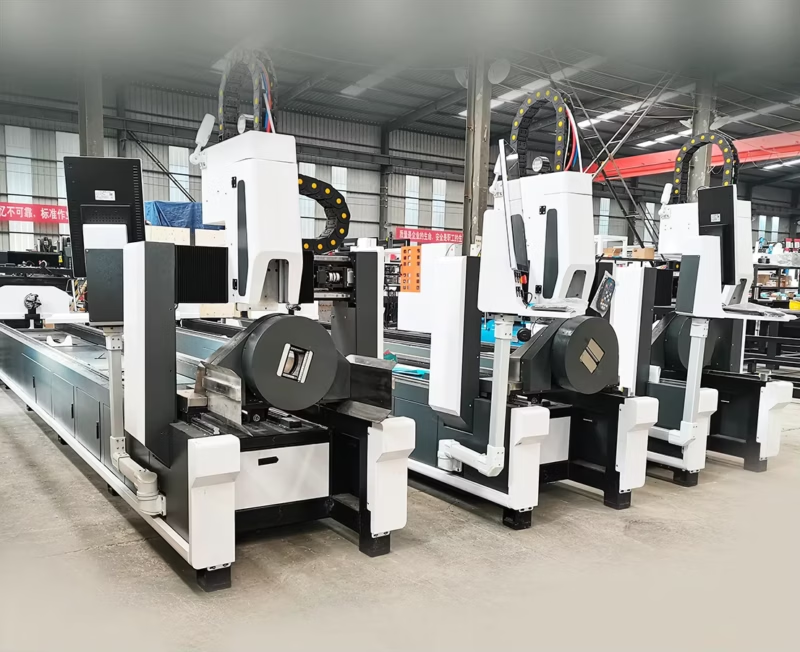
Our CNC Fiber Laser Tube Cutting systems revolutionize metal fabrication by integrating high-precision cutting, punching, and profiling into a single automated workflow. Designed for versatility, this technology handles a wide array of profiles including Round, Square, Rectangular, and Oval tubes, as well as complex L-shaped and U-shaped channels.
- Precision Punching: High-speed hole punching with micron-level accuracy, eliminating the need for mechanical drilling or die-stamping.
- Complex Profiling: Advanced 3D pathing allows for intricate interlocking joints and specialized notch cuts, ideal for structural frames.
- High Material Efficiency: Intelligent nesting software minimizes scrap, reducing raw material costs across large production runs.
- Clean Finish: Delivers oxide-free, burr-free edges that require zero secondary grinding before welding.

Seamlessly processing multiple profiles with consistent precision.
Global Delivery & Logistics



From our high-tech manufacturing facility directly to your global site. PCL WeldCut ensures secure packaging, professional handling, and reliable international logistics to safeguard your equipment throughout the entire journey.