Precision Engineering in LNG Infrastructure: The Fiber Laser Advantage
Liquefied Natural Gas (LNG) projects demand the highest levels of structural integrity due to the volatile nature of the medium and the extreme cryogenic temperatures involved. Industrial engineers tasked with the fabrication of LNG storage tanks, vaporizers, and piping systems are increasingly moving away from traditional thermal cutting methods. The transition toward Fiber Laser Cutting technology represents a shift toward zero-defect manufacturing. Unlike legacy processes, fiber lasers offer a concentrated energy density that minimizes the thermal footprint while maximizing throughput on specialized alloys like 9% nickel steel.
The core objective in LNG fabrication is the maintenance of material properties. Excessive heat input can compromise the grain structure of the metal, leading to potential failure at -162 degrees Celsius. Fiber laser systems, operating in the 10kW to 30kW range, provide a high-speed, narrow-kerf solution that maintains the metallurgical integrity of the substrate. This technical shift is not merely about speed; it is about the repeatable precision required for massive scale assemblies where a millimeter of deviation can lead to catastrophic fit-up issues.
Integrated Laser Seam Tracking for Dynamic Path Correction
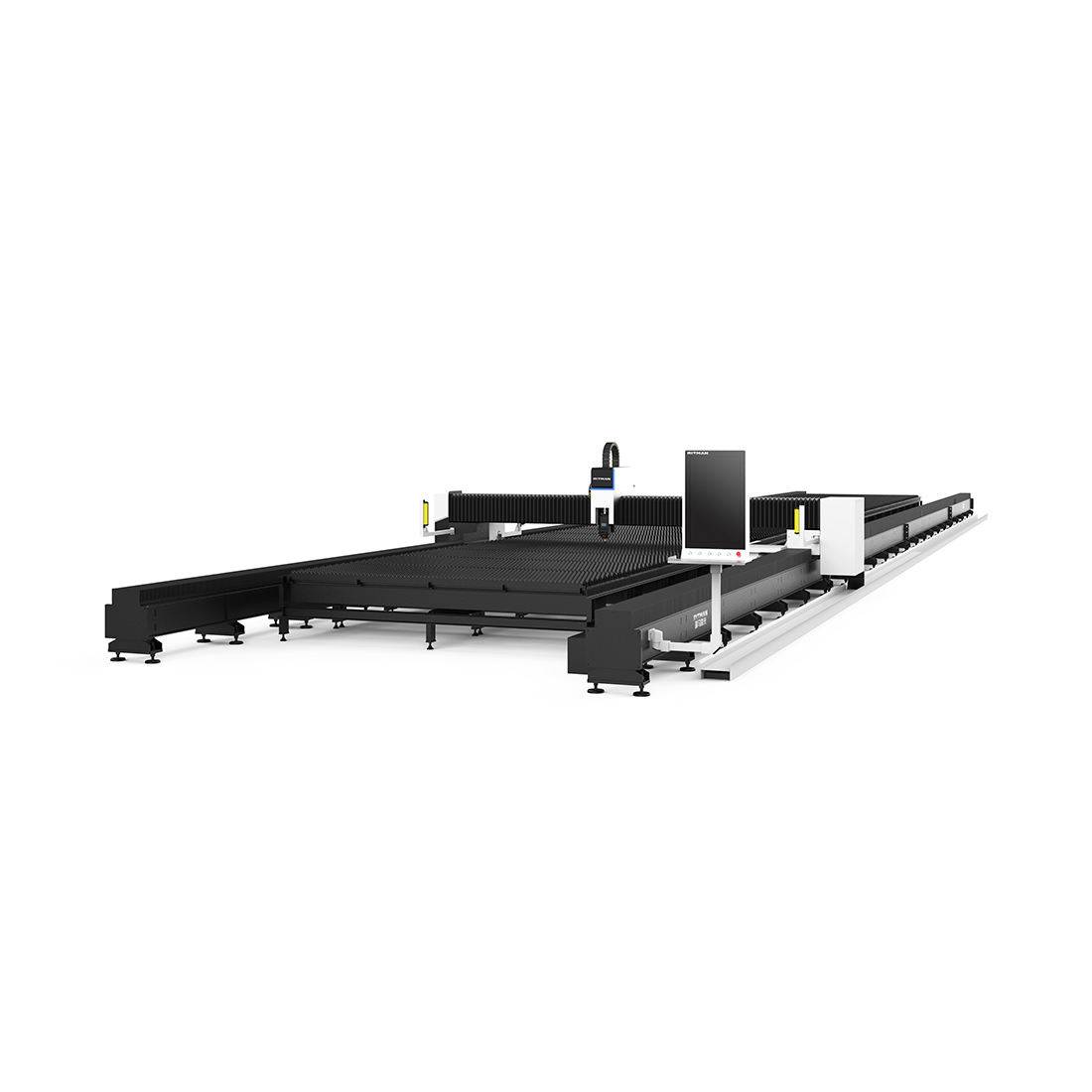
One of the primary challenges in large-format cutting for LNG tanks is material flatness and positioning. Large plates, often exceeding 12 meters in length, rarely sit perfectly flat on the cutting bed. This is where Laser Seam Tracking becomes an essential component of the industrial workflow. These sensors utilize a laser triangulation method to scan the surface profile in real-time, feeding data directly back to the CNC controller.
Real-Time Compensation for Material Distortion
As the cutting head moves across the plate, the seam tracking system detects height variations and lateral shifts. for LNG Projects, where beveling for butt joints is common, the tracking system ensures that the focal point of the laser remains constant relative to the material surface. This prevents inconsistencies in the kerf width and ensures that the bevel angle remains uniform across the entire length of the cut. Without this automated adjustment, manual intervention would be required, leading to downtime and increased risk of human error.
The Triple-Action Workflow: Punch, Mark, and Cut
Efficiency in LNG Tank Fabrication is measured by the reduction of secondary processes. High-performance fiber lasers allow for a streamlined “Punch, Mark, and Cut” sequence within a single nesting program. This eliminates the need for manual layout and center-punching, which are historically labor-intensive and prone to inaccuracy.
Automated Punching and Piercing
The fiber laser initiates the process with high-speed piercing. Advanced gas pressure control and frequency modulation allow the laser to “punch” through thick nickel-alloy plates with minimal splatter. This clean pierce is critical for maintaining the nozzle’s longevity and ensuring that the subsequent cut starts from a precise geometric point.
Laser Marking for Traceability
Traceability is a non-negotiable requirement in energy sector projects. The laser marking function uses a lower power setting to etch heat numbers, part ID codes, and assembly lines directly onto the plate surface. Because this is done in the same setup as the cutting, the orientation and placement of these marks are perfect. This facilitates faster downstream assembly and ensures that every component in the LNG facility can be tracked back to its mill certification.
High-Precision Final Cutting
The final phase is the high-speed cut. The fiber laser’s beam quality allows for incredibly tight tolerances. Because the beam is delivered via fiber optic cable rather than mirrors, the power remains consistent regardless of where the head is on the gantry. This results in a square, clean edge that meets the stringent requirements of cryogenic pressure vessel codes.
Eliminating Post-Process Grinding
Perhaps the most significant impact of fiber laser technology on the bottom line is the elimination of grinding. Traditional cutting methods often leave a thick dross or a heavy oxide layer on the cut edge, which must be mechanically removed before any subsequent welding. In the context of an LNG project involving miles of plate edges, the labor costs associated with grinding are astronomical.
Superior Surface Finish and HAZ Control
The Heat Affected Zone (HAZ) produced by a fiber laser is exceptionally narrow. When cutting with nitrogen as the assist gas, the resulting edge is bright, clean, and free of oxides. Industrial engineers can move these plates directly from the cutting table to the assembly jig. The absence of dross means that the fit-up is tighter, which is a prerequisite for the high-quality automated welding processes used in tank construction. By removing the grinding stage, facilities reduce labor costs, minimize abrasive consumption, and significantly improve the shop floor environment by reducing metallic dust.
Optimizing ROI Through CNC Integration
The integration of fiber lasers with advanced nesting software allows for maximum material utilization—a critical factor when working with expensive 9% nickel steel. The CNC interface provides the operator with real-time feedback on gas consumption, cutting speed, and laser power. For LNG projects, where project timelines are often aggressive, the reliability of fiber laser sources (often exceeding 100,000 hours of diode life) ensures that production schedules are maintained without the frequent maintenance required by older CO2 or mechanical systems.
Conclusion: The New Standard for Energy Sector Fabrication
The adoption of Fiber Laser Cutting Machines equipped with Laser Seam Tracking is no longer an optional upgrade for fabricators in the LNG sector; it is a competitive necessity. The ability to execute a “punch, mark, and cut” strategy with such high precision that secondary grinding is rendered obsolete directly translates to faster project completion and lower overhead. As LNG infrastructure continues to expand globally, the focus on metallurgical integrity and dimensional accuracy will only intensify, cementing the fiber laser’s role as the primary tool for high-performance metal fabrication.
Technical Specifications Summary
- Material Compatibility: 9% Nickel Steel, Stainless Steel, Carbon Steel.
- Cutting Precision: +/- 0.05mm.
- Tracking Accuracy: Real-time 0.1mm height adjustment.
- Edge Quality: Ra < 12.5 (eliminates grinding).
-


Cantilever Welding Robot solution
-


GF laser cutting machine
-

P3015 plasma cutting machine
-

LFP3015 Fiber Laser Cutter
-

pipe plasma cutting machine
-
LFH 4020 Fiber Laser Cutting Machine
-
LFP4020
-

gantry plasma air cutting machine
-

3D robot cutting machine
-

8 axis plasma cutting machine
-

5 axis plasma cutting machine
-

LT360 tube laser cutting machine
-

robot welding workstation
-

SF6060 fiber laser cutting machine
Advanced Fiber Laser Tube Processing Technology
Our CNC Fiber Laser Tube Cutting systems revolutionize metal fabrication by integrating high-precision cutting, punching, and profiling into a single automated workflow. Designed for versatility, this technology handles a wide array of profiles including Round, Square, Rectangular, and Oval tubes, as well as complex L-shaped and U-shaped channels.
- Precision Punching: High-speed hole punching with micron-level accuracy, eliminating the need for mechanical drilling or die-stamping.
- Complex Profiling: Advanced 3D pathing allows for intricate interlocking joints and specialized notch cuts, ideal for structural frames.
- High Material Efficiency: Intelligent nesting software minimizes scrap, reducing raw material costs across large production runs.
- Clean Finish: Delivers oxide-free, burr-free edges that require zero secondary grinding before welding.

Seamlessly processing multiple profiles with consistent precision.
Global Delivery & Logistics



From our high-tech manufacturing facility directly to your global site. PCL WeldCut ensures secure packaging, professional handling, and reliable international logistics to safeguard your equipment throughout the entire journey.