Advancing Construction Machinery Fabrication with Fiber Laser Technology
The manufacturing landscape for Construction Machinery—ranging from excavators and bulldozers to heavy-duty cranes—is undergoing a fundamental shift toward high-efficiency thermal processing. At the center of this evolution is the Fiber Laser Cutting Machine. Unlike legacy systems, fiber lasers utilize an optical fiber doped with rare-earth elements to amplify light, resulting in a beam with exceptional energy density and a small footprint. For an industrial engineer, the objective is clear: maximizing throughput while maintaining the tight geometric tolerances required for heavy-duty structural components.
In the context of structural component fabrication, the transition to high-power fiber lasers (often exceeding 12kW) allows for the processing of thick-plate carbon steels and high-strength alloys with unprecedented speed. The primary driver for this technology is its ability to deliver a concentrated heat source, which minimizes the Heat Affected Zone (HAZ) and prevents the thermal distortion often seen in large-format plate processing.
The Role of Laser Seam Tracking in Precision Cutting
While often associated with joining processes, laser seam tracking has become a critical feature in high-end fiber laser cutting systems designed for the construction industry. Large-scale plates used in machinery chassis often exhibit surface irregularities, such as crowning or oil canning, which can interfere with the focal position of the laser head. A seam tracking system utilizes a secondary laser line sensor to scan the material surface in real-time ahead of the cutting nozzle.
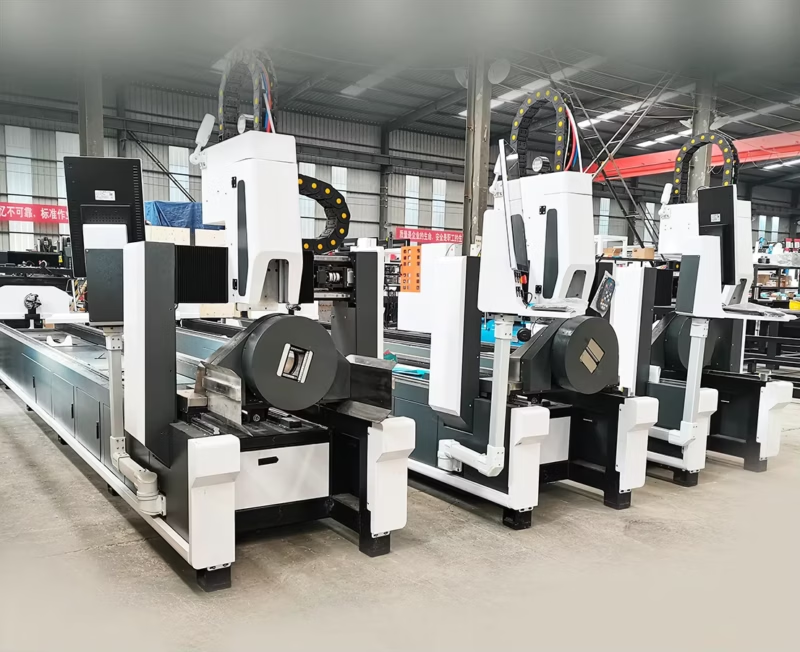
This sensor data allows the CNC controller to dynamically adjust the Z-axis height and the beam’s focal point. By maintaining a constant distance between the nozzle and the workpiece, the machine ensures a consistent kerf width and gas pressure. This level of automated cutting efficiency is vital when dealing with plates that may be 20mm to 50mm thick, where even a slight deviation in focus can lead to dross formation or an incomplete cut, resulting in expensive scrap.
Eliminating Secondary Grinding: The “No-Grinding” Advantage
One of the most significant cost centers in heavy machinery manufacturing is the post-processing of cut parts. Traditional methods often leave rough edges or hardened slag that requires manual grinding before the parts can move to the next stage of assembly. Fiber laser cutting, when optimized with the correct assist gas (Oxygen for thick carbon steel or Nitrogen for stainless and thinner plates), produces an edge finish that meets ISO 9013 standards for perpendicularity and roughness.
By achieving a “ready-to-assemble” edge, the facility eliminates the need for secondary grinding stations. This not only reduces labor costs but also improves the safety of the shop floor by reducing airborne metallic dust and noise. The precision of the fiber laser ensures that bolt holes and interlocking tabs are cut with a tolerance of +/- 0.1mm, ensuring a perfect fit-up during the assembly of complex boom structures.
Integrated Punching, Marking, and Cutting Sequences
Modern fiber laser systems are no longer just cutting tools; they are multi-process fabrication centers. For construction machinery, where traceability and hole alignment are paramount, the ability to perform “punch-mark-cut” sequences in a single setup is a force multiplier for productivity.
The fiber laser precision allows the system to “punch” or pierce heavy plates using specialized frequency-modulated pulses that prevent cratering at the entry point. Once the pierce is established, the machine can switch to a marking mode. This involves using a low-power setting to etch part numbers, bend lines, or assembly instructions directly onto the surface of the plate. Finally, the system executes the high-speed profile cut. By combining these three steps, the manufacturer eliminates the cumulative error associated with moving parts between different machines, such as mechanical punches or separate marking stations.
Structural Integrity and Material Performance
Construction machinery is subjected to extreme cyclic loading and harsh environments. Therefore, the structural integrity of every cut component is non-negotiable. Fiber laser cutting provides a distinct advantage here due to its narrow kerf and high cutting speed. The faster the laser moves, the less heat is conducted into the surrounding material. This preserves the metallurgical properties of high-tensile steels like Q460 or Q960, which are common in crane manufacturing.
Because the thermal input is so localized, the risk of micro-cracking at the edge is significantly reduced compared to slower thermal cutting methods. This is particularly important for components that will undergo high-stress bending. A clean, laser-cut edge provides a superior starting point for downstream processes, ensuring that the final machine can withstand the rigors of a construction site for decades.
Maximizing Material Utilization via Intelligent Nesting
From an operational standpoint, the cost of raw steel is a major variable in the total cost of goods sold. Fiber laser machines, integrated with advanced nesting software, allow for tighter spacing between parts. Because the laser beam is roughly the diameter of a human hair, parts can be nested with minimal skeletons. The stability provided by the laser seam tracking system ensures that even if a small piece of scrap tips up during the process, the head-sensing technology can detect it and avoid a collision, protecting the expensive optical assembly.
Conclusion: The Path to Fully Automated Fabrication
The integration of fiber laser cutting machines with Laser Seam Tracking represents the pinnacle of current fabrication technology for the construction machinery sector. By focusing on high precision and the elimination of secondary processes, manufacturers can drastically shorten their production cycles. The ability to punch, mark, and cut in a single operation, combined with the “no-grinding” edge quality, creates a streamlined workflow that is essential for competing in a global market. As power levels continue to rise and sensor technology becomes more sophisticated, the fiber laser will remain the cornerstone of efficient, high-quality industrial manufacturing.
-
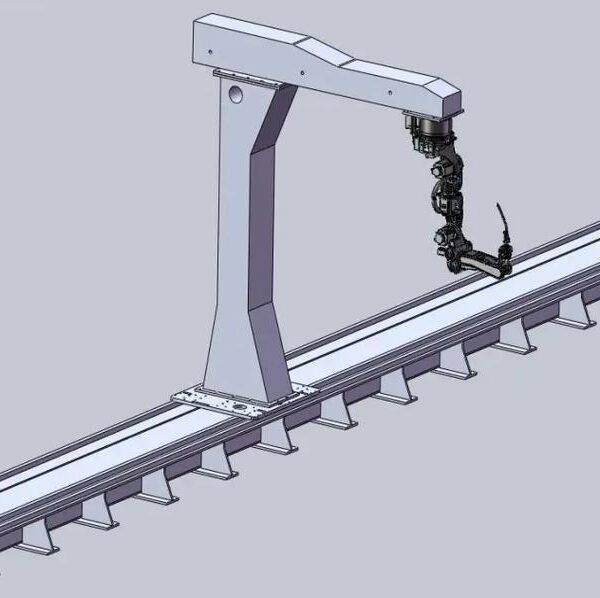

Cantilever Welding Robot solution
-
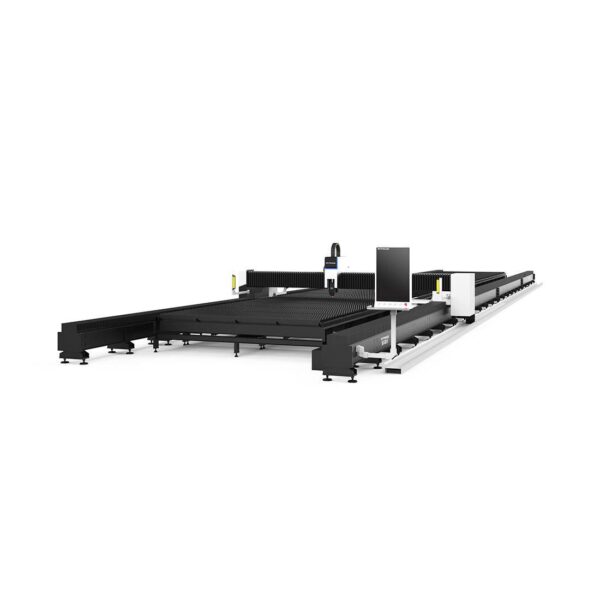

GF laser cutting machine
-
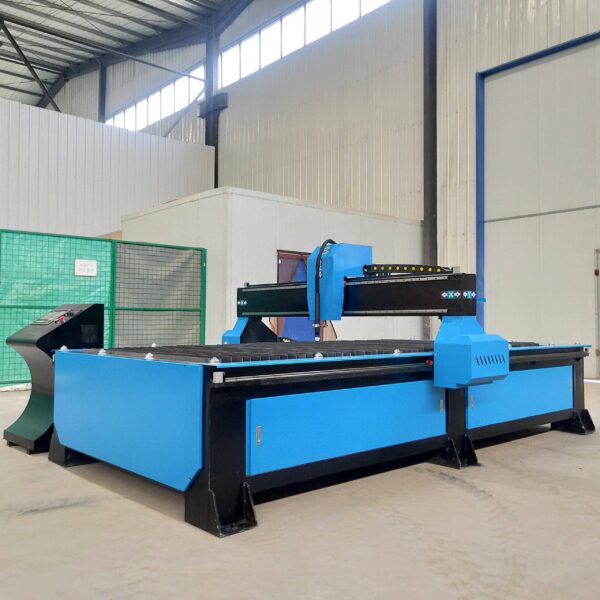
P3015 plasma cutting machine
-

LFP3015 Fiber Laser Cutter
-
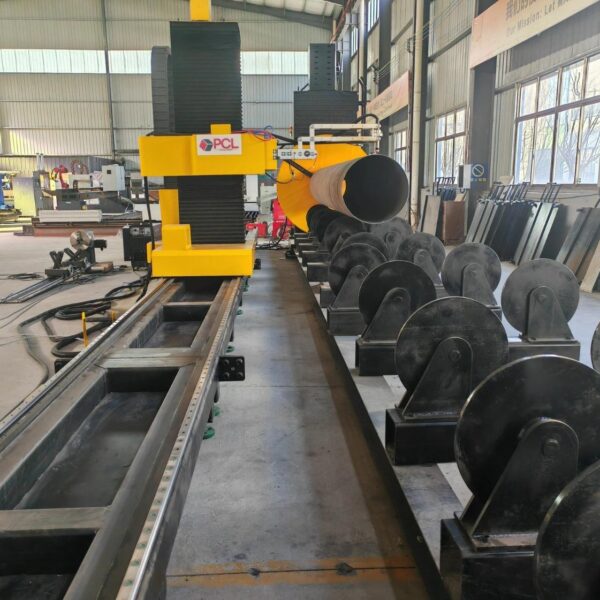
pipe plasma cutting machine
-
LFH 4020 Fiber Laser Cutting Machine
-
LFP4020
-
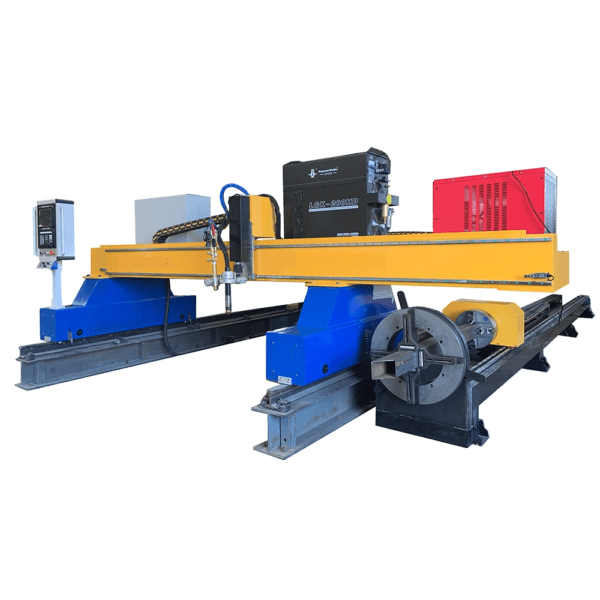
gantry plasma air cutting machine
-
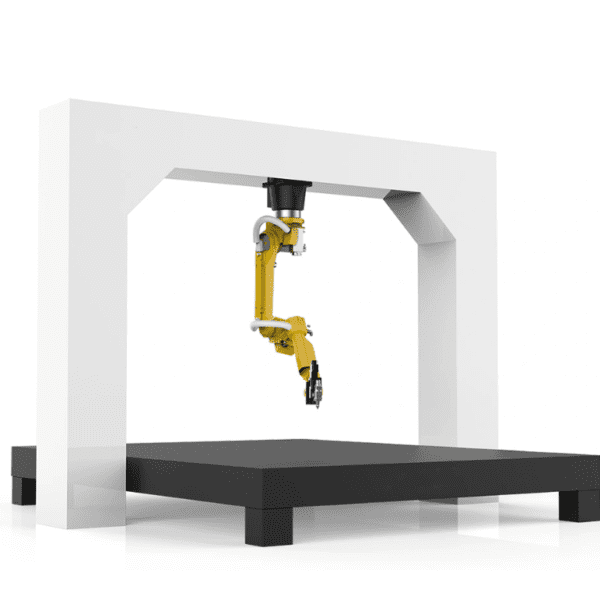
3D robot cutting machine
-
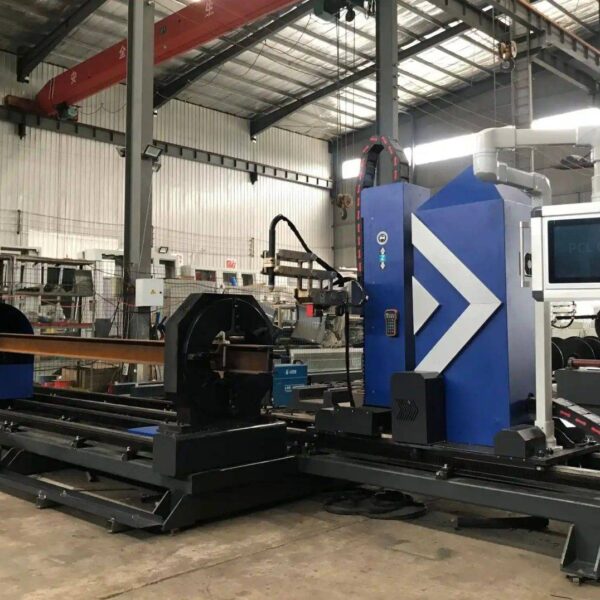
8 axis plasma cutting machine
-
5 axis plasma cutting machine
-

LT360 tube laser cutting machine
-
robot welding workstation
-
SF6060 fiber laser cutting machine
Advanced Fiber Laser Tube Processing Technology
Our CNC Fiber Laser Tube Cutting systems revolutionize metal fabrication by integrating high-precision cutting, punching, and profiling into a single automated workflow. Designed for versatility, this technology handles a wide array of profiles including Round, Square, Rectangular, and Oval tubes, as well as complex L-shaped and U-shaped channels.
- Precision Punching: High-speed hole punching with micron-level accuracy, eliminating the need for mechanical drilling or die-stamping.
- Complex Profiling: Advanced 3D pathing allows for intricate interlocking joints and specialized notch cuts, ideal for structural frames.
- High Material Efficiency: Intelligent nesting software minimizes scrap, reducing raw material costs across large production runs.
- Clean Finish: Delivers oxide-free, burr-free edges that require zero secondary grinding before welding.

Seamlessly processing multiple profiles with consistent precision.
Global Delivery & Logistics



From our high-tech manufacturing facility directly to your global site. PCL WeldCut ensures secure packaging, professional handling, and reliable international logistics to safeguard your equipment throughout the entire journey.