Optimizing Heavy Fabrication: The Strategic Role of Fiber Laser Cutting
In the production of construction machinery, structural integrity and dimensional accuracy are the primary drivers of manufacturing cost and product longevity. As components like excavator booms, crane chassis, and loader frames transition toward high-strength, low-alloy (HSLA) steels, traditional thermal cutting methods often fall short of modern engineering tolerances. The implementation of Fiber Laser Cutting platforms represents a paradigm shift in how heavy-duty steel plates are processed. Unlike legacy systems, fiber lasers operate at a wavelength of approximately 1.06 microns, allowing for high absorption rates in carbon steel and providing the energy density required for high-speed vapor cutting.
For an industrial engineer, the goal is the minimization of “non-value-added” time. Conventional fabrication workflows frequently include a secondary grinding stage to remove dross or to correct the taper of a cut. High-power fiber laser systems (ranging from 12kW to 30kW) effectively eliminate these steps by producing a nearly square edge with a surface roughness that meets or exceeds ISO 9013 Grade 2 standards. This level of precision is critical for the subsequent assembly of large-scale structural members where fit-up gaps must be kept under 0.5mm to ensure structural reliability.
Advanced Precision through Laser Seam Tracking
A significant challenge in processing large-format plates (often exceeding 12 meters in length) for Construction Machinery is plate deformation and uneven surface topography. Even the most robust hydraulic leveling systems cannot guarantee a perfectly flat substrate across the entire work envelope. This is where Laser Seam Tracking and advanced vision sensing systems become indispensable. While often associated with joining processes, seam tracking in a cutting context refers to the real-time topographic mapping and path correction of the laser head.
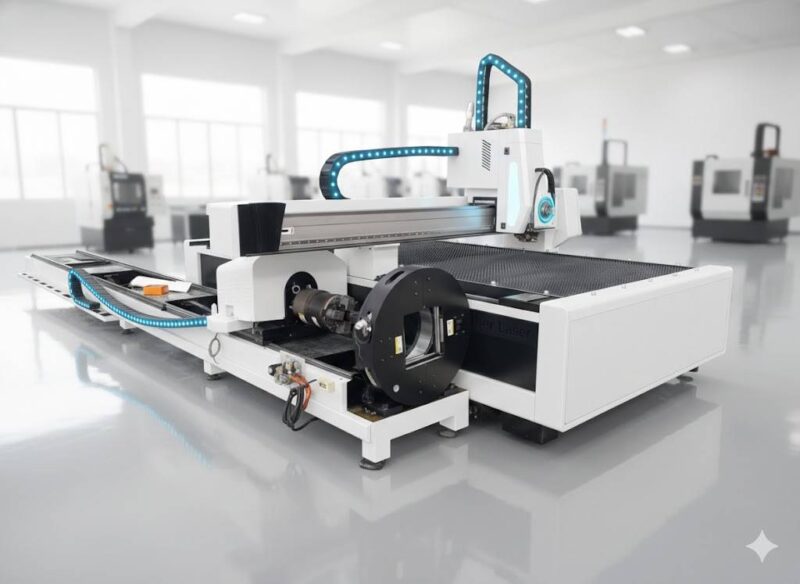
Integrated sensors utilize a laser line profiler to scan the plate surface ahead of the cutting nozzle. This data is fed into the CNC motion controller with millisecond latency, allowing for dynamic adjustments in the Z-axis (height) and minor corrections in the X-Y path. for Construction Machinery components that involve pre-bent sections or plates with existing surface features, seam tracking ensures that the focal point of the laser beam remains constant relative to the material surface. This consistency prevents “blowouts” and maintains a uniform kerf width, which is essential for components that require high-fatigue resistance under cyclic loading.
Integrated Functionality: Punching, Marking, and Cutting
One of the most significant throughput advantages of modern fiber laser systems is the ability to consolidate multiple fabrication steps into a single setup. In a traditional shop floor environment, a plate might move from a marking station to a drilling/punching station and finally to a cutting station. Each move introduces potential positioning errors and increases labor costs.
High-Speed Part Marking
Fiber lasers can be modulated to perform low-power surface etching. This allows for the immediate application of part numbers, heat numbers, and assembly guides directly onto the steel plate. Because this occurs in the same coordinate system as the cut, the placement accuracy is absolute. This is vital for the traceability requirements of heavy equipment manufacturing, ensuring that every structural rib or gusset is identifiable throughout the assembly line.
Precision Hole Punching and Small-Diameter Features
Historically, thermal cutting struggled with “hole-to-thickness” ratios, often requiring secondary drilling for bolt holes. High-power fiber lasers utilize sophisticated pulsing frequencies to “punch” or pierce holes with diameters smaller than the material thickness (e.g., an 8mm hole in 12mm plate) with minimal taper. By controlling the gas pressure and laser ramp-up speed, the system achieves a cylindricality that allows for direct bolt insertion without the need for reaming. This eliminates the bottleneck of secondary mechanical drilling stations.
Eliminating Secondary Operations: The “No Grinding” Mandate
The Heat Affected Zone (HAZ) is a critical metric for industrial engineers focusing on metallurgy. Excessive heat input during the cutting process can alter the microstructure of the steel, leading to localized hardening or embrittlement. Fiber laser cutting, characterized by its narrow beam diameter and high feed rates, minimizes the total thermal energy delivered to the part. This results in a HAZ that is up to 70% smaller than that produced by other thermal processes.
From a production standpoint, the absence of a hardened edge means that the parts do not require edge grinding before painting or further machining. In the context of construction machinery, where components are subjected to extreme vibrations and stresses, the preservation of the base metal’s mechanical properties at the edge of the cut is non-negotiable. By delivering a “clean cut” straight from the machine, the facility reduces abrasive costs, labor hours, and the environmental impact of grinding dust.
Kinematic Requirements for Heavy Plate Processing
The machinery required to move a laser head at high speeds over large distances must possess exceptional rigidity. For construction machinery fabrication, gantry-style fiber lasers are often equipped with linear motors or high-precision rack-and-pinion drives. The acceleration rates (often exceeding 2.0G) allow the machine to maintain optimal cutting speeds even when navigating complex geometries like sprocket teeth or intricate weight-reduction cutouts in crane booms.
Furthermore, the integration of automated nozzle changers and cleaning stations ensures that the machine can operate through extended shifts with minimal manual intervention. When paired with the aforementioned tracking sensors, the system becomes a self-correcting fabrication cell capable of handling the heavy-gauge plates (16mm to 30mm) typical of the industry without sacrificing the precision usually reserved for thin-gauge sheet metal.
Key Technical Advantages for Structural Components:
- Reduction in Kerf Width: Minimizes material waste and allows for tighter nesting of parts.
- Nitrogen vs. Oxygen Cutting: The ability to switch assist gases based on the required edge finish for different grades of construction steel.
- Dynamic Power Modulation: Adjusting laser wattage in real-time during cornering to prevent over-burning and maintain edge sharping.
- Automation Readiness: Fiber laser sources are easily integrated with automated loading and unloading systems for 24/7 operation.
Economic Impact and ROI Analysis
The capital expenditure for a high-power fiber laser with seam tracking is substantial, but the Return on Investment (ROI) is realized through the radical reduction in cycle time and secondary labor. In a standard industrial engineering audit, the transition to fiber laser technology often reveals a 40-60% increase in plate processing throughput. By eliminating the “move-stage-process-move” cycle of traditional punching and grinding, the floor space requirement for work-in-progress (WIP) is also reduced.
In conclusion, for manufacturers of construction machinery, the adoption of fiber laser cutting is no longer an optional upgrade but a strategic necessity. The combination of precision pathing via laser seam tracking and the multi-functional capability of the laser head ensures that structural components are produced with the highest possible integrity. By focusing on a “ready-to-assemble” output, facilities can meet the increasing demands for machinery that is stronger, lighter, and more durable, all while maintaining a lean manufacturing profile.
-
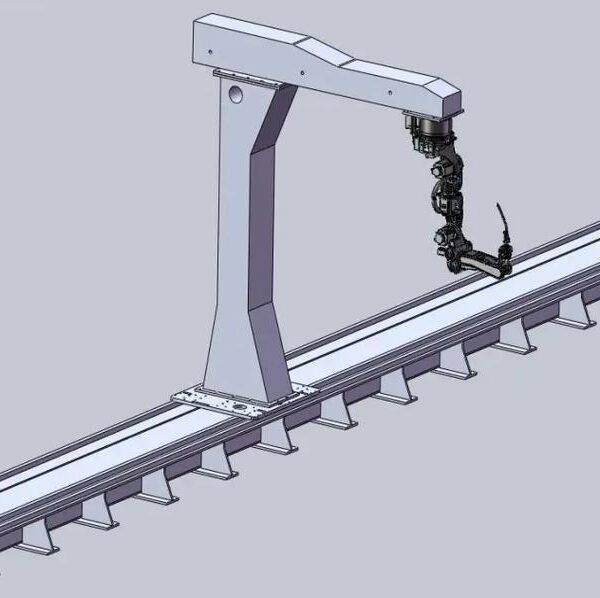

Cantilever Welding Robot solution
-
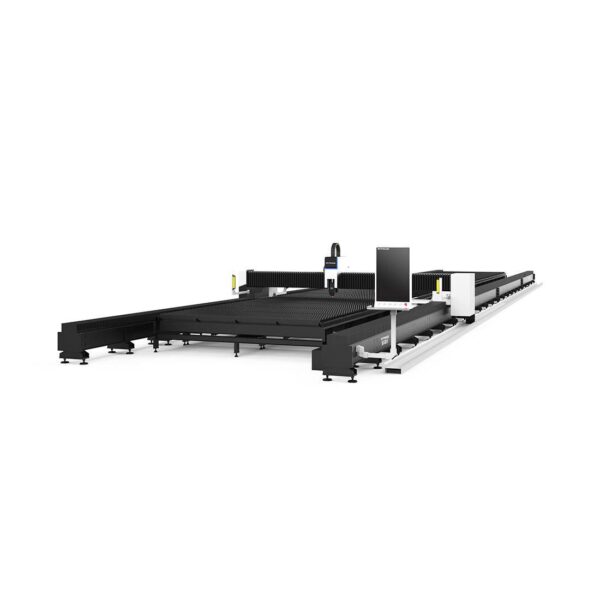

GF laser cutting machine
-
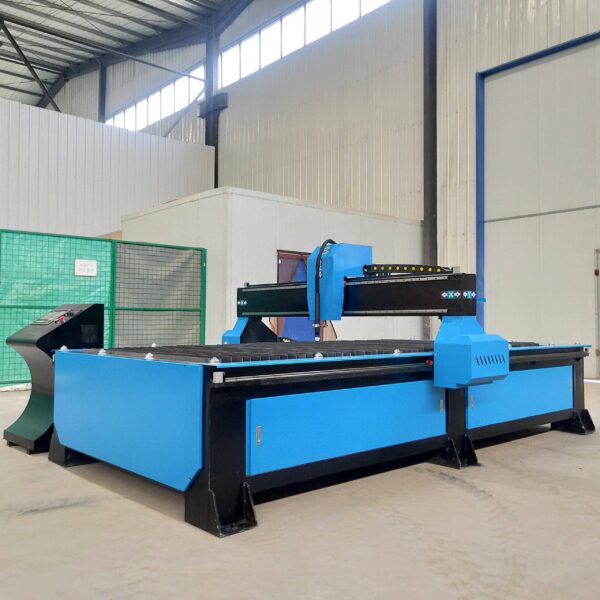
P3015 plasma cutting machine
-

LFP3015 Fiber Laser Cutter
-
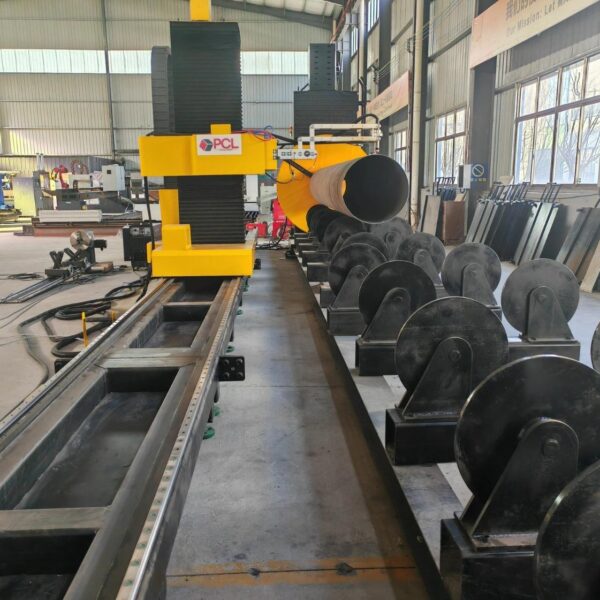
pipe plasma cutting machine
-
LFH 4020 Fiber Laser Cutting Machine
-
LFP4020
-
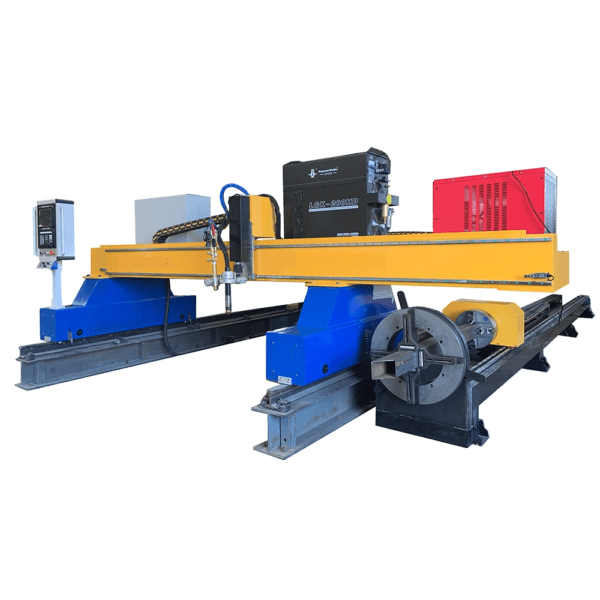
gantry plasma air cutting machine
-
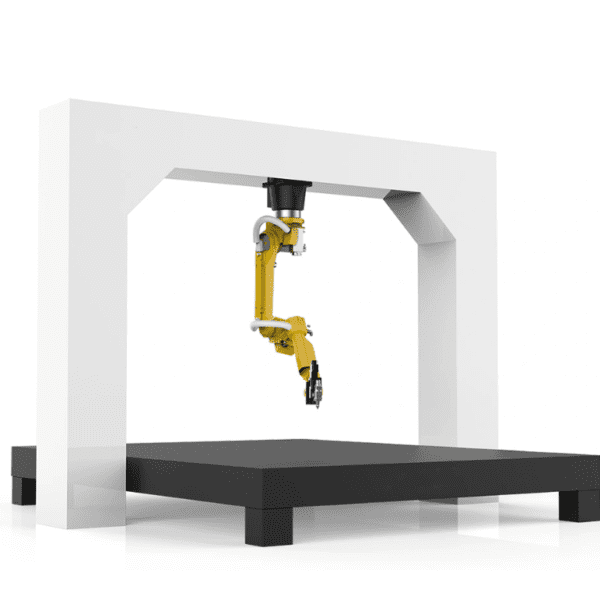
3D robot cutting machine
-
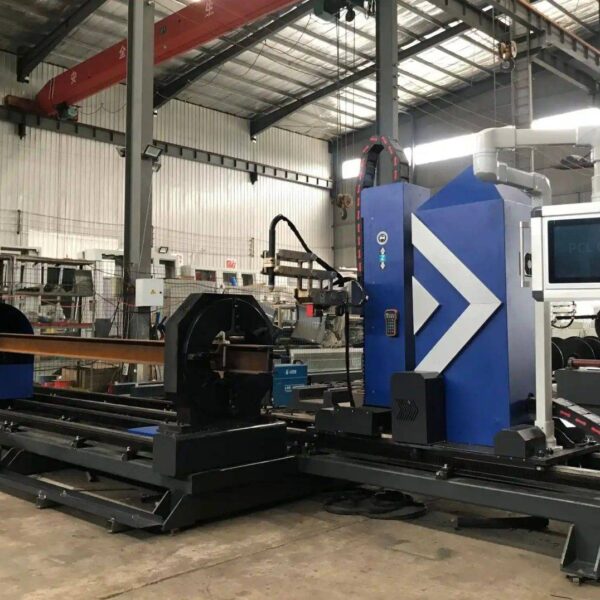
8 axis plasma cutting machine
-
5 axis plasma cutting machine
-

LT360 tube laser cutting machine
-
robot welding workstation
-
SF6060 fiber laser cutting machine
Advanced Fiber Laser Tube Processing Technology
Our CNC Fiber Laser Tube Cutting systems revolutionize metal fabrication by integrating high-precision cutting, punching, and profiling into a single automated workflow. Designed for versatility, this technology handles a wide array of profiles including Round, Square, Rectangular, and Oval tubes, as well as complex L-shaped and U-shaped channels.
- Precision Punching: High-speed hole punching with micron-level accuracy, eliminating the need for mechanical drilling or die-stamping.
- Complex Profiling: Advanced 3D pathing allows for intricate interlocking joints and specialized notch cuts, ideal for structural frames.
- High Material Efficiency: Intelligent nesting software minimizes scrap, reducing raw material costs across large production runs.
- Clean Finish: Delivers oxide-free, burr-free edges that require zero secondary grinding before welding.

Seamlessly processing multiple profiles with consistent precision.
Global Delivery & Logistics



From our high-tech manufacturing facility directly to your global site. PCL WeldCut ensures secure packaging, professional handling, and reliable international logistics to safeguard your equipment throughout the entire journey.