Optimization of Construction Machinery Fabrication via Fiber Laser Systems
The manufacturing of construction machinery—ranging from excavator booms to crane chassis—demands extreme structural reliability and dimensional repeatability. Traditional fabrication workflows often suffer from throughput bottlenecks due to disconnected processes. The implementation of high-wattage fiber Laser Cutting technology, integrated with advanced seam tracking sensors, represents a shift toward unified manufacturing. This approach prioritizes the elimination of secondary finishing and maximizes the duty cycle of the production floor.
Industrial engineers focus on the “Total Cost of Ownership” (TCO) and “Overall Equipment Effectiveness” (OEE). Fiber laser resonators provide a wall-plug efficiency of approximately 30-40%, significantly reducing energy overhead compared to legacy CO2 systems. When applied to the thick-plate carbon steels common in heavy equipment, the narrow kerf width and minimal heat-affected zone (HAZ) ensure that the metallurgical properties of the base material remain uncompromised.
Laser Seam Tracking: Precision in Large-Format Processing
In the context of construction machinery, workpieces are often oversized, sometimes exceeding 12 meters in length. Large plates frequently exhibit physical deviations, such as surface unevenness or thermal stress-induced bowing. Standard CNC toolpaths assume a perfectly flat plane, which leads to focal point inconsistencies.
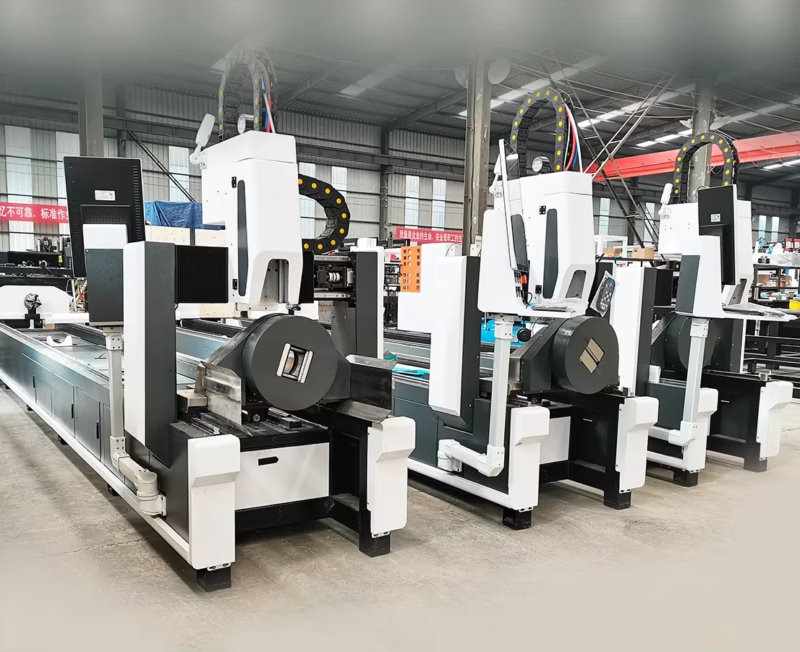
Laser seam tracking (or vision-guided sensing) mitigates these variables by utilizing a non-contact optical sensor to scan the plate surface in real-time. This system identifies the exact position of edges, pre-drilled holes, or plate boundaries. The CNC controller dynamically adjusts the cutting head’s trajectory and height (Z-axis) based on this feedback. For the engineer, this translates to consistent cut geometry across the entire work envelope, preventing scrapped parts due to material shift or plate deformation.
Triple-Function Execution: Punch, Mark, and Cut
Modern fiber laser systems for heavy industry are not merely cutting tools; they are multi-process machining centers. The integration of three distinct functions within a single program file is essential for lean manufacturing.
1. High-Speed Punching and Piercing
The initial phase of any complex part involves piercing. Fiber lasers utilize frequency-modulated pulses to “punch” through thick plate with minimal splatter. Unlike mechanical punching, there is no tool wear. The precision of the laser allows for high-aspect-ratio holes where the diameter is smaller than the plate thickness—a critical requirement for bolting patterns in heavy machinery assemblies.
2. Functional Marking and Traceability
Traceability is a regulatory requirement in construction equipment. By adjusting the laser’s power density and frequency, the system can etch part numbers, QR codes, or assembly guidelines directly onto the steel surface. This no grinding approach to marking ensures that the surface remains flat and ready for painting or coating without manual intervention or the use of vibrating pens/inkjets that can be obscured during later stages.
3. High-Precision Contour Cutting
The final cutting phase utilizes high-pressure assist gases (Oxygen or Nitrogen) to evacuate molten metal. The fiber laser’s beam quality allows for a concentrated energy density, resulting in a square edge with minimal dross. In heavy plate applications, achieving a perpendicularity tolerance that meets ISO 9013 standards is vital.
Eliminating Secondary Grinding Operations
One of the most significant labor costs in heavy fabrication is manual grinding. Rough edges and slag accumulation from inferior cutting methods require hours of manual labor to rectify before parts can be moved to the assembly or painting stages.
High-power fiber lasers produce an “as-cut” surface finish that typically bypasses the grinding station. The stability of the laser seam tracking ensures the focal point is always optimized, which is the primary factor in reducing edge roughness. By achieving a smooth, dross-free finish, the manufacturing cycle time is reduced by 20-30%, as components move directly from the cutting table to the next production cell.
Material Integrity and Thermal Management
Construction machinery utilizes high-strength, low-alloy (HSLA) steels. These materials are sensitive to excessive heat input, which can lead to localized softening or embrittlement. The high cutting speeds of fiber lasers—often 2 to 4 times faster than alternative methods on medium-thickness plates—drastically reduce the dwell time of the heat source.
The resulting Heat Affected Zone is so narrow that it does not interfere with the mechanical properties of critical load-bearing joints. From an engineering perspective, this allows for tighter nesting of parts, as the thermal distortion is minimized, ensuring that nested components remain dimensionally stable even when separated by only a few millimeters of skeleton.
Technical Specifications and OEE Considerations
When evaluating fiber laser machines for this sector, several technical parameters are non-negotiable:
- Beam Parameter Product (BPP): Lower BPP allows for better focusability over long distances, crucial for large-format tables.
- Dynamic Acceleration: Machines must maintain high G-force acceleration (1.5G to 2.8G) to handle complex geometries without slowing down at corners.
- Automatic Nozzle Changing: To maintain 24/7 operation, the system must automatically switch nozzles based on material thickness and type.
The synergy between the fiber source and the tracking software reduces the need for constant operator supervision. The industrial efficiency gain is realized through “lights-out” manufacturing capabilities where the machine can compensate for material variations autonomously.
Data Integration and CAD/CAM Workflow
The modern fiber laser is a node in the Industrial Internet of Things (IIoT). Design files for Construction Machinery, often generated in 3D CAD environments, are processed through nesting software that optimizes the punch/mark/cut sequence. The seam tracking data can be fed back into the PLM (Product Lifecycle Management) system to provide a record of “as-built” dimensions for every part produced.
This level of data integration ensures that if a chassis component shows a 0.5mm deviation during the scan, the system compensates instantly, maintaining the tight tolerances required for automated downstream assembly processes.
Conclusion for the Industrial Practitioner
For the industrial engineer, the objective is the removal of variance. The combination of fiber laser cutting and intelligent seam tracking achieves this by stabilizing the most volatile variable in the shop: the raw material. By delivering parts that are punched, marked, and cut to precision without the need for post-process grinding, the facility realizes a higher throughput and lower per-part cost. The investment in fiber technology is justified not just by speed, but by the systemic elimination of waste across the fabrication lifecycle.
-
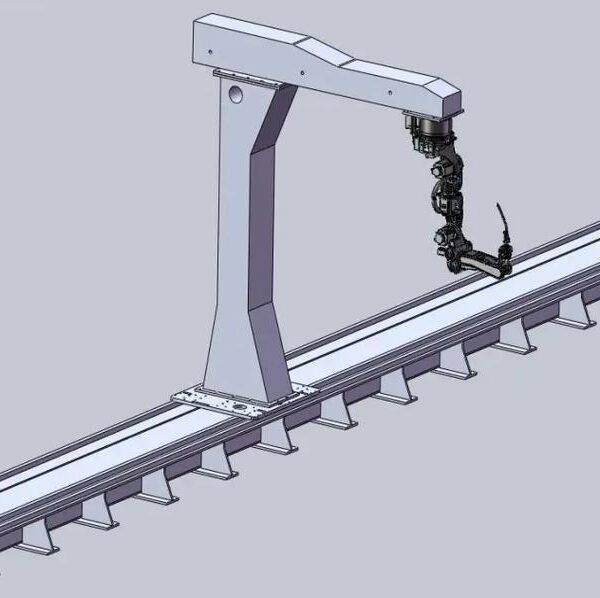

Cantilever Welding Robot solution
-
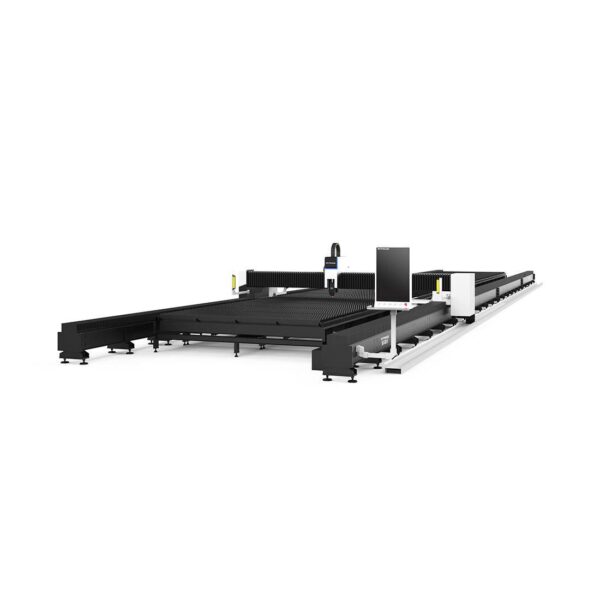

GF laser cutting machine
-
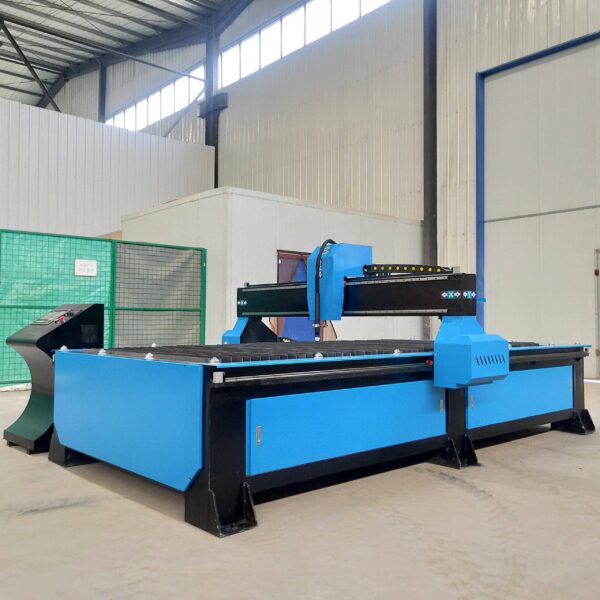
P3015 plasma cutting machine
-

LFP3015 Fiber Laser Cutter
-
pipe plasma cutting machine
-
LFH 4020 Fiber Laser Cutting Machine
-
LFP4020
-
gantry plasma air cutting machine
-
3D robot cutting machine
-
8 axis plasma cutting machine
-
5 axis plasma cutting machine
-

LT360 tube laser cutting machine
-
robot welding workstation
-
SF6060 fiber laser cutting machine
Advanced Fiber Laser Tube Processing Technology
Our CNC Fiber Laser Tube Cutting systems revolutionize metal fabrication by integrating high-precision cutting, punching, and profiling into a single automated workflow. Designed for versatility, this technology handles a wide array of profiles including Round, Square, Rectangular, and Oval tubes, as well as complex L-shaped and U-shaped channels.
- Precision Punching: High-speed hole punching with micron-level accuracy, eliminating the need for mechanical drilling or die-stamping.
- Complex Profiling: Advanced 3D pathing allows for intricate interlocking joints and specialized notch cuts, ideal for structural frames.
- High Material Efficiency: Intelligent nesting software minimizes scrap, reducing raw material costs across large production runs.
- Clean Finish: Delivers oxide-free, burr-free edges that require zero secondary grinding before welding.

Seamlessly processing multiple profiles with consistent precision.
Global Delivery & Logistics



From our high-tech manufacturing facility directly to your global site. PCL WeldCut ensures secure packaging, professional handling, and reliable international logistics to safeguard your equipment throughout the entire journey.