Advancing Bridge Truss Fabrication with Fiber Laser Technology
The structural integrity of bridge trusses depends on the precision of geometric fits and the quality of the edges produced during the primary fabrication stage. Traditional methods often require multiple setups and significant manual intervention to achieve the tolerances necessary for high-strength connections. The transition to Fiber Laser Cutting represents a fundamental shift in how heavy-section structural steel is processed. Unlike legacy mechanical methods, fiber lasers utilize a concentrated beam of light, typically in the 1.06-micron wavelength range, to achieve energy densities that vaporize steel instantaneously. This results in a narrow kerf and a minimal heat-affected zone (HAZ), which is critical for the fatigue life of bridge components.
In the context of bridge engineering, trusses are subjected to cyclic loading and environmental stress. Any micro-fissures or excessive thermal distortion during the cutting phase can lead to premature structural failure. The application of high-wattage fiber laser sources (ranging from 12kW to 30kW) ensures that even thick-plate carbon steel used in gusset plates and chord members is cut with a perpendicularity that meets or exceeds ISO 9013 standards. This precision eliminates the need for secondary edge preparation, directly impacting the operational throughput of the fabrication facility.
The Role of Laser Seam Tracking in Precision Cutting
One of the primary challenges in large-scale bridge truss manufacturing is the physical size of the workpieces. Long-span beams and large-format plates often exhibit inherent material deviations, such as slight bowing or surface irregularities resulting from the rolling process at the mill. Laser Seam Tracking technology, when integrated into a cutting head, acts as a real-time guidance system. It utilizes a dedicated sensor—often a line-profile laser—to scan the material surface milliseconds before the cutting beam arrives. This data is fed back to the CNC controller, which adjusts the Z-axis height and the X/Y path to compensate for any material warpage.
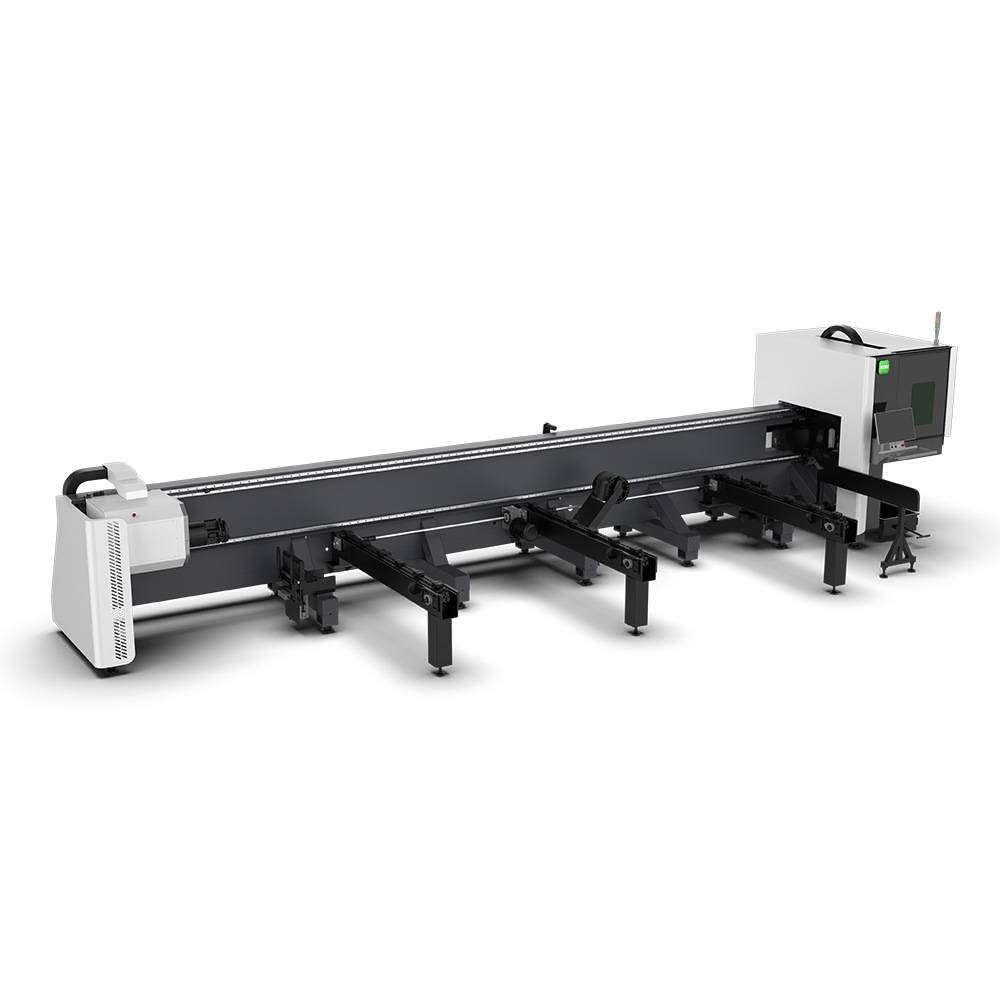
for Bridge Trusses, this means the laser can maintain a constant focal point relative to the material surface, regardless of how the plate sits on the cutting bed. If a 12-meter chord member has a slight vertical deviation, the Laser Seam Tracking system ensures the cut remains consistent across the entire length. This level of Automated Path Compensation prevents the loss of focus that would otherwise result in dross formation or incomplete cuts, ensuring that every bolt hole and interlocking joint is perfectly aligned for assembly.
The Triple-Function Workflow: Punch, Mark, and Cut
Efficiency in an industrial setting is measured by the reduction of “touches” per part. Traditional bridge truss production often separates layout marking, hole punching, and profile cutting into different workstations. A modern fiber laser system consolidates these into a single continuous process. This “Punch-Mark-Cut” capability is essential for modern Bridge Truss Fabrication where traceability and assembly speed are paramount.
Precision Marking for Assembly Guidance
Before the high-power cutting sequence begins, the fiber laser operates in a low-frequency pulse mode to etch layout lines and part identification numbers directly onto the steel surface. This laser marking is permanent and precise, providing a roadmap for subsequent assembly stages. These markings indicate where stiffeners should be placed or where cross-members will intersect, removing the human error associated with manual chalking or physical stamping.
Automated Piercing and Punching Substitutes
While mechanical punching is limited by tool wear and plate thickness, the fiber laser performs “piercing” with microscopic precision. In bridge trusses, bolt holes must be perfectly cylindrical with no taper. Advanced pulsing techniques allow the laser to “punch” through thick plate with minimal splash-back, creating holes that are ready for high-strength friction-grip bolts without the need for reaming. This eliminates the noise and mechanical stress of traditional punching machines while providing the flexibility to change hole diameters instantly via the CNC program.
High-Speed Profile Cutting
The final stage is the high-speed profile cut. Because the Fiber Laser Cutting process is non-contact, there is no tool wear, meaning the first part and the thousandth part are identical in dimension. The high energy density of the fiber laser allows for feed rates that are significantly higher than traditional thermal cutting methods, especially in the 16mm to 25mm thickness range common in bridge components. The resulting edge is smooth, often with a surface roughness (Ra) that requires no grinding before painting or galvanizing.
Eliminating Post-Process Grinding and Edge Preparation
In bridge construction, the quality of the cut edge is a matter of compliance with strict codes (such as AWS D1.5 or Eurocode 3). Traditionally, edges had to be ground to remove hardened layers or slag. The fiber laser’s narrow kerf and high-pressure assist gas (usually Oxygen for carbon steel or Nitrogen for stainless) produce a clean, dross-free edge. By eliminating the grinding stage, manufacturers save on labor costs and reduce the environmental impact of dust and noise. Furthermore, the Automated Path Compensation ensures that the geometry of the bevels and the straightness of the edges meet the most stringent structural requirements without manual correction.
Structural Integrity and the Heat Affected Zone (HAZ)
Structural engineers are often concerned with the thermal impact on steel metallurgy. Fiber Laser Cutting minimizes the duration of heat exposure due to its extreme cutting speeds. The resulting HAZ is significantly narrower than that of other thermal processes. This is vital for bridge trusses made of high-strength, low-alloy (HSLA) steels, where excessive heat can alter the grain structure and reduce the yield strength of the material near the cut. By maintaining the metallurgical integrity of the truss members, the laser process ensures the long-term safety and load-bearing capacity of the bridge structure.
Optimizing OEE in Bridge Component Manufacturing
For a bridge fabrication facility, Overall Equipment Effectiveness (OEE) is the gold standard for measuring performance. A fiber laser system with integrated seam tracking maximizes OEE by reducing downtime and scrap. The ability of the Laser Seam Tracking system to detect material errors before they result in a failed cut prevents the wasting of expensive structural steel. Additionally, the software integration allows for advanced nesting algorithms, which minimize the “skeleton” scrap left after cutting complex truss gussets.
The lack of mechanical components in the cutting process (no bits, no dies, no blades) translates to a lower maintenance requirement and higher machine availability. The solid-state nature of the fiber laser source means there are no moving parts or mirrors in the beam generation path, which is a significant upgrade over older CO2 technologies. For an industrial engineer, this means more predictable production schedules and lower overhead costs per ton of fabricated steel.
Technical Summary for Industrial Implementation
Integrating a Fiber Laser Cutting machine with Laser Seam Tracking into a bridge truss production line requires a focus on digital workflow. The CAD/CAM files used for the bridge design are fed directly into the laser’s controller, ensuring a “digital twin” accuracy from design to finished part. The combination of high-precision cutting, integrated marking, and real-time path correction allows bridge fabricators to produce more complex, more reliable, and more cost-effective truss systems than ever before. The elimination of secondary grinding and the consolidation of punching and marking into a single operation represent the peak of modern manufacturing efficiency in the structural steel sector.
-


LT240S tube laser cutting machine
-
LT120S tube laser cutting machine
-
Sale

Tank Fillet Welding Machine
Original price was: $1,000.00.$900.00Current price is: $900.00. -
Sale

MAK100 tube laser cutting machine
Original price was: $5,500.00.$5,000.00Current price is: $5,000.00. -

portable plasma air cutting machine
$1,200.00 -

2in1 fiber laser cutting machine
-

Air cooling Laser welding machine
-

HF h beam laser cutting machine
-

LT240 laser cutting machine
-

Laser welding machine
-


Cobot Welding Station
-

Gantry welding robot solution
-

Tracked Wheeled AGV Welding robot
-

LFH6020 Fiber laser cutting machine
-
LFP6020
-

robotic welidng machine
Advanced Fiber Laser Tube Processing Technology
Our CNC Fiber Laser Tube Cutting systems revolutionize metal fabrication by integrating high-precision cutting, punching, and profiling into a single automated workflow. Designed for versatility, this technology handles a wide array of profiles including Round, Square, Rectangular, and Oval tubes, as well as complex L-shaped and U-shaped channels.
- Precision Punching: High-speed hole punching with micron-level accuracy, eliminating the need for mechanical drilling or die-stamping.
- Complex Profiling: Advanced 3D pathing allows for intricate interlocking joints and specialized notch cuts, ideal for structural frames.
- High Material Efficiency: Intelligent nesting software minimizes scrap, reducing raw material costs across large production runs.
- Clean Finish: Delivers oxide-free, burr-free edges that require zero secondary grinding before welding.

Seamlessly processing multiple profiles with consistent precision.
Global Delivery & Logistics



From our high-tech manufacturing facility directly to your global site. PCL WeldCut ensures secure packaging, professional handling, and reliable international logistics to safeguard your equipment throughout the entire journey.
2 thoughts on “Fiber Laser Cutting Machine with Laser Seam Tracking for for Bridge Trusses”
The Tube Cutting Machine exceeded our expectations in terms of speed and stability.
Been using this for 3 months now. Still running like a beast. Very reliable.