Optimizing Pressure Vessel Fabrication with 5-Axis Fiber Laser Technology
In industrial engineering, the production of pressure vessels represents a critical intersection of structural integrity and manufacturing efficiency. Traditionally, the preparation of cylindrical shells and dished ends required multiple machine setups, leading to cumulative tolerances and increased labor costs. The introduction of Fiber Laser Cutting Machine systems equipped with 5-Axis Beveling heads has shifted the paradigm. By utilizing a high-density photon beam, these machines deliver a level of precision that mechanical cutting or thermal processes cannot match, specifically within the context of complex edge geometries required for high-pressure containment.
Kinematics of the 5-Axis Beveling Head
The core of the system lies in its kinematic chain. Unlike standard 2D laser systems, the 5-axis configuration introduces two rotational axes (typically A and B) to the standard X, Y, and Z Cartesian coordinates. For pressure vessel manufacturers, this allows the laser head to tilt up to ±45 degrees. This capability is essential for creating V, Y, X, and K-shaped bevels directly on the raw material.
From a technical standpoint, the 5-axis head compensates for focal length variations in real-time. As the head tilts, the distance between the nozzle and the workpiece changes. Advanced CNC controllers utilize high-speed algorithms to adjust the Z-axis dynamically, ensuring the focal point remains perfectly positioned within the material thickness. This precision ensures that the bevel angle remains consistent across the entire circumference of a shell or the curved surface of a dished end.
Eliminating Secondary Processes: No Grinding Required
One of the most significant cost drivers in heavy fabrication is secondary finishing. Conventional cutting methods often leave a thick oxide layer or heavy dross, necessitating manual grinding to achieve a weld-ready surface. 5-Axis Beveling using a fiber laser source operates at a wavelength of approximately 1.07 microns, which is highly absorbed by metals. This energy efficiency results in a narrow kerf and a microscopic Heat Affected Zone (HAZ).
The metallurgical integrity of the edge is superior because the fiber laser’s high power density vaporizes the metal almost instantaneously. When combined with high-purity assist gases like oxygen or nitrogen, the resulting cut surface is clean, smooth, and free of carbonization. for Pressure Vessels, which must undergo rigorous X-ray or ultrasonic testing, the absence of surface impurities is critical. Engineers can move parts directly from the laser bed to the assembly station, bypassing the grinding booth entirely.
Integrated Workflow: Punch, Mark, and Cut
Efficiency in a lean manufacturing environment is measured by the reduction of “touches” on a part. A 5-axis fiber laser machine functions as a multi-process center.
Precision Punching and Piercing
Before the main cutting sequence, the fiber laser executes high-speed pulsing to “punch” start holes for nozzles and manways. The software optimizes piercing parameters to prevent blowout, especially in thick-walled vessels. This ensures that the subsequent cut begins from a point of stability, maintaining the dimensional accuracy of the opening.
Automated Part Marking
Traceability is a mandatory requirement for pressure vessels under codes such as ASME Section VIII. The fiber laser can be de-focused or set to low power to “mark” heat numbers, part IDs, and alignment lines directly onto the plate. This permanent marking survives subsequent processes and eliminates the need for manual stamping or inkjet labeling, which can be obscured or lost during handling.
Final Geometry Cutting
The final stage is the high-precision cut. Whether it is the longitudinal edge of a shell plate or the complex contour of a nozzle reinforcement pad, the Precision Edge Quality remains constant. The ability to cut and bevel in a single pass ensures that the geometry of the bevel is perfectly concentric with the hole or the plate edge, a feat that is exceptionally difficult to achieve with manual intervention.
Technical Advantages for Pressure Vessel Materials
Pressure vessels are typically constructed from carbon steel, stainless steel, or high-alloy materials. Fiber lasers excel in processing these materials due to their beam stability.
In stainless steel applications, the use of nitrogen as an assist gas allows for “bright cutting.” This prevents oxidation on the beveled edge, which is essential for maintaining the corrosion resistance of the alloy. In thick carbon steel, the laser’s ability to maintain a stable keyhole during the cutting process results in verticality tolerances that far exceed traditional thermal methods.
Maximizing Material Utilization and ROI
From an industrial engineering perspective, the Return on Investment (ROI) for a 5-axis fiber laser is driven by material savings and throughput. Because the laser kerf is so narrow (often less than 0.5mm), nesting software can place parts closer together, reducing scrap rates. Furthermore, the speed of fiber laser cutting—often 2 to 5 times faster than older laser technologies on thin to medium gauges—significantly reduces the cycle time per vessel component.
The reduction in labor is perhaps the most quantifiable benefit. By consolidating beveling into the cutting cycle, the man-hours previously dedicated to manual edge preparation, bevel checking, and rework are eliminated. The Automated Beveling Process provides a repeatable, data-driven result that does not fluctuate with operator fatigue.
Conclusion: The Future of Heavy Fabrication
The adoption of 5-axis fiber laser cutting for pressure vessel fabrication represents a shift toward “smart” manufacturing. The integration of high-precision beveling, automated marking, and punch-piercing within a single CNC environment addresses the core challenges of the industry: accuracy, traceability, and cost-efficiency. As pressure vessel designs become more complex and safety margins tighter, the precision of the fiber laser ensures that every component meets the exact specifications required for high-pressure service without the need for costly and time-consuming secondary operations.
-


LT240S tube laser cutting machine
-
LT120S tube laser cutting machine
-
Sale

Tank Fillet Welding Machine
Original price was: $1,000.00.$900.00Current price is: $900.00. -
Sale

MAK100 tube laser cutting machine
Original price was: $5,500.00.$5,000.00Current price is: $5,000.00. -

portable plasma air cutting machine
$1,200.00 -

2in1 fiber laser cutting machine
-

Air cooling Laser welding machine
-

HF h beam laser cutting machine
-

LT240 laser cutting machine
-

Laser welding machine
-


Cobot Welding Station
-

Gantry welding robot solution
-

Tracked Wheeled AGV Welding robot
-

LFH6020 Fiber laser cutting machine
-
LFP6020
-

robotic welidng machine
Advanced Fiber Laser Tube Processing Technology
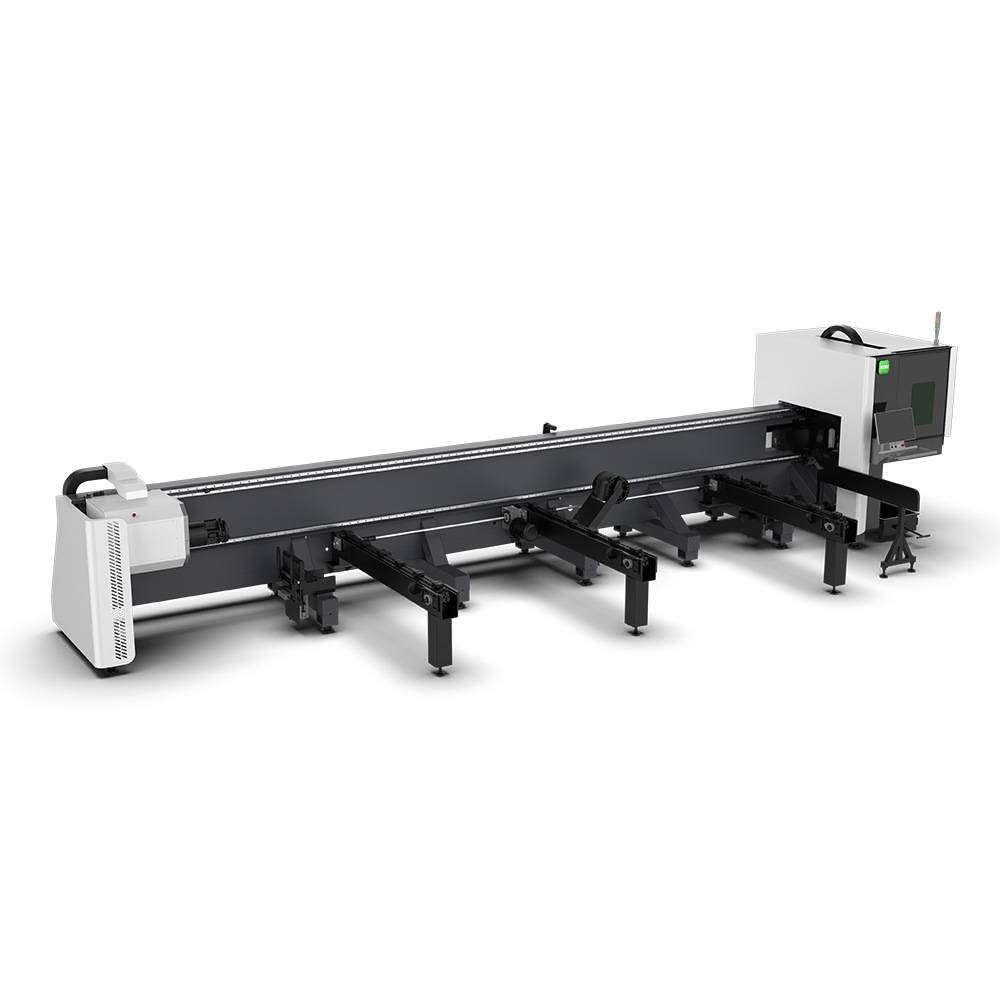
Our CNC Fiber Laser Tube Cutting systems revolutionize metal fabrication by integrating high-precision cutting, punching, and profiling into a single automated workflow. Designed for versatility, this technology handles a wide array of profiles including Round, Square, Rectangular, and Oval tubes, as well as complex L-shaped and U-shaped channels.
- Precision Punching: High-speed hole punching with micron-level accuracy, eliminating the need for mechanical drilling or die-stamping.
- Complex Profiling: Advanced 3D pathing allows for intricate interlocking joints and specialized notch cuts, ideal for structural frames.
- High Material Efficiency: Intelligent nesting software minimizes scrap, reducing raw material costs across large production runs.
- Clean Finish: Delivers oxide-free, burr-free edges that require zero secondary grinding before welding.

Seamlessly processing multiple profiles with consistent precision.
Global Delivery & Logistics



From our high-tech manufacturing facility directly to your global site. PCL WeldCut ensures secure packaging, professional handling, and reliable international logistics to safeguard your equipment throughout the entire journey.