Fiber Laser Cutting Machine with 5-Axis Beveling for LNG Projects
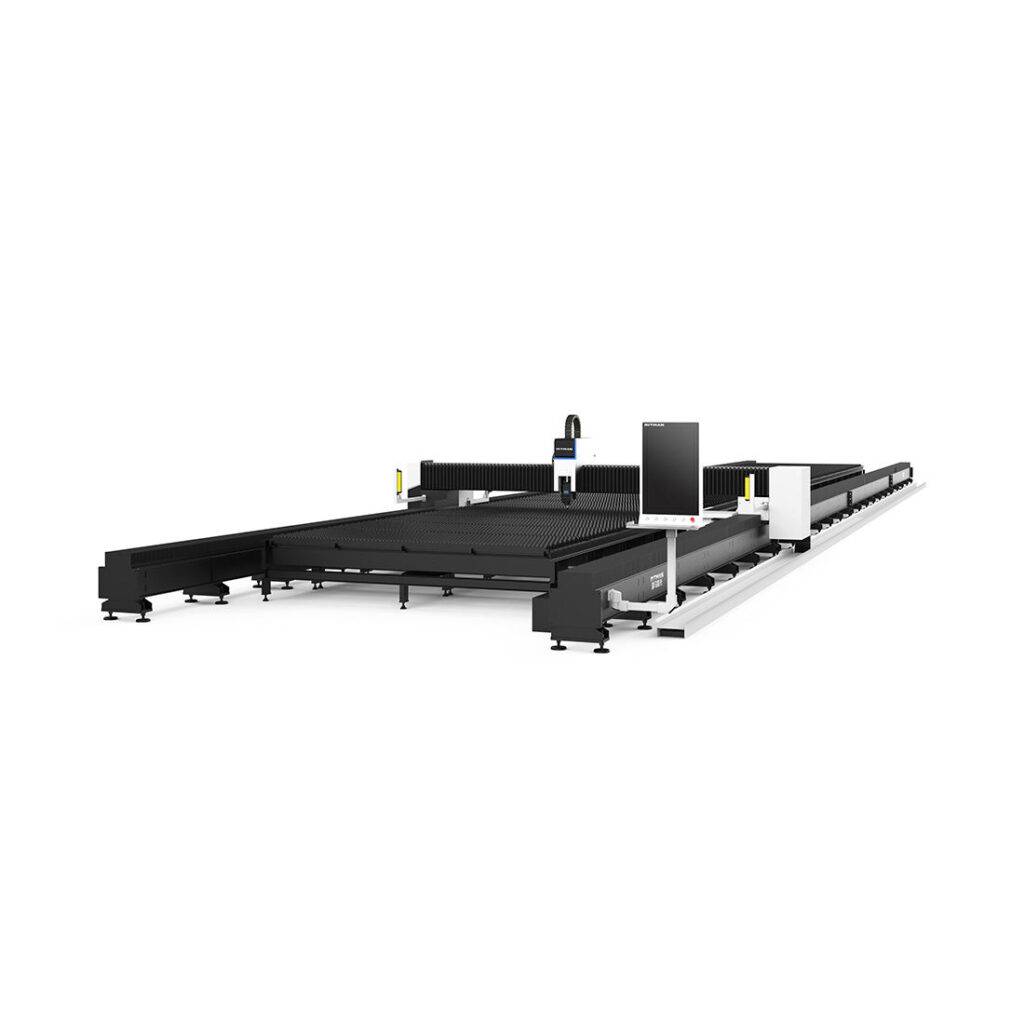
In this article
Precision Engineering in LNG Infrastructure: The Role of 5-Axis Fiber Laser Beveling
The fabrication of Liquefied Natural Gas (LNG) storage tanks, regasification modules, and distribution piping requires a level of structural integrity that leaves no room for error. Traditionally, the preparation of thick-plate materials for heavy-duty welding involved multiple, disjointed stages. However, the implementation of 5-Axis Fiber Laser Beveling has fundamentally shifted the baseline for production efficiency and accuracy. By utilizing high-density photon energy, these machines provide a non-contact cutting solution that maintains the metallurgical properties of specialized alloys while delivering geometries ready for immediate assembly.
In industrial engineering terms, the goal is the reduction of total cycle time and the elimination of non-value-added activities. In LNG projects, where materials like 9% nickel steel and 304/316L stainless steel are prevalent due to their cryogenic toughness, managing the Heat Affected Zone (HAZ) is critical. Fiber laser technology, operating at a wavelength of approximately 1.06 microns, ensures narrow kerf widths and minimal thermal distortion, which is vital for the dimensional stability of large-scale components.
Kinematics and the 5-Axis Beveling Head
The core of this technology lies in the complex kinematics of the cutting head. Unlike standard 2D laser systems that operate on an X-Y plane, a 5-axis system incorporates A and B axes of rotation. This allows the laser nozzle to tilt at angles typically ranging from -45 to +45 degrees. For LNG Infrastructure Fabrication, this capability is essential for creating V, X, Y, and K-shaped bevels. These profiles are required to ensure full-penetration welds in thick-walled pressure vessels and storage tank shells.
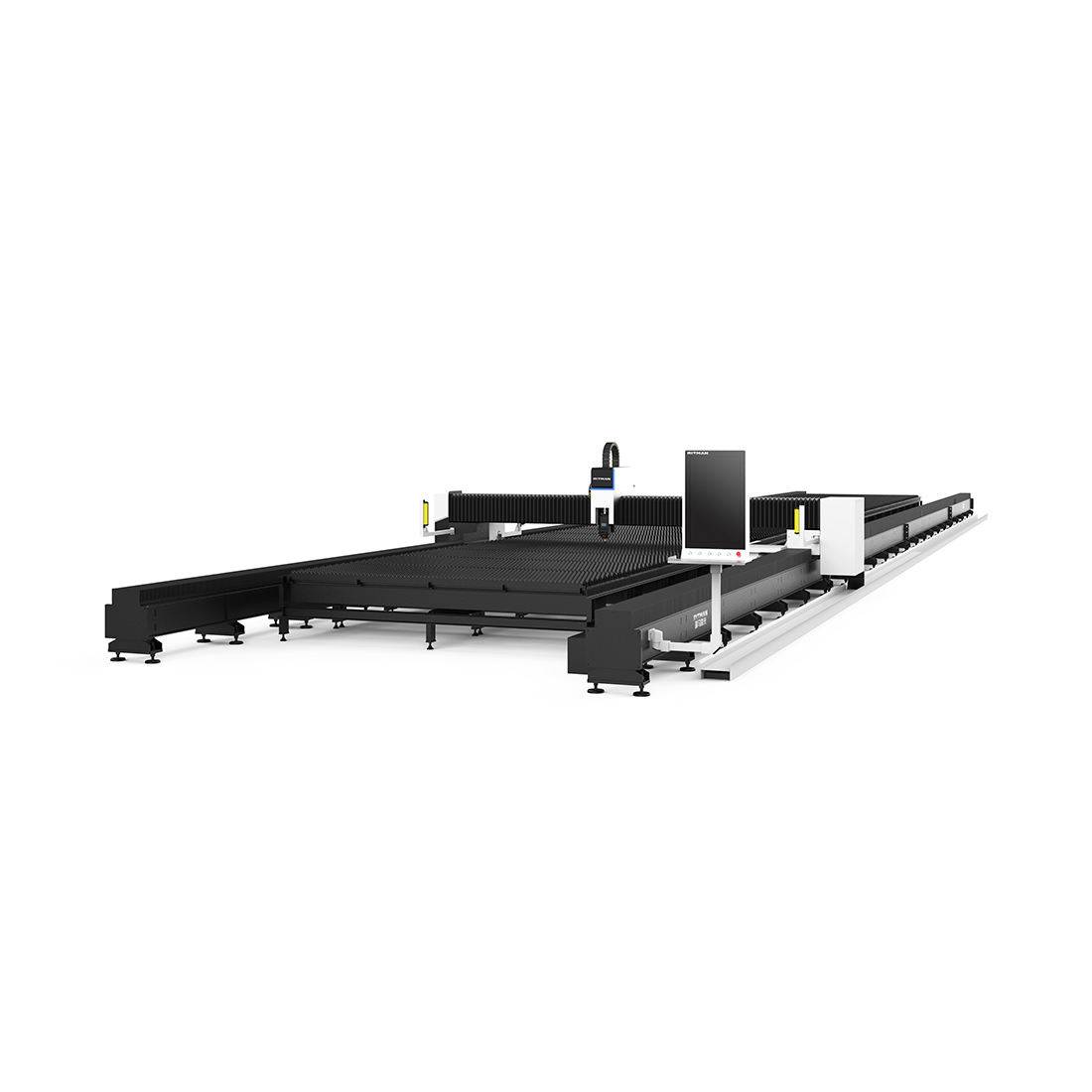
From an automation perspective, the CNC controller must handle real-time interpolation of five axes simultaneously. This ensures that the focal point of the laser remains constant relative to the material surface, even as the angle of attack changes. High-speed processors calculate the necessary offsets to compensate for beam path length variations, ensuring that the edge quality at the bottom of a 45-degree bevel is as clean as a vertical cut. This precision eliminates the mechanical variations often found in manual or semi-automated edge preparation methods.
The “No-Grinding” Workflow: Efficiency Metrics
One of the most significant bottlenecks in traditional heavy fabrication is secondary processing. Mechanical shearing or older cutting methods often leave dross, slag, or a hardened edge layer that requires intensive manual grinding before welding can commence. Fiber Laser Cutting, when optimized with the correct assist gas (typically Oxygen for carbon steels or Nitrogen for stainless steels), produces a dross-free finish.
By achieving a surface roughness (Ra) that meets or exceeds international standards for weld preparation, the “no-grinding” requirement is satisfied. This results in a direct reduction in labor costs and a significant decrease in the consumption of abrasive materials. More importantly, it removes the risk of carbon contamination from grinding discs, which is a critical concern when working with high-purity stainless steel components for LNG transport systems. The Thermal Distortion Mitigation inherent in fiber laser processing ensures that the plates remain flat, facilitating easier fit-up during the assembly of large-diameter tanks.
Integrated Punch, Mark, and Cut Cycles
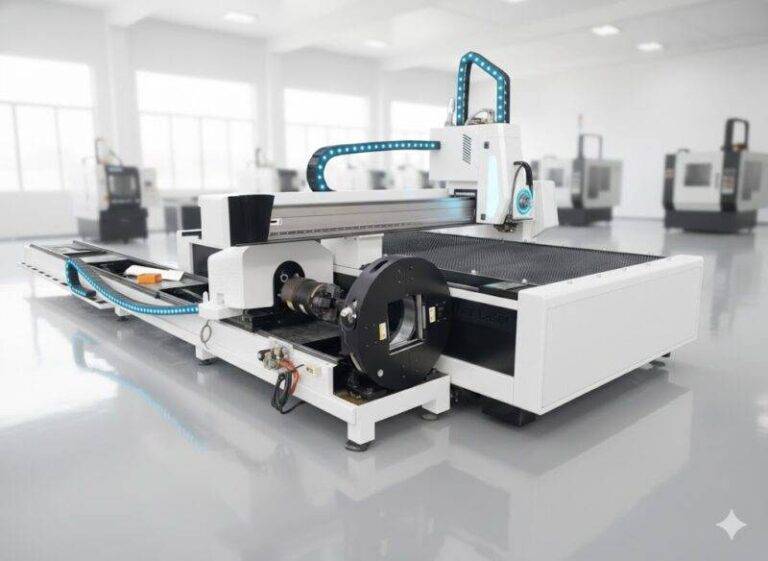
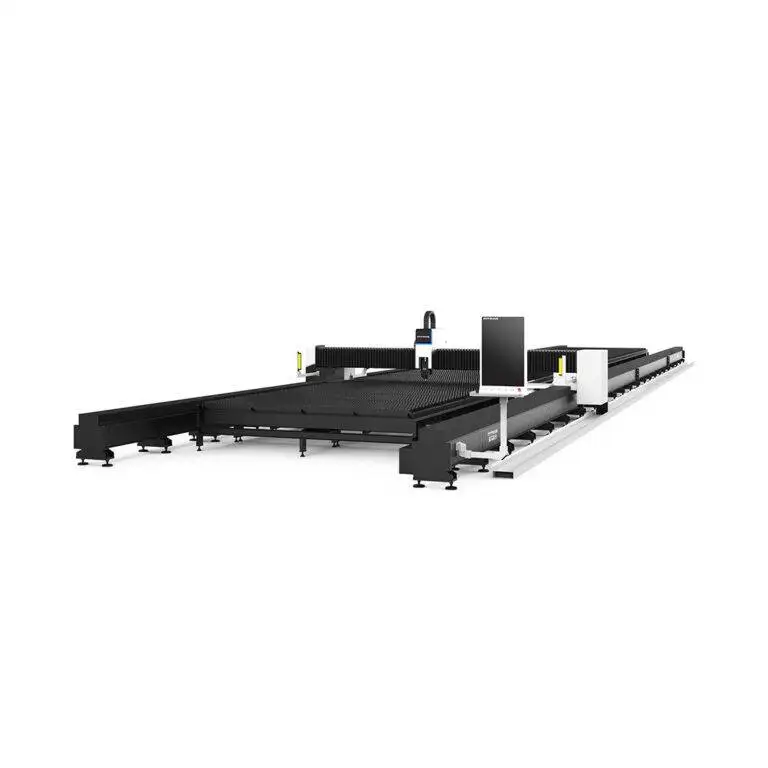
Modern industrial engineering emphasizes the consolidation of processes. 5-axis fiber laser machines for LNG Projects are not merely cutting tools; they are integrated fabrication centers. The software allows for a three-step cycle within a single program: Integrated Marking and Cutting combined with high-precision punching.
Precision Punching and Piercing
Before the cut begins, the laser performs high-speed piercing. Advanced sensors monitor the “breakthrough” to ensure the hole is clean and the surrounding material is not overheated. This is particularly important for bolt hole locations or start points for internal cutouts in structural supports. The laser can produce holes with diameters significantly smaller than the plate thickness, a feat difficult to achieve with mechanical drills or alternative thermal processes.
Automated Marking for Traceability
Traceability is a legal requirement in LNG construction. Every plate segment must be identified by its heat number, project code, and orientation. The fiber laser can be de-focused or run at lower power settings to etch or mark alphanumeric codes, barcodes, or layout lines directly onto the workpiece. This marking occurs in the same setup as the cutting, ensuring that the identification is perfectly indexed to the part’s geometry. This eliminates the possibility of human error in manual stamping or labeling.
Final Contour Cutting and Beveling
Following the marking, the machine executes the high-power cutting sequence. Because the part does not move between marking and cutting, the spatial relationship between the bevel and the layout lines is maintained within tolerances of ±0.1mm. This level of precision is fundamental when managing the cumulative tolerances of a 50-meter diameter LNG storage tank.
Material Integrity and Heat Affected Zone (HAZ) Control
LNG projects utilize materials specifically engineered for sub-zero temperatures. 9% Nickel steel, for instance, is chosen for its ability to remain ductile at -162°C. Excessive heat during the cutting process can cause localized changes in the grain structure, potentially leading to embrittlement. Fiber lasers, due to their high power density and rapid travel speeds, localize the energy delivery so efficiently that the HAZ is remarkably narrow.
Engineering data shows that the HAZ in fiber laser cutting is often 50-70% smaller than that produced by older thermal methods. This ensures that the base metal’s mechanical properties—specifically its fracture toughness and tensile strength—remain intact up to the very edge of the weld prep. For project managers and quality assurance engineers, this provides a higher safety margin for the structural longevity of the facility.
Throughput and ROI for Large-Scale Projects
The return on investment (ROI) for a 5-axis fiber laser system in the LNG sector is driven by throughput. When analyzing the cost-per-part, one must consider the entire workflow. A traditional process might involve three machines and four material handling steps to achieve a marked and beveled plate. The fiber laser accomplishes this on a single bed.
The high cutting speeds of fiber lasers (often exceeding 10 m/min for thinner sections and maintaining high efficiency on plates up to 30mm-50mm) translate to more parts per shift. Furthermore, the reliability of solid-state fiber laser sources—which lack the mirrors and turbines of CO2 lasers—results in higher machine uptime. In the context of a multi-billion dollar LNG project, where delays can cost millions in liquidated damages, the reliability of the cutting line is a critical project risk mitigation factor.
Conclusion: A New Standard for LNG Fabrication
The integration of 5-axis fiber laser beveling represents a move toward “smart” manufacturing in the heavy industry sector. By combining the precision of photonics with the flexibility of 5-axis motion control, engineers can produce components that are geometrically perfect and metallurgically sound. The ability to punch, mark, and cut in a single operation without the need for secondary grinding optimizes the supply chain and ensures that LNG infrastructure is built to the highest standards of safety and efficiency. As the global demand for natural gas continues to rise, the adoption of these advanced laser systems will be the defining factor in the competitive landscape of industrial fabrication.