Optimizing Wind Tower Fabrication via Fiber Laser Technology
The global demand for renewable energy infrastructure necessitates a shift toward higher throughput and tighter tolerances in the production of wind turbine towers. Traditional methods of preparing large-format steel plates often involve fragmented workflows, including manual layout, mechanical punching, and multi-stage thermal processing. However, the adoption of high-power fiber Laser Cutting systems has redefined the benchmark for precision in this sector. Unlike legacy thermal methods, fiber lasers utilize a solid-state gain medium, resulting in a wavelength of approximately 1.064 microns. This allows for superior absorption rates in structural steels like S355, enabling a concentrated energy density that facilitates rapid melting and vaporization with minimal kerf width.
The Technical Role of 3D Vision Positioning
In the context of wind tower fabrication, the workpieces—often exceeding 10 meters in length and weighing several tons—rarely exhibit perfect planarity. Plate deformation, whether caused by residual stresses from the rolling mill or gravitational sagging on the cutting bed, poses a significant challenge for automated systems. Integrated 3D vision positioning addresses this by employing industrial-grade stereoscopic cameras or structured light sensors to generate a high-fidelity point cloud of the material surface.
This spatial data is processed in real-time by the CNC controller to adjust the cutting head’s Z-axis height and XY-axis trajectory. By mapping the actual geometry of the plate against the theoretical CAD model, the system compensates for irregularities. This ensures that the laser focal point remains constant relative to the material surface, which is critical for maintaining perpendicularity and edge quality across the entire circumference of a tower section or door frame aperture.
Consolidated Process: Punch, Mark, and Cut
One of the most significant gains in industrial efficiency is the transition from multi-machine processing to a single-pass workflow. A fiber laser cutting machine equipped with advanced nesting software and vision systems can execute three distinct functions without requiring the workpiece to be repositioned:
- Precision Punching: Utilizing high-frequency pulse modes, the laser creates ultra-accurate start holes and bolt-hole configurations. The precision of the laser beam ensures that the holes meet stringent circularity requirements, often eliminating the need for subsequent drilling or reaming.
- Surface Marking: Low-power laser modulation allows for the engraving of traceability codes, weld lines, and assembly markers directly onto the plate surface. This provides permanent, high-contrast identification that survives subsequent coating processes without compromising the metallurgical integrity of the steel.
- High-Speed Cutting: The primary cutting phase utilizes the full power of the fiber source to excise complex geometries. The high energy density results in a narrow Heat Affected Zone (HAZ), which preserves the mechanical properties of the structural steel.
Elimination of Secondary Grinding Operations
In traditional heavy-plate fabrication, the presence of heavy dross and slag necessitates extensive post-process grinding. This stage is not only labor-intensive but also introduces variability in the final dimensions of the part. Fiber laser systems operating with high-pressure nitrogen or oxygen assist gases produce a clean, oxide-free or low-oxide edge.
From an industrial engineering perspective, the removal of the grinding stage represents a substantial reduction in “Non-Value-Added” (NVA) time. The precision of the laser cut is such that the edge roughness (Ra) remains within the limits required for immediate fit-up and assembly. For wind tower door frames and internal platforms, this level of accuracy ensures that components interface perfectly, reducing the need for corrective force during the assembly of the tower segments.
Structural Integrity and Thermal Distortion Management
Wind towers are subject to extreme fatigue and cyclical loading. Therefore, the structural integrity of the base material is paramount. Thermal distortion is a primary concern when processing large plates. Traditional high-heat methods can induce localized warping, leading to dimensional inaccuracies that propagate through the assembly chain.
Fiber lasers mitigate this through a concentrated heat source and high feed rates. The localized nature of the laser beam means that the total heat input into the workpiece is significantly lower than alternative methods. This localized cooling prevents the “potato-chipping” effect often seen in large-format thin or medium-thickness plates. By maintaining the flatness of the components, the subsequent rolling and joining processes become more predictable, resulting in a more uniform final product.
Material Utilization and Economic Impact
The integration of 3D vision and fiber laser technology directly impacts the bottom line through optimized material utilization. The narrow kerf—often less than 0.5mm—allows for tighter nesting of parts. When dealing with the high-grade steels required for offshore wind applications, a 3% to 5% improvement in nesting efficiency can result in significant annual cost savings.
Furthermore, the automation of the 3D vision system reduces the reliance on manual measurement and setup. An industrial engineer can calculate the ROI (Return on Investment) based on the reduction in man-hours per tower section. With the vision system handling the alignment and the laser handling the multi-functional tasks, the total “Floor-to-Floor” time is minimized, increasing the overall OEE (Overall Equipment Effectiveness) of the fabrication facility.
Conclusion: The Future of Large-Scale Fabrication
As wind towers grow in height and diameter, the tolerances for their constituent parts become increasingly stringent. The combination of 3D vision positioning and high-power fiber lasers provides a deterministic approach to fabrication. By replacing manual, multi-step processes with a digitized, single-pass solution, manufacturers achieve a level of repeatability and precision that was previously unattainable in heavy industry. The result is a more resilient supply chain, higher quality components, and a streamlined production path that meets the aggressive timelines of modern energy projects.
-


LT240S tube laser cutting machine
-
LT120S tube laser cutting machine
-
Sale

Tank Fillet Welding Machine
Original price was: $1,000.00.$900.00Current price is: $900.00. -
Sale

MAK100 tube laser cutting machine
Original price was: $5,500.00.$5,000.00Current price is: $5,000.00. -

portable plasma air cutting machine
$1,200.00 -

2in1 fiber laser cutting machine
-

Air cooling Laser welding machine
-

HF h beam laser cutting machine
-

LT240 laser cutting machine
-

Laser welding machine
-


Cobot Welding Station
-

Gantry welding robot solution
-

Tracked Wheeled AGV Welding robot
-

LFH6020 Fiber laser cutting machine
-
LFP6020
-

robotic welidng machine
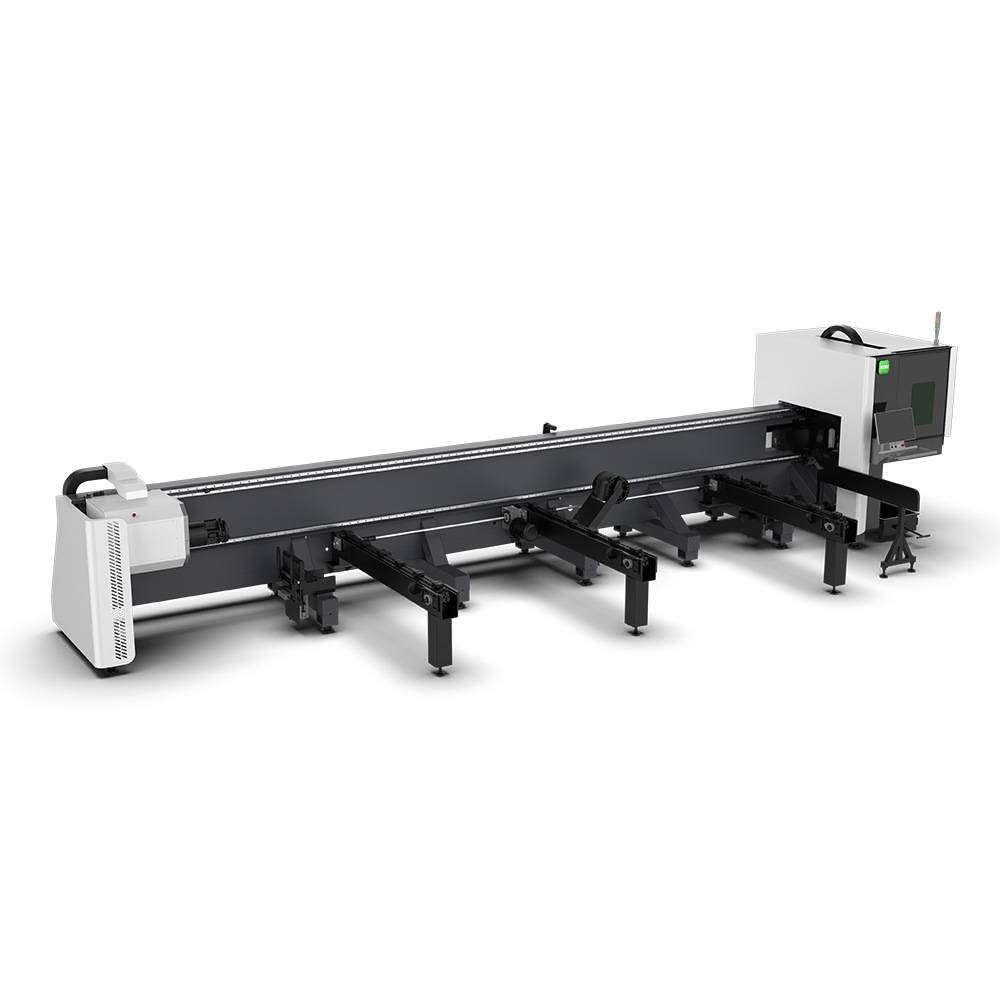
Advanced Fiber Laser Tube Processing Technology
Our CNC Fiber Laser Tube Cutting systems revolutionize metal fabrication by integrating high-precision cutting, punching, and profiling into a single automated workflow. Designed for versatility, this technology handles a wide array of profiles including Round, Square, Rectangular, and Oval tubes, as well as complex L-shaped and U-shaped channels.
- Precision Punching: High-speed hole punching with micron-level accuracy, eliminating the need for mechanical drilling or die-stamping.
- Complex Profiling: Advanced 3D pathing allows for intricate interlocking joints and specialized notch cuts, ideal for structural frames.
- High Material Efficiency: Intelligent nesting software minimizes scrap, reducing raw material costs across large production runs.
- Clean Finish: Delivers oxide-free, burr-free edges that require zero secondary grinding before welding.

Seamlessly processing multiple profiles with consistent precision.
Global Delivery & Logistics



From our high-tech manufacturing facility directly to your global site. PCL WeldCut ensures secure packaging, professional handling, and reliable international logistics to safeguard your equipment throughout the entire journey.