Advancing LNG Fabrication Precision with Fiber Laser Integration
In the current landscape of global energy infrastructure, Liquefied Natural Gas (LNG) projects demand unprecedented levels of structural integrity and dimensional accuracy. The transition from traditional thermal cutting methods to advanced fiber Laser Cutting technology represents a critical shift in industrial engineering strategy. For LNG facilities, where cryogenic temperatures necessitate the use of specialized materials like 9% Nickel steel and high-grade stainless steels, the margin for error in fit-up is virtually non-existent. The implementation of fiber laser systems, enhanced by 3D vision positioning, addresses the fundamental challenges of pipe spooling, manifold fabrication, and structural support production.
The Technical Advantage of 3D Vision Positioning
One of the primary obstacles in large-scale LNG pipe fabrication is the inherent dimensional variance in raw materials. Large diameter pipes often exhibit slight ovality or longitudinal warping that exceeds the tolerances required for automated welding. 3D vision positioning serves as the “eyes” of the fiber laser system, utilizing high-resolution cameras and laser sensors to perform a spatial scan of the workpiece before the first piercing occurs.
This system generates a digital twin of the physical component in real-time. By comparing the actual surface geometry against the CAD/CAM model, the controller applies dynamic offsets to the cutting path. This ensures that the focal point of the laser remains constant relative to the material surface, maintaining a uniform kerf width and bevel angle across the entire circumference of a pipe or the complex contours of a vessel head. In an industrial engineering context, this eliminates the need for manual jigging and reduces the setup time by up to 40%.
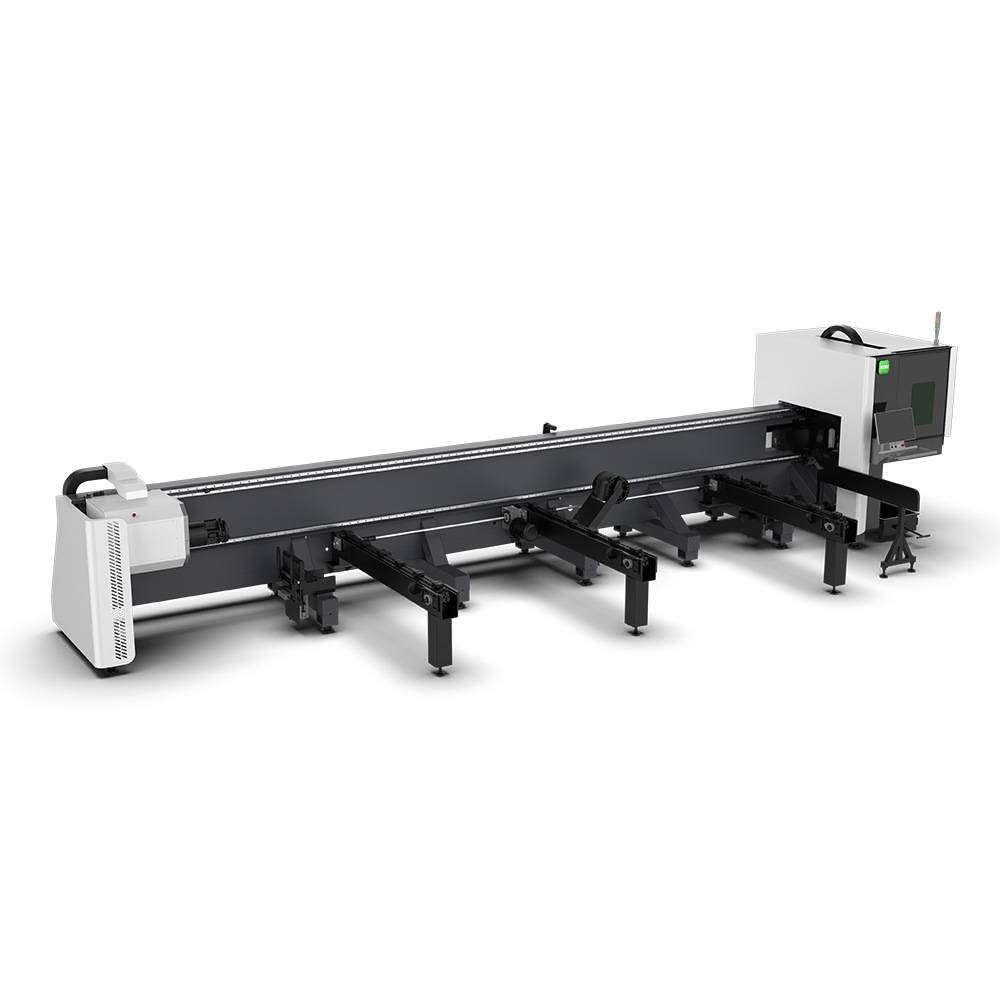
Precision Cutting Without Secondary Grinding
The hallmark of a high-performance fiber laser in LNG applications is the quality of the cut edge. Unlike legacy thermal processes, the fiber laser utilizes a concentrated beam with a high power density, resulting in a narrow Heat Affected Zone (HAZ). For materials like 9% Nickel steel, preserving the metallurgical properties of the edge is vital to ensure impact toughness at -196 degrees Celsius.
Industrial engineers prioritize LNG infrastructure fabrication processes that deliver “weld-ready” finishes. The fiber laser’s ability to produce dross-free, oxide-free cuts on stainless steel means that components can move directly from the cutting bed to the fit-up station. The elimination of manual grinding not only reduces labor costs but also removes a significant source of ergonomic strain and airborne particulate matter from the shop floor. By achieving a surface roughness (Ra) that meets stringent international welding standards, the facility ensures higher pass rates during non-destructive testing (NDT).
Integrated Punching and Marking Workflow
Traceability is a non-negotiable requirement in the energy sector. Every component in an LNG terminal must be documented, from heat number to the specific welder who joined it. Modern fiber laser systems integrate marking and punching capabilities directly into the cutting cycle. Before the cutting head executes the profile, the system can use lower-frequency pulses or specialized marking heads to etch alphanumeric codes, QR codes, or assembly alignment marks directly onto the material.
This “all-in-one” approach prevents the logistical bottlenecks associated with moving heavy parts between separate marking and cutting stations. Furthermore, the 3D vision system ensures that markings are placed with sub-millimeter accuracy relative to the cut edges, facilitating rapid assembly during the spooling phase. From a lean manufacturing perspective, this reduces the Work in Progress (WIP) and streamlines the material flow through the facility.
High-Precision Beveling for Critical Joints
LNG piping systems involve complex intersections, including lateral taps and eccentric reducers. Achieving the correct bevel geometry on these intersections is traditionally a labor-intensive task. Fiber laser machines equipped with five-axis or six-axis heads can execute high-precision beveling (V, X, Y, and K cuts) with continuous adjustment.
When coupled with 3D vision, the machine can compensate for wall thickness variations. As the laser orbits the pipe, the vision system monitors the actual position of the material, adjusting the tilt and rotation of the laser head to maintain a consistent root face and bevel angle. This level of precision is essential for mechanized orbital welding, where a variation of even 0.5mm in the root gap can lead to fusion defects. By providing a perfect fit-up every time, the fiber laser minimizes the requirement for filler metal and reduces the overall heat input into the joint.
Operational Efficiency and Material Utilization
The high-speed capabilities of fiber lasers—often exceeding 20 meters per minute on thinner gauges—significantly outpace mechanical or older thermal methods. However, the true efficiency gain for an industrial engineer lies in nesting and material yield. Advanced software can nest complex 3D profiles onto a single length of pipe or a large plate with minimal skeleton waste. Because the fiber laser has such a small kerf, parts can be placed closer together without the risk of thermal distortion affecting adjacent cuts.
In LNG projects, where material costs for nickel-alloys are substantial, a 5% increase in material utilization can equate to hundreds of thousands of dollars in savings over the life of a project. The stability of the fiber source also ensures high uptime; with no mirrors to align and a solid-state delivery system, the machine maintains its calibration even in high-duty cycle environments.
Conclusion: The Future of Cryogenic Fabrication
The integration of 3D vision and fiber laser technology represents a maturing of the fabrication process for the LNG industry. By focusing on high precision and the total elimination of secondary processing like grinding, industrial facilities can meet the dual demands of aggressive project timelines and stringent safety standards. The ability to punch, mark, and cut complex geometries in a single setup, guided by real-time spatial data, positions the fiber laser as the centerpiece of a modern, data-driven fabrication shop. As LNG projects continue to grow in scale and complexity, the reliance on these automated, high-accuracy systems will be the defining factor in operational competitiveness and structural reliability.
Key Process Metrics for Engineering Review:
1. Dimensional Tolerance: +/- 0.1mm for linear cuts.
2. Bevel Accuracy: +/- 0.5 degrees across complex 3D paths.
3. Surface Finish: No secondary mechanical cleaning required for GTAW/GMAW preparation.
4. Traceability: Integrated laser etching for 100% component identification.
-


LT240S tube laser cutting machine
-
LT120S tube laser cutting machine
-
Sale

Tank Fillet Welding Machine
Original price was: $1,000.00.$900.00Current price is: $900.00. -
Sale

MAK100 tube laser cutting machine
Original price was: $5,500.00.$5,000.00Current price is: $5,000.00. -

portable plasma air cutting machine
$1,200.00 -

2in1 fiber laser cutting machine
-

Air cooling Laser welding machine
-

HF h beam laser cutting machine
-

LT240 laser cutting machine
-

Laser welding machine
-


Cobot Welding Station
-

Gantry welding robot solution
-

Tracked Wheeled AGV Welding robot
-

LFH6020 Fiber laser cutting machine
-
LFP6020
-

robotic welidng machine
Advanced Fiber Laser Tube Processing Technology
Our CNC Fiber Laser Tube Cutting systems revolutionize metal fabrication by integrating high-precision cutting, punching, and profiling into a single automated workflow. Designed for versatility, this technology handles a wide array of profiles including Round, Square, Rectangular, and Oval tubes, as well as complex L-shaped and U-shaped channels.
- Precision Punching: High-speed hole punching with micron-level accuracy, eliminating the need for mechanical drilling or die-stamping.
- Complex Profiling: Advanced 3D pathing allows for intricate interlocking joints and specialized notch cuts, ideal for structural frames.
- High Material Efficiency: Intelligent nesting software minimizes scrap, reducing raw material costs across large production runs.
- Clean Finish: Delivers oxide-free, burr-free edges that require zero secondary grinding before welding.

Seamlessly processing multiple profiles with consistent precision.
Global Delivery & Logistics



From our high-tech manufacturing facility directly to your global site. PCL WeldCut ensures secure packaging, professional handling, and reliable international logistics to safeguard your equipment throughout the entire journey.