Optimizing Construction Machinery Fabrication via 3D Vision Fiber Laser Cutting
The manufacturing of Construction Machinery requires high structural integrity and dimensional precision. Traditional methods often involve disparate stages of layout, mechanical punching, and manual marking, which introduce cumulative tolerances and increase lead times. The adoption of Fiber Laser Cutting systems equipped with 3D Vision positioning has transformed this workflow. By utilizing high-intensity coherent light at a wavelength of approximately 1.06 microns, fiber lasers provide superior absorption rates in carbon steel and high-strength alloys commonly used in excavator frames, crane booms, and chassis components.
Industrial engineering principles dictate that process consolidation is the primary driver of throughput. When a 3D vision system is integrated into the laser head assembly, the machine gains the ability to perceive the physical orientation and topological variations of the workpiece in real-time. This eliminates the manual setup time traditionally required for locating heavy plates and ensures that every cut, punch, and mark is aligned with the digital twin of the component.
Technical Architecture of 3D Vision Positioning
The 3D vision module typically employs structured light or stereoscopic camera sensors to capture high-density point cloud data. In the context of Fiber Laser Cutting, this sensor data is processed by an onboard industrial PC to calculate the precise spatial coordinates of the workpiece. for Construction Machinery, where plates may be slightly warped or positioned with a degree of angular deviation on the shuttle table, the 3D vision system compensates for these variables by adjusting the cutting path’s XY coordinates and the Z-axis standoff distance simultaneously.
This automated alignment is critical for maintaining a constant focal point. Unlike 2D systems that assume a perfectly flat plane, 3D positioning ensures that the laser beam remains perpendicular to the material surface, regardless of local deformations. This results in a consistent kerf width and a perpendicular cut edge, which are vital for the subsequent assembly of large-scale mechanical structures.
The “Three-in-One” Workflow: Punching, Marking, and Cutting
One of the most significant advantages of high-power fiber lasers is the ability to execute multiple fabrication steps in a single program cycle. This consolidated approach maximizes machine uptime and reduces the material handling overhead associated with moving parts between different workstations.
1. High-Precision Laser Punching
Instead of using mechanical drills or turret presses, the fiber laser utilizes high-frequency pulsing to “punch” start holes and bolt apertures. The precision of a fiber laser allows for hole diameters that are equal to or even smaller than the material thickness—a feat difficult to achieve with mechanical means in thick-plate construction. The 3D vision system ensures these holes are located with sub-millimeter accuracy, facilitating perfect alignment for bolted joints in heavy equipment.
2. Dynamic Laser Marking
Traceability is a core requirement in modern industrial engineering. The fiber laser can be tuned to lower power densities to “mark” part numbers, bend lines, and assembly indicators directly onto the steel surface. Because this marking occurs in the same coordinate system as the cutting path, there is zero risk of locational error. This precision marking provides clear instructions for downstream assembly teams, reducing the likelihood of human error during the fabrication of complex hydraulic systems or engine mounts.
3. High-Speed Contour Cutting
The final stage is the high-speed cutting of the external and internal contours. Fiber lasers excel here due to their high beam quality and small spot size. The energy density is sufficient to vaporize the metal instantly, creating a clean, narrow cut. Because the 3D vision system has already accounted for any material shifting or warping, the final part geometry matches the CAD specification within extremely tight tolerances.
Eliminating Post-Process Grinding
In traditional heavy fabrication, the edges of cut parts often require extensive grinding to remove dross, slag, or excessive carbonization. This secondary process is labor-intensive, creates hazardous dust, and increases the total cost per part. Fiber Laser Cutting produces a negligible heat-affected zone (HAZ) and exceptionally smooth edge surfaces. By optimizing the assist gas pressure (typically oxygen for carbon steel or nitrogen for stainless) and the laser’s pulse frequency, the resulting edge is “ready-to-use.”
From an engineering standpoint, the elimination of grinding improves the Process Optimization metrics of the factory floor. The smooth edges provided by the fiber laser ensure that there are no micro-cracks or stress risers along the cut surface, which is essential for construction machinery components that undergo cyclic loading and high-stress operations. Furthermore, the absence of edge taper ensures that the fit-up between parts is tight, reducing the volume of filler material required in later stages of production.
Operational Efficiency and ROI Considerations
The integration of 3D Vision Positioning significantly impacts the Overall Equipment Effectiveness (OEE) of a manufacturing facility. By reducing the “Non-Value Added” time—specifically the time spent on manual measurement, part alignment, and edge cleaning—the fiber laser machine remains in the “Value Added” state for a higher percentage of the shift.
Industrial engineers focusing on cost reduction will find that while the initial capital expenditure for a 3D-vision-enabled fiber laser is higher than standard units, the reduction in labor costs and the increase in material utilization offer a rapid return on investment. The ability to nest parts more tightly due to the laser’s precision, combined with the reduction in scrap caused by alignment errors, leads to significant annual savings in raw material procurement.
Future-Proofing the Fabrication Line
As construction machinery becomes more sophisticated, the demand for lighter, stronger, and more complex components grows. High-strength, low-alloy (HSLA) steels are increasingly common, and these materials are sensitive to the thermal inputs of traditional cutting methods. The localized heating of a fiber laser, controlled by precise 3D vision feedback, ensures that the metallurgical properties of these advanced steels are preserved.
In conclusion, the synergy between 3D vision and fiber laser technology represents the pinnacle of precision for the construction machinery sector. By focusing on a “no-grinding” philosophy and integrating punching, marking, and cutting into a single high-accuracy operation, manufacturers can achieve superior product quality and operational throughput. This technological transition is not merely an upgrade in equipment; it is a fundamental shift toward a more precise, efficient, and data-driven manufacturing environment.
-


LT240S tube laser cutting machine
-
LT120S tube laser cutting machine
-
Sale

Tank Fillet Welding Machine
Original price was: $1,000.00.$900.00Current price is: $900.00. -
Sale

MAK100 tube laser cutting machine
Original price was: $5,500.00.$5,000.00Current price is: $5,000.00. -

portable plasma air cutting machine
$1,200.00 -

2in1 fiber laser cutting machine
-

Air cooling Laser welding machine
-

HF h beam laser cutting machine
-

LT240 laser cutting machine
-

Laser welding machine
-


Cobot Welding Station
-

Gantry welding robot solution
-

Tracked Wheeled AGV Welding robot
-

LFH6020 Fiber laser cutting machine
-
LFP6020
-

robotic welidng machine
Advanced Fiber Laser Tube Processing Technology
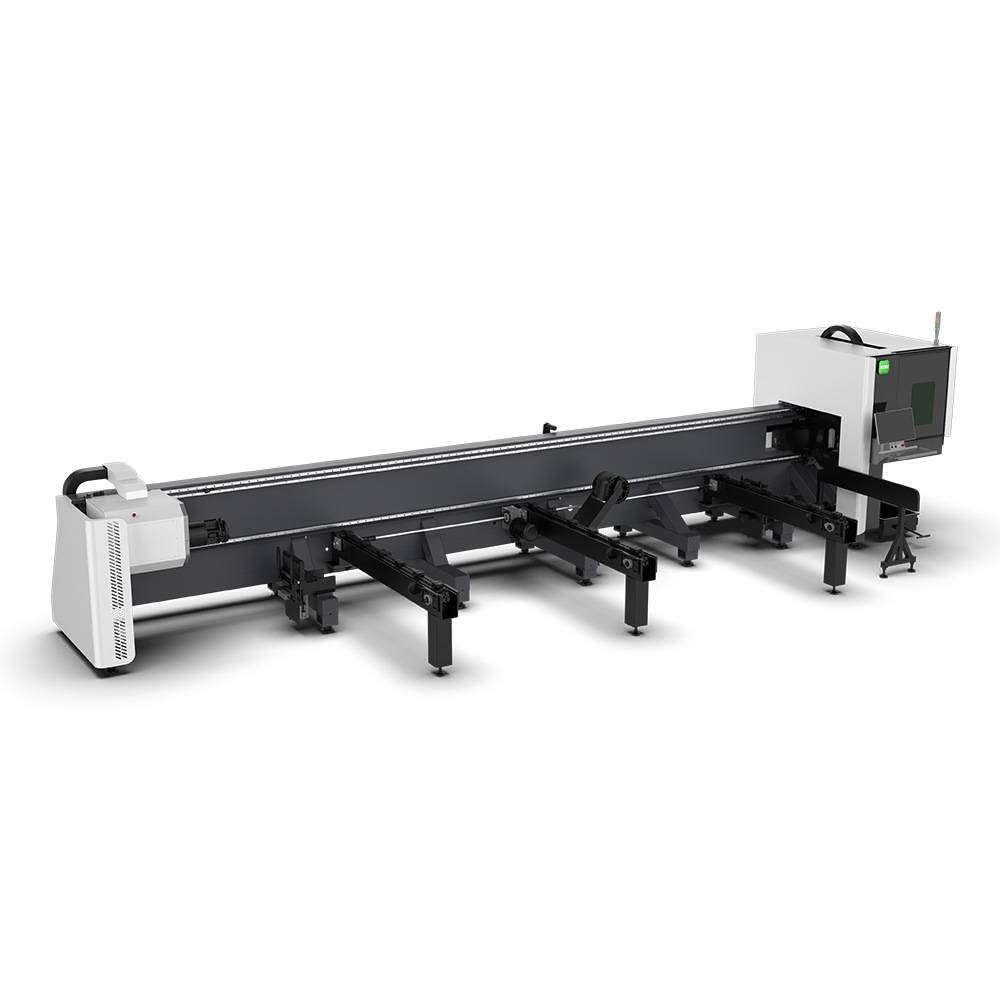
Our CNC Fiber Laser Tube Cutting systems revolutionize metal fabrication by integrating high-precision cutting, punching, and profiling into a single automated workflow. Designed for versatility, this technology handles a wide array of profiles including Round, Square, Rectangular, and Oval tubes, as well as complex L-shaped and U-shaped channels.
- Precision Punching: High-speed hole punching with micron-level accuracy, eliminating the need for mechanical drilling or die-stamping.
- Complex Profiling: Advanced 3D pathing allows for intricate interlocking joints and specialized notch cuts, ideal for structural frames.
- High Material Efficiency: Intelligent nesting software minimizes scrap, reducing raw material costs across large production runs.
- Clean Finish: Delivers oxide-free, burr-free edges that require zero secondary grinding before welding.

Seamlessly processing multiple profiles with consistent precision.
Global Delivery & Logistics



From our high-tech manufacturing facility directly to your global site. PCL WeldCut ensures secure packaging, professional handling, and reliable international logistics to safeguard your equipment throughout the entire journey.