Advancing Bridge Truss Fabrication with Fiber Laser Integration
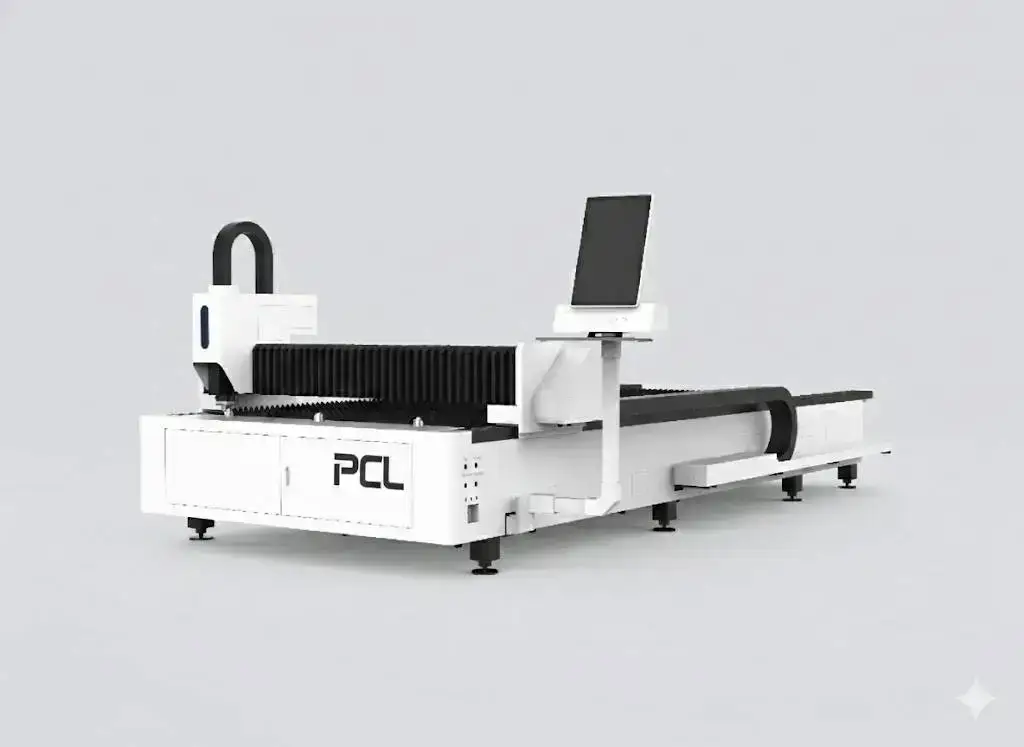
In the domain of structural engineering, the bridge truss represents one of the most demanding applications for material processing. Traditional fabrication methods often struggle with the sheer scale and the tight tolerances required for interlocking nodes and gusset plate connections. The adoption of a specialized Fiber Laser Cutting Machine equipped with 3D vision represents a significant shift toward lean manufacturing in the heavy infrastructure sector. This technology addresses the fundamental challenges of processing I-beams, H-beams, and large-diameter tubular sections used in bridge architecture.
The Mechanics of 3D Vision Positioning in Large-Scale Profiles
Unlike flat-sheet cutting, bridge truss members are rarely perfectly linear. Raw steel sections often possess inherent structural deviations, such as twisting, bowing, or thickness variations resulting from the hot-rolling process. A standard CNC program cannot account for these physical inconsistencies, leading to significant fit-up issues during assembly. 3D Vision positioning systems mitigate this by performing a real-time spatial scan of the workpiece before the cutting head is engaged.
The vision system utilizes high-precision laser line sensors to capture a point cloud of the structural member. This data is fed into the control software, which calculates the difference between the theoretical CAD model and the actual physical profile. The system then adjusts the cutting path in 6-axis space to compensate for the deviation. This ensures that every bolt hole, notch, and bevel is placed with absolute accuracy relative to the actual geometry of the beam, rather than its theoretical center line.
High-Precision Execution and Edge Integrity
The core advantage of fiber laser technology lies in its beam quality. With a wavelength of approximately 1.06 microns, the fiber laser achieves a much smaller focal spot diameter than legacy thermal cutting methods. This results in an incredibly high power density, allowing for a narrow kerf width and a minimal heat-affected zone (HAZ). for Bridge Trusses, where fatigue life and structural integrity are paramount, maintaining the metallurgical properties of the steel near the cut edge is critical.
The precision afforded by this technology reaches levels of plus or minus 0.05mm. In the context of Bridge Trusses, this means that complex intersections and fish-mouth cuts in tubular trusses fit together with zero gap. Such tight tolerances distribute loads more evenly across the structure and reduce the reliance on excessive filler materials during subsequent assembly stages. Furthermore, the high-speed oscillation of the laser beam—often referred to as “wobble” technology—can be used to fine-tune the surface finish of the cut, ensuring it meets stringent ISO 9013 standards for perpendicularity and roughness.
Eliminating Post-Processing: The No-Grinding Mandate
One of the most significant cost drivers in traditional steel fabrication is secondary processing. Conventional thermal cutting often leaves behind dross, slag, and a hardened edge that requires manual grinding or machining before the part is ready for the next stage. A high-wattage fiber laser, when tuned with the correct assist gas (typically Oxygen for carbon steel or Nitrogen for stainless alloys), produces a clean, oxide-free surface.
By achieving a “ready-to-assemble” finish directly from the machine, facilities can remove the grinding station from their workflow entirely. This not only reduces labor costs but also eliminates the environmental and safety hazards associated with metal dust and noise. The absence of mechanical stress during the laser cutting process further ensures that the structural integrity of the truss members remains uncompromised, as there is no physical force applied to the workpiece that could induce cold-working or micro-cracking.
The Unified Workflow: Punch, Mark, and Cut
The versatility of the precision fiber laser allows it to function as a multi-tool center. In a single setup, the machine can execute three distinct operations that previously required separate equipment:
- Punching Simulation: While lasers do not physically punch, they “laser-drill” bolt holes with higher circularity and positional accuracy than traditional mechanical punches or drills, avoiding the deformation associated with high-pressure contact.
- Marking and Etching: The system can switch to a low-power setting to etch assembly instructions, part numbers, and weld alignment lines directly onto the steel surface. This high-contrast marking is permanent and invaluable for streamlining the assembly of complex truss networks.
- Final Cutting: The high-power beam executes complex 3D geometries, including beveling for weld preparation, without the need to rotate the part manually or recalibrate the machine.
Optimizing Material Utilization and Throughput
Industrial engineers focus heavily on the “Time-Per-Part” metric. The integration of 3D vision and fiber laser technology drastically reduces the floor-to-floor time for truss members. Traditional layout methods involve manual templating and chalk-lining, which are prone to human error. The automated vision system performs these tasks in seconds, ensuring that the machine is cutting for the maximum percentage of its duty cycle.
Furthermore, the nesting software associated with these 3D systems allows for more efficient use of raw materials. Because the laser can cut intricate shapes in close proximity without the risk of mechanical vibration shifting the part, manufacturers can minimize the “skeleton” or scrap material between cuts. In large-scale bridge projects where high-grade structural steel is a major cost component, a 5% to 10% improvement in material utilization can translate to hundreds of thousands of dollars in savings.
Technical Considerations for 6-Axis Motion Control
Processing the diagonal members and chords of a bridge truss requires more than just a flatbed. It requires a 6-axis head capable of reaching around the profile of the beam. The motion control system must synchronize the rotation of the workpiece (via high-torque chucks) with the lateral and vertical movement of the laser head. The 3D vision system acts as the “eyes” of this motion controller, providing the feedback loop necessary to ensure the beam remains perpendicular to the surface at all times, which is essential for maintaining consistent edge quality and bevel angles.
Future-Proofing Bridge Fabrication
The shift toward automated, vision-guided fiber laser cutting is not merely a trend but a necessity for modern infrastructure demands. As bridge designs become more complex—incorporating organic curves and non-standard geometric nodes—the limitations of manual fabrication become more apparent. By digitizing the fabrication process, bridge builders create a “digital twin” of their workflow, where the physical output is a perfect mirror of the engineering design.
In conclusion, the implementation of 3D vision-guided fiber laser systems provides a comprehensive solution for bridge truss manufacturing. By combining high-precision cutting with real-time geometric compensation, manufacturers can eliminate secondary processes, reduce labor dependence, and ensure the highest levels of structural safety. The ability to punch, mark, and cut in a single, high-speed operation positions this technology as the cornerstone of the modern structural steel facility.
-


Cantilever Welding Robot solution
-


GF laser cutting machine
-

P3015 plasma cutting machine
-

LFP3015 Fiber Laser Cutter
-

pipe plasma cutting machine
-
LFH 4020 Fiber Laser Cutting Machine
-
LFP4020
-

gantry plasma air cutting machine
-

3D robot cutting machine
-

8 axis plasma cutting machine
-

5 axis plasma cutting machine
-

LT360 tube laser cutting machine
-

robot welding workstation
-

SF6060 fiber laser cutting machine
Advanced Fiber Laser Tube Processing Technology
Our CNC Fiber Laser Tube Cutting systems revolutionize metal fabrication by integrating high-precision cutting, punching, and profiling into a single automated workflow. Designed for versatility, this technology handles a wide array of profiles including Round, Square, Rectangular, and Oval tubes, as well as complex L-shaped and U-shaped channels.
- Precision Punching: High-speed hole punching with micron-level accuracy, eliminating the need for mechanical drilling or die-stamping.
- Complex Profiling: Advanced 3D pathing allows for intricate interlocking joints and specialized notch cuts, ideal for structural frames.
- High Material Efficiency: Intelligent nesting software minimizes scrap, reducing raw material costs across large production runs.
- Clean Finish: Delivers oxide-free, burr-free edges that require zero secondary grinding before welding.

Seamlessly processing multiple profiles with consistent precision.
Global Delivery & Logistics



From our high-tech manufacturing facility directly to your global site. PCL WeldCut ensures secure packaging, professional handling, and reliable international logistics to safeguard your equipment throughout the entire journey.