Field Evaluation: Implementation of High-Power Industrial Laser Welder in California Precision Fabrication
1.0 Introduction and Site Conditions
This report summarizes the field performance and metallurgical outcomes of integrating a 2kW water-cooled Industrial Laser Welder at a precision manufacturing facility in San Jose, California. The primary objective was to transition a significant portion of the facility’s 304 and 316L Stainless Steel welding operations from traditional Gas Tungsten Arc Welding (GTAW) to advanced Laser Technology.
Operating in California presents specific environmental and regulatory challenges. High ambient temperatures in the Central Valley and South Bay regions during summer months necessitate robust thermal management. Furthermore, strict OSHA and California-specific safety standards regarding Class 4 laser environments required a localized rethink of shop floor architecture. This report details the technical synergy between the hardware and the material science involved in high-speed stainless fabrication.
2.0 The Synergy of Laser Technology and the Modern Industrial Laser Welder
To understand the performance gains, one must distinguish between the raw Laser Technology—the generation of a coherent, monochromatic beam via ytterbium-doped fiber—and the Industrial Laser Welder as a holistic system. The “welder” is not merely the source; it is the integration of the power supply, the water-cooling chiller, the wire-feed sub-systems, and the wobble-head optics.
2.1 Beam Dynamics and Energy Density
The core advantage of the Industrial Laser Welder used in this field study lies in its power density. Traditional arc welding relies on a plasma stream that disperses heat across a relatively wide area. In contrast, Laser Technology allows us to focus 2000 watts of energy into a spot size of approximately 150μm. This creates a “keyhole” welding effect, where the energy density is sufficient to vaporize a small column of metal, which is then surrounded by molten material.
In the California workshop environment, where throughput is dictated by high labor costs, the ability to achieve deep penetration with minimal heat input is a critical economic driver. We observed that the Industrial Laser Welder could maintain a stable keyhole at travel speeds five times faster than manual GTAW, while simultaneously reducing the total heat input by nearly 70%.
3.0 Technical Analysis: Stainless Steel Welding Applications
Stainless Steel welding is notoriously sensitive to heat. Excessive heat input leads to warping, loss of corrosion resistance (sensitization), and prolonged post-weld cleanup. Our field testing focused on 1.5mm to 4.0mm 304-grade stainless sheets used in food-processing equipment.
3.1 Mitigating Chromium Carbide Precipitation
The primary technical hurdle in Stainless Steel welding is preventing the precipitation of chromium carbides at the grain boundaries. When the material stays in the 425°C to 870°C range for too long, chromium is depleted, leaving the steel vulnerable to intergranular corrosion.
By leveraging the rapid cooling cycles inherent in Laser Technology, we effectively bypassed this “danger zone.” The concentrated beam of the Industrial Laser Welder ensures that the Heat Affected Zone (HAZ) remains microscopic. Our cross-sectional lab analysis of the 304L samples showed a HAZ width of less than 0.2mm, compared to the 1.5mm to 2.0mm typical of TIG processes. This preservation of the base metal’s chemistry is vital for California’s high-spec medical and semiconductor industries.
3.2 The Role of Shielding Gas in Laser-Based Stainless Runs
While the laser provides the heat, the gas delivery ensures the metallurgy. During the field run, we utilized a 100% High-Purity Argon shield. Because the Industrial Laser Welder operates at such high speeds, the trailing gas shield becomes as important as the primary nozzle flow. We implemented a custom trailing shoe to ensure the weld bead remained under an inert atmosphere until the temperature dropped below the oxidation threshold. This resulted in a “silver” finish straight off the line, eliminating the need for pickling or intensive polishing—a major win for reducing chemical waste in compliance with CA environmental mandates.
4.0 Water-Cooling Architecture in the California Climate
The decision to use a water-cooled Industrial Laser Welder over an air-cooled variant was driven by the specific thermal load of high-duty cycle production in California. Air-cooled units often struggle when ambient shop temperatures exceed 95°F (35°C), leading to diode degradation or thermal shutdown.
4.1 Chiller Maintenance and Dew Point Management
The integrated dual-circuit chiller in our Industrial Laser Welder cools both the fiber source and the delivery head. A lesson learned during the July heatwave was the importance of dew point monitoring. If the cooling water is set too low relative to the shop’s humidity, condensation can form on the protective windows of the laser head. This condensation will instantly flash-vaporize when the laser fires, destroying the optics. We adjusted our SOPs to ensure the chiller temperature was set no more than 5°C below ambient temperature, or we utilized the shop’s HVAC to dehumidify the laser enclosure area.
5.0 Practical Field Observations: Lessons Learned
Implementing Laser Technology is not a “plug-and-play” replacement for traditional methods. It requires a shift in upstream fabrication processes.
5.1 Fit-up Tolerances: The Non-Negotiable Requirement
The most significant challenge encountered was the requirement for precision fit-up. In traditional Stainless Steel welding, a welder can use a filler rod to bridge a gap of 1mm or 2mm. With an Industrial Laser Welder, a 1mm gap is a canyon. Because the beam spot is so small, if the parts do not have an intimate fit (less than 10% of material thickness), the beam will simply pass through the gap. We had to recalibrate our CNC laser cutters and press brakes to ensure a “zero-gap” fit-up. If your upstream fabrication is sloppy, your laser welding will fail.
5.2 Beam Wobble Parameters
To mitigate the fit-up sensitivity, we utilized the “wobble” function of the Industrial Laser Welder. This involves oscillating the beam in a circular or “figure-8” pattern at high frequencies (up to 300Hz). This effectively widens the weld pool without significantly increasing total heat input. For the 316L stainless housings, a 1.2mm circular wobble at 150Hz provided the best balance between gap bridging and structural integrity. It allowed us to handle slight variations in part geometry that are common in large-scale California fab shops.
6.0 Safety and Compliance (Class 4 Environment)
Deploying Laser Technology in California requires strict adherence to ANSI Z136.1. Unlike a TIG station where a simple curtain suffices, the Industrial Laser Welder requires a fully light-tight enclosure with interlocked doors. We encountered an issue where reflections off the brushed surface of the stainless steel created potential hazards for overhead crane operators. We resolved this by installing a roofed laser booth with OD7+ rated viewing windows. Engineers must budget for these safety enclosures, as they are as critical to the “system” as the laser itself.
7.0 Conclusion and Recommendations
The field application of the water-cooled Industrial Laser Welder in San Jose demonstrates that the technology is mature enough for 24/7 production environments, provided the infrastructure supports it. The synergy between the high-efficiency Laser Technology and the metallurgical requirements of Stainless Steel welding offers a clear path toward localized, high-value manufacturing in the USA.
Final Engineering Takeaways:
- Upstream Quality: Investment in the Industrial Laser Welder must be matched by investment in precision cutting and bending. The weld is only as good as the fit-up.
- Thermal Management: In California’s climate, water-cooled units are mandatory for duty cycles exceeding 40%. Monitor dew points to protect expensive optics.
- Metallurgical Integrity: Laser welding is the superior choice for stainless grades where corrosion resistance is paramount, due to the ultra-low HAZ.
- Operator Skill-Shift: The role moves from manual dexterity to process parameter management. Training should focus on “wobble” settings, focal depth, and gas flow dynamics rather than just “puddle control.”
By strictly following these technical protocols, the facility has seen a 400% increase in throughput on the stainless steel tank line, with a near-zero rejection rate for warping or burn-through.
-


LT240S tube laser cutting machine
-
LT120S tube laser cutting machine
-
Sale

Tank Fillet Welding Machine
Original price was: $1,000.00.$900.00Current price is: $900.00. -
Sale

MAK100 tube laser cutting machine
Original price was: $5,500.00.$5,000.00Current price is: $5,000.00. -

portable plasma air cutting machine
$1,200.00 -

2in1 fiber laser cutting machine
-

Air cooling Laser welding machine
-

HF h beam laser cutting machine
-

LT240 laser cutting machine
-

Laser welding machine
-


Cobot Welding Station
-

Gantry welding robot solution
-

Tracked Wheeled AGV Welding robot
-

LFH6020 Fiber laser cutting machine
-
LFP6020
-

robotic welidng machine
Advanced Fiber Laser Tube Processing Technology
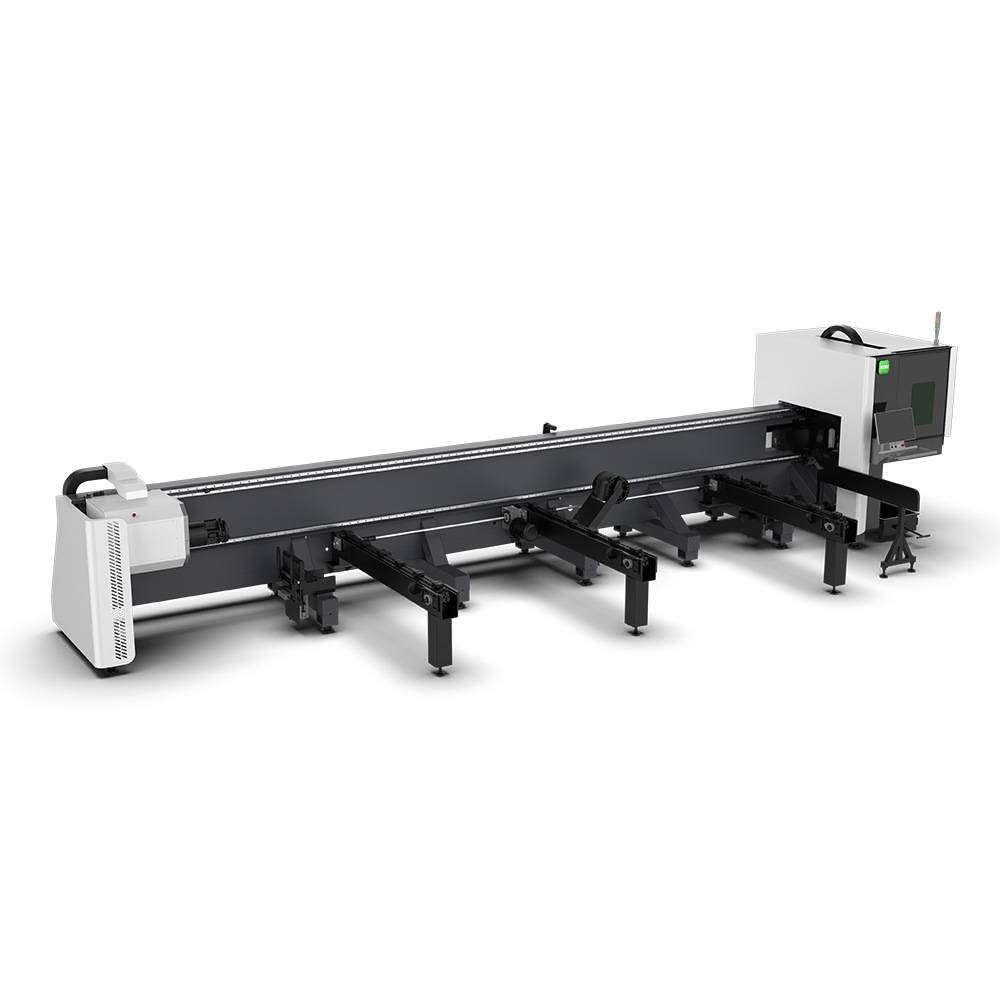
Our CNC Fiber Laser Tube Cutting systems revolutionize metal fabrication by integrating high-precision cutting, punching, and profiling into a single automated workflow. Designed for versatility, this technology handles a wide array of profiles including Round, Square, Rectangular, and Oval tubes, as well as complex L-shaped and U-shaped channels.
- Precision Punching: High-speed hole punching with micron-level accuracy, eliminating the need for mechanical drilling or die-stamping.
- Complex Profiling: Advanced 3D pathing allows for intricate interlocking joints and specialized notch cuts, ideal for structural frames.
- High Material Efficiency: Intelligent nesting software minimizes scrap, reducing raw material costs across large production runs.
- Clean Finish: Delivers oxide-free, burr-free edges that require zero secondary grinding before welding.

Seamlessly processing multiple profiles with consistent precision.
Global Delivery & Logistics



From our high-tech manufacturing facility directly to your global site. PCL WeldCut ensures secure packaging, professional handling, and reliable international logistics to safeguard your equipment throughout the entire journey.