Field Engineering Report: Implementation of Water-Cooled 6-Axis Collaborative Welder Systems
Location: Tier-1 Automotive Component Facility, Oragadam, Chennai, India
This report outlines the technical deployment and operational assessment of a water-cooled 6-Axis Collaborative Welder integrated into a high-volume production line. The objective was to transition from manual MIG/MAG processes to a semi-automated framework to address consistency issues in heavy-gauge Carbon Steel welding. In the specific climate of Chennai, where ambient workshop temperatures frequently exceed 40°C with humidity levels surpassing 85%, the hardware selection was dictated as much by thermal management as by kinematic precision.
1. Technical Integration of the 6-Axis Collaborative Welder
The core of the installation is a 10kg payload 6-Axis Collaborative Welder. Unlike traditional industrial robots that require extensive safety interlocks and light curtains, the collaborative nature of this system allows it to operate alongside human technicians in the relatively cramped quarters of the Oragadam facility. However, the technical challenge lies in the “6-axis” requirement. For the complex geometries of automotive sub-frames, a 3 or 4-axis system lacks the necessary torch orientation to maintain a consistent push-angle in tight fillets.
Kinematic Flexibility and Tool Center Point (TCP) Calibration
The 6-axis configuration provides the rotational freedom required to navigate circular weld paths on Carbon Steel tubes without requiring a rotary positioner. During the field setup, we found that the software’s ability to “lead-through” program the points was essential. We observed that manual welders in the Chennai plant could be retrained as “Cobot Operators” within three days. The synergy here is clear: the 6-Axis Collaborative Welder handles the repetitive, high-heat pathing, while the operator manages part fit-up and final visual inspection.
Water-Cooling: A Non-Negotiable Requirement
In Chennai’s industrial belt, air-cooled torches frequently fail when pushed to a 60% or higher duty cycle. For Automated Welding of Carbon Steel, where we are running continuous beads of 300mm to 500mm, the heat soak into the contact tip is immense. We implemented a closed-loop water-cooling unit integrated directly into the cobot’s umbilical. This lowered our consumable replacement rate by 40% compared to the air-cooled prototypes. Without water-cooling, the thermal expansion in the neck of the torch caused TCP drift, leading to off-center welds on critical joints.
2. Advancing Productivity through Automated Welding
The transition to Automated Welding in this facility was driven by the need to eliminate “Monday Morning Syndrome”—the variance in weld quality observed at the start of the work week. By leveraging the 6-Axis Collaborative Welder, we achieved a level of path repeatability that manual intervention cannot match.
Synergy Between Human and Machine
The real-world application in Chennai showed that Automated Welding is not about replacing the welder but about augmenting the “Arc-on Time.” In a standard 8-hour shift, a manual welder on Carbon Steel components typically manages an arc-on time of 25-30%. With the collaborative system, we pushed this to 70%. The operator loads the jig, hits the start button, and while the cobot executes the weld, the operator preps the next jig. This “shadow-tasking” is where the ROI for the facility was realized.
Power Quality and Grid Stability
A lesson learned during the second week of deployment involved Chennai’s power grid. Voltage sags in the Oragadam industrial area were causing the cobot’s controller to trip. Automated Welding requires a stable power input not just for the robot’s motors, but for the inverter power source to maintain a stable short-circuit transfer. We had to install a dedicated servo-stabilizer to prevent arc-outs and “cold starts” in the Carbon Steel welding process. Once the power was conditioned, the synergy between the motion controller and the power source was flawless.
3. Metallurgical Focus: Carbon Steel Welding Performance
Carbon Steel welding, specifically on IS 2062 or equivalent automotive grades, requires precise heat input control to minimize the Heat Affected Zone (HAZ) and prevent distortion. The 6-Axis Collaborative Welder excels here because it maintains a constant travel speed, something a human operator struggles with over long shifts.
Managing Spatter and Wire Feed Consistency
We utilized a 1.2mm solid ER70S-6 wire. In the humid Chennai atmosphere, wire oxidation is a rapid threat. We had to move to drum-fed wire with protective “hats” to ensure the Automated Welding process wasn’t interrupted by bird-nesting in the wire feeder. The 6-axis arm’s ability to maintain a consistent “contact-tip-to-work distance” (CTWD) significantly reduced spatter. This reduced post-weld cleaning time—a major bottleneck in the previous manual workflow.
WPS Validation and Penetration
For Carbon Steel welding, we optimized the Welding Procedure Specification (WPS) for a spray-transfer mode. The water-cooled torch allowed us to run at 280 Amps without overheating the cobot’s wrist sensors. Cross-sectional macro-etch tests performed at the onsite lab confirmed consistent throat thickness and root penetration. The 6-axis movement allowed us to perform “weaving” patterns in vertical-up positions that were more uniform than any manual attempt, ensuring structural integrity in the automotive frames.
4. Lessons Learned and Field Observations
The deployment in Chennai provided several “hard-truth” lessons that aren’t found in the technical manuals. Engineering in the tropics requires a different mindset than in temperate climates.
Environmental Protection of Electronics
The cobot’s controller cabinet, despite being IP-rated, struggled with the fine metallic dust prevalent in Chennai workshops. We had to implement positive-pressure cooling for the control rack. This prevents the conductive dust from settling on the PCBs, which is a common cause of failure in Automated Welding units in the region.
Software Over-Complexity
Initially, we tried to program complex logic for every possible part variation. We learned that for Carbon Steel welding, simplicity is better. We moved to a “Master Program” with simple offsets. This allowed the local Chennai engineers to troubleshoot the 6-Axis Collaborative Welder without needing to call the OEM. Empowering the local team to tweak the Automated Welding parameters was the turning point for the project’s success.
The “Humidity Factor” in Shielding Gas
We encountered porosity issues early in the morning. Investigation revealed that the gas lines were collecting condensation overnight. We implemented a gas-purge cycle into the cobot’s start-up routine. For Carbon Steel welding, especially in high-humidity zones like Chennai, ensuring the Ar/CO2 mix is bone-dry is critical for passing X-ray inspection.
5. Conclusion and Future Outlook
The implementation of the water-cooled 6-Axis Collaborative Welder at the Oragadam site has set a new benchmark for the facility. By focusing on the synergy between precise 6-axis motion and the robust requirements of Automated Welding, we have stabilized the production of Carbon Steel components. The key was not just the robotics, but the peripheral support—water cooling, power conditioning, and environmental protection. For senior engineers looking to replicate this in other Indian industrial hubs, the lesson is clear: respect the environment, over-spec your cooling, and simplify the interface for the local workforce. The machine provides the precision, but the engineering environment determines the uptime.
Report Filed By:
Senior Welding Engineer
Project Lead – Chennai Automation Initiative
-


LT240S tube laser cutting machine
-
LT120S tube laser cutting machine
-
Sale

Tank Fillet Welding Machine
Original price was: $1,000.00.$900.00Current price is: $900.00. -
Sale

MAK100 tube laser cutting machine
Original price was: $5,500.00.$5,000.00Current price is: $5,000.00. -

portable plasma air cutting machine
$1,200.00 -

2in1 fiber laser cutting machine
-

Air cooling Laser welding machine
-

HF h beam laser cutting machine
-

LT240 laser cutting machine
-

Laser welding machine
-


Cobot Welding Station
-

Gantry welding robot solution
-

Tracked Wheeled AGV Welding robot
-

LFH6020 Fiber laser cutting machine
-
LFP6020
-

robotic welidng machine
Advanced Fiber Laser Tube Processing Technology
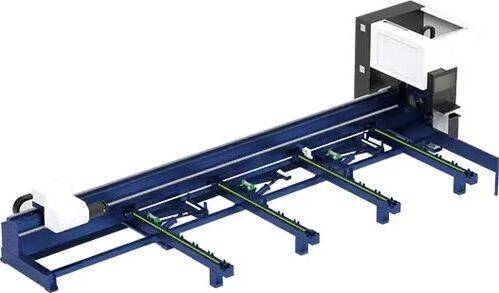
Our CNC Fiber Laser Tube Cutting systems revolutionize metal fabrication by integrating high-precision cutting, punching, and profiling into a single automated workflow. Designed for versatility, this technology handles a wide array of profiles including Round, Square, Rectangular, and Oval tubes, as well as complex L-shaped and U-shaped channels.
- Precision Punching: High-speed hole punching with micron-level accuracy, eliminating the need for mechanical drilling or die-stamping.
- Complex Profiling: Advanced 3D pathing allows for intricate interlocking joints and specialized notch cuts, ideal for structural frames.
- High Material Efficiency: Intelligent nesting software minimizes scrap, reducing raw material costs across large production runs.
- Clean Finish: Delivers oxide-free, burr-free edges that require zero secondary grinding before welding.

Seamlessly processing multiple profiles with consistent precision.
Global Delivery & Logistics



From our high-tech manufacturing facility directly to your global site. PCL WeldCut ensures secure packaging, professional handling, and reliable international logistics to safeguard your equipment throughout the entire journey.