Field Engineering Report: Implementation of Single Pulse MIG/MAG Welding Robot in Bursa Industrial Zone
This report details the technical deployment and process optimization of automated Arc Welding Solutions within a Tier-1 automotive component manufacturing facility in Bursa, Turkey. The primary objective was the transition from manual stations to a fully integrated MIG/MAG Welding Robot system to handle high-volume Sheet Metal Fabrication welding. Bursa’s industrial landscape demands rigorous adherence to IATF 16949 standards, necessitating a level of repeatability that manual processes could no longer sustain under current throughput requirements.
Site Context and Process Requirements
The facility specializes in 1.5mm to 3.0mm DC01 cold-rolled steel assemblies. Historically, manual MAG welding resulted in inconsistent penetration and excessive post-weld rework due to spatter. In the context of Sheet Metal Fabrication welding, heat input management is critical. Excessive thermal energy leads to oil-canning and dimensional inaccuracy in the final chassis components. By introducing a 6-axis MIG/MAG Welding Robot equipped with a high-speed digital power source, we aimed to localize the heat-affected zone (HAZ) and standardize the bead geometry.
Synergy: The MIG/MAG Welding Robot and Integrated Arc Welding Solutions
The success of this installation relied on the synergy between the robotic manipulator and the peripheral Arc Welding Solutions. A robot is merely a positioning device; the “solution” encompasses the power source communication protocol, the torch geometry, and the wire-feed consistency. In Bursa, we utilized a Profinet interface to ensure millisecond-level synchronization between the robot’s TCP (Tool Center Point) speed and the power source’s pulsing frequency.
Single Pulse Waveform Dynamics
The core of this deployment was the optimization of the single pulse waveform. Unlike standard globular or spray transfer, the single pulse mode allows for “one drop per pulse” metal transfer. This is essential for Sheet Metal Fabrication welding because it provides the penetration profile of spray transfer but at a much lower average current. We calibrated the peak current to ensure oxide layer breakthrough while maintaining a base current low enough to allow the weld pool to solidify slightly between pulses, preventing burn-through on thin-gauge joints.
Technical Challenges in Sheet Metal Fabrication Welding
The Bursa site presented unique challenges regarding part fit-up. In Sheet Metal Fabrication welding, gaps are inevitable due to stamping tolerances. A rigid automated program often fails when encountering a 0.5mm gap variation. To address this, our Arc Welding Solutions included the implementation of “Seam Tracking” and “Touch Sensing” logic within the robot’s routine.
Addressing Thermal Distortion
During the first week of implementation, we observed significant longitudinal shrinkage on the 1200mm side-rail components. Lessons learned from previous Bursa projects suggested that the “back-step” welding technique, while effective manually, is slow for a MIG/MAG Welding Robot. Instead, we programmed a staggered welding sequence, jumping between different zones of the part to distribute thermal loads evenly. This decreased the reject rate from distortion by 22%.
Shielding Gas and Consumable Selection
The local supply chain in Bursa provided an 82% Argon / 18% CO2 gas mixture. While standard, we found that for high-speed Sheet Metal Fabrication welding, a move to 92/8 Argon/CO2 blend offered a more stable arc column during the pulse phase. The reduced CO2 content decreased the “stiffness” of the arc, allowing for better wetting at the toes of the weld, which is crucial for fatigue resistance in automotive brackets.
Optimizing the Robotic Cell Layout
The MIG/MAG Welding Robot was mounted on a localized pedestal to maximize the reach envelope across a twin-station positioner. This setup allows the operator to load one station while the robot welds on the other—a fundamental component of modern Arc Welding Solutions. We specifically focused on the “Torch Lead” angle. In manual welding, an operator compensates intuitively; for the robot, we fixed a 15-degree push angle to ensure consistent gas coverage and reduce the risk of porosity at high travel speeds (reaching 80 cm/min).
Lessons Learned: Field Observations from the Bursa Workshop
1. Wire Feed Constancy and Conduit Management
One of the most frequent points of failure in robotic Arc Welding Solutions isn’t the software, but the mechanical delivery of the wire. We encountered intermittent arc instability which was traced back to the conduit length. In the Bursa facility, the bulk wire drums were placed too far from the robot base. The friction in the liners caused the wire to “chatter,” disrupting the pulse frequency. Lesson: Use high-quality Teflon-lined conduits for aluminum or chrome-silicon liners for steel, and keep the delivery path as straight as possible to maintain the integrity of the MIG/MAG Welding Robot‘s arc starts.
2. Tip-to-Work Distance (CTWD)
In Sheet Metal Fabrication welding, even a 2mm change in CTWD can drastically alter the current density in a pulsed arc. We found that the robot’s accuracy was being undermined by slight variations in the contact tip’s wear. We implemented a mandatory tip-change protocol every 200 meters of weld and integrated an automated torch cleaning station (reamer) every 10 cycles. This ensures the “Stick-out” remains constant, which is vital for the stability of the single pulse waveform.
3. Grounding and Interference
Bursa’s heavy industrial power grid can introduce electrical noise. We learned that the MIG/MAG Welding Robot controller and the welding power source must share a common, dedicated earth ground. Initial “communication errors” on the fieldbus were resolved once we isolated the welding return cables from the robot’s logic grounding. This is a critical “hidden” aspect of successful Arc Welding Solutions.
Impact on Cycle Time and Quality
Prior to the robotic transition, the cycle time per assembly was 14 minutes with a 12% defect rate (mostly spatter and distortion). Following the optimization of the MIG/MAG Welding Robot parameters, cycle time dropped to 4.5 minutes, and the defect rate plummeted to less than 1.5%. The single pulse mode eliminated the need for anti-spatter chemicals, which significantly reduced the cost per part and improved the workplace environment in the Bursa shop.
Concluding Technical Summary
The deployment of the MIG/MAG Welding Robot in Bursa reinforces the necessity of a holistic approach to Arc Welding Solutions. It is not enough to simply automate the movement; one must master the fluid dynamics of the weld pool through pulse-shaping and rigorous mechanical maintenance. For Sheet Metal Fabrication welding, the margin for error is thin. The single pulse process, when correctly synchronized with robotic precision, offers the best balance of travel speed, aesthetic bead quality, and structural integrity. Moving forward, the site will look into “Double Pulse” variants for aesthetic aluminum welding, building upon the foundational success of this single pulse implementation.
The key takeaway for the engineering team: Trust the data from the power source but verify the results on the macro-etch. No amount of software simulation can replace the iterative “teach-pendant” adjustments made on the shop floor to account for real-world material variability.
-


LT240S tube laser cutting machine
-
LT120S tube laser cutting machine
-
Sale

Tank Fillet Welding Machine
Original price was: $1,000.00.$900.00Current price is: $900.00. -
Sale

MAK100 tube laser cutting machine
Original price was: $5,500.00.$5,000.00Current price is: $5,000.00. -

portable plasma air cutting machine
$1,200.00 -

2in1 fiber laser cutting machine
-

Air cooling Laser welding machine
-

HF h beam laser cutting machine
-

LT240 laser cutting machine
-

Laser welding machine
-


Cobot Welding Station
-

Gantry welding robot solution
-

Tracked Wheeled AGV Welding robot
-

LFH6020 Fiber laser cutting machine
-
LFP6020
-

robotic welidng machine
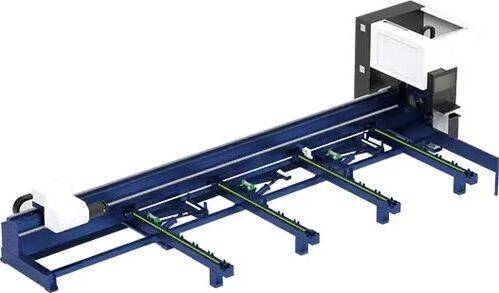
Advanced Fiber Laser Tube Processing Technology
Our CNC Fiber Laser Tube Cutting systems revolutionize metal fabrication by integrating high-precision cutting, punching, and profiling into a single automated workflow. Designed for versatility, this technology handles a wide array of profiles including Round, Square, Rectangular, and Oval tubes, as well as complex L-shaped and U-shaped channels.
- Precision Punching: High-speed hole punching with micron-level accuracy, eliminating the need for mechanical drilling or die-stamping.
- Complex Profiling: Advanced 3D pathing allows for intricate interlocking joints and specialized notch cuts, ideal for structural frames.
- High Material Efficiency: Intelligent nesting software minimizes scrap, reducing raw material costs across large production runs.
- Clean Finish: Delivers oxide-free, burr-free edges that require zero secondary grinding before welding.

Seamlessly processing multiple profiles with consistent precision.
Global Delivery & Logistics



From our high-tech manufacturing facility directly to your global site. PCL WeldCut ensures secure packaging, professional handling, and reliable international logistics to safeguard your equipment throughout the entire journey.