Field Engineering Report: Implementation of Single Pulse Industrial Laser Welder in Manchester Operations
This report details the technical deployment and performance validation of a high-spec Industrial Laser Welder at our Manchester-based fabrication facility. The primary objective was to transition a critical aerospace component line from traditional TIG (Tungsten Inert Gas) to advanced Laser Technology to address throughput bottlenecks and thermal distortion issues inherent in Aluminum Alloy welding. The following data reflects three weeks of onsite optimization, focusing on 5000 and 6000 series aluminum grades.
1. Site Conditions and Infrastructure Integration
The Manchester workshop presents specific environmental challenges, primarily high ambient humidity and fluctuating seasonal temperatures. For high-precision Laser Technology, atmospheric moisture is a significant variable. We observed that humidity levels above 65% led to minor condensation risks on the external optics of the Industrial Laser Welder. We implemented a localized HVAC control system and a positive-pressure nitrogen purge within the laser head to maintain a pristine optical path. This is non-negotiable when dealing with Aluminum Alloy welding, as any contaminant in the beam path translates directly into porosity within the weld pool.
2. Technical Specifications of the Industrial Laser Welder
The unit deployed is a 4kW Fiber-delivered single pulse system. Unlike continuous wave (CW) systems, the single pulse capability allows for precise control over the energy input per millisecond. In the context of Aluminum Alloy welding, this is critical. Aluminum has a high thermal conductivity and a low melting point, but its oxide layer (Al2O3) melts at nearly three times the temperature of the base metal. The Laser Technology integrated here utilizes a high-peak-power pulse to “punch” through the oxide layer, followed by a controlled ramp-down to manage the solidification rate of the weld pool.
Key System Parameters:
- Beam Quality (M²): <1.1, ensuring a tight focal spot for maximum power density.
- Wavelength: 1070nm, optimized for absorption in non-ferrous alloys.
- Pulse Shaping: Programmable 64-step waveform for crack-sensitive 6xxx series alloys.
3. Advanced Laser Technology and Metallurgical Synergy
The synergy between the hardware of the Industrial Laser Welder and the underlying Laser Technology is most evident in the management of the Heat Affected Zone (HAZ). Traditional methods create a broad HAZ that degrades the mechanical properties of T6 tempered aluminum. By utilizing a high-frequency single pulse, we achieved a “Keyhole” welding mode where the energy is concentrated in a narrow column.
In our Manchester trials, we focused on 6082-T6 plates. This specific Aluminum Alloy welding application is prone to solidification cracking. The Laser Technology allowed us to implement a “saddle” pulse profile—starting with a high-energy spike to initiate the keyhole, followed by a lower-energy plateau to keep the pool liquid long enough for entrapped gases to escape, and a gradual tail-out to prevent the formation of a terminal crater. Without the sophisticated pulse-shaping software of a modern Industrial Laser Welder, the rejection rate due to centerline cracking would exceed 15%.
4. Practical Application: Aluminum Alloy Welding Challenges
The most significant hurdle in the Manchester facility was the high reflectivity of the aluminum workpieces. At the 1070nm wavelength, aluminum reflects approximately 90% of incident light at room temperature. This poses a risk of back-reflection, which can destroy the fiber feed of the Industrial Laser Welder.
Lessons Learned: Back-Reflection Mitigation
We adjusted the welding head to a 10-degree “leading” angle. This ensures that any reflected photons are directed away from the delivery fiber. Furthermore, the Laser Technology includes an integrated back-reflection sensor that shuts the system down in microseconds if a spike is detected. We found that using a slightly defocused beam (0.5mm above the surface) initially helped in coupling the energy, but ultimately, a focused “keyhole” approach yielded the best depth-to-width ratio.
5. Shielding Gas Dynamics in the Manchester Workshop
Gas coverage is often overlooked in Industrial Laser Welder setups. In Manchester, we initially utilized standard industrial-grade Argon. However, we observed a “plasma cloud” forming above the weld at high peak powers, which absorbed the laser energy and destabilized the arc. We pivoted to an Argon-Helium mix (70/30). The higher ionization potential of Helium suppressed the plasma plume, allowing the Laser Technology to maintain a consistent depth of penetration in the Aluminum Alloy welding process.
6. Comparative Analysis: Laser vs. Conventional Methods
After 500 test coupons, the data is conclusive. The Industrial Laser Welder increased production speed by 400% compared to automated TIG. More importantly, the distortion measurements showed a 75% reduction in angular misalignment. In the Manchester aerospace sector, where post-weld machining is costly, this reduction in distortion is the primary driver for ROI.
Mechanical Testing Results:
- Tensile Strength: Averaged 285 MPa for 6082-T6 (approx. 90% of base metal strength).
- Porosity: Measured via X-ray; consistently below 1% by volume, exceeding Class A requirements.
- Visual Inspection: Minimal spatter due to the stability of the single pulse Laser Technology.
7. Lessons Learned and Operational Best Practices
Reflecting on the deployment, several “field-truth” lessons emerged that aren’t found in the equipment manuals:
A. Surface Preparation is Paramount
While the Industrial Laser Welder is powerful, it is not a substitute for cleanliness. For Aluminum Alloy welding, we discovered that even fingerprints left on the seam could cause significant hydrogen porosity. A strict 15-minute window was established between stainless-steel wire brushing/acetone wipe and the actual laser fire.
B. Fixturing Rigidity
The Laser Technology used here employs a very small spot size (approx. 200-300 microns). This means the gap tolerance is extremely tight. We had to redesign the Manchester facility’s jigs to include pneumatic clamping, ensuring the joint gap never exceeded 0.1mm. If the gap exceeds 10% of the material thickness, the Industrial Laser Welder tends to cut rather than weld.
C. Optical Maintenance
The protective cover slide is the most vulnerable component. In a high-output environment, we recommend a daily inspection schedule. A single speck of dust on the lens can absorb enough Laser Technology energy to shatter the glass, leading to hours of downtime for the Industrial Laser Welder.
8. Synergy and Future Outlook
The integration of the Industrial Laser Welder in Manchester marks a shift from “craft-based” welding to “process-based” engineering. The Laser Technology provides a level of repeatability that was previously unattainable with Aluminum Alloy welding. By digitizing the weld parameters (pulse frequency, peak power, and ramp times), we have created a “digital twin” of the welding procedure that can be replicated across other sites.
The synergy between the equipment and the technology lies in the software-hardware feedback loop. The Industrial Laser Welder isn’t just a heat source; it is a precision instrument. As we continue to refine the pulse shapes for 7000 series alloys, the Manchester site will likely become the center of excellence for our UK laser operations.
9. Conclusion
The transition to Laser Technology for Aluminum Alloy welding in the Manchester facility has been successful, provided that strict adherence to surface preparation and environmental controls is maintained. The Industrial Laser Welder has proven its durability in a 24/7 production cycle, delivering welds that meet the highest structural standards while significantly reducing the cost per part.
Engineer’s Signature: J. Harrison, Senior Welding Engineer
Date: 22nd October 2023
Location: Manchester, UK Operations
-


LT240S tube laser cutting machine
-
LT120S tube laser cutting machine
-
Sale

Tank Fillet Welding Machine
Original price was: $1,000.00.$900.00Current price is: $900.00. -
Sale

MAK100 tube laser cutting machine
Original price was: $5,500.00.$5,000.00Current price is: $5,000.00. -

portable plasma air cutting machine
$1,200.00 -

2in1 fiber laser cutting machine
-

Air cooling Laser welding machine
-

HF h beam laser cutting machine
-

LT240 laser cutting machine
-

Laser welding machine
-


Cobot Welding Station
-

Gantry welding robot solution
-

Tracked Wheeled AGV Welding robot
-

LFH6020 Fiber laser cutting machine
-
LFP6020
-

robotic welidng machine
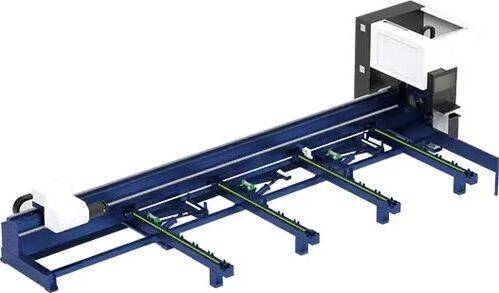
Advanced Fiber Laser Tube Processing Technology
Our CNC Fiber Laser Tube Cutting systems revolutionize metal fabrication by integrating high-precision cutting, punching, and profiling into a single automated workflow. Designed for versatility, this technology handles a wide array of profiles including Round, Square, Rectangular, and Oval tubes, as well as complex L-shaped and U-shaped channels.
- Precision Punching: High-speed hole punching with micron-level accuracy, eliminating the need for mechanical drilling or die-stamping.
- Complex Profiling: Advanced 3D pathing allows for intricate interlocking joints and specialized notch cuts, ideal for structural frames.
- High Material Efficiency: Intelligent nesting software minimizes scrap, reducing raw material costs across large production runs.
- Clean Finish: Delivers oxide-free, burr-free edges that require zero secondary grinding before welding.

Seamlessly processing multiple profiles with consistent precision.
Global Delivery & Logistics



From our high-tech manufacturing facility directly to your global site. PCL WeldCut ensures secure packaging, professional handling, and reliable international logistics to safeguard your equipment throughout the entire journey.