Field Engineering Report: Industrial Automation Deployment – Madrid Site
1. Project Overview and Site Conditions
This report documents the final commissioning and optimization phase of the robotic welding cell located at a Tier-2 automotive and structural supplier facility in Getafe, Madrid. The primary objective was the transition from manual stations to a fully integrated MIG/MAG Welding Robot system to handle high-volume production of structural frames. The core challenge presented at this site involves Galvanized Pipe welding, a process notoriously difficult due to the low boiling point of zinc relative to the melting point of the carbon steel substrate.
The Madrid facility operates under specific environmental constraints, including high ambient temperatures during summer months which affect the duty cycle of power sources. Our approach was not merely to install hardware but to engineer comprehensive Arc Welding Solutions that harmonize software-driven pulse profiles with mechanical precision. The following technical breakdown outlines the synergy between the hardware, the metallurgical challenges of zinc coatings, and the localized implementation of these systems.
2. Technical Specifications: The MIG/MAG Welding Robot Integration
The core of the cell is a 6-axis industrial MIG/MAG Welding Robot equipped with a hollow-wrist design for internal routing of the torch cable assembly. This configuration is critical in Madrid’s high-throughput environments to minimize “cable whip” and reduce mechanical wear during high-speed air moves between pipe joints.
2.1. Motion Control and Path Calibration
Accuracy in Galvanized Pipe welding is heavily dependent on the Robot’s ability to maintain a consistent Tool Center Point (TCP). We utilized an automated TCP calibration station that resets the torch geometry after every 50 cycles or following a wire-stick event. Because zinc vapors frequently contaminate the gas nozzle, the robot’s integrated “reamer” or torch cleaning station was programmed for an aggressive duty cycle. In Madrid, we observed that standard cleaning intervals were insufficient; we increased the nozzle spray frequency to every 15 minutes to prevent spatter buildup from disrupting the laminar flow of shielding gas.
2.2. Synchronized External Axis
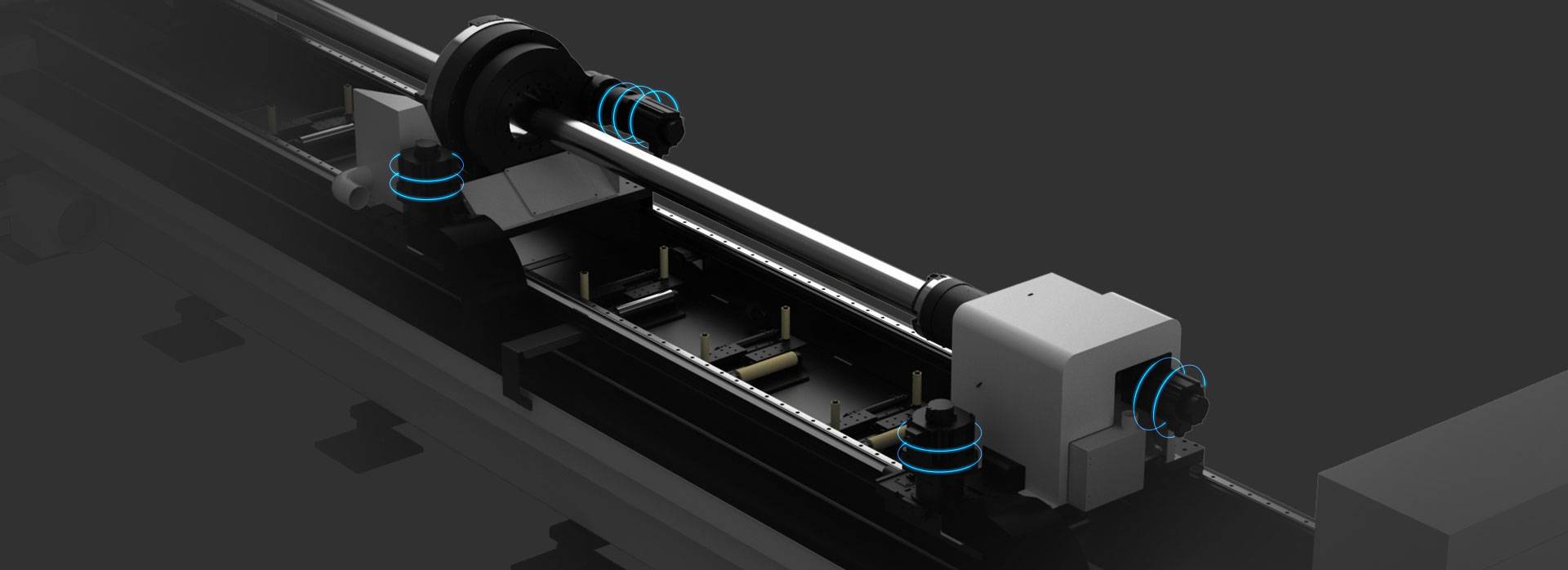
To handle the circular geometry of the pipes, the MIG/MAG Welding Robot was synchronized with a horizontal positioner (Headstock/Tailstock). This allow for “Flat Position” (1G) welding throughout the entire circumference of the joint. Maintaining the weld pool in the 12 o’clock position is vital when dealing with galvanized materials to allow the escaping zinc gas to vent upward through the arc plasma rather than being trapped under the molten puddle.
3. Implementing Advanced Arc Welding Solutions
A robot without a sophisticated power source is merely a positioning arm. For the Madrid site, the “Solution” aspect of our Arc Welding Solutions focused on a modified pulse-on-pulse wave profile. Zinc boils at approximately 906°C, while steel melts at roughly 1,500°C. This 600-degree gap creates high-pressure gas that leads to explosive spatter and internal porosity.
3.1. Waveform Manipulation
We implemented a “Zinc-Specific” waveform that incorporates a short-circuit phase followed by a high-energy pulse. This momentarily increases the arc force to blast the zinc coating away from the leading edge of the weld pool before the filler metal bridges the gap. By utilizing these specialized Arc Welding Solutions, we reduced post-weld rework by 40% compared to the manual MIG processes previously used in the shop.
3.2. Gas Chemistry and Shielding Strategy
The choice of shielding gas in the Madrid workshop was moved from a standard 80/20 Argon/CO2 mix to a 92/8 blend. The reduction in CO2 minimizes the overall heat input, which is counter-intuitive but necessary to prevent excessive zinc vaporization. However, we compensated for the loss of penetration by increasing the peak amperage on the MIG/MAG Welding Robot‘s power source. This delicate balance is the hallmark of professional Arc Welding Solutions: prioritizing the evacuation of vapors without sacrificing the structural integrity of the pipe joint.
4. Challenges in Galvanized Pipe Welding
Galvanized Pipe welding remains one of the most volatile processes in robotic automation. The Madrid project highlighted three specific technical hurdles: Intermittent Arc Instability, Porosity in the 2-to-4 o’clock position, and Fume Extraction Management.
4.1. Managing Zinc-Oxide Accumulation
During the fusion process, zinc reacts with oxygen to form zinc oxide (ZnO). This white powder is electrically insulative. If the MIG/MAG Welding Robot passes through a zone with heavy ZnO accumulation, the voltage sensing (SmartTac) can fail, leading to “wire stubbing.” Our solution involved a pre-welding mechanical abrasion step on the robot’s path, or alternatively, the use of a specialized “galvanized-grade” filler wire containing silicon and aluminum deoxidizers.
4.2. Porosity Mitigation in Circular Joins
When the robot maneuvers around the pipe, centrifugal forces and gravity act on the weld pool. We found that in Galvanized Pipe welding, the trailing edge of the pool often solidifies faster than the zinc gas can escape. To solve this, we programmed the MIG/MAG Welding Robot with a slight “weaving” motion (2.5mm amplitude, 3Hz frequency). This agitation of the molten puddle keeps it fluid for an extra 150 milliseconds—just enough time for the trapped gas to vent.
5. The Madrid Workshop Synergy: Practical Application
The synergy between the MIG/MAG Welding Robot and the broader Arc Welding Solutions is best demonstrated in the facility’s production floor layout. Madrid’s local industrial regulations regarding air quality required the integration of a high-vacuum fume extraction system directly mounted to the robot’s torch.
5.1. Thermal Management and Ambient Conditions
The Madrid heat presents a challenge for the cooling of the robotic torch. We upgraded the cell to a water-cooled system. In this specific Arc Welding Solutions package, we monitored the coolant temperature in real-time. If the coolant exceeded 45°C, the robot was programmed to slow its travel speed and increase its dwell time to prevent the contact tip from expanding and causing “wire drag,” which is a common cause of downtime in high-heat Spanish summer months.
5.2. Local Operator Training and Language Integration
Part of the “Solution” was translating the HMI (Human Machine Interface) of the MIG/MAG Welding Robot into Spanish while maintaining technical English terminology for error codes. This ensured that the local Madrid engineering team could troubleshoot path offsets without waiting for remote support. The lesson learned here was that technical success is 50% metallurgy and 50% user interface accessibility.
6. Lessons Learned and Final Recommendations
The deployment in Madrid provided several key takeaways for future Galvanized Pipe welding projects using robotic systems:
- Wire Stick-Out (ESO): For galvanized materials, a longer Electrode Stick-Out (20mm+) helps pre-heat the wire and provides a more stable arc, though it requires the MIG/MAG Welding Robot to have a highly accurate Touch-Sense routine to compensate for wire deflection.
- Travel Speed Limits: There is a “temptation of speed” with robots. However, for Galvanized Pipe welding, exceeding 45 cm/min often results in centerline cracking. We capped the production speed to 38 cm/min to ensure 100% X-ray quality.
- Maintenance of Extraction: The zinc dust in the Madrid facility is finer than expected. Fume extraction filters required cleaning twice as often as anticipated. Failure to do so led to a localized “cloud” that interfered with the robot’s laser-based seam tracking sensors.
7. Conclusion
The integration of the MIG/MAG Welding Robot at the Madrid site has successfully moved the facility from a 65% first-pass yield to a 94% yield. By treating Galvanized Pipe welding as a variable-intensive process rather than a standard “point-and-shoot” application, and by wrapping the hardware in comprehensive Arc Welding Solutions, we have established a new benchmark for the client. The synergy of motion control and waveform manipulation has effectively neutralized the inherent difficulties of welding zinc-coated substrates. Final handover to the Madrid local maintenance team is complete; the system is now rated for 24/7 operation.
-


Cantilever Welding Robot solution
-


GF laser cutting machine
-

P3015 plasma cutting machine
-

LFP3015 Fiber Laser Cutter
-

pipe plasma cutting machine
-
LFH 4020 Fiber Laser Cutting Machine
-
LFP4020
-

gantry plasma air cutting machine
-

3D robot cutting machine
-

8 axis plasma cutting machine
-

5 axis plasma cutting machine
-

LT360 tube laser cutting machine
-

robot welding workstation
-

SF6060 fiber laser cutting machine
