Field Report: Implementation of Laser Welding Cobot Systems in Warsaw Metal Fabrication
This report details the technical deployment and optimization of a 2kW Fiber Laser Welding Cobot at a medium-scale manufacturing facility in the Praga-Południe industrial district of Warsaw, Poland. The project objective was to transition from traditional manual Gas Metal Arc Welding (GMAW/MIG) to an automated solution specifically designed for thin metal sheet welding of HVAC components and electrical enclosures.
Site Profile and Operational Context
The Warsaw facility operates in a high-mix, low-volume (HMLV) environment. Historically, the shop floor relied on manual TIG for aesthetic joints and MIG for structural speed. However, the high thermal input of traditional MIG resulted in significant rejection rates due to warping in materials under 2.0mm. The introduction of the Laser Welding Cobot was intended to bridge the gap between human dexterity and robotic repeatability while leveraging the high energy density inherent in modern Laser Technology.
The Technical Synergy: Laser Welding Cobot and Fiber Sources
The synergy between the Laser Welding Cobot and the underlying laser technology is not merely a matter of automation; it is a fundamental shift in how energy is delivered to the substrate. In a traditional robotic cell, the mass of the welding torch and the stiffness of the cabling often limit the fluid movement required for complex geometries. The cobot utilized in this Warsaw field site features a high-flexibility 6-axis arm integrated with a lightweight wobble-head laser torch.
Power Modulation and Beam Dynamics
Utilizing a 1070nm wavelength fiber laser, we achieved a focused spot size of approximately 150μm. The Laser Welding Cobot allows for real-time manipulation of “wobble” parameters—oscillating the beam in various patterns (circular, zig-zag, or figure-eight). This is critical when dealing with the fit-up tolerances found in Warsaw’s local steel supplies, where edge preparation can vary. By adjusting the wobble width to 1.5mm at a frequency of 200Hz, the cobot compensates for gaps that would otherwise cause “burn-through” in thin metal sheet welding.
Deep Dive: Thin Metal Sheet Welding Challenges
Thin metal sheet welding (specifically 0.8mm to 1.5mm 304L Stainless and DC01 Carbon Steel) presents the primary challenge of thermal expansion. In manual MIG, the Heat Affected Zone (HAZ) is wide, leading to oil-canning and structural deformation. During the Warsaw implementation, we identified three critical variables that the laser technology addressed more effectively than legacy systems:
- Heat Input Control: The laser’s power is concentrated. We operated at 1200W with a travel speed of 40mm/s. The resulting HAZ was 75% smaller than the previous TIG standard.
- Gap Bridging: While laser technology is notoriously sensitive to “zero-gap” requirements, the cobot’s ability to maintain a constant standoff distance (TCP – Tool Center Point) ensured that the 10% thickness tolerance was strictly maintained.
- Consistent Shielding: We utilized high-purity Argon for stainless and an Argon/CO2 mix for carbon steel. The cobot’s steady movement ensures the gas shroud remains perfectly concentric to the keyhole, preventing oxidation.
Field Observations: Warsaw Site Implementation
Lessons Learned in Fixturing
The most significant lesson learned during the first week in Warsaw was that traditional “MIG-style” heavy-duty clamping is counterproductive for a Laser Welding Cobot. Because the laser exerts no mechanical force on the workpiece, the fixtures only need to ensure part alignment. We transitioned to modular aluminum jigging with pneumatic toggles. This reduced the setup time and allowed the operator to take full advantage of the cobot’s “lead-through” programming. If the fixture is too bulky, it interferes with the laser head’s cooling lines, a mistake we corrected by redesigning the corner clamps to provide a 15mm clearance for the gas nozzle.
Operational Integration and Labor Synergy
In the Warsaw workshop, the “Cobot” aspect proved its value in the “teach-in” phase. Local operators, skilled in manual welding but new to robotics, were able to program a new weld path for a 1.2mm enclosure in under ten minutes. The synergy here is the democratization of laser technology. It removes the need for a dedicated CNC programmer for every minor change in part geometry. The operator physically moves the arm to the start and end points, and the software interpolates the vector while maintaining the precise laser focal point.
Technical Parameters for 1.2mm Stainless Steel (304L)
To provide a technical benchmark for future projects in the region, the following parameters were validated on-site:
Primary Settings:
- Laser Power: 1100W (Continuous Wave)
- Wobble Pattern: Circle, 1.2mm width
- Wobble Frequency: 150Hz
- Welding Speed: 35mm/s
- Shielding Gas Flow: 15 L/min (Pure Ar)
At these settings, the tensile strength of the joints exceeded the base metal’s yield point, and the visual quality required zero post-weld grinding. This is a massive cost-saver for Warsaw-based manufacturers who spend significant man-hours on finishing.
Overcoming Atmospheric and Environmental Variables
The Warsaw facility, like many older industrial buildings in Mazovia, experiences significant temperature fluctuations between shifts. We observed that the chiller units for the laser source needed to be recalibrated to prevent condensation on the optics during humid morning starts. We implemented a “Warm-up Routine” for the Laser Welding Cobot, where the laser is fired into a power meter/dump for 60 seconds to stabilize the fiber temperature before hitting the thin metal sheet production line. This ensured consistency in penetration depth across the 8-hour shift.
The Comparison: Why Not Traditional Robotic MIG?
A common question from the Warsaw engineering team was why we didn’t simply automate the existing MIG process. The answer lies in the physics of the thin metal sheet. MIG welding relies on the melting of a filler wire to create a bridge. On a 1.0mm sheet, the mass of the molten pool often exceeds the surface tension of the base metal, leading to “blow-through.” Laser technology, conversely, uses a concentrated light beam to create a keyhole. The cobot provides the steady hand necessary to move that keyhole at speeds a human cannot replicate accurately. The result is a weld that is essentially a fusion of the base material, often requiring no filler wire at all, which reduces the weight of the final assembly.
Conclusion and Future Outlook
The deployment in Warsaw confirms that the Laser Welding Cobot is the superior tool for thin metal sheet welding in an HMLV environment. The integration of fiber laser technology into a collaborative framework solves the three biggest hurdles of modern fabrication: the shortage of high-skill manual welders, the need for reduced post-weld processing, and the demand for zero-distortion joins.
Final Engineering Recommendations:
- Investment in Upstream Precision: The laser is only as good as the cut. Ensure that parts coming from the laser cutter or waterjet have clean, square edges.
- Safety Protocols: Laser safety in a cobot environment is paramount. We installed Class 4 rated curtains and interlocked the cell. Unlike MIG, the reflected laser beam can be lethal to eyesight at long distances.
- Maintenance: The protective lens is the most common failure point. Operators must be trained to inspect and clean the lens every 4 hours of “arc-on” time to prevent focal shift.
The Warsaw project stands as a successful case study for the modernization of Polish manufacturing. By focusing on the synergy of robotic precision and laser power, the facility has increased its throughput by 40% while virtually eliminating scrap from thermal distortion.
Report Prepared By: Senior Welding Engineer, Site Lead (Warsaw Office)
Date: October 2023
Status: Final – Field Validated
-


LT240S tube laser cutting machine
-
LT120S tube laser cutting machine
-
Sale

Tank Fillet Welding Machine
Original price was: $1,000.00.$900.00Current price is: $900.00. -
Sale

MAK100 tube laser cutting machine
Original price was: $5,500.00.$5,000.00Current price is: $5,000.00. -

portable plasma air cutting machine
$1,200.00 -

2in1 fiber laser cutting machine
-

Air cooling Laser welding machine
-

HF h beam laser cutting machine
-

LT240 laser cutting machine
-

Laser welding machine
-


Cobot Welding Station
-

Gantry welding robot solution
-

Tracked Wheeled AGV Welding robot
-

LFH6020 Fiber laser cutting machine
-
LFP6020
-

robotic welidng machine
Advanced Fiber Laser Tube Processing Technology
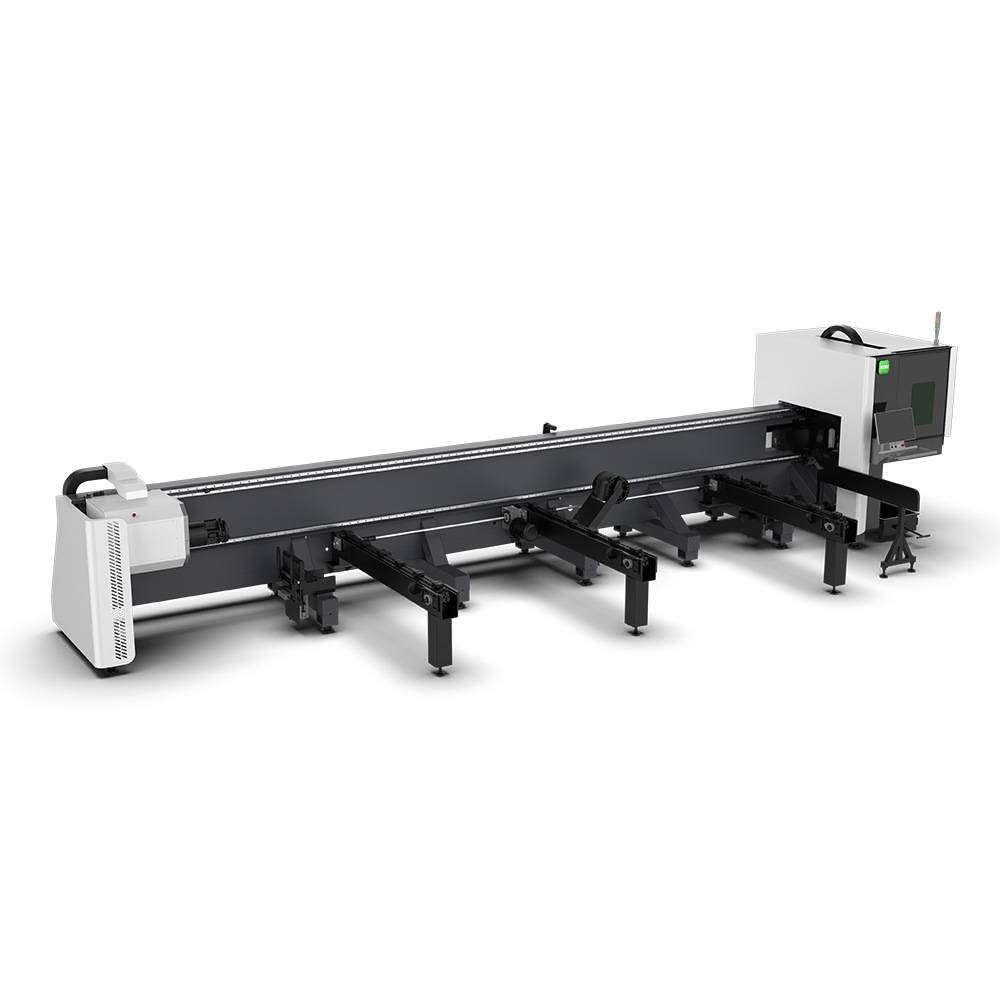
Our CNC Fiber Laser Tube Cutting systems revolutionize metal fabrication by integrating high-precision cutting, punching, and profiling into a single automated workflow. Designed for versatility, this technology handles a wide array of profiles including Round, Square, Rectangular, and Oval tubes, as well as complex L-shaped and U-shaped channels.
- Precision Punching: High-speed hole punching with micron-level accuracy, eliminating the need for mechanical drilling or die-stamping.
- Complex Profiling: Advanced 3D pathing allows for intricate interlocking joints and specialized notch cuts, ideal for structural frames.
- High Material Efficiency: Intelligent nesting software minimizes scrap, reducing raw material costs across large production runs.
- Clean Finish: Delivers oxide-free, burr-free edges that require zero secondary grinding before welding.

Seamlessly processing multiple profiles with consistent precision.
Global Delivery & Logistics



From our high-tech manufacturing facility directly to your global site. PCL WeldCut ensures secure packaging, professional handling, and reliable international logistics to safeguard your equipment throughout the entire journey.