Field Evaluation Report: Precision CMT Industrial Laser Welder Integration
1.0 Introduction and Site Context
This report summarizes the technical field assessment of the Precision CMT 2kW Industrial Laser Welder, conducted at a heavy-gauge fabrication facility in the Greater Toronto Area, Ontario. As the industry in Ontario shifts toward higher-throughput manufacturing to compete with global markets, the transition from traditional Gas Tungsten Arc Welding (GTAW) to advanced Laser Technology has become a strategic necessity rather than a luxury. Our primary objective was to evaluate the unit’s performance on 304 and 316L stainless steel welding applications, specifically focusing on weld integrity, thermal distortion, and the reduction of post-weld processing.
In the Ontario context, specifically within the food-grade and pharmaceutical equipment sectors, the aesthetic and structural requirements for stainless steel are exceptionally high. Traditional methods often result in excessive heat input, leading to warping that requires labor-intensive straightening. The implementation of an Industrial Laser Welder aims to mitigate these variables through precise energy delivery.
2.0 The Synergy of Industrial Laser Welder Hardware and Laser Technology
The core of the Precision CMT system lies in the seamless integration of high-density Laser Technology with a ruggedized industrial chassis. Unlike the laboratory-grade lasers of the past decade, a modern Industrial Laser Welder is built for the “Ontario shop floor”—a variable environment where ambient temperatures can swing from -20°C in the winter to 35°C with high humidity in the summer.
2.1 Beam Delivery and Fiber Optics
The CMT unit utilizes a fiber-delivered laser source. The synergy here is found in the beam’s ability to maintain a consistent spot size over a long focal length. In our field tests, the Laser Technology allowed for a 150-micron spot size, which provides a power density that traditional arc welding simply cannot match. For the Ontario fabricator, this means the Industrial Laser Welder can penetrate 5mm stainless steel with a fraction of the total heat input compared to a 300-amp TIG torch.
2.2 Wobble Functionality
One of the most critical “lessons learned” during this field evaluation was the importance of the “wobble” parameters. Precision CMT incorporates an oscillating beam head. This Laser Technology allows the operator to bridge gaps that were previously impossible for laser systems. In real-world stainless steel welding, fit-up is rarely perfect. By adjusting the wobble frequency (Hz) and width (mm), we were able to achieve high-quality fillets even when the joint gap exceeded 0.5mm, a common occurrence in large-scale Ontario tank fabrications.

3.0 Technical Analysis: Stainless Steel Welding Applications
Stainless steel welding presents unique metallurgical challenges, primarily regarding its low thermal conductivity and high thermal expansion coefficient. These properties make it prone to “oil-canning” and warping.
3.1 Heat Affected Zone (HAZ) Reduction
During our assessment, we cross-sectioned several samples of 3mm 304 stainless steel. The Industrial Laser Welder produced a HAZ that was approximately 75% smaller than the GTAW control group. This is a direct result of the concentrated Laser Technology, which moves the heat source so rapidly that the surrounding base metal does not have time to reach critical temperatures. This is vital for maintaining the corrosion resistance of the stainless steel, as it minimizes chromium carbide precipitation at the grain boundaries.
3.2 Shielding Gas Dynamics in Ontario Facilities
A significant finding in our field report concerns gas coverage. While many shops in Ontario use standard Argon for TIG, the Industrial Laser Welder requires a more nuanced approach to shielding. We found that at higher travel speeds (above 40mm/s), the gas trailing shield becomes mandatory. Because the laser creates a small, deep keyhole, the cooling rate is incredibly fast. Without precise gas delivery, we observed superficial oxidation (straw or blue tinting) which is unacceptable in food-grade stainless steel welding.
4.0 Operational Challenges and Lessons Learned
Deploying an Industrial Laser Welder in an active Ontario plant revealed several practical hurdles that are often omitted from manufacturer brochures.
4.1 Power Quality and Chiller Requirements
Ontario’s industrial power grid is generally stable, but the Precision CMT unit is sensitive to voltage fluctuations during peak summer hours when AC loads are high. We learned that a dedicated voltage regulator is a mandatory investment. Furthermore, the chiller unit—a critical component of Laser Technology—must be oversized if the shop is located in a high-humidity zone like Windsor or the Niagara region. We experienced one instance of condensation on the protective lens due to the chiller being set too low relative to the dew point of the shop air.
4.2 Safety and CWB Standards
A major “lesson learned” involves compliance. The Canadian Welding Bureau (CWB) and Ontario Ministry of Labour have strict guidelines regarding Class 4 laser safety. You cannot simply drop an Industrial Laser Welder into an open bay. We had to design and install light-tight enclosures with interlocked doors. The cost of this safety infrastructure must be factored into the initial ROI calculations for any Ontario facility.
5.0 Comparative Performance Metrics
To provide a clear picture of the technology’s impact, we tracked the following metrics during a week-long production run of stainless steel electrical enclosures.
5.1 Travel Speed and Throughput
- GTAW (TIG): Average travel speed of 120mm/minute on 2mm stainless.
- Industrial Laser Welder: Average travel speed of 850mm/minute on the same gauge.
The throughput increase is nearly 7x. However, this assumes the operator is proficient. We found that the learning curve for Laser Technology is shorter than TIG, but it requires a different kind of “hand-eye” coordination, focusing more on steady travel speed than filler rod manipulation.
5.2 Post-Weld Cleanup
In stainless steel welding, the cost of the weld is often eclipsed by the cost of the finish. The CMT laser produced “Grade A” finishes that required only a light pass with a Scotch-Brite pad. In contrast, the TIG welds required grinding, flap discs, and pickling paste to remove heat tint. We estimated a 60% reduction in post-weld labor costs.
6.0 Metallurgical Integrity and Joint Design
Laser Technology demands a shift in how we design joints. Traditional “V” grooves used in heavy stainless steel welding are often counter-productive for an Industrial Laser Welder. During our site visit, we transitioned the engineering team from 60-degree bevels to square butt joints for materials up to 6mm. The deep penetration capabilities of the laser allow for full-thickness fusion without the need for extensive edge preparation, saving both time and filler wire.
6.1 Porosity and Cleaning Protocols
One technical “lesson learned” was the sensitivity of the laser to surface contaminants. While TIG can sometimes “burn off” minor oils, the Industrial Laser Welder will trap those impurities in the keyhole, leading to micro-porosity. In the Ontario humidity, we noticed that stainless steel sheets developed a microscopic moisture film overnight. A mandatory pre-weld wipe with acetone became a standard operating procedure (SOP) to ensure x-ray quality welds.
7.0 Conclusion: The ROI for Ontario Manufacturers
The field integration of the Precision CMT Industrial Laser Welder demonstrates that the synergy between portable hardware and high-end Laser Technology is now mature enough for the rigors of the Canadian manufacturing floor. For stainless steel welding, the advantages in speed, distortion control, and finish quality are undeniable.
However, the transition is not merely “plug-and-play.” Success in an Ontario shop requires a three-pillar approach:
- Rigorous Safety Compliance: Adhering to provincial regulations for Class 4 lasers.
- Environmental Control: Managing shop humidity and power stability to protect the laser source.
- Upstream Precision: Improving fit-up and part cleaning to match the high-speed requirements of the laser.
Final Verdict: The Precision CMT unit is a force multiplier for stainless steel fabrication. While the initial capital expenditure is higher than traditional sets, the reduction in secondary operations and the sheer increase in linear meters welded per hour provide a compelling technical and financial case for adoption across Ontario’s industrial corridors.
Report Authored By:
Senior Welding Engineer, P.Eng.
Ontario Field Operations Division
-
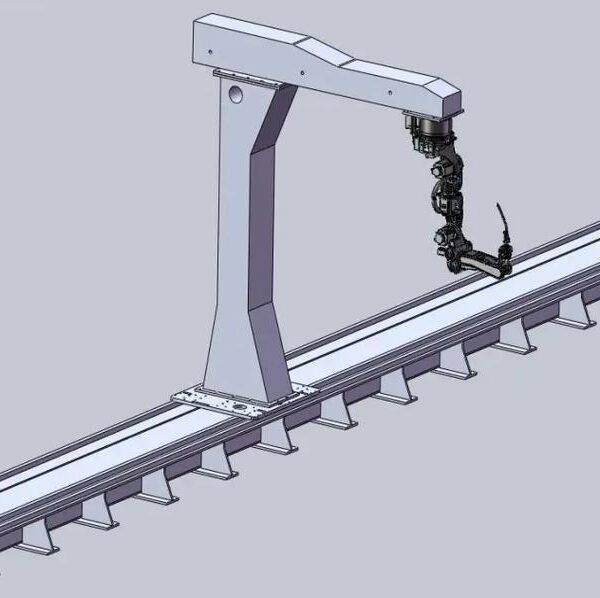

Cantilever Welding Robot solution
-
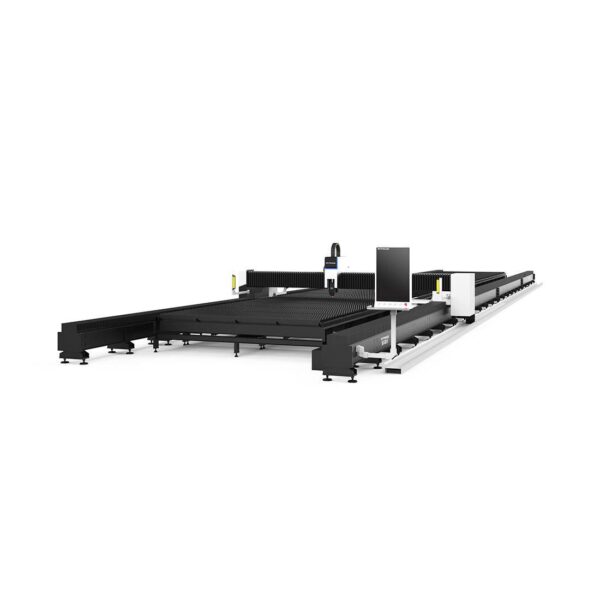

GF laser cutting machine
-
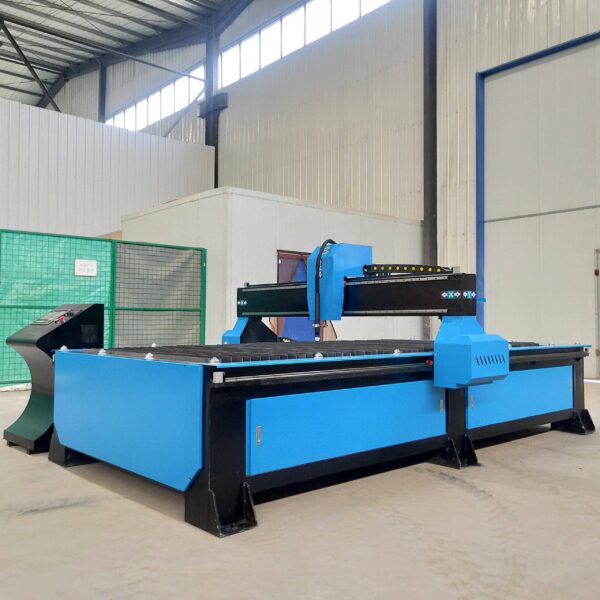
P3015 plasma cutting machine
-

LFP3015 Fiber Laser Cutter
-
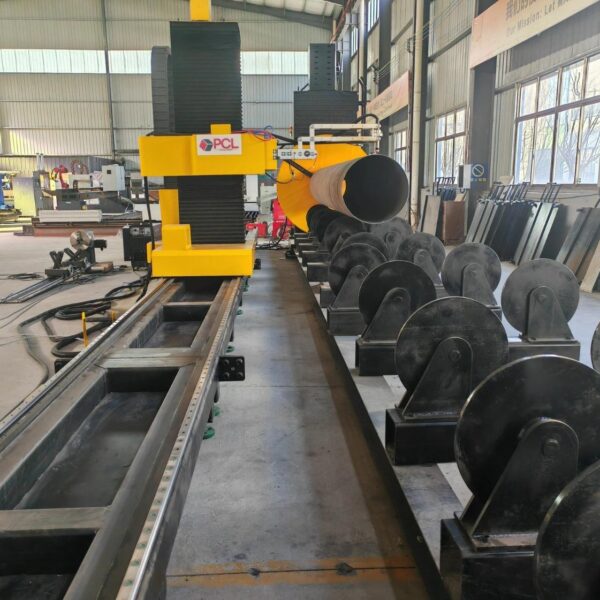
pipe plasma cutting machine
-
LFH 4020 Fiber Laser Cutting Machine
-
LFP4020
-
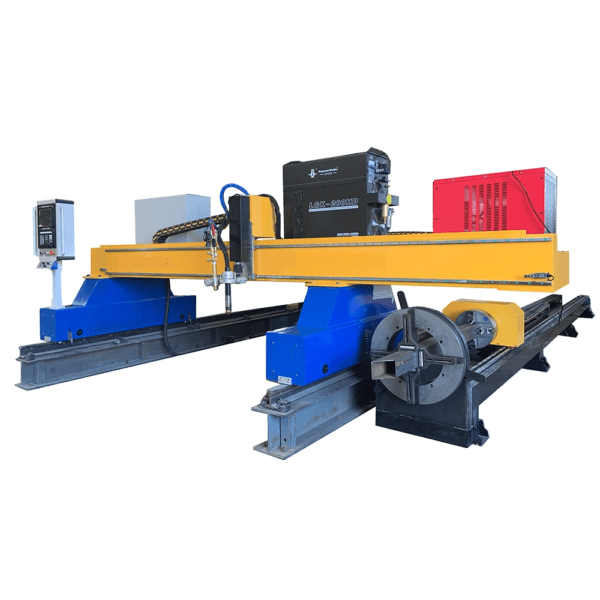
gantry plasma air cutting machine
-
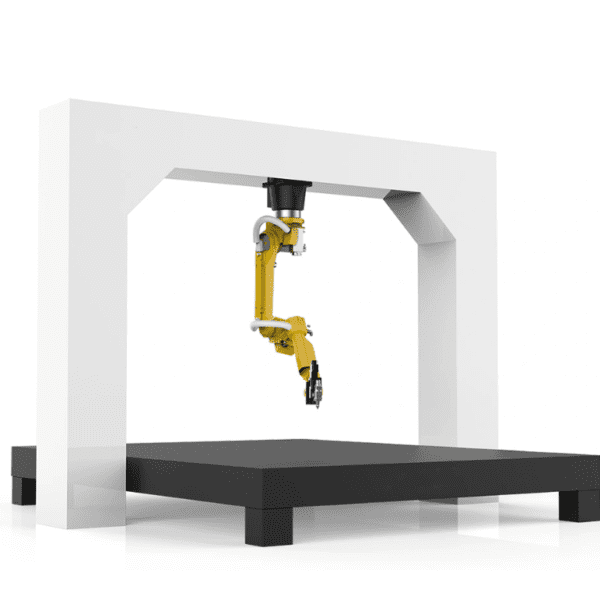
3D robot cutting machine
-
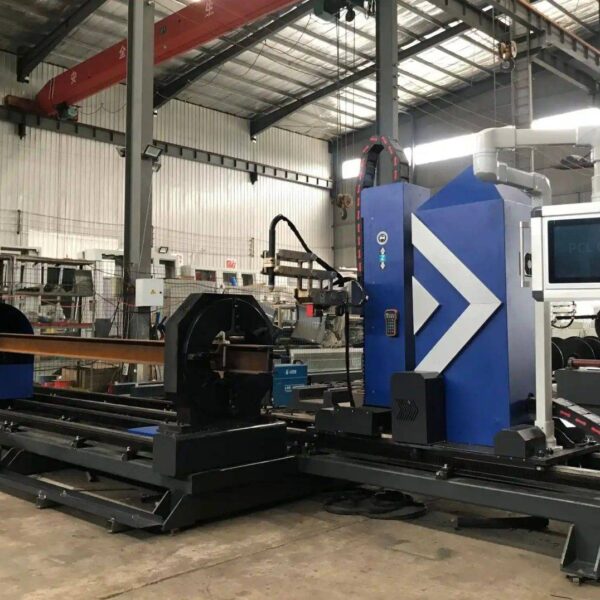
8 axis plasma cutting machine
-
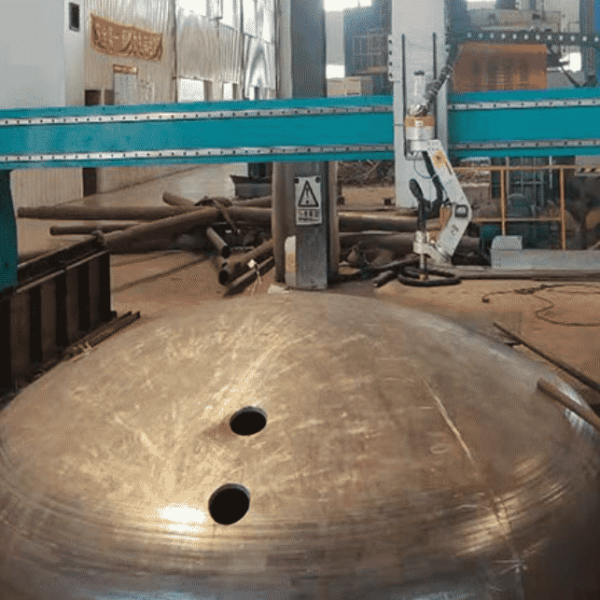
5 axis plasma cutting machine
-

LT360 tube laser cutting machine
-
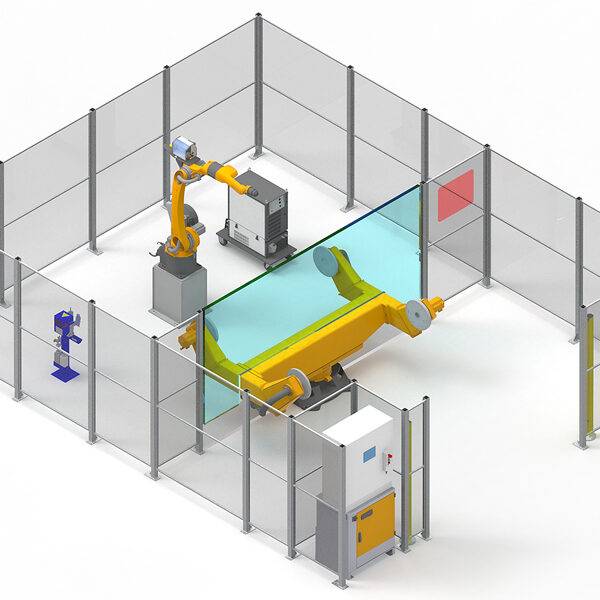
robot welding workstation
-
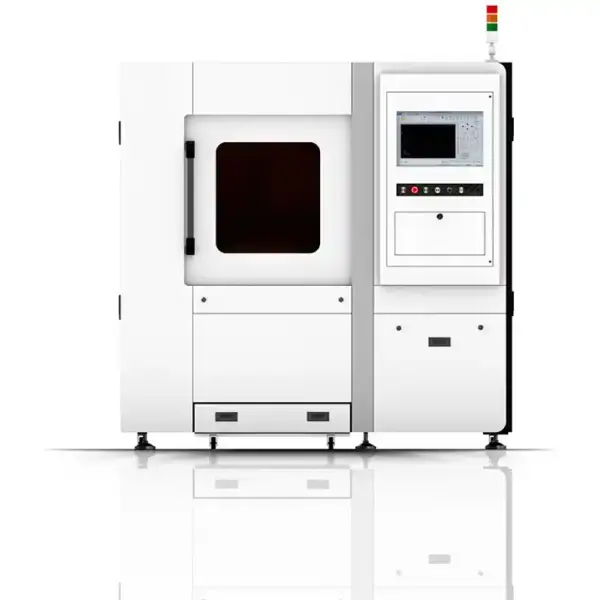
SF6060 fiber laser cutting machine
Advanced Fiber Laser Tube Processing Technology
Our CNC Fiber Laser Tube Cutting systems revolutionize metal fabrication by integrating high-precision cutting, punching, and profiling into a single automated workflow. Designed for versatility, this technology handles a wide array of profiles including Round, Square, Rectangular, and Oval tubes, as well as complex L-shaped and U-shaped channels.
- Precision Punching: High-speed hole punching with micron-level accuracy, eliminating the need for mechanical drilling or die-stamping.
- Complex Profiling: Advanced 3D pathing allows for intricate interlocking joints and specialized notch cuts, ideal for structural frames.
- High Material Efficiency: Intelligent nesting software minimizes scrap, reducing raw material costs across large production runs.
- Clean Finish: Delivers oxide-free, burr-free edges that require zero secondary grinding before welding.

Seamlessly processing multiple profiles with consistent precision.
Global Delivery & Logistics



From our high-tech manufacturing facility directly to your global site. PCL WeldCut ensures secure packaging, professional handling, and reliable international logistics to safeguard your equipment throughout the entire journey.