Field Report: Multi-pass MIG/MAG Welding Robot Integration for Structural Steel
Project Overview and Site Context: Bengaluru Industrial Corridor
This report details the field commissioning and optimization of a high-payload 6-axis MIG/MAG Welding Robot at a Tier-1 heavy fabrication facility in the Peenya Industrial Area, Bengaluru. The objective was to transition from manual GMAW to a fully automated solution for heavy-duty Structural Steel welding, specifically targeting thick-section (25mm to 50mm) I-beams and gusset plate assemblies used in high-rise infrastructure.
The operational environment in Bengaluru presents specific challenges, notably the ambient humidity fluctuations during the monsoon season and the requirement for consistent power stabilization in an aging industrial grid. This report focuses on the practical synergy between the robotic hardware and the integrated Arc Welding Solutions that were deployed to ensure x-ray quality welds across multi-pass sequences.
System Configuration and Robotic Kinematics
The core of the installation is a 1.44m reach MIG/MAG Welding Robot equipped with an integrated hollow-wrist design to minimize torch cable interference. In the context of Structural Steel welding, kinematics are as critical as the weld parameters. We utilized a coordinated motion system involving a 2-axis positioner to maintain the joint in the 1G (flat) or 2F (horizontal fillet) position whenever possible, maximizing deposition rates.
Synergy of Robotic Hardware and Power Source
The “robot” is merely a motion carrier; the actual metallurgical success depends on the Arc Welding Solutions integrated via a high-speed EtherCAT interface. We utilized a 500A inverter-based power source capable of High-Speed Pulse (HSP) and modified short-arc characteristics. The communication latency between the robot controller and the power source was tuned to <1ms, allowing for real-time adjustments to wire feed speed and voltage based on the robot’s TCP (Tool Center Point) velocity. This synergy is vital during multi-pass fill sequences where the heat accumulation changes the puddle fluidity.
Technical Challenges in Multi-pass Structural Steel Welding
When dealing with Structural Steel welding for infrastructure, the primary hurdle is managing the heat-affected zone (HAZ) and distortion. Manual welding often results in inconsistent interpass temperatures. Our robotic solution addressed this through a programmed “cool-down” logic integrated into the cycle time.
Joint Geometry and Path Planning
For a 30mm V-groove butt joint, the sequence was broken down into a root pass, four fill passes, and two cap passes. The MIG/MAG Welding Robot used a laser-based seam tracking sensor to account for fit-up variations—a common issue in local Bengaluru steel yards where plate shearing tolerances can be loose.
- Root Pass: Employed a modified short-circuit transfer to ensure full penetration without burn-through, using an 80/20 Argon-CO2 mix.
- Fill Passes: Switched to spray transfer mode to maximize deposition. We achieved a 15% increase in deposition rate compared to manual sticks.
- Capping: Utilized a slight weave pattern (2mm amplitude) to ensure proper tie-in to the side walls, preventing undercut.
Lessons Learned: The Bengaluru Field Experience
Documentation of field failures is more valuable than successes. During the first week in Bengaluru, we encountered intermittent arc instability. The root cause was twofold: the local power grid’s voltage spikes and the oxidation of the ER70S-6 wire due to the facility’s open-door ventilation policy during rain.
Implementing Arc Welding Solutions for Stability
To counter the arc instability, we upgraded the Arc Welding Solutions package to include a dedicated voltage stabilizer for the robot controller and a pressurized wire delivery drum. We also introduced a “Torch Cleaning Station” cycle every 30 minutes of arc-on time. In the heavy-duty cycle of Structural Steel welding, nozzle spatter buildup is the silent killer of gas coverage. The automated reamer and anti-spatter injection significantly reduced porosity rejects.
Advanced Software Integration: Adaptive Fill Logic
One of the most successful deployments in this project was the use of “Adaptive Fill” software. In Structural Steel welding, the gap width of a bevel can vary by 1-2mm over a 3-meter span. A standard MIG/MAG Welding Robot with a fixed path would either under-fill or over-fill these areas.
The integrated Arc Welding Solutions we applied used “Through-Arc Seam Tracking” (TAST). By monitoring the current fluctuations during the weave, the robot calculates the actual joint width and automatically adjusts its travel speed and weave width. This eliminated the need for manual grinding and re-welding, which previously accounted for 12% of the labor time in this Bengaluru shop.
Metallurgical Integrity and Quality Control
Post-weld visual inspection and Ultrasonic Testing (UT) were conducted on the first 50 beams. The results showed a 98.5% first-pass success rate. The MIG/MAG Welding Robot maintained a consistent heat input of 1.8 kJ/mm, which is critical for maintaining the toughness of the structural steel grades used in the project (typically IS 2062 E350).
Interpass Temperature Management
A key “lesson learned” was the management of interpass temperature. Bengaluru’s ambient temperature can hover around 30°C, but the massive thermal mass of the structural sections retains heat. We programmed the robot to monitor the time elapsed between passes. If the internal logic estimated the temperature exceeded 250°C, the robot would trigger an “Idle/Cooling” state or move to a different joint on the assembly to distribute the thermal load. This level of control is virtually impossible with manual Arc Welding Solutions.
Operational Efficiency and ROI
From a senior engineer’s perspective, the transition to a MIG/MAG Welding Robot is justified not just by speed, but by the “Arc-on Time” metric. In this facility, manual welders averaged a 30% arc-on time due to fatigue, heat, and the need for frequent repositioning. The robotic cell reached 75% arc-on time.
Cost Impact on Structural Steel Welding
While the initial investment in high-end Arc Welding Solutions and robotic arms is significant, the reduction in wire waste and shielding gas consumption (via precise flow control) resulted in a 22% reduction in consumables cost per meter of weld. In the competitive Bengaluru fabrication market, these margins are the difference between winning and losing infrastructure tenders.
Final Engineering Recommendations
For future deployments of a MIG/MAG Welding Robot in similar Indian industrial contexts, I recommend the following:
- Climate-Controlled Wire Storage: Even “dry” seasons in Bengaluru have high humidity. Use hermetically sealed wire drums to prevent hydrogen-induced cracking in high-tensile Structural Steel welding.
- Redundant Grounding: Ensure the robot and the workpiece have a common, high-quality ground. Robotic sensors are sensitive to electromagnetic interference (EMI) from neighboring high-frequency induction heaters or large overhead cranes.
- Operator Upskilling: The role of the “welder” changes to “robot technician.” Training local staff in Bengaluru to troubleshoot the Arc Welding Solutions software—not just the hardware—is essential for long-term uptime.
Conclusion
The synergy between the MIG/MAG Welding Robot and the digital Arc Welding Solutions has proven to be the only viable way to meet the increasing volume and quality demands of Structural Steel welding in the Bengaluru region. By moving away from “fixed-path” automation and toward adaptive, sensor-driven processes, we have successfully addressed the real-world variability of heavy fabrication. The system is now handed over to the local production team, with ongoing remote monitoring for further parameter optimization.
Report Prepared By:
Senior Welding Engineer
Field Operations – Bengaluru Division
-


LT240S tube laser cutting machine
-
LT120S tube laser cutting machine
-
Sale

Tank Fillet Welding Machine
Original price was: $1,000.00.$900.00Current price is: $900.00. -
Sale

MAK100 tube laser cutting machine
Original price was: $5,500.00.$5,000.00Current price is: $5,000.00. -

portable plasma air cutting machine
$1,200.00 -

2in1 fiber laser cutting machine
-

Air cooling Laser welding machine
-

HF h beam laser cutting machine
-

LT240 laser cutting machine
-

Laser welding machine
-


Cobot Welding Station
-

Gantry welding robot solution
-

Tracked Wheeled AGV Welding robot
-

LFH6020 Fiber laser cutting machine
-
LFP6020
-

robotic welidng machine
Advanced Fiber Laser Tube Processing Technology
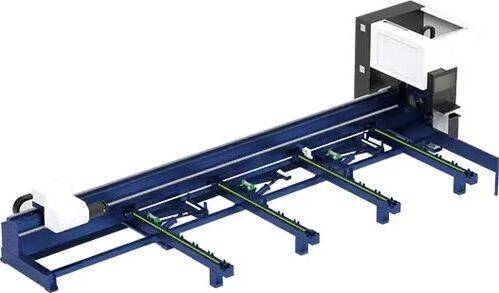
Our CNC Fiber Laser Tube Cutting systems revolutionize metal fabrication by integrating high-precision cutting, punching, and profiling into a single automated workflow. Designed for versatility, this technology handles a wide array of profiles including Round, Square, Rectangular, and Oval tubes, as well as complex L-shaped and U-shaped channels.
- Precision Punching: High-speed hole punching with micron-level accuracy, eliminating the need for mechanical drilling or die-stamping.
- Complex Profiling: Advanced 3D pathing allows for intricate interlocking joints and specialized notch cuts, ideal for structural frames.
- High Material Efficiency: Intelligent nesting software minimizes scrap, reducing raw material costs across large production runs.
- Clean Finish: Delivers oxide-free, burr-free edges that require zero secondary grinding before welding.

Seamlessly processing multiple profiles with consistent precision.
Global Delivery & Logistics



From our high-tech manufacturing facility directly to your global site. PCL WeldCut ensures secure packaging, professional handling, and reliable international logistics to safeguard your equipment throughout the entire journey.