Engineering Review: Multi-pass Welding Industrial Laser Welder – Pune, India

In this article
- Field Report: Multi-Pass Implementation of Industrial Laser Welder in Pune Automotive Corridor
- 1. Infrastructure and Equipment Specification
- 2. The Synergy of Laser Technology and Material Science
- 3. Multi-Pass Methodology for Thick Sections
- 4. Technical Challenges and Field Solutions
- 5. Comparative Analysis: Laser vs. Conventional Arc
- 6. Metallurgical Observations and Quality Control
- 7. Safety and Operator Training in the Local Context
- 8. Final Recommendations for Pune Industrial Scale-up
Field Report: Multi-Pass Implementation of Industrial Laser Welder in Pune Automotive Corridor
This report details the technical findings and operational parameters established during the deployment of high-power Laser Technology for multi-pass applications on heavy-gauge Stainless Steel welding. The site of implementation is a Tier-1 automotive fabrication facility in Chakan, Pune. While Industrial Laser Welder systems are traditionally utilized for thin-sheet autogenous joins, this project pushed the envelope into 8mm and 12mm 304L stainless sections using a multi-pass approach to replace conventional TIG/MIG processes.
1. Infrastructure and Equipment Specification
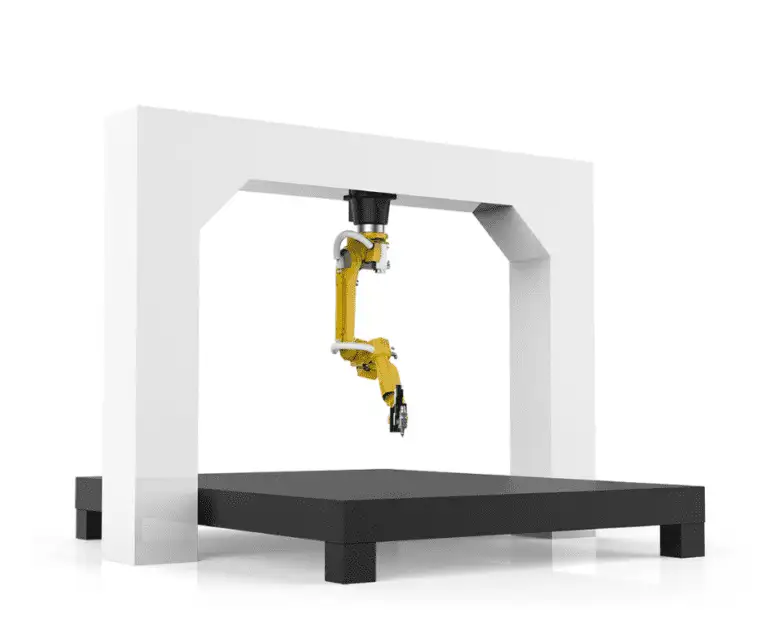
In the context of the Pune industrial climate—characterized by high ambient temperatures and varying humidity levels—the hardware selection was critical. We deployed a 4kW continuous wave (CW) fiber Industrial Laser Welder integrated with a six-axis robotic arm. The Laser Technology utilized here relies on a 100-micron transport fiber, providing a high power density at the focal point which is essential for achieving the keyhole stability required in the initial root pass of Stainless Steel welding.
Power Stability and Chiller Performance
One of the primary lessons learned in the Pune field test was the impact of the local power grid on laser consistency. We observed fluctuations in beam quality during peak afternoon hours. The integration of a dedicated voltage stabilizer and an oversized industrial chiller was mandatory. Laser Technology is sensitive to thermal lensing; if the optical cavity or the delivery head temperature fluctuates by more than 2°C, the focal point shifts, leading to incomplete penetration in the root pass.
2. The Synergy of Laser Technology and Material Science
Stainless Steel welding presents a unique challenge regarding thermal expansion and carbide precipitation. Conventional arc welding often results in a massive Heat Affected Zone (HAZ), leading to warping in large-format plates. By utilizing an Industrial Laser Welder, we constrained the HAZ to less than 0.5mm.
The synergy here lies in the “Power Density vs. Time” equation. Laser Technology allows for high-speed processing (approx. 1.2 to 2.0 meters per minute for the root pass), which ensures that the bulk temperature of the stainless steel plate remains below the critical 450°C sensitization threshold. This is particularly vital for the Pune-based pharmaceutical equipment manufacturers who require maximum corrosion resistance in their 316L assemblies.
3. Multi-Pass Methodology for Thick Sections
Single-pass laser welding usually caps out at 6mm for a 4kW source if high quality is the metric. For 10mm and 12mm plates, we transitioned to a multi-pass strategy. This is where the Industrial Laser Welder must be recalibrated from a “keyhole” tool into a “conduction” tool for the fill passes.
The Root Pass (Keyhole Mode)
The first pass was performed autogenously. We utilized the core strength of Laser Technology—deep penetration.
- Power: 3.8kW
- Speed: 1.5 m/min
- Shielding: 99.99% Argon at 25 L/min
The goal was a 5mm penetration with a narrow bead profile. The primary challenge here was back-side oxidation. In the Pune workshop, we had to engineer a custom copper backing bar with integrated gas channels to ensure the underside of the Stainless Steel welding remained silvery-white.
The Fill and Cap Passes (Wire-Fed Conduction Mode)
Subsequent passes required the integration of a synchronized wire feeder using 0.8mm SS308L filler wire. This is a departure from standard Industrial Laser Welder use cases. We defocused the beam by +3mm to widen the melt pool, preventing sidewall lack-of-fusion—a common failure point in multi-pass Laser Technology applications.
4. Technical Challenges and Field Solutions
Gap Bridging and Tolerance Management
The most significant hurdle in the Pune facility was part fit-up. Laser Technology is notoriously intolerant of gaps. While TIG can bridge a 2mm gap with ease, an Industrial Laser Welder will simply “blow through.”
Lesson Learned: We implemented a “Wobble” head strategy. By oscillating the laser beam in a circular pattern (2.5mm width at 150Hz), we successfully bridged gaps up to 1.2mm without compromising the structural integrity of the Stainless Steel welding.
Gas Shielding Dynamics
In Pune’s open-shed factory environments, cross-drafts are a major issue. Even a slight breeze can disrupt the laminar flow of the shielding gas. For Stainless Steel welding, any oxygen ingress results in “sugaring.” We moved away from standard conical nozzles to wide-aperture “Trailing Shields.” This modification ensured the weld pool remained protected until the temperature dropped below 300°C.
5. Comparative Analysis: Laser vs. Conventional Arc
Data collected over a 30-day period in the Chakan plant shows a stark contrast in efficiency. For a standard 1-meter seam on 10mm 304 SS:
- TIG Multi-pass: 45 minutes (including prep and post-weld straightening).
- Industrial Laser Welder: 6 minutes (3 passes at high speed, zero warping).
The Laser Technology investment pays for itself not just in welding speed, but in the elimination of post-weld grinding and hydraulic straightening. The precision of Stainless Steel welding via laser means the components are “in-spec” immediately after cooling.
6. Metallurgical Observations and Quality Control
Cross-sectional analysis (Macro-etch) performed at a local Pune lab confirmed that the grain structure in the laser-welded samples was significantly finer than arc-welded counterparts. This is due to the rapid solidification rates inherent in Laser Technology.
Porosity Mitigation
We encountered intermittent porosity in the second pass. Investigation revealed that the high-velocity metal vapor (plume) was being trapped by the filler wire. By adjusting the wire feed angle to 30 degrees relative to the plate and leading the beam (Leading Wire configuration), we allowed the metal vapor to escape before the trailing edge of the melt pool solidified. This is a critical adjustment for anyone using an Industrial Laser Welder in a heavy-duty production environment.
7. Safety and Operator Training in the Local Context
Implementing Laser Technology in a region accustomed to Manual Metal Arc (MMA) and MIG requires a cultural shift. The “invisible” danger of a 1070nm fiber laser beam necessitates Class-1 enclosures. We retrofitted a section of the Pune workshop with laser-rated curtains and interlocked entry points. Training focused on the “Cleanliness First” mantra; Stainless Steel welding with a laser fails if there is even a trace of machining oil or fingerprint grease in the joint.
8. Final Recommendations for Pune Industrial Scale-up
To successfully scale the use of the Industrial Laser Welder for multi-pass thick section stainless steel, the following must be prioritized:
- Upstream Precision: Invest in fiber laser cutting for the weld preps. If the edge is not perfectly square, the multi-pass laser process will struggle.
- Gas Quality: Move to liquid Argon tanks. Cylinder-based gas in Pune showed inconsistent purity levels which affected the Laser Technology optics over time.
- Preventative Maintenance: The humid air in the Western Ghats region can lead to condensation on the protective windows. A positive-pressure clean-air system for the laser head is non-negotiable.
Conclusion
The transition to multi-pass Stainless Steel welding using an Industrial Laser Welder represents a significant leap for Pune’s manufacturing sector. While the Laser Technology requires a higher degree of technical discipline and tighter fit-up tolerances, the resultant increase in throughput and reduction in thermal distortion provide a clear competitive advantage. The data from this field report confirms that with the right “Wobble” parameters and shielding strategy, laser welding is no longer confined to thin-gauge applications.
Senior Welding Engineer: [Authored for Pune Technical Division]
Date: October 2023
Subject: Process Optimization Report #442