Field Evaluation Report: Multi-pass Mild Steel Implementation via All-in-one Cobot Station
1. Executive Summary: The HCMC Context
This report details the operational deployment of an All-in-one Cobot Station at a heavy-machinery fabrication facility in the Thu Duc district of Ho Chi Minh City (HCMC). The primary objective was to transition high-volume, multi-pass Mild Steel welding from manual processes to Collaborative Robotics. In the tropical industrial environment of Vietnam—characterized by high ambient humidity and fluctuating power stability—the integration of a unified welding cell presents unique technical challenges. The following sections analyze the synergy between the hardware, the robotic logic, and the metallurgical requirements of thick-section mild steel.
2. The Hardware Paradigm: The All-in-one Cobot Station
In HCMC’s industrial zones, floor space is at a premium. The All-in-one Cobot Station deployed here integrates the robotic controller, the power source (400A pulsed GMAW), the wire feeder, and the cooling system into a single, mobile footprint.
2.1. Mobility and Stability in the Workshop
Unlike traditional industrial robots that require a permanent footprint and safety fencing, the all-in-one unit utilizes a locking caster system. During the field test, we moved the station between three different bays to handle oversized mild steel frames. The critical technical takeaway is the rigidity of the integrated pedestal. Any vibration at the base is magnified at the end-effector (TCP), especially during high-speed travel between passes. The station’s dampening characteristics proved sufficient to maintain a +/- 0.05mm repeatability, even on the uneven concrete floors typical of older HCMC workshops.
2.2. Power Management in Vietnam’s Grid
Local voltage fluctuations can be detrimental to sensitive electronics. The station’s internal conditioning units were tested against the 380V three-phase supply. We observed that the integrated nature of the All-in-one Cobot Station provides a “common ground” logic that reduces electromagnetic interference (EMI) between the welder and the robot’s encoders—a frequent failure point when cobots are “Frankensteined” together with external power sources.

3. Collaborative Robotics: Bridging the Skill Gap
The core of Collaborative Robotics is not just safety, but the interface. In HCMC, where the senior welding workforce is aging and younger technicians prefer digital interfaces, the cobot’s lead-through programming is a force multiplier.
3.1. Human-Machine Interaction (HMI)
We implemented a “Hand-Guiding” teaching method. Local operators, who were previously manual GMAW welders, were able to define the start, midpoint, and end of a 1.5-meter fillet weld in under two minutes. By removing the need for complex G-code or offline programming, the All-in-one Cobot Station effectively turned the welder’s “craft knowledge” (torch angle and stand-off distance) into a digital repeatable program.
3.2. Safety and Throughput
Operating without light curtains or cages allowed for a 30% increase in workflow efficiency. Welders could prepare the next workpiece on the adjacent table while the cobot completed the final cap pass on the first piece. The force-torque sensors in the robotic joints were calibrated to the high-density environment of the HCMC shop, ensuring that any accidental contact resulted in an immediate Category 0 stop without damaging the workpiece or the operator.
4. Technical Deep Dive: Multi-pass Mild Steel Welding
The project focused on 20mm thick Mild Steel welding (S235JR grade). This requires a multi-pass strategy consisting of a root pass, four fill passes, and two cap passes to ensure structural integrity and aesthetic consistency.
4.1. Root Pass Dynamics and Gap Bridging
The primary challenge in HCMC’s fabrication scene is inconsistent fit-up. Mild steel welding on large structures often results in gaps varying from 1mm to 3mm. We utilized the cobot’s “Through-Arc Seam Tracking” (TAST). As the Collaborative Robotics system oscillates across the joint, it monitors the current change to adjust the Z-height and Y-lateral position in real-time. This synergy between the power source and the robot’s path correction is what makes the “all-in-one” designation critical—the latency must be near-zero for the correction to be effective at travel speeds of 350mm/min.
4.2. Multi-pass Programming Logic
For the fill and cap passes, we utilized the station’s proprietary multi-pass software layer.
- Pass 1 (Root): 180A, 22V, No weave.
- Passes 2-5 (Fill): 240A, 26V, 3mm weave amplitude.
- Passes 6-7 (Cap): 210A, 24V, 5mm weave amplitude for a smooth finish.
The software automatically calculates the “offset” for each subsequent pass based on the cross-sectional area of the groove. This eliminates the need for the operator to manual-teach every single pass, which is the traditional bottleneck in multi-pass automation.
5. Lessons Learned from the Field
5.1. The Humidity Factor
HCMC’s relative humidity often exceeds 80%. In Mild Steel welding, this leads to hydrogen-induced cracking if the wire is not managed correctly. We found that the enclosed wire spool compartment in the All-in-one Cobot Station was insufficient for long-term storage. We had to retrofit a localized heater/dehumidifier inside the station’s cabinet to prevent moisture pickup on the ER70S-6 wire. Lesson: Never assume “integrated” means “weather-proofed” for the tropics.
5.2. Interpass Temperature Control
Mild steel is forgiving, but 20mm plate retains heat. During the fill passes, the cumulative heat input began to cause “arc blow” and excessive spatter. We programmed a “dwell timer” into the cobot’s routine, triggered by an external infrared pyrometer. The Collaborative Robotics system would pause until the interpass temperature dropped below 200°C. This ensured the grain structure of the mild steel remained within the specified heat-affected zone (HAZ) limits.
5.3. Torch Alignment and Consumables
We observed that local operators were initially aggressive with the torch cleaning. In an All-in-one Cobot Station, the alignment of the torch neck is critical for multi-pass accuracy. A 1mm deviation at the contact tip results in a missed root pass. We implemented a daily TCP (Tool Center Point) check routine using a fixed pointer on the station’s frame. If the cobot’s TCP was out by >0.5mm, it required a recalibration before the shift started.
6. The Synergy of Integration
The true value witnessed in the Ho Chi Minh City trial was the reduction of “Technical Friction.” When the power source, the robot, and the safety systems are developed as a single ecosystem, the troubleshooting process is streamlined. In a traditional setup, a “Communication Error” could mean the PLC, the robot controller, or the welder is at fault. In the All-in-one Cobot Station, the unified diagnostics allowed our team to identify a faulty 7-meter umbilical cable in minutes rather than hours.
7. Conclusion and Recommendations
The deployment of Collaborative Robotics for Mild Steel welding in Vietnam is no longer a futuristic concept but a practical necessity for shops aiming for export-quality standards (ISO 3834). The All-in-one Cobot Station bridges the gap between manual flexibility and robotic precision.
For future deployments in the HCMC region, I recommend:
4.1. Implementation of Active Wire Drying
Integrate a constant-heat wire delivery system to combat the local climate.
4.2. Specialized Operator Training
Focus less on “how to weld” and more on “how to sequence.” The machine handles the puddle; the human must handle the thermal management and the fit-up verification.
4.3. Expansion to FCAW
While this report focused on GMAW, the station’s power source is capable of Flux-Cored Arc Welding (FCAW). Given the heavy-duty nature of Vietnamese infrastructure projects, transitioning the cobot to FCAW would further increase deposition rates for multi-pass applications.
This field report concludes that the synergy of an integrated station and collaborative logic significantly out-performs modular robotic builds in high-humidity, high-mix environments.
-
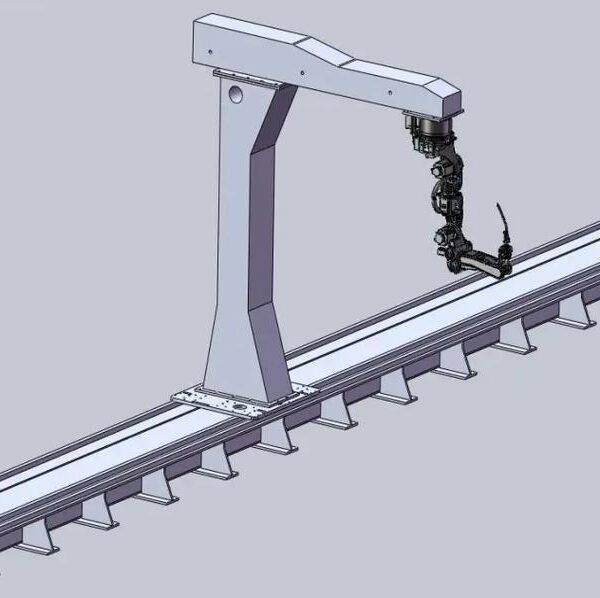

Cantilever Welding Robot solution
-
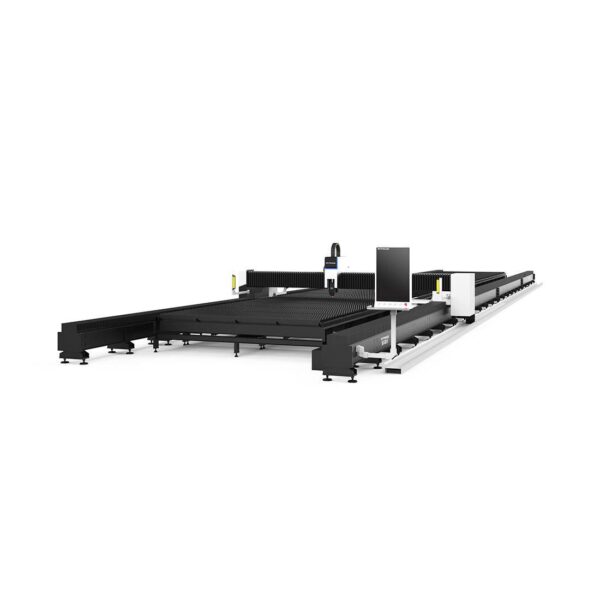

GF laser cutting machine
-
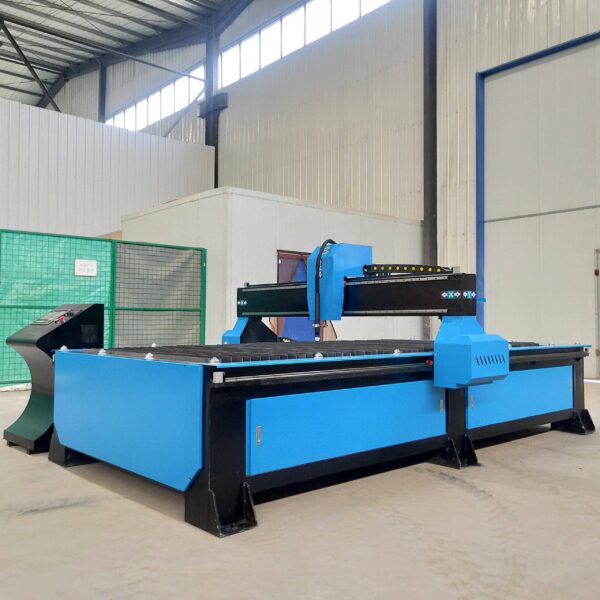
P3015 plasma cutting machine
-

LFP3015 Fiber Laser Cutter
-
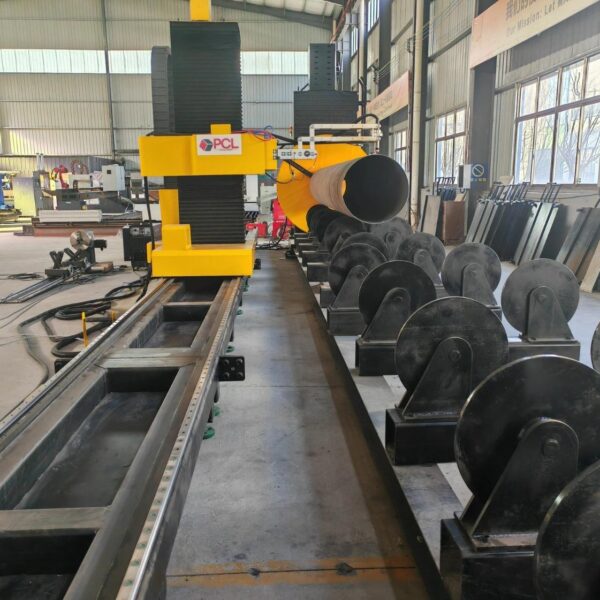
pipe plasma cutting machine
-
LFH 4020 Fiber Laser Cutting Machine
-
LFP4020
-
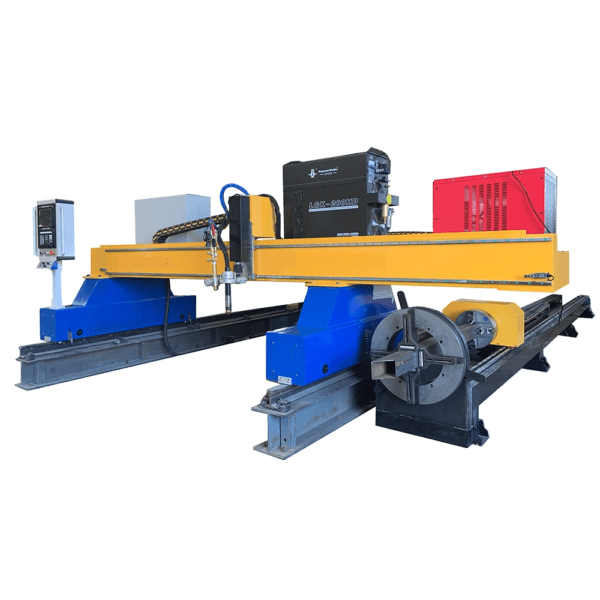
gantry plasma air cutting machine
-
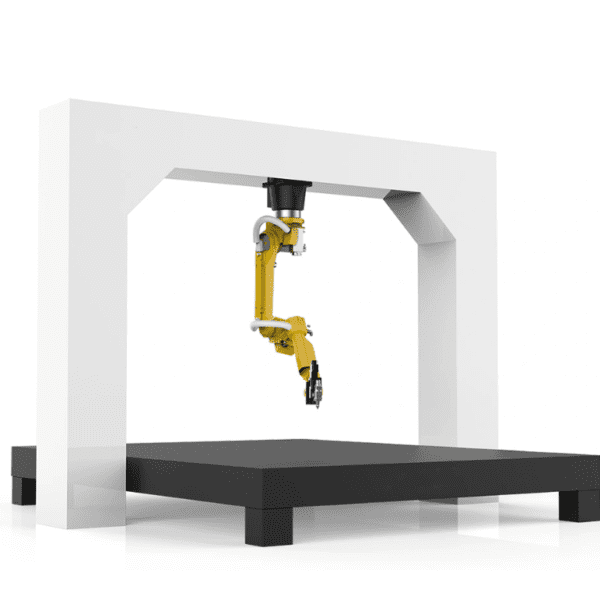
3D robot cutting machine
-
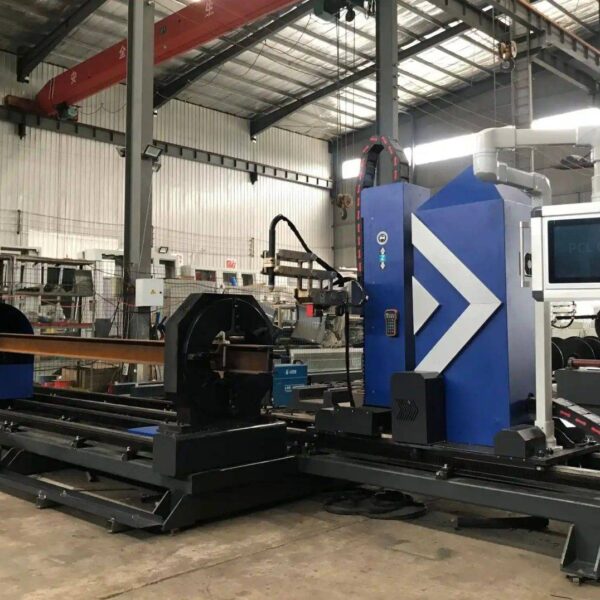
8 axis plasma cutting machine
-
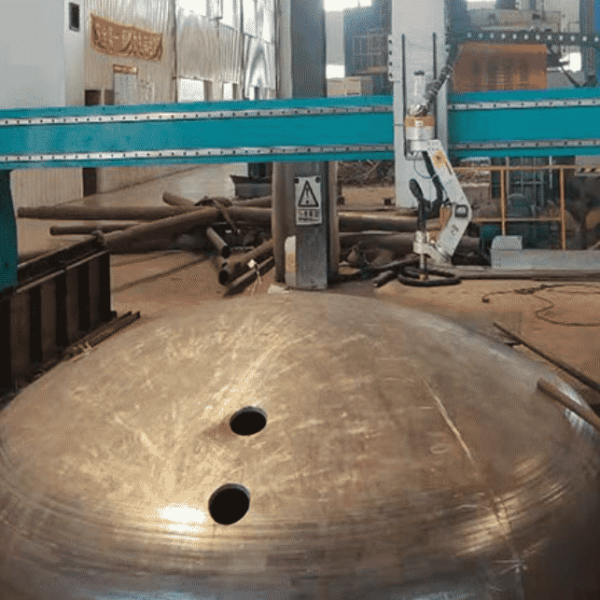
5 axis plasma cutting machine
-

LT360 tube laser cutting machine
-
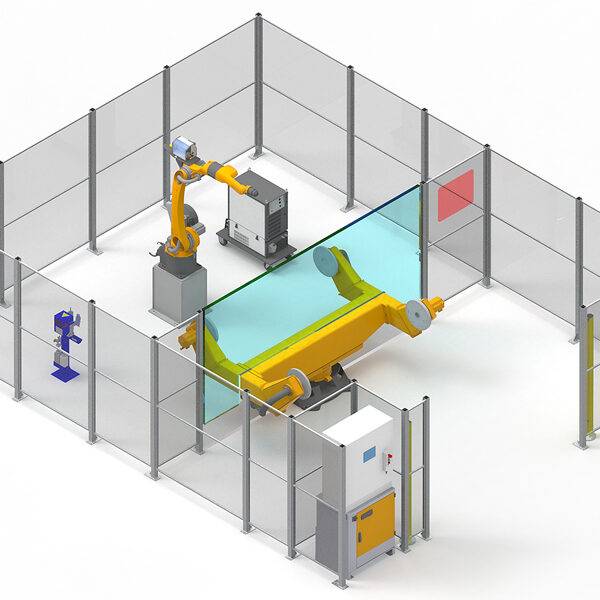
robot welding workstation
-
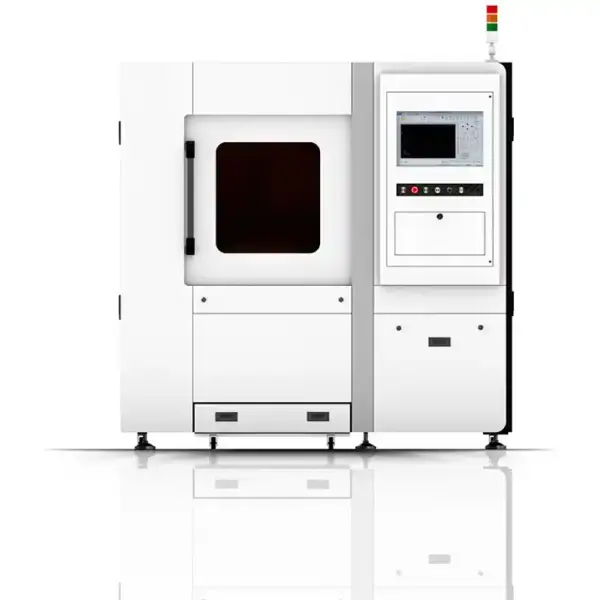
SF6060 fiber laser cutting machine
Advanced Fiber Laser Tube Processing Technology
Our CNC Fiber Laser Tube Cutting systems revolutionize metal fabrication by integrating high-precision cutting, punching, and profiling into a single automated workflow. Designed for versatility, this technology handles a wide array of profiles including Round, Square, Rectangular, and Oval tubes, as well as complex L-shaped and U-shaped channels.
- Precision Punching: High-speed hole punching with micron-level accuracy, eliminating the need for mechanical drilling or die-stamping.
- Complex Profiling: Advanced 3D pathing allows for intricate interlocking joints and specialized notch cuts, ideal for structural frames.
- High Material Efficiency: Intelligent nesting software minimizes scrap, reducing raw material costs across large production runs.
- Clean Finish: Delivers oxide-free, burr-free edges that require zero secondary grinding before welding.

Seamlessly processing multiple profiles with consistent precision.
Global Delivery & Logistics



From our high-tech manufacturing facility directly to your global site. PCL WeldCut ensures secure packaging, professional handling, and reliable international logistics to safeguard your equipment throughout the entire journey.
2 thoughts on “Engineering Review: Multi-pass Welding All-in-one Cobot Station – Ho Chi Minh City, Vietnam”
The nesting software is very intuitive. Saved us a lot of carbon steel waste.
Been using this for a year now. Still running like a beast. Very reliable.