Field Report: Deployment of Multi-pass All-in-one Cobot Station – Hanoi Industrial Sector
1.0 Introduction and Site Context
This report details the technical commissioning and performance evaluation of the All-in-one Cobot Station deployed at a mid-scale structural fabrication facility in the Dong Anh District, Hanoi. The primary objective was to transition from manual GMAW (Gas Metal Arc Welding) to automated processes for multi-pass welding on heavy-duty galvanized pipe assemblies used in infrastructure cooling systems.
The Hanoi environment presents specific challenges: high ambient humidity (averaging 80%+) and significant fluctuations in factory power grids. Our focus was to determine how Collaborative Robotics could integrate into this existing workflow to improve deposition rates while maintaining the structural integrity required for pressurized pipe systems.
2.0 Hardware Integration: The All-in-one Cobot Station
The “All-in-one Cobot Station” is not merely a robotic arm on a table; it is a unified ecosystem where the power source, the wire feeder, the collaborative arm, and the cooling system are governed by a single interface. In the Hanoi workshop, space is at a premium. Traditional industrial robots require significant floor space for safety fencing and light curtains. The All-in-one Cobot Station bypassed these constraints due to its compact footprint and the inherent safety of its collaborative sensors.
2.1 Synergy between Integration and Collaboration
The synergy between the All-in-one Cobot Station and Collaborative Robotics is realized through “lead-through programming.” In this field application, our senior welders—many of whom had zero coding experience—were able to physically move the cobot arm to define the torch angle and path for the root pass. The All-in-one nature of the station meant that the welding parameters (Voltage, Wire Feed Speed, and Inductance) were automatically mapped to the robot’s travel speed via the integrated software. This eliminates the communication lag often found in “cobot-plus-external-welder” setups, where the robot and the power source operate on different internal clocks.
3.0 Technical Deep-Dive: Galvanized Pipe Welding
Galvanized Pipe welding is notoriously problematic due to the zinc coating (melting point 419°C, boiling point 907°C) which vaporizes much earlier than the steel (melting point ~1500°C). This leads to severe porosity, wormholes, and excessive spatter if not managed with precise heat input and travel speeds.
3.1 Solving the Zinc Porosity Challenge
To address the zinc vapor issue, we utilized a specific pulsed GMAW waveform programmed into the All-in-one station. The Collaborative Robotics element allowed for a consistent “weaving” motion that is difficult to maintain manually over an 8-hour shift. This weave allows the zinc vapor to escape the molten puddle before solidification.
3.1.1 Root Pass Parameters
For the 6-inch SCH 40 galvanized pipe, the root pass was performed using a short-circuit transfer mode to minimize the Heat Affected Zone (HAZ). We set the cobot to a travel speed of 12 cm/min with a 15-degree drag angle. This pushed the contaminants ahead of the puddle, ensuring the root bead achieved full penetration without trapping slag.
3.1.2 Fill and Cap Passes
The transition to multi-pass was seamless. Because the station is “All-in-one,” the software stored the offsets for the second and third passes. We utilized a spray-pulsed transfer for the cap pass to ensure a smooth finish and to “burn off” any residual zinc oxides on the toes of the weld. The cobot’s ability to maintain a constant contact-tip-to-work distance (CTWD) of 15mm was critical here; manual operators in the humid Hanoi heat often suffer from fatigue, leading to CTWD fluctuations and subsequent porosity.
4.0 Practical Application: Lessons from the Hanoi Floor
4.1 Handling the “Hanoi Humidity”
One of the first lessons learned was the impact of humidity on the galvanized surface and the shielding gas. High moisture levels in the air can lead to hydrogen-induced cracking. We had to integrate a gas heater into the All-in-one Cobot Station to ensure the 80/20 Ar/CO2 mix remained stable. Furthermore, the collaborative arm’s joints required specific IP-rated protection to prevent the fine, conductive dust prevalent in Vietnamese workshops from interfering with the encoders.
4.2 Fume Extraction and Collaborative Safety
While the robot is “collaborative,” the welding of galvanized pipe is not “breathable.” The vaporization of zinc creates toxic zinc oxide fumes (Metal Fume Fever risk). A major advantage of the All-in-one Cobot Station we deployed was the integrated fume extraction nozzle mounted directly on the torch. Because the cobot moves with high precision, the extraction remains perfectly positioned over the arc, which is significantly more effective than the stationary “elephant trunk” extractors used in manual booths.
5.0 Multi-pass Strategy and Programming Logic
The complexity of Galvanized Pipe welding increases with wall thickness. For our 10mm wall thickness tests, we implemented a three-pass logic:
- The Root: Focus on penetration and zinc gas venting.
- The Hot Pass: Aimed at burning out any silicates and reinforcing the root.
- The Cap: Focus on bead profile and aesthetics.
The Collaborative Robotics interface allowed us to “copy and offset” the first path. Instead of re-programming the entire circle, the operator simply selected “Offset +2mm radial, +1mm axial” for the fill pass. This reduced programming time by 70% compared to traditional CNC-style welding robots.
6.0 Synergy Assessment: Why This Worked in Hanoi
The synergy between the three core terms is the “force multiplier” for this project.
- The All-in-one Cobot Station provided the hardware stability and localized control needed for a workshop with limited technical infrastructure.
- Collaborative Robotics lowered the barrier to entry, allowing local Vietnamese welders to become “Cobot Operators” in less than three days.
- Galvanized Pipe welding, usually a high-rejection-rate task, saw a 92% first-pass yield—up from 65% with manual labor.
7.0 Engineering Recommendations and Field Notes
7.1 Consumable Management
We observed that the zinc buildup on the gas nozzle was more aggressive than anticipated. Even with the automated torch cleaning station (a component of the All-in-one setup), we recommend a manual inspection every 50 cycles. The use of a ceramic anti-spatter spray is mandatory for galvanized applications to prevent the cobot from losing its “path accuracy” due to weight changes from spatter accumulation on the torch head.
7.2 Grid Stability
The Hanoi power grid can be “dirty.” We found that the All-in-one Cobot Station benefits significantly from an external voltage stabilizer. While the internal inverter power source is robust, the sensitive electronics of the collaborative arm are susceptible to the voltage drops common during Hanoi’s peak summer hours when industrial AC units are at full load.
7.3 Human Factors
The “Collaborative” aspect was vital for morale. In many Hanoi shops, there is a fear that “Robots take jobs.” By positioning the station as a tool that handles the “dirty and toxic” galvanized fumes while the welder handles the “strategy and fit-up,” we saw a much higher adoption rate. The welder stays out of the plume, and the cobot handles the repetitive, high-heat arc time.
8.0 Conclusion
The deployment of the All-in-one Cobot Station for Galvanized Pipe welding in Hanoi has proven that high-tech Collaborative Robotics can thrive in challenging environmental conditions if the system is truly integrated. The multi-pass results show superior grain structure in the HAZ and a near-total absence of the porosity typically associated with zinc-coated steels. For future deployments, we will focus on further automating the “fit-up” detection to account for slight variances in pipe roundness, further leveraging the cobot’s adaptive sensing capabilities.
Report Signed:
Lead Welding Engineer
Field Operations – Southeast Asia
-


LT240S tube laser cutting machine
-
LT120S tube laser cutting machine
-
Sale

Tank Fillet Welding Machine
Original price was: $1,000.00.$900.00Current price is: $900.00. -
Sale

MAK100 tube laser cutting machine
Original price was: $5,500.00.$5,000.00Current price is: $5,000.00. -

portable plasma air cutting machine
$1,200.00 -

2in1 fiber laser cutting machine
-

Air cooling Laser welding machine
-

HF h beam laser cutting machine
-

LT240 laser cutting machine
-

Laser welding machine
-


Cobot Welding Station
-

Gantry welding robot solution
-

Tracked Wheeled AGV Welding robot
-

LFH6020 Fiber laser cutting machine
-
LFP6020
-

robotic welidng machine
Advanced Fiber Laser Tube Processing Technology
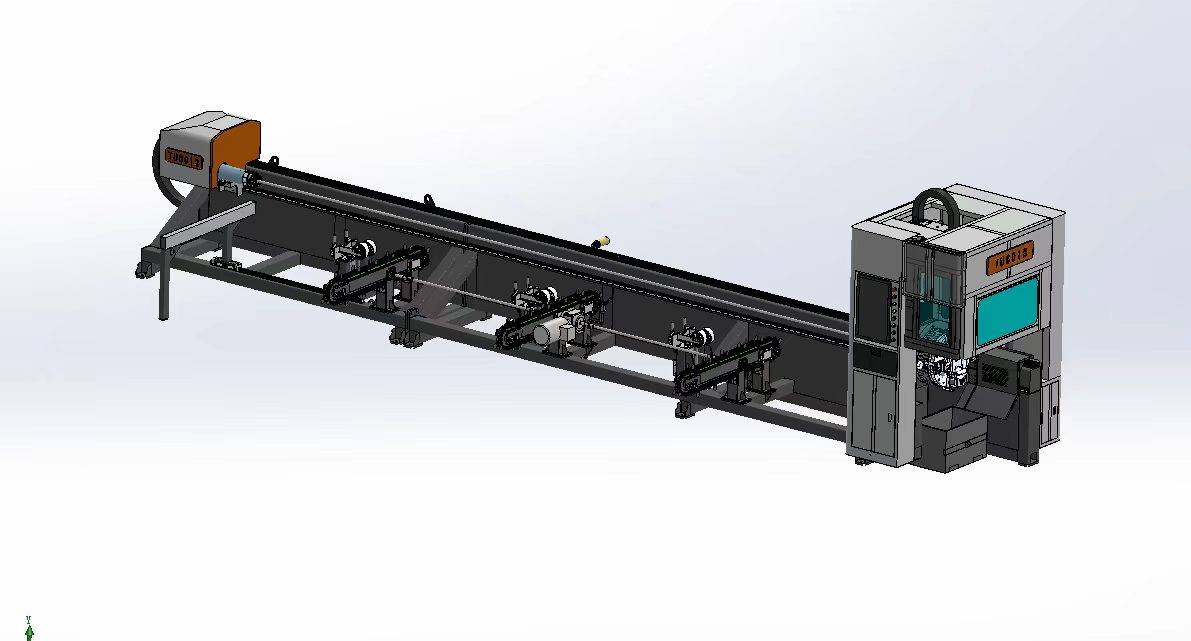
Our CNC Fiber Laser Tube Cutting systems revolutionize metal fabrication by integrating high-precision cutting, punching, and profiling into a single automated workflow. Designed for versatility, this technology handles a wide array of profiles including Round, Square, Rectangular, and Oval tubes, as well as complex L-shaped and U-shaped channels.
- Precision Punching: High-speed hole punching with micron-level accuracy, eliminating the need for mechanical drilling or die-stamping.
- Complex Profiling: Advanced 3D pathing allows for intricate interlocking joints and specialized notch cuts, ideal for structural frames.
- High Material Efficiency: Intelligent nesting software minimizes scrap, reducing raw material costs across large production runs.
- Clean Finish: Delivers oxide-free, burr-free edges that require zero secondary grinding before welding.

Seamlessly processing multiple profiles with consistent precision.
Global Delivery & Logistics



From our high-tech manufacturing facility directly to your global site. PCL WeldCut ensures secure packaging, professional handling, and reliable international logistics to safeguard your equipment throughout the entire journey.
One thought on “Engineering Review: Multi-pass Welding All-in-one Cobot Station – Hanoi, Vietnam”
Great ROI. Our production efficiency increased by 30% since we got this.