Technical Field Report: Multi-pass Integration of 6-Axis Collaborative Systems
Site Overview: Prague, Czech Republic Production Facility
This report details the implementation and performance optimization of a 6-Axis Collaborative Welder at a precision fabrication facility in Prague. The facility primarily handles high-volume, high-complexity components for the European rail and automotive sectors. The objective was to transition from manual GTAW (Gas Tungsten Arc Welding) to Automated Welding to address labor shortages and inconsistent weld penetration on Thin Metal Sheet welding applications.
The Prague site presented unique challenges, including a shop floor layout that precluded the use of massive safety gating required by traditional industrial robots. This necessitated a “collaborative” approach where operators work in proximity to the machinery. The focus of this deployment was the execution of multi-pass fillet welds on 2.0mm to 3.5mm stainless steel assemblies, where thermal management is critical to prevent warping.
1. The Synergy of 6-Axis Collaborative Welders and Automated Welding
Beyond Simple Automation
In the context of this Prague workshop, Automated Welding is no longer synonymous with “static fixtures.” By integrating a 6-Axis Collaborative Welder, we achieved a level of dexterity that mimics a veteran human welder’s wrist movements while maintaining the duty cycle of a machine. The six degrees of freedom allowed the torch to maintain a consistent 15-degree push angle even while navigating the complex, non-linear geometries of our transit components.
The true synergy lies in the cobot’s ability to handle “lead-through” programming. In Prague, our senior welders—who were initially skeptical of automation—were able to physically move the robotic arm to define the weld path. This combined human tribal knowledge of puddle control with the Automated Welding system’s ability to repeat that path with a ±0.03mm repeatability. This eliminated the traditional bottleneck of offline programming (OLP) which often fails to account for minor variations in sheet metal fit-up.
Operational Dynamics in the Prague Facility
Unlike traditional industrial robots, the 6-Axis Collaborative Welder utilized integrated force-torque sensors. During the Prague field test, this proved vital. When a jig was slightly misaligned by a technician, the cobot detected the resistance and paused the cycle, preventing a catastrophic torch crash—something a standard Automated Welding cell would not have done without expensive external vision systems.
2. Technical Execution of Thin Metal Sheet Welding
Managing Heat Input in Multi-pass Scenarios
Thin Metal Sheet welding (specifically below 3.0mm) is notoriously difficult in multi-pass scenarios due to the cumulative heat input. If the second pass is executed too quickly after the first, the “Interpass Temperature” exceeds the material’s threshold, leading to grain growth and loss of corrosion resistance in stainless steel.
Our solution in Prague involved leveraging the Automated Welding software to pulse the power source in synchronization with the cobot’s travel speed. By using a 6-axis movement profile, we could execute a “stitch” pattern on the first pass to establish a root, followed by a rapid, continuous weave on the second pass to provide the required leg length without burning through the thin substrate.
Parameters for 2.5mm 304L Stainless:
- First Pass (Root): 95A, 14.2V, Travel Speed 450mm/min.
- Second Pass (Cover): 80A, 13.8V, Travel Speed 550mm/min, 1.5mm Weave.
- Shielding Gas: 98% Argon / 2% CO2 at 12 L/min.
Distortion Control Strategies
One of the primary “lessons learned” in Prague was that even with a 6-Axis Collaborative Welder, the sequence of welds is more important than the speed. We programmed the Automated Welding logic to “skip weld,” jumping across the workpiece to balance the residual stresses. On Thin Metal Sheet welding, this reduced vertical bowing by 40% compared to our previous manual benchmarks.
3. Multi-pass Logic and Path Planning
The Importance of the Sixth Axis
In multi-pass applications, the angle of the wire electrode relative to the previous bead is paramount. The 6-axis capability allowed us to adjust the torch orientation for the “hot pass” to ensure proper side-wall fusion. Without that sixth axis of rotation, the torch would frequently bind or lose the optimal gas coverage angle when working inside the tight radii typical of our Prague-manufactured enclosures.
Real-time Parameter Adjustment
The Automated Welding system was interfaced via Modbus/TCP to a digital power source. This allowed us to change parameters “on the fly” between passes. For example, during the first pass of a multi-pass T-joint, the system used a high-penetration “Deep Arc” mode. For the second pass, the 6-Axis Collaborative Welder automatically switched the power source to a “Cold Process” to minimize the heat-affected zone (HAZ), ensuring the thin metal sheet did not lose its structural integrity.
4. Lessons Learned and Field Observations
Observation A: Lead-Through vs. Precision
While lead-through programming is excellent for rapid setup, we found that for Thin Metal Sheet welding, the human hand is not steady enough to program the precise 0.5mm arc length required.
Correction: We adopted a hybrid approach. Use lead-through for the general path, then use the pendant to “snap” the torch to precise coordinates for the actual weld execution. This is the “Prague Method” now being standardized across our other EU sites.
Observation B: Spatter and Sensor Interference
Collaborative robots are sensitive. We noted that high-frequency spatter from poorly tuned Automated Welding cycles would occasionally trigger the cobot’s safety sensors, causing a “False Stop.”
Solution: Refined the pulse-on-pulse settings to achieve near-zero spatter and installed a pressurized air curtain around the cobot’s joints to prevent metallic dust ingress.
Observation C: Operator Upskilling
The transition in the Prague shop proved that the welder’s role changes from “puddle manipulator” to “process controller.” The most successful operators were those who understood how to manipulate the 6-Axis Collaborative Welder‘s speed to compensate for slight gaps in the Thin Metal Sheet welding fit-up. The machine handles the consistency; the human handles the variables.
5. Final Engineering Conclusion
The deployment of 6-Axis Collaborative Welders in Prague has validated that Automated Welding is no longer restricted to heavy-plate, high-clearance applications. By meticulously controlling the torch geometry and utilizing advanced pulsing logic, we have successfully automated the multi-pass Thin Metal Sheet welding process. This has resulted in a 22% increase in throughput and a significant reduction in post-weld straightening labor. Future iterations will focus on integrating laser line trackers to allow the cobot to adjust to real-time thermal expansion during longer weldments.
Report Prepared By: Senior Welding Engineer, Prague Site Division
Status: Deployment Successful / Continuous Monitoring Phase
-


LT240S tube laser cutting machine
-
LT120S tube laser cutting machine
-
Sale

Tank Fillet Welding Machine
Original price was: $1,000.00.$900.00Current price is: $900.00. -
Sale

MAK100 tube laser cutting machine
Original price was: $5,500.00.$5,000.00Current price is: $5,000.00. -

portable plasma air cutting machine
$1,200.00 -

2in1 fiber laser cutting machine
-

Air cooling Laser welding machine
-

HF h beam laser cutting machine
-

LT240 laser cutting machine
-

Laser welding machine
-


Cobot Welding Station
-

Gantry welding robot solution
-

Tracked Wheeled AGV Welding robot
-

LFH6020 Fiber laser cutting machine
-
LFP6020
-

robotic welidng machine
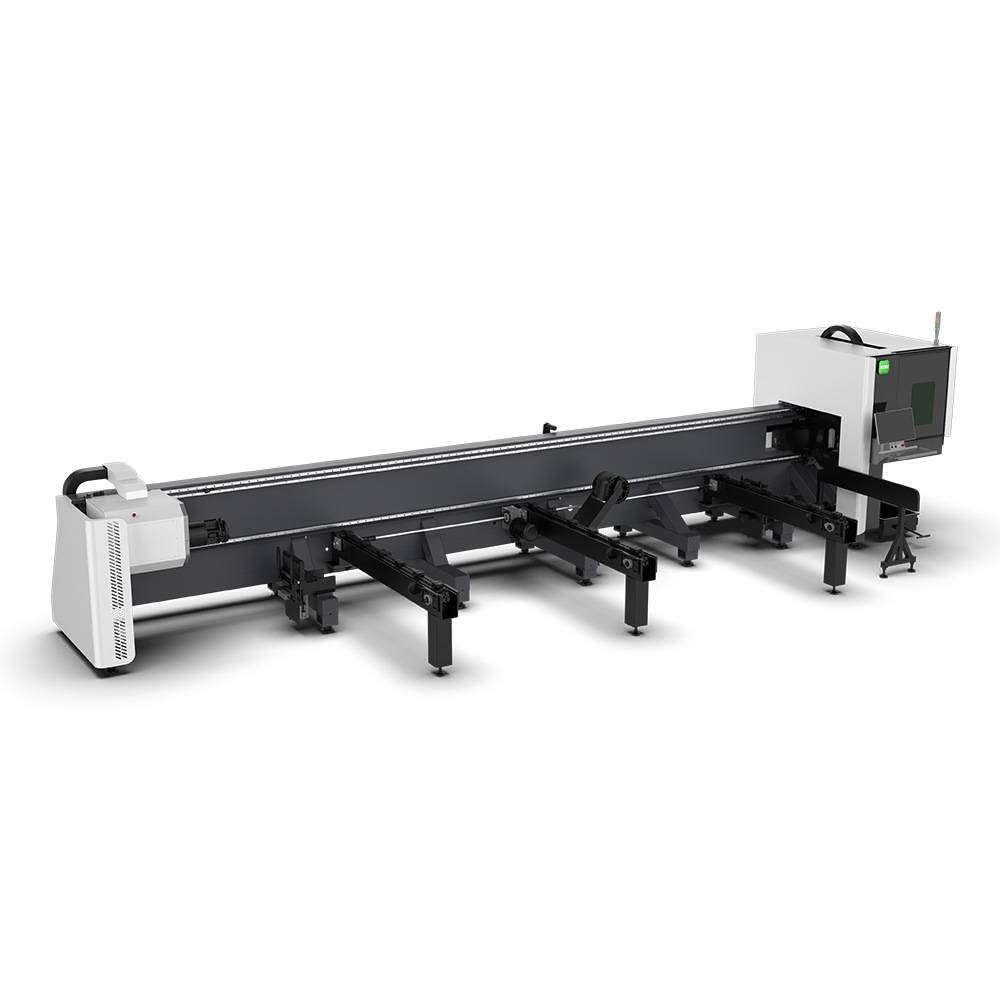
Advanced Fiber Laser Tube Processing Technology
Our CNC Fiber Laser Tube Cutting systems revolutionize metal fabrication by integrating high-precision cutting, punching, and profiling into a single automated workflow. Designed for versatility, this technology handles a wide array of profiles including Round, Square, Rectangular, and Oval tubes, as well as complex L-shaped and U-shaped channels.
- Precision Punching: High-speed hole punching with micron-level accuracy, eliminating the need for mechanical drilling or die-stamping.
- Complex Profiling: Advanced 3D pathing allows for intricate interlocking joints and specialized notch cuts, ideal for structural frames.
- High Material Efficiency: Intelligent nesting software minimizes scrap, reducing raw material costs across large production runs.
- Clean Finish: Delivers oxide-free, burr-free edges that require zero secondary grinding before welding.

Seamlessly processing multiple profiles with consistent precision.
Global Delivery & Logistics



From our high-tech manufacturing facility directly to your global site. PCL WeldCut ensures secure packaging, professional handling, and reliable international logistics to safeguard your equipment throughout the entire journey.