Field Engineering Report: Integration of Intelligent Arc Control in Gauteng Automotive Supply Chain
1. Project Overview and Site Conditions
This report summarizes the commissioning and optimization phase of the Project JHB-MAG-2024, located in the Elandsfontein industrial corridor, Johannesburg. The primary objective was the deployment of a high-speed Automated MAG Welding Cell designed to process 1.2mm to 2.0mm mild steel components for the local automotive sector.
Operating in the Johannesburg environment presents specific geographical challenges. The high altitude (approx. 1,750m) affects atmospheric pressure and, consequently, shielding gas density and cooling rates. Furthermore, the local power grid stability necessitated the integration of heavy-duty surge protection and specialized Arc Welding Solutions capable of handling voltage fluctuations without compromising the digital waveform control required for Thin Metal Sheet welding.
2. The Technical Challenge: Thin Metal Sheet Welding
The core difficulty at this site involved the fabrication of complex geometry assemblies using DC01 and S235 cold-rolled steel. Prior to the automation upgrade, the facility relied on manual GMAW, which resulted in a 14% reject rate due to thermal distortion and burn-through.
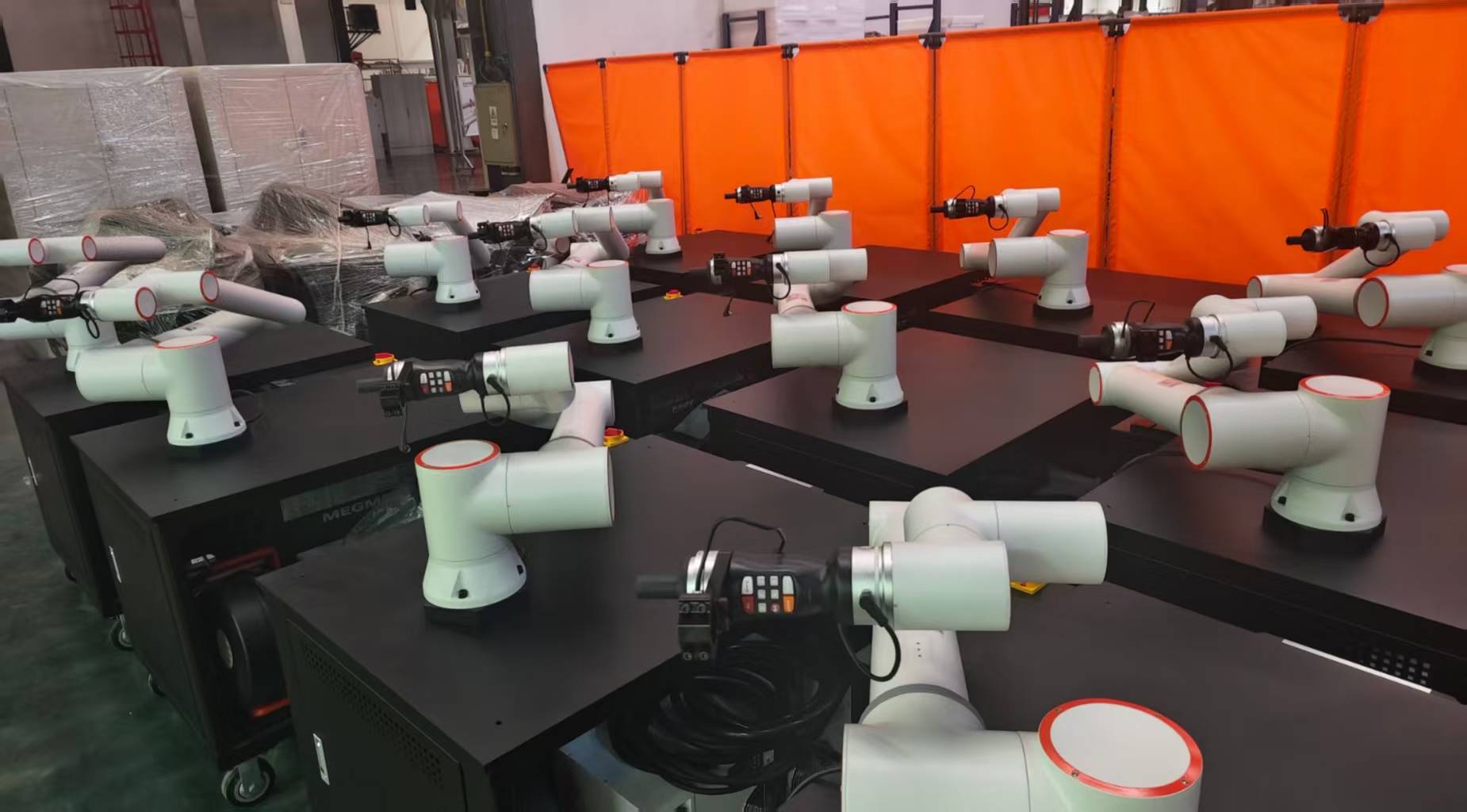
Thin Metal Sheet welding requires a very narrow operating window. If the heat input exceeds the critical threshold (measured in kJ/mm), the high thermal expansion coefficient of the thin gauge material leads to buckling. Conversely, reducing the current too far results in lack of fusion or “cold-lapping.” Our approach focused on moving away from traditional short-circuit transfer to a modified, high-speed pulsed process managed by the Automated MAG Welding Cell‘s internal control logic.
3. Implementing the Automated MAG Welding Cell
The hardware configuration consists of a 6-axis industrial manipulator integrated with a 500A inverter power source. However, the “Cell” is more than the robot; it is the synchronization of the wire feed assembly, the torch geometry, and the rotary positioner.
3.1 Robotic Integration and Torch Pathing
In Johannesburg’s high-volume production environment, cycle time is the primary KPI. We optimized the Automated MAG Welding Cell to run at travel speeds exceeding 80 cm/min. To achieve this on 1.2mm sheets, we implemented a “Push” torch angle of 10 to 15 degrees. This technique flattens the bead profile and reduces penetration depth, which is vital for preventing blow-through on thin-gauge materials.
3.2 Wire Feed Consistency
We identified a recurring feeding issue during the first week. The solution involved switching to a four-roll drive system with high-precision U-groove rollers. Given the dust levels in the Gauteng industrial zones, we also implemented enclosed drum feeders to ensure the 0.8mm ER70S-6 wire remained free of contaminants that cause arc instability.
4. Deploying Advanced Arc Welding Solutions
The “intelligence” of the cell resides in the Arc Welding Solutions—specifically the software-driven waveform control. We utilized a proprietary “Cold Process” algorithm that monitors the droplet detachment in real-time.
4.1 Waveform Modification
For the Thin Metal Sheet welding applications, we programmed the power source to utilize a modified short-arc. This involves a high-frequency sampling rate (up to 100kHz) that detects the onset of a short circuit and preemptively reduces the current. This prevents the “explosion” of the molten bridge, drastically reducing spatter and minimizing the post-weld cleaning required in the Johannesburg facility.
4.2 Synergy Between Software and Hardware
The synergy between the Automated MAG Welding Cell and our Arc Welding Solutions is most evident in the gap-bridging capabilities. In real-world manufacturing, fit-up is rarely perfect. The intelligent arc control allows the robot to sense the arc voltage variations. If the gap widens, the system automatically adjusts the weaving frequency and the peak current to “bridge” the gap without manual intervention. This level of adaptability has reduced our rework rate from 14% to under 0.5%.
5. Lessons Learned: Practical Field Observations
After three months of 24/7 operation in the JHB workshop, several critical lessons have emerged regarding the application of an Automated MAG Welding Cell for Thin Metal Sheet welding.
5.1 Shielding Gas Optimization
Initial tests using a standard 80/20 Ar-CO2 mix were inconsistent. Due to the lower atmospheric pressure in Johannesburg, we found that increasing the Argon content to 92% (92/8 mix) provided a more stable plasma column. This shift in the Arc Welding Solutions package allowed for a smoother transition into the spray-arc realm at lower voltages, which is essential for high-speed sheet work.
5.2 Grounding and Electrical Noise
In many Johannesburg plants, the electrical earthing is substandard. We learned that the high-frequency components of the Automated MAG Welding Cell‘s inverter were being fed back into the robot controller, causing intermittent E-stop triggers. We solved this by installing a dedicated copper earth spike for the cell and using shielded communication cables for the Arc Welding Solutions interface. Engineering note: Never trust factory earthing for high-speed digital welding.
5.3 Contact Tip Longevity
High-speed Thin Metal Sheet welding generates a specific type of radiant heat. We found that standard copper tips were softening too quickly, leading to “keyholing” and erratic arc wander. We transitioned to Chrome-Zirconium (CuCrZr) tips. While more expensive, they maintained the Contact Tip to Work Distance (CTWD) integrity over 8-hour shifts, ensuring the Automated MAG Welding Cell maintained its precision.
6. Thermal Management and Distortion Control
The most significant hurdle in Thin Metal Sheet welding remains the management of the Heat Affected Zone (HAZ). Through the Arc Welding Solutions dashboard, we implemented a “Stitch and Jump” sequence. Instead of a continuous 600mm seam, the Automated MAG Welding Cell was programmed to weld 50mm segments in a non-linear order. This allowed for heat dissipation across the workpiece, keeping the overall part temperature below 150°C and eliminating the need for expensive straightening jigs.
7. Maintenance Protocol for the JHB Environment
The Johannesburg climate is characterized by dry, dusty winters. This dust is often conductive in industrial areas. Our Automated MAG Welding Cell maintenance schedule was revised to include weekly blow-outs of the power source heat sinks and monthly ultrasonic cleaning of the wire feed rollers. Failure to do this resulted in “micro-slippage” of the wire, which the Arc Welding Solutions would try to compensate for by increasing voltage—eventually leading to burn-through on the 1.2mm sheets.
8. Economic and Technical Summary
The integration of this Automated MAG Welding Cell has transformed the production capabilities of the Johannesburg facility. By leveraging high-end Arc Welding Solutions, we have successfully tackled the inherent difficulties of Thin Metal Sheet welding at scale.
Final Technical Metrics:
- Cycle Time Reduction: 42% compared to manual GMAW.
- Consumable Efficiency: 18% reduction in wire waste due to spatter control.
- Quality Assurance: 100% of welds passed the visual and macro-etch requirements for automotive structural integrity.
The synergy between the robotic hardware and the intelligent software control is the only viable path for high-volume Thin Metal Sheet welding in the modern South African context. The project is now moving into the Phase 2 expansion, which will include a second Automated MAG Welding Cell specialized for aluminum alloy welding using the same Arc Welding Solutions framework.
Senior Welding Engineer: J. van der Merwe
Location: Johannesburg Site Office
Status: Commissioning Complete / Production Active
-


LT240S tube laser cutting machine
-
LT120S tube laser cutting machine
-
Sale

Tank Fillet Welding Machine
Original price was: $1,000.00.$900.00Current price is: $900.00. -
Sale

MAK100 tube laser cutting machine
Original price was: $5,500.00.$5,000.00Current price is: $5,000.00. -

portable plasma air cutting machine
$1,200.00 -

2in1 fiber laser cutting machine
-

Air cooling Laser welding machine
-

HF h beam laser cutting machine
-

LT240 laser cutting machine
-

Laser welding machine
-


Cobot Welding Station
-

Gantry welding robot solution
-

Tracked Wheeled AGV Welding robot
-

LFH6020 Fiber laser cutting machine
-
LFP6020
-

robotic welidng machine
Advanced Fiber Laser Tube Processing Technology
Our CNC Fiber Laser Tube Cutting systems revolutionize metal fabrication by integrating high-precision cutting, punching, and profiling into a single automated workflow. Designed for versatility, this technology handles a wide array of profiles including Round, Square, Rectangular, and Oval tubes, as well as complex L-shaped and U-shaped channels.
- Precision Punching: High-speed hole punching with micron-level accuracy, eliminating the need for mechanical drilling or die-stamping.
- Complex Profiling: Advanced 3D pathing allows for intricate interlocking joints and specialized notch cuts, ideal for structural frames.
- High Material Efficiency: Intelligent nesting software minimizes scrap, reducing raw material costs across large production runs.
- Clean Finish: Delivers oxide-free, burr-free edges that require zero secondary grinding before welding.

Seamlessly processing multiple profiles with consistent precision.
Global Delivery & Logistics



From our high-tech manufacturing facility directly to your global site. PCL WeldCut ensures secure packaging, professional handling, and reliable international logistics to safeguard your equipment throughout the entire journey.