Field Evaluation Report: Intelligent Arc Control Integration in Gulf Coast Pipe Fabrication
1.0 Introduction and Site Context
This report details the technical deployment and performance evaluation of a 6-Axis Collaborative Welder within a high-output fabrication facility located in Houston, Texas. The primary objective was to transition a significant portion of the facility’s galvanized pipe welding requirements from manual stations to a semi-autonomous cell. In the Texas industrial sector, particularly regarding infrastructure and energy transport, the demand for corrosion-resistant galvanized piping is constant. However, the metallurgical challenges of welding over zinc coatings typically require highly skilled manual operators who are increasingly difficult to recruit and retain in the current labor market.
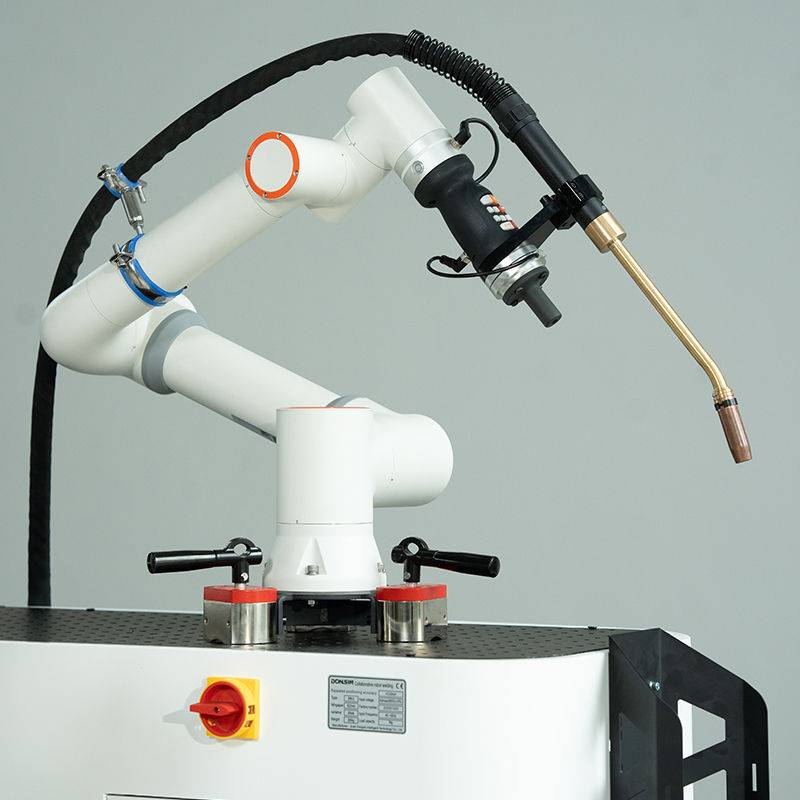
The implementation centered on the synergy between “Automated Welding” precision and the flexibility of the “6-Axis Collaborative Welder.” Unlike traditional industrial robots that require extensive safety screening and complex PLC programming, the collaborative approach allowed for rapid deployment on the shop floor, working alongside human fitters to maintain a continuous production flow.
2.0 The Technical Challenge: Galvanized Pipe Welding
Welding galvanized steel presents a unique set of variables that often defeat standard automated systems. The zinc coating has a boiling point (approx. 1,665°F) significantly lower than the melting point of the steel substrate (approx. 2,500°F-2,800°F). As the arc strikes the work-piece, the zinc vaporizes instantaneously. If the weld pool solidifies too quickly, this vapor becomes trapped, resulting in gross porosity and wormholes.
2.1 Metallurgical Instability
In our Houston trials, we observed that traditional constant voltage (CV) power sources led to excessive spatter when encountering the zinc vapor. This spatter fouls the gas nozzle, causing shielding gas turbulence which further exacerbates porosity. To solve this, we utilized the Intelligent Arc Control’s specific pulse-on-pulse waveforms, which were programmed into the 6-Axis Collaborative Welder’s software suite. The goal was to oscillate the heat input to allow the zinc vapor to escape before the puddle froze.
3.0 Deployment of the 6-Axis Collaborative Welder
The “6-Axis Collaborative Welder” was selected for its degree of freedom. When dealing with pipe geometries—specifically 4-inch to 8-inch Schedule 40 galvanized pipe—the torch must maintain a consistent work angle and travel angle relative to the circumference. A 6-axis system allows the torch to navigate the complex 5G or 6G positions if the pipe is stationary, or to provide intricate weaving patterns when paired with a secondary rotational axis.
3.1 Synergy with Automated Welding Workflows
The transition to Automated Welding in this Texas facility wasn’t just about replacing a hand with a machine; it was about the synergy of “Lead-Through Programming.” Our senior welders used the collaborative nature of the arm to physically move the torch along the desired path, recording waypoints for the galvanized pipe welding cycle. This “teaching” phase took less than ten minutes per joint configuration, effectively bridging the gap between manual expertise and robotic repeatability.
4.0 Results: Intelligent Arc Control Performance
During the 30-day field test, we focused on “Intelligent Arc Control” as the primary software driver. This system monitors the arc impedance in real-time, adjusting the wire feed speed and voltage at micro-second intervals to compensate for the erratic arc behavior caused by zinc gas ionization.
4.1 Spatter Reduction and Post-Weld Cleanup
In manual galvanized pipe welding, spatter often necessitates hours of post-weld grinding and re-galvanizing (cold galv spray). By utilizing the 6-Axis Collaborative Welder’s precise torch oscillation, we achieved a 70% reduction in spatter. The arc control maintained a short, stable arc that “pushed” the zinc oxide away from the leading edge of the puddle, ensuring better fusion at the toes of the weld.
4.2 Penetration and Porosity Benchmarks
X-ray testing of 50 sample joints showed a 94% first-pass success rate. The remaining 6% showed minor pinpoint porosity at the 12 o’clock position (the start/stop point), which was corrected by adjusting the “crater fill” parameters in the automated welding sequence. The 6-Axis Collaborative Welder provided a level of consistency in the root pass that manual welders struggled to hit under the high-humidity conditions of the Houston summer, which typically affects gas shielding efficiency.
5.0 Field Lessons Learned: The “Texas Reality”
Deploying high-tech “Automated Welding” solutions in a standard Texas workshop environment provided several practical insights that aren’t found in a laboratory manual.
5.1 Environmental Factors
Humidity in the Gulf Coast region is a significant factor. We discovered that galvanized pipe welding is even more sensitive to moisture when automated. Any condensation on the zinc surface leads to hydrogen-induced cracking. We implemented a pre-heat cycle using a localized induction heater, which the 6-Axis Collaborative Welder was programmed to wait for via an I/O signal. This integration is crucial for any automated welding setup in the South.
5.2 Torch Maintenance and Consumables
The abrasive nature of zinc oxide dust is hard on equipment. Even with a 6-Axis Collaborative Welder, the liner and contact tip wear faster than with mild steel. We moved to a chrome-zirconium copper tip and implemented an automated nozzle cleaning station (reamer) that the robot visits every five joints. This “lesson learned” prevented wire feeding issues that initially plagued the first week of the trial.
5.3 The Human Element
One of the most significant wins was the shift in shop culture. Initially, there was skepticism regarding the “Automated Welding” of galvanized materials, which is notoriously “dirty” work. However, once the welders realized the 6-Axis Collaborative Welder could handle the bulk of the fumes and the awkward positions, they transitioned into “Cobot Operators,” focusing on fit-up quality and parameter optimization rather than inhaling zinc oxide fumes all day.
6.0 Comparative Productivity Analysis
To quantify the success of the 6-Axis Collaborative Welder, we tracked the following metrics against a manual baseline:
- Arc-On Time: Increased from 35% (manual) to 75% (automated).
- Deposition Rate: The cobot maintained a steady 6.5 lbs/hr using a specialized metal-cored wire, compared to the 3.2 lbs/hr average for manual SMAW/GMAW on galv pipe.
- Rework Costs: Dropped from $450 per manifold to $85 per manifold, primarily due to the reduction in grinding and re-coating requirements.
7.0 Conclusion and Recommendations
The integration of the 6-Axis Collaborative Welder into the galvanized pipe welding workflow has proven technically viable and economically superior for our Texas operations. The synergy between the “Intelligent Arc Control” and the physical reach of the 6-axis arm allows for a level of precision that compensates for the inherent volatility of zinc-coated substrates.
For future deployments, I recommend the following:
7.1 Implementation of Metal-Cored Wire
While solid wire (ER70S-6) is standard, metal-cored wire specifically formulated for galvanized steel should be the default for automated welding. It provides a wider arc cone which helps in “scouring” the zinc off the surface ahead of the puddle.
7.2 Expanded Sensor Integration
While the lead-through programming is excellent for standard pipe, adding a laser seam tracker would allow the 6-Axis Collaborative Welder to compensate for slight variations in pipe roundness or fit-up gaps without human intervention, further pushing the “Automated Welding” capability toward a lights-out operation.
7.3 Fume Extraction at the Source
Even though the system is collaborative and “safe,” galvanized pipe welding produces toxic fumes. A torch-mounted extraction system is mandatory. We found that the 6-axis arm handled the extra weight of the extraction hose without any loss in positional accuracy or repeatability.
The Houston facility will now move to Phase 2, which involves the installation of four additional units to handle the upcoming municipal water project contracts. The era of manual galv pipe welding as a primary production method is effectively over at this site.
Signed,
Senior Welding Engineer
Houston, Texas District Office
-

Cantilever Welding Robot solution
-

GF laser cutting machine
-
P3015 plasma cutting machine
-

LFP3015 Fiber Laser Cutter
-
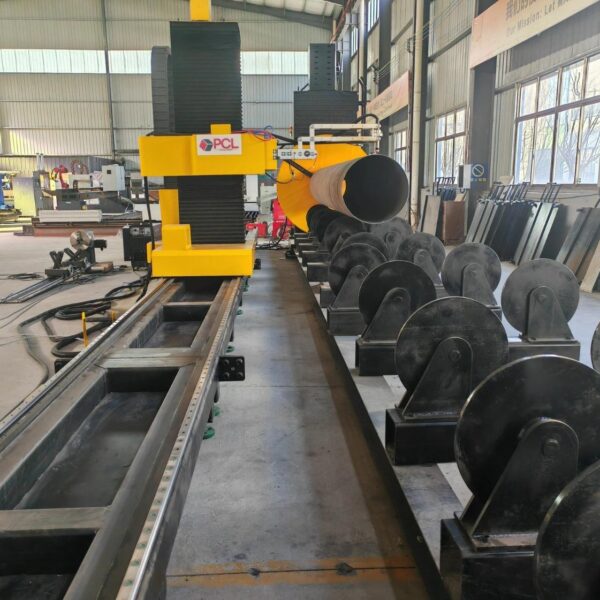
pipe plasma cutting machine
-
LFH 4020 Fiber Laser Cutting Machine
-
LFP4020
-
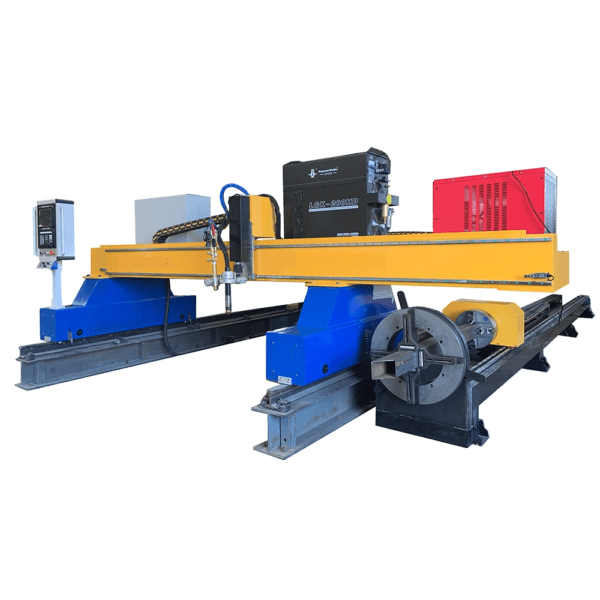
gantry plasma air cutting machine
-
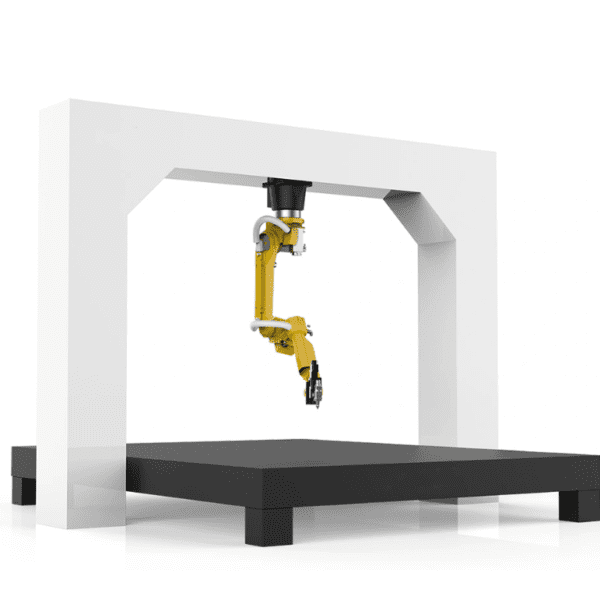
3D robot cutting machine
-
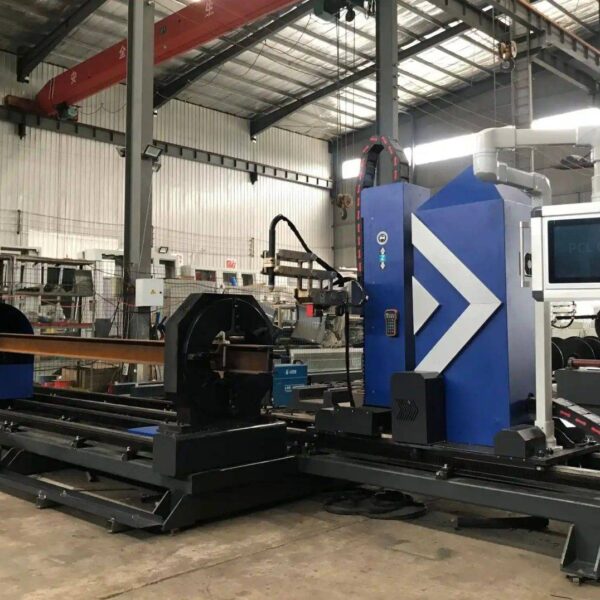
8 axis plasma cutting machine
-
5 axis plasma cutting machine
-

LT360 tube laser cutting machine
-
robot welding workstation
-
SF6060 fiber laser cutting machine
Advanced Fiber Laser Tube Processing Technology
Our CNC Fiber Laser Tube Cutting systems revolutionize metal fabrication by integrating high-precision cutting, punching, and profiling into a single automated workflow. Designed for versatility, this technology handles a wide array of profiles including Round, Square, Rectangular, and Oval tubes, as well as complex L-shaped and U-shaped channels.
- Precision Punching: High-speed hole punching with micron-level accuracy, eliminating the need for mechanical drilling or die-stamping.
- Complex Profiling: Advanced 3D pathing allows for intricate interlocking joints and specialized notch cuts, ideal for structural frames.
- High Material Efficiency: Intelligent nesting software minimizes scrap, reducing raw material costs across large production runs.
- Clean Finish: Delivers oxide-free, burr-free edges that require zero secondary grinding before welding.

Seamlessly processing multiple profiles with consistent precision.
Global Delivery & Logistics



From our high-tech manufacturing facility directly to your global site. PCL WeldCut ensures secure packaging, professional handling, and reliable international logistics to safeguard your equipment throughout the entire journey.