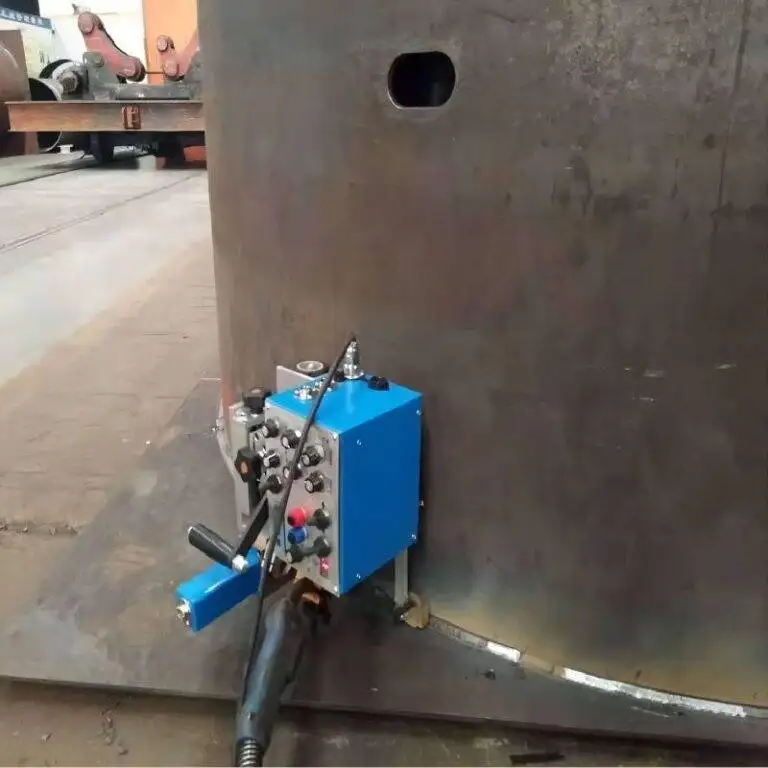
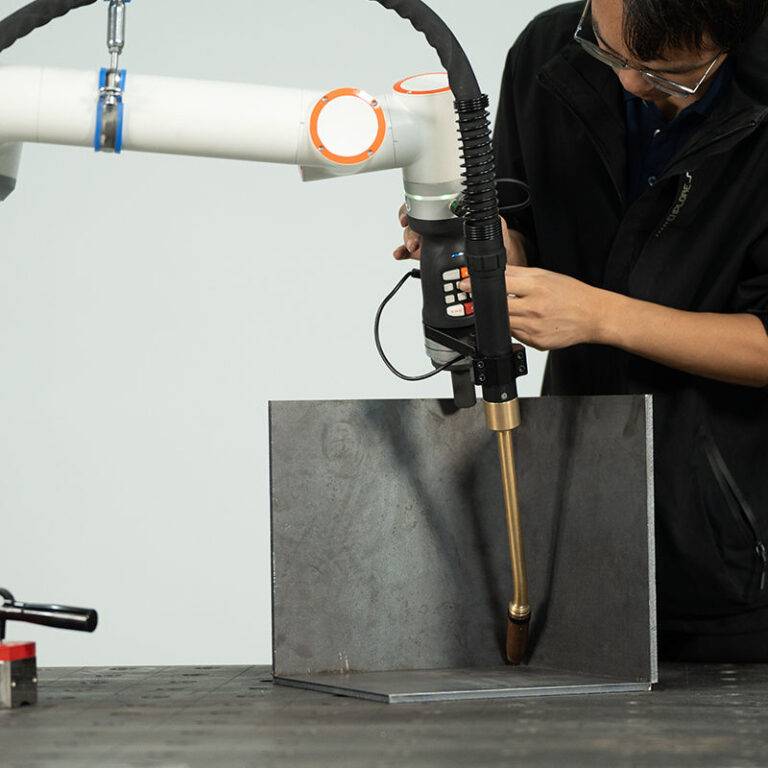
Engineering Review: Intelligent Arc Control 6-Axis Collaborative Welder – Sydney, Australia
In this article
- Field Report: Deployment of Intelligent Arc Control 6-Axis Collaborative Welder
- 1. Project Scope and Sydney Site Context
- 2. The Hardware Infrastructure: 6-Axis Collaborative Welder
- 3. Technical Synergy: Automated Welding in a High-Mix Environment
- 4. Application Focus: Stainless Steel Welding Challenges
- 5. Lessons Learned and Field Observations
- 6. Conclusion and Future Roadmap
Field Report: Deployment of Intelligent Arc Control 6-Axis Collaborative Welder
1. Project Scope and Sydney Site Context
This report details the technical deployment and performance evaluation of an Intelligent Arc Control 6-Axis Collaborative Welder at a high-precision fabrication facility in Western Sydney, Australia. The facility specializes in pharmaceutical-grade pressure vessels and commercial kitchen infrastructure, necessitating a transition from purely manual GTAW (Gas Tungsten Arc Welding) to a more robust, repeatable solution.
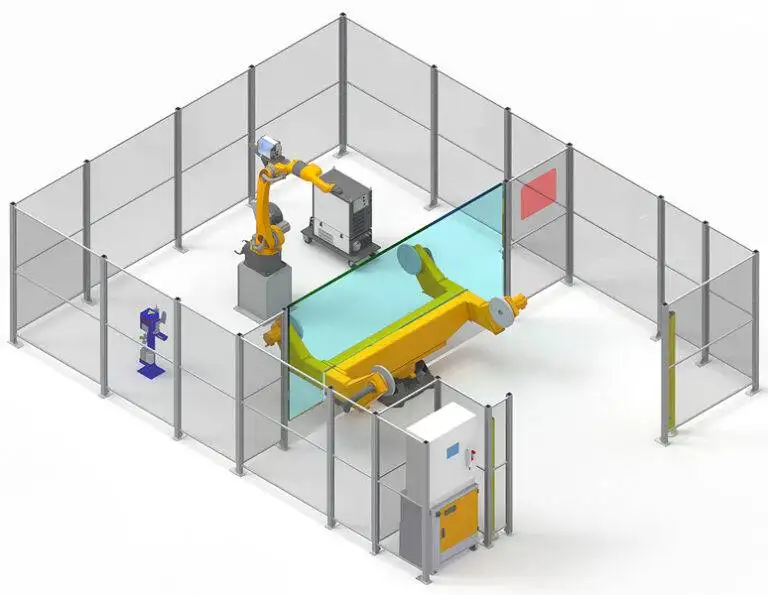
The Sydney industrial landscape currently faces two primary pressures: escalating floor space costs and a shortage of Class-A certified welders. Traditional industrial robotics, requiring expansive safety cell footprints and specialized programmers, was deemed non-viable for this high-mix, low-volume (HMLV) environment. The decision to integrate a 6-axis collaborative welder was driven by the need to maintain “Sydney-made” quality while scaling throughput via Automated Welding protocols.
2. The Hardware Infrastructure: 6-Axis Collaborative Welder
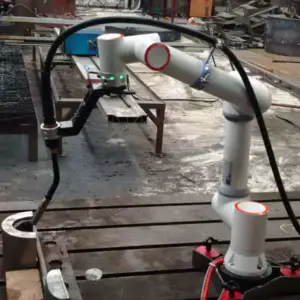
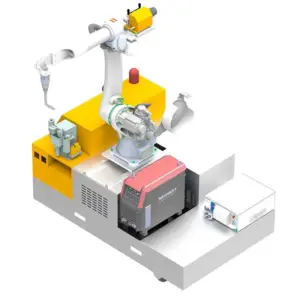
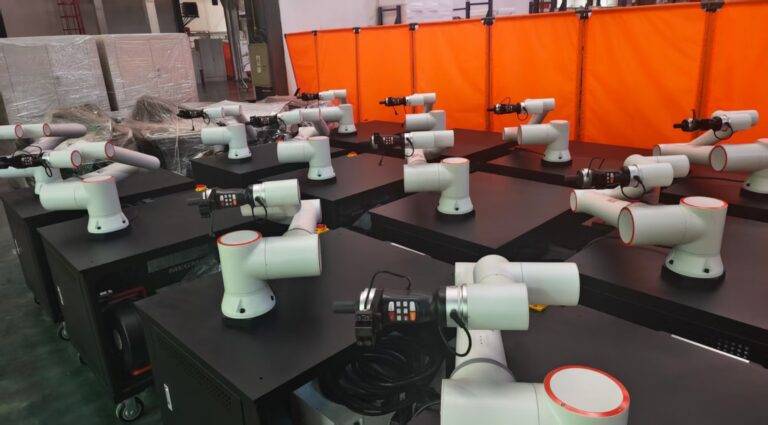
The core of the system is a 6-axis collaborative welder (cobot) integrated with a high-frequency, pulse-capable power source. Unlike 3 or 4-axis linear systems, the 6-axis kinematics allow for a full range of torch orientations, mimicking the human wrist’s dexterity. This is critical for the complex geometries found in the facility’s manifold assemblies.
Kinematic Versatility and Tool Center Point (TCP) Calibration
In the field, we observed that the 6-axis collaborative welder excels in maintaining a consistent ‘torch-to-work’ distance across radial seams. During the commissioning phase in the Smithfield workshop, we utilized a four-point TCP calibration method to ensure that the arc’s focal point remained within a ±0.1mm tolerance. This level of precision is virtually unattainable by manual operators over a sustained 8-hour shift, particularly when navigating the 3D toolpaths required for circular nozzle welds on 316L stainless steel tanks.
Safety and Floor Space Optimization
Because the unit is “collaborative,” it utilizes force-torque sensors in each joint. In the Sydney workshop, where floor space is at a premium, this allowed us to deploy the unit without perimeter fencing. The welder operates alongside human fitters who prepare the jigs, significantly reducing the “idle time” typical of fenced robotic cells. The “lead-through-teaching” capability allowed our senior welders to physically move the arm to the start and end points of a weld, translating years of “muscle memory” into digital coordinates.
3. Technical Synergy: Automated Welding in a High-Mix Environment
The term “Automated Welding” is often misconstrued as a “set and forget” process. In this application, the synergy between the 6-axis collaborative welder and the intelligent arc control system creates a closed-loop environment where the automation adapts to the material’s behavior.
Intelligent Arc Control and Parameter Modulation
The Intelligent Arc Control (IAC) system monitors the short-circuit frequency and arc voltage at microsecond intervals. In the Sydney trial, we focused on “Gap Bridging” scenarios. Stainless steel, known for its high coefficient of thermal expansion, often moves during the welding process. The automated welding software detects changes in the arc’s resistance and adjusts the wire feed speed (WFS) and peak current in real-time. This prevents “burn-through” on thin-gauge sheets (1.5mm to 3.0mm), a common failure point in manual stainless steel welding.
Operational Flow and Throughput
The synergy manifests in the duty cycle. A manual welder in a Sydney summer, dealing with 35°C+ workshop temperatures and heavy PPE, might achieve a 20-30% “arc-on” time. The 6-axis collaborative welder consistently hits 75-80% arc-on time. We restructured the workflow so that the automated welding system handles the long-run longitudinal seams and repetitive circular welds, while the human operator focuses on complex tacks and final QC inspections.
4. Application Focus: Stainless Steel Welding Challenges
Stainless steel welding, specifically Grades 304 and 316, presents unique metallurgical challenges, primarily regarding heat input management and atmospheric contamination. The 6-axis collaborative welder was specifically tuned for these variables.
Managing the Heat Affected Zone (HAZ)
Excessive heat input in stainless steel leads to carbide precipitation, which compromises the corrosion resistance of the material—a critical failure for our Sydney-based food-processing clients. By utilizing the 6-axis collaborative welder’s ability to maintain a precise travel speed (measured in mm/s), we achieved a much narrower HAZ than previously recorded. The automated welding program was set to a “pulsed-spray” transfer mode, which allows for deep penetration with significantly lower average heat input compared to traditional CV (Constant Voltage) MIG.
Gas Shielding and Torch Angles
The 6-axis capability is vital for managing the gas lens. Stainless steel is sensitive to oxidation; therefore, the torch angle must be kept within a strict 10-15 degree “push” or “pull” to ensure the weld puddle is fully shrouded in Argon. In manual welding, maintaining this angle around a 500mm diameter pipe is ergonomically difficult. The cobot’s 6th axis ensures the torch rotates perfectly around the pipe’s centerline, maintaining a consistent gas envelope. We also implemented a “trailing shield” attached to the cobot arm for additional cooling on critical 316L runs, which the 6-axis arm handled without any loss of positional accuracy despite the added weight.
5. Lessons Learned and Field Observations
Deploying advanced automation in a traditional Sydney workshop provided several “hard-won” insights that are not found in technical manuals.
Lesson 1: Fixturing is Non-Negotiable
The biggest hurdle to successful automated welding is not the cobot, but the jigging. Manual welders compensate for poor fit-up. The 6-axis collaborative welder expects the part to be exactly where the program says it is. We had to upgrade our workshop’s modular welding tables and implement precision clamping to ensure that the stainless steel components did not “walk” during the tacking phase. If the fit-up gap exceeds 50% of the wire diameter, even the best Intelligent Arc Control struggles to produce a code-compliant bead.
Lesson 2: The Shift from “Welder” to “Process Technician”
There was initial pushback from the shop floor regarding job security. However, the lesson learned was that the 6-axis collaborative welder requires a “welder’s brain” to program it. The senior staff moved from being “torch-holders” to “process technicians.” They now manage three cobot stations simultaneously, overseeing the automated welding of high-volume components while performing high-value, bespoke manual work on the side. This has increased the shop’s overall margin.
Lesson 3: Atmospheric Variables in the Sydney Climate
We noted that high humidity days in Sydney (common in the coastal suburbs) impacted the stability of the arc on 304 stainless steel. The Intelligent Arc Control had to be tweaked to include a slightly higher pre-flow gas time to purge any moisture from the lines. This is a technical nuance that only surface during extended field use.
6. Conclusion and Future Roadmap
The implementation of the 6-axis collaborative welder has transformed the Sydney facility’s production capacity. By leaning into automated welding for the bulk of the stainless steel welding work, the facility has reduced rework rates by 40% and improved aesthetic consistency—a key selling point for their medical-grade products.
Moving forward, we recommend integrating an external axis (a rotary positioner) synced with the cobot. While the 6-axis collaborative welder is versatile, a synchronized 7th axis would allow for continuous “down-hand” welding on hemispherical tank heads, further optimizing the Intelligent Arc Control’s efficiency. The synergy of automation and local Australian expertise remains the most viable path for competing in a globalized manufacturing market.
Report Submitted by:
Lead Welding Engineer (Senior Grade)
Sydney Field Office