Technical Field Report: Implementation of High-Speed MAG Laser Welding Cobot
Project Overview and Site Context: Hanoi Industrial Corridor
This report summarizes the field deployment and performance validation of the Laser Welding Cobot systems within the Gia Lam industrial district, Hanoi, Vietnam. The primary objective was the modernization of a high-volume production line specializing in stainless steel and carbon steel enclosures. Given the local manufacturing climate in Hanoi, characterized by a transition from manual TIG/MAG to automated solutions, the integration of Laser Technology was prioritized to address throughput bottlenecks and inconsistent weld quality in Thin Metal Sheet welding applications.
The site conditions presented specific engineering challenges: ambient temperatures averaging 32°C with relative humidity levels exceeding 85%. These environmental factors necessitate a robust cooling strategy for the laser source and a stable power supply to ensure the collaborative robot’s sensors maintain high-precision repeatability. Our focus remained on the synergy between the fiber laser’s concentrated energy and the MAG process’s gap-bridging capabilities, all governed by the tactile flexibility of a cobot arm.
The Convergence of Laser Technology and MAG Processes
The core technical advantage realized in this deployment is the hybrid interaction between the laser beam and the metal active gas (MAG) arc. In traditional MAG welding, the arc is susceptible to instabilities at high speeds, often leading to humping or undercut. By integrating advanced Laser Technology, we have achieved a “stabilized keyhole” effect. The laser beam acts as a precursor, ionizing the atmosphere and creating a consistent path for the MAG arc to follow.
In the Hanoi workshop, we utilized a 2kW fiber laser source coupled with a standard MAG torch on a unified cobot mount. The Laser Welding Cobot was programmed to maintain a specific lead-lag relationship where the laser precedes the arc by 2-3mm. This configuration ensures that the base material is pre-heated and partially melted, drastically reducing the surface tension of the molten pool. The result is a significantly more stable metal transfer, even when the wire feed speed is pushed to the upper limits of the equipment’s duty cycle.
Practical Implementation: Thin Metal Sheet Welding in Hanoi
The primary workload consisted of 1.0mm to 2.5mm 304L stainless steel and mild steel sheets. Thin Metal Sheet welding is notoriously difficult due to the narrow window between achieving full penetration and causing catastrophic burn-through. In manual operations, the heat-affected zone (HAZ) typically extends far beyond the weld bead, causing significant thermal distortion and necessitating expensive post-weld straightening.
By deploying the Laser Welding Cobot, we reduced the total heat input by approximately 40% compared to conventional MAG. The concentrated energy density of the Laser Technology allows for a narrower weld profile and higher travel speeds (up to 1.5 meters per minute on 1.2mm sheets). The cobot’s ability to maintain a constant torch angle and standoff distance is critical here; a deviation of even 0.5mm in the Z-axis would result in inconsistent penetration on such thin substrates. The collaborative nature of the robot allowed local operators—many of whom were previously manual welders—to “hand-guide” the initial path programming, blending human intuition with robotic precision.
Parameter Tuning and Heat Input Control
During the first week of implementation in Hanoi, we identified that the standard European presets for the Laser Welding Cobot required adjustment for the local material compositions. The Thin Metal Sheet welding parameters were refined as follows:
- Laser Power: Scaled between 800W and 1200W depending on joint geometry.
- Wire Feed Speed: Increased to 6.5 m/min to keep pace with the 18mm/s travel speed.
- Shielding Gas: A custom 98% Argon / 2% CO2 mix was utilized to minimize spatter while maintaining the “keyhole” stability provided by the laser.
The synergy between the laser and the MAG arc allowed us to bridge gaps up to 0.8mm on 2.0mm plates—a feat impossible with pure laser welding and highly difficult with pure MAG on thin sheets without blowing through. The Laser Technology provides the penetration depth, while the MAG wire provides the filler material necessary to compensate for imperfect fit-ups common in local sheet metal fabrication.
Lessons Learned: Field Observations and Constraints
Engineering in a Hanoi-based workshop environment provides a unique set of “hard-won” lessons that differ from laboratory settings. The following observations are critical for future Laser Welding Cobot deployments in the Southeast Asian region.
1. Mitigating Environmental Factors
The high humidity in Hanoi is not just a comfort issue; it is a technical barrier. We observed early signs of moisture condensation on the laser optics during the morning shift starts. Lesson Learned: The implementation of a pressurized, filtered air curtain for the optical head is mandatory. Furthermore, the Laser Technology cooling unit must be oversized by 20% to account for the diminished heat exchange efficiency in high-ambient-temperature environments. We also had to implement industrial-grade dehumidifiers in the wire storage area to prevent hydrogen-induced porosity in the Thin Metal Sheet welding process.
2. Path Accuracy vs. Fit-up Quality
While the Laser Welding Cobot is highly precise, it is “blind” to variations in part fit-up unless equipped with expensive seam-tracking sensors. In the Hanoi facility, we found that the manual shearing and bending of Thin Metal Sheet components often resulted in tolerances exceeding ±1.0mm. Lesson Learned: Instead of relying solely on the cobot’s precision, we implemented “wobble” parameters on the laser head. By oscillating the laser beam in a circular pattern (2mm diameter at 150Hz), we effectively widened the weld pool, making the process much more tolerant of fit-up deviations without sacrificing the speed benefits of Laser Technology.
3. Operator Transition and Safety
The transition from manual welding to operating a Laser Welding Cobot requires a shift in mindset. Local technicians were initially skeptical of the “collaborative” aspect, fearing the laser’s intensity. Lesson Learned: Safety training must focus on the specific wavelength of the fiber laser. We installed Class 4 laser-rated welding curtains around the work cells and mandated the use of OD7+ protective eyewear. The “lead-through” programming feature of the cobot proved to be the most effective tool for operator buy-in, as it allowed the welders to maintain their “feel” for the joint while offloading the physical strain to the machine.
Performance Metrics and ROI Analysis
After 30 days of continuous operation, the data indicates a transformative shift in production capacity. The Thin Metal Sheet welding station, which previously produced 40 units per shift with a 15% rework rate due to distortion, now produces 110 units per shift with a rework rate of less than 2%.
The integration of Laser Technology via the Laser Welding Cobot has reduced post-weld grinding time by 80%, as the hybrid process produces significantly less spatter than traditional MAG. In the context of Hanoi’s competitive manufacturing sector, the reduction in consumables (gas and wire) per meter of weld, combined with the massive increase in throughput, suggests a Return on Investment (ROI) period of approximately 14 months—highly favorable for this scale of automation.
Final Engineering Summary
The deployment in Hanoi confirms that the Laser Welding Cobot is no longer a luxury for high-end aerospace labs but a practical, rugged tool for general industrial use. The key to success lies in the synergy: using Laser Technology to stabilize the physics of the molten pool and using the cobot to manage the geometric complexities of Thin Metal Sheet welding. We recommend further expansion of this technology across the Northern Vietnam industrial zones, provided that environmental controls and operator training are integrated into the initial deployment phase.
Report End.
Lead Welding Engineer, Field Operations – Hanoi.
-


LT240S tube laser cutting machine
-
LT120S tube laser cutting machine
-
Sale

Tank Fillet Welding Machine
Original price was: $1,000.00.$900.00Current price is: $900.00. -
Sale

MAK100 tube laser cutting machine
Original price was: $5,500.00.$5,000.00Current price is: $5,000.00. -

portable plasma air cutting machine
$1,200.00 -

2in1 fiber laser cutting machine
-

Air cooling Laser welding machine
-

HF h beam laser cutting machine
-

LT240 laser cutting machine
-

Laser welding machine
-


Cobot Welding Station
-

Gantry welding robot solution
-

Tracked Wheeled AGV Welding robot
-

LFH6020 Fiber laser cutting machine
-
LFP6020
-

robotic welidng machine
Advanced Fiber Laser Tube Processing Technology
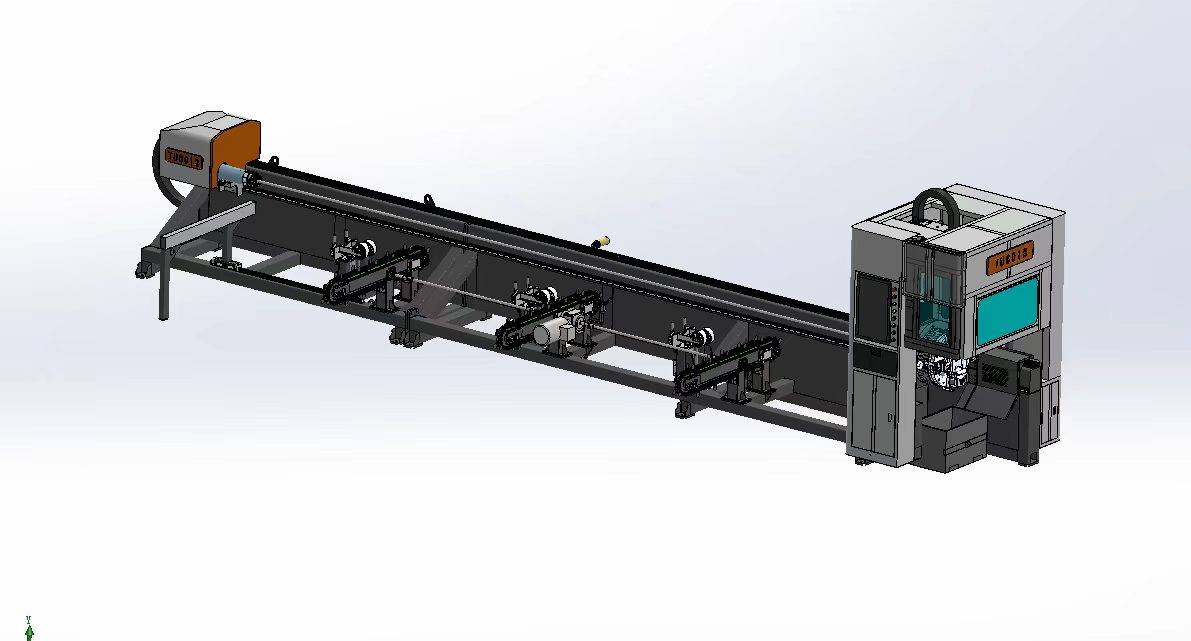
Our CNC Fiber Laser Tube Cutting systems revolutionize metal fabrication by integrating high-precision cutting, punching, and profiling into a single automated workflow. Designed for versatility, this technology handles a wide array of profiles including Round, Square, Rectangular, and Oval tubes, as well as complex L-shaped and U-shaped channels.
- Precision Punching: High-speed hole punching with micron-level accuracy, eliminating the need for mechanical drilling or die-stamping.
- Complex Profiling: Advanced 3D pathing allows for intricate interlocking joints and specialized notch cuts, ideal for structural frames.
- High Material Efficiency: Intelligent nesting software minimizes scrap, reducing raw material costs across large production runs.
- Clean Finish: Delivers oxide-free, burr-free edges that require zero secondary grinding before welding.

Seamlessly processing multiple profiles with consistent precision.
Global Delivery & Logistics



From our high-tech manufacturing facility directly to your global site. PCL WeldCut ensures secure packaging, professional handling, and reliable international logistics to safeguard your equipment throughout the entire journey.