Field Report: Deployment of Heavy-Duty MAG Cobot Welder in Sao Paulo Infrastructure Project
1. Project Scope and Environmental Context
This report details the field implementation of an automated MAG Cobot Welder system within a heavy-industrial workshop located in the Guarulhos district of Sao Paulo, Brazil. The facility specializes in the fabrication of large-scale structural steel welding components for urban transit expansions. The primary objective was to transition high-volume, repetitive fillet welds from manual operations to a collaborative robotic framework to address a localized shortage of certified high-pressure welders.
The Sao Paulo environment presents specific challenges for high-precision Arc Welding Solutions. During the June-August window, ambient humidity levels fluctuate significantly, impacting gas shield integrity and potential hydrogen-induced cracking in high-tensile steels. Furthermore, the local power grid in this industrial zone exhibits periodic voltage drops. Our deployment necessitated the use of high-end inverter power sources with robust line-voltage compensation to ensure the cobot’s arc characteristics remained consistent across three shifts.
2. Technical Synergy: Integrating MAG Cobot Welder into Modern Arc Welding Solutions
The success of this deployment relied on the seamless synergy between the MAG Cobot Welder and the broader arc welding solutions ecosystem. In a heavy-duty setting, a cobot is not a standalone tool; it is a collaborative interface for a high-output power source. We utilized a 500-amp water-cooled power supply integrated via a dedicated fieldbus gateway to the cobot controller.
3. Process Optimization for Structural Steel Welding
When dealing with structural steel welding, specifically ASTM A36 and NBR 7007 plates ranging from 12mm to 25mm in thickness, the MAG (Metal Active Gas) process was tuned for high-deposition spray transfer. We moved away from the traditional short-circuit transfer to minimize spatter and maximize penetration depth.
3.1. Gas Composition and Flow Dynamics
In the Sao Paulo facility, we standardized an 82% Argon / 18% CO2 mixture. This blend provided the necessary arc stiffness for the MAG Cobot Welder to maintain a stable plasma column during high-speed oscillations. Field observation noted that flow rates needed to be increased to 22 L/min due to the workshop’s open-bay cross-drafts, a common logistical reality in Brazilian industrial architecture.
3.2. Wire Feed and Contact Tip Longevity
For heavy structural steel welding, we utilized 1.2mm ER70S-6 solid wire. A recurring issue in the first week was “burn-back” during the cobot’s crater-fill sequence. The lesson learned here was the necessity of high-performance zirconium-chromium-copper contact tips. Standard copper tips could not withstand the 90% duty cycle the cobot achieved, leading to micro-arcs within the tip and inconsistent wire delivery.
4. Field Implementation: The “Collaborative” Reality
The term “cobot” often implies a plug-and-play simplicity that does not exist in heavy arc welding solutions. In Sao Paulo, the implementation required rigorous jigging and fixture engineering. Unlike manual welders, the MAG Cobot Welder cannot “see” a 2mm gap variance unless equipped with expensive laser-seam tracking.
4.1. Path Programming and Touch Sensing
We utilized “Lead-Through” programming for the initial pathing on the structural I-beams. However, we found that for structural steel welding of 6-meter spans, thermal distortion caused the joint to migrate mid-weld. We implemented a “Touch-Sensing” protocol where the cobot uses the welding wire to detect the plate’s actual position before striking the arc. This 10-second pre-check saved approximately 4 hours of rework per shift by ensuring the root pass was always centered.
4.2. Safety and Shop Floor Integration
The Sao Paulo facility had strict NR-12 (Brazilian Safety Standard) requirements. Despite the cobot’s inherent safety sensors, the intensity of the MAG arc required localized screening. We designed mobile welding curtains that moved with the cobot base, allowing other workers to continue prep work on adjacent beams without UV exposure. This integration of arc welding solutions with local safety mandates is critical for legal compliance in the Brazilian market.
5. Performance Data and Metallurgical Results
After 60 days of operation, the data confirms a significant shift in production metrics. The MAG Cobot Welder maintained an “Arc-On” time of 72%, compared to the 32% average of manual welders in the same bay. This increase is not due to travel speed—which remained capped at 450mm/min to ensure throat thickness—but due to the elimination of operator fatigue and repositioning delays.
5.1. Macro-Etch Analysis
Cross-sectional analysis of the 10mm fillet welds on NBR 7007 steel showed superior fusion at the toes compared to manual samples. The MAG Cobot Welder provides a level of torch angle consistency that humans cannot replicate over an 8-hour shift. Porosity levels were measured at less than 1% per 100mm of weld, well within the AWS D1.1 structural code requirements.
5.2. Heat Input Control
One of the primary “lessons learned” involved heat management. The high duty cycle of the cobot resulted in higher interpass temperatures than the procedures allowed. We had to program “cooling skips”—moving the cobot to a different section of the beam while the previous section cooled below 250°C. This is a vital consideration for structural steel welding to prevent the enlargement of the Heat Affected Zone (HAZ) and the subsequent loss of toughness.
6. Lessons Learned and Engineering Recommendations
Deploying a MAG Cobot Welder in a high-demand environment like Sao Paulo taught us several “hard-way” lessons that should be considered for future arc welding solutions:
- Consumable Quality is Non-Negotiable: Cheap welding wire with inconsistent copper coating will cause “chatter” in the cobot’s feed system, leading to arc instability. Use only premium-grade spools with precision winding.
- The “Ghost in the Machine”: Cobots are sensitive to Electromagnetic Interference (EMI). In the Guarulhos plant, the overhead cranes generated significant EMI. We had to upgrade the cobot’s data cables to double-shielded versions to prevent path deviations.
- Training the “Welder,” not the “Programmer”: The most successful operators were our best senior welders, not the IT staff. A welder understands puddle fluid dynamics; teaching a welder to move a robot arm is easier than teaching a programmer how to read a molten pool.
- Grounding Matters: In structural steel welding, the mass of the workpiece is immense. Inconsistent grounding caused “Arc Blow” in the cobot system. We implemented dual-grounding clamps directly on the jig rather than the table to ensure a stable return path.
7. Conclusion
The integration of the MAG Cobot Welder into the Sao Paulo project has proven that collaborative arc welding solutions are ready for heavy-duty structural steel welding. While the “collaborative” nature of the robot simplifies the interface, the metallurgical and electrical requirements remains as stringent as ever. The 35% increase in throughput and the reduction in ultrasonic testing (UT) failures justify the initial capital expenditure. Future phases will look into integrating AI-driven vision systems to further reduce the reliance on rigid fixturing, allowing the cobot to adapt to the inherent dimensional tolerances of hot-rolled steel in real-time.
Report Prepared By:
Senior Welding Engineer, Field Operations
Sao Paulo, Brazil Branch
-


LT240S tube laser cutting machine
-
LT120S tube laser cutting machine
-
Sale

Tank Fillet Welding Machine
Original price was: $1,000.00.$900.00Current price is: $900.00. -
Sale

MAK100 tube laser cutting machine
Original price was: $5,500.00.$5,000.00Current price is: $5,000.00. -

portable plasma air cutting machine
$1,200.00 -

2in1 fiber laser cutting machine
-

Air cooling Laser welding machine
-

HF h beam laser cutting machine
-

LT240 laser cutting machine
-

Laser welding machine
-


Cobot Welding Station
-

Gantry welding robot solution
-

Tracked Wheeled AGV Welding robot
-

LFH6020 Fiber laser cutting machine
-
LFP6020
-

robotic welidng machine
Advanced Fiber Laser Tube Processing Technology
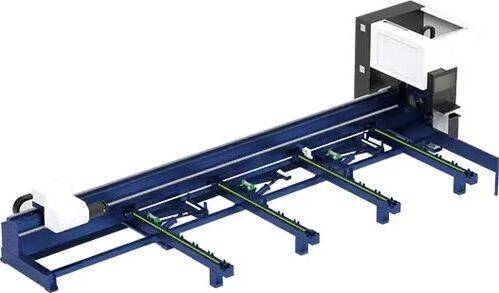
Our CNC Fiber Laser Tube Cutting systems revolutionize metal fabrication by integrating high-precision cutting, punching, and profiling into a single automated workflow. Designed for versatility, this technology handles a wide array of profiles including Round, Square, Rectangular, and Oval tubes, as well as complex L-shaped and U-shaped channels.
- Precision Punching: High-speed hole punching with micron-level accuracy, eliminating the need for mechanical drilling or die-stamping.
- Complex Profiling: Advanced 3D pathing allows for intricate interlocking joints and specialized notch cuts, ideal for structural frames.
- High Material Efficiency: Intelligent nesting software minimizes scrap, reducing raw material costs across large production runs.
- Clean Finish: Delivers oxide-free, burr-free edges that require zero secondary grinding before welding.

Seamlessly processing multiple profiles with consistent precision.
Global Delivery & Logistics



From our high-tech manufacturing facility directly to your global site. PCL WeldCut ensures secure packaging, professional handling, and reliable international logistics to safeguard your equipment throughout the entire journey.