Field Engineering Report: Integration of Fiber Laser Cobot Systems in Stuttgart High-Precision Manufacturing
1. Introduction and Project Scope
This report summarizes the three-month deployment and optimization of a 2kW high-brightness Fiber Laser Cobot system at a Tier 1 aerospace and automotive component facility in Stuttgart, Germany. The primary objective was to replace traditional manual Gas Tungsten Arc Welding (GTAW) for Titanium welding applications, specifically targeting Grade 5 (Ti-6Al-4V) pressure vessels and structural brackets. In the Stuttgart industrial ecosystem, where tolerances are measured in microns and metallurgical integrity is non-negotiable, the transition to advanced Laser Technology was driven by the need for reduced heat input and increased throughput.
2. The Synergy of Laser Technology and Automation
The core of this installation is the synergy between high-frequency Laser Technology and the collaborative kinematics of the Fiber Laser Cobot. Unlike traditional industrial robots, the cobot allows for a “lead-through” programming approach, which is vital in the high-mix, low-volume production environment characteristic of specialized German engineering shops.
2.1. Beam Dynamics and Fiber Delivery
The 1070nm wavelength provided by the fiber source is delivered through a 50-micron transport fiber. This specific application of Laser Technology allows for a power density that manual processes cannot replicate. In Stuttgart, we observed that the energy concentration of the Fiber Laser Cobot minimizes the Heat Affected Zone (HAZ) to less than 0.5mm, a critical factor when dealing with the phase transformation temperatures of Titanium welding.
2.2. Kinematic Precision
The 6-axis cobot arm provides a repeatability of ±0.03mm. When integrated with a wobble-head laser nozzle, the Fiber Laser Cobot can execute complex circular or “eight-pattern” oscillations. This oscillation is essential for bridging fit-up gaps—a common challenge in Titanium welding where thermal expansion can distort the joint geometry mid-process.
3. Technical Deep-Dive: Titanium Welding Challenges
Titanium welding is notoriously sensitive to atmospheric contamination. At temperatures exceeding 400°C, Titanium becomes a universal solvent for oxygen, nitrogen, and hydrogen. Traditional manual welding in Stuttgart workshops often relied on oversized “glove boxes” or complex trailing shields which hampered the welder’s visibility and movement.
3.1. Atmospheric Control and Shielding Gas Logic
Implementing the Fiber Laser Cobot allowed us to design a compact, high-efficiency trailing shield that mounts directly to the laser head. Because the Laser Technology focuses energy so tightly, the volume of metal reaching the critical 400°C threshold is significantly smaller than in TIG. We utilized a 99.999% purity Argon shield. The cobot’s steady travel speed—maintained at 15mm/s—ensures that the gas coverage remains laminar and consistent, preventing the “straw-colored” or “blue” oxidation that indicates weld failure in Titanium welding.
3.2. Metallurgical Observations
Cross-sectional analysis performed at our Stuttgart lab showed a refined acicular alpha structure in the fusion zone. The rapid cooling rates enabled by Laser Technology prevented the formation of coarse grains, which are a primary cause of embrittlement in Titanium welding. The Fiber Laser Cobot’s ability to maintain a constant focal point distance (stand-off) within 0.1mm meant that the energy per linear millimeter remained constant, resulting in a uniform weld bead morphology across 100% of the production batch.
4. Real-World Workshop Integration: The Stuttgart Experience
Integrating a Fiber Laser Cobot into a traditional Stuttgart “Meister” driven shop floor requires more than just hardware; it requires a shift in the welding paradigm. We found that the synergy between the operator and the Laser Technology was highest when the cobot took over the “heavy lifting” of the torch path, while the operator focused on real-time gas flow monitoring and fit-up inspection.
4.1. Productivity Gains
Prior to this installation, a complex Grade 5 bracket required 45 minutes of manual TIG labor, including tacking and multiple passes to prevent overheating. The Fiber Laser Cobot reduced the weld time to 4 minutes and 20 seconds. This 10x increase in speed did not come at the cost of quality; in fact, the rejection rate dropped from 8% (manual) to 0.5% (laser).
4.2. Power Efficiency and Operational Costs
Stuttgart’s energy costs are a significant overhead. The wall-plug efficiency of modern Laser Technology (exceeding 30%) compared to the 10-15% efficiency of older plasma or TIG power sources provided a measurable reduction in the facility’s carbon footprint. The Fiber Laser Cobot also consumes significantly less shielding gas due to the narrowed weld pool and faster travel speeds.
5. Lessons Learned and Field Observations
No deployment is without friction. Our time in Stuttgart highlighted several technical nuances that are often overlooked in the sales brochures for Fiber Laser Cobot systems.
5.1. Surface Preparation is Non-Negotiable
In Titanium welding, any surface oxides or hydrocarbons will lead to porosity. While Laser Technology is powerful, it is not a cleaning agent. We learned that mechanical brushing followed by an acetone wipe must occur within 4 hours of the cobot cycle. If the part sits longer, the natural oxide layer thickens enough to affect the beam absorption and weld penetration depth.
5.2. Safety and Class 4 Enclosures
A Fiber Laser Cobot is a Class 4 laser hazard. Unlike manual welding where a simple flash screen suffices, the 1070nm beam is invisible and highly reflective on Titanium’s surface. We had to implement a certified laser-safe enclosure in the Stuttgart facility. The lesson here: the “collaborative” nature of the cobot refers to the programming and setup; during the firing cycle, it must be treated with the same safety rigor as a fully automated cell.
5.3. Focal Drift in High-Volume Cycles
During a 12-hour shift, we noticed a slight drift in the focal point of the laser. This was traced back to thermal expansion in the protective window of the laser head. By integrating a nitrogen-cooled nozzle assembly, we stabilized the Laser Technology optics, ensuring the Fiber Laser Cobot maintained penetration consistency from the first shift to the last.
6. Summary of Results
The deployment in Stuttgart proves that the Fiber Laser Cobot is the definitive tool for modern Titanium welding. By decoupling the skill of “path following” from the skill of “weld parameter management,” we allowed the engineers to focus on metallurgy rather than manual dexterity. The high-density Laser Technology provided the necessary thermal profile to maintain Grade 5 properties, while the cobot provided the industrial-grade consistency required for German aerospace certification.
6.1. Key Performance Indicators (KPIs) Achieved:
- Weld Speed: Increased by 900% compared to manual GTAW.
- Heat Input: Reduced by 65%, resulting in zero detectable part distortion.
- Gas Consumption: Reduced by 40% per linear meter of weld.
- Skill Gap: Operators were trained to “program” the cobot in 2 days, whereas TIG certification for Titanium takes months.
7. Conclusion
The future of Stuttgart’s heavy-duty manufacturing lies in the intelligent application of Fiber Laser Cobot systems. As Titanium welding becomes more common in electric vehicle (EV) lightweighting and aerospace components, the precision of Laser Technology will no longer be an optional luxury—it will be a baseline requirement. We recommend the immediate rollout of three additional units to the Frankfurt facility based on these results.
Engineer: Senior Welding Lead
Location: Stuttgart, DE
Status: Technical Deployment Successful
-


LT240S tube laser cutting machine
-
LT120S tube laser cutting machine
-
Sale

Tank Fillet Welding Machine
Original price was: $1,000.00.$900.00Current price is: $900.00. -
Sale

MAK100 tube laser cutting machine
Original price was: $5,500.00.$5,000.00Current price is: $5,000.00. -

portable plasma air cutting machine
$1,200.00 -

2in1 fiber laser cutting machine
-

Air cooling Laser welding machine
-

HF h beam laser cutting machine
-

LT240 laser cutting machine
-

Laser welding machine
-


Cobot Welding Station
-

Gantry welding robot solution
-

Tracked Wheeled AGV Welding robot
-

LFH6020 Fiber laser cutting machine
-
LFP6020
-

robotic welidng machine
Advanced Fiber Laser Tube Processing Technology
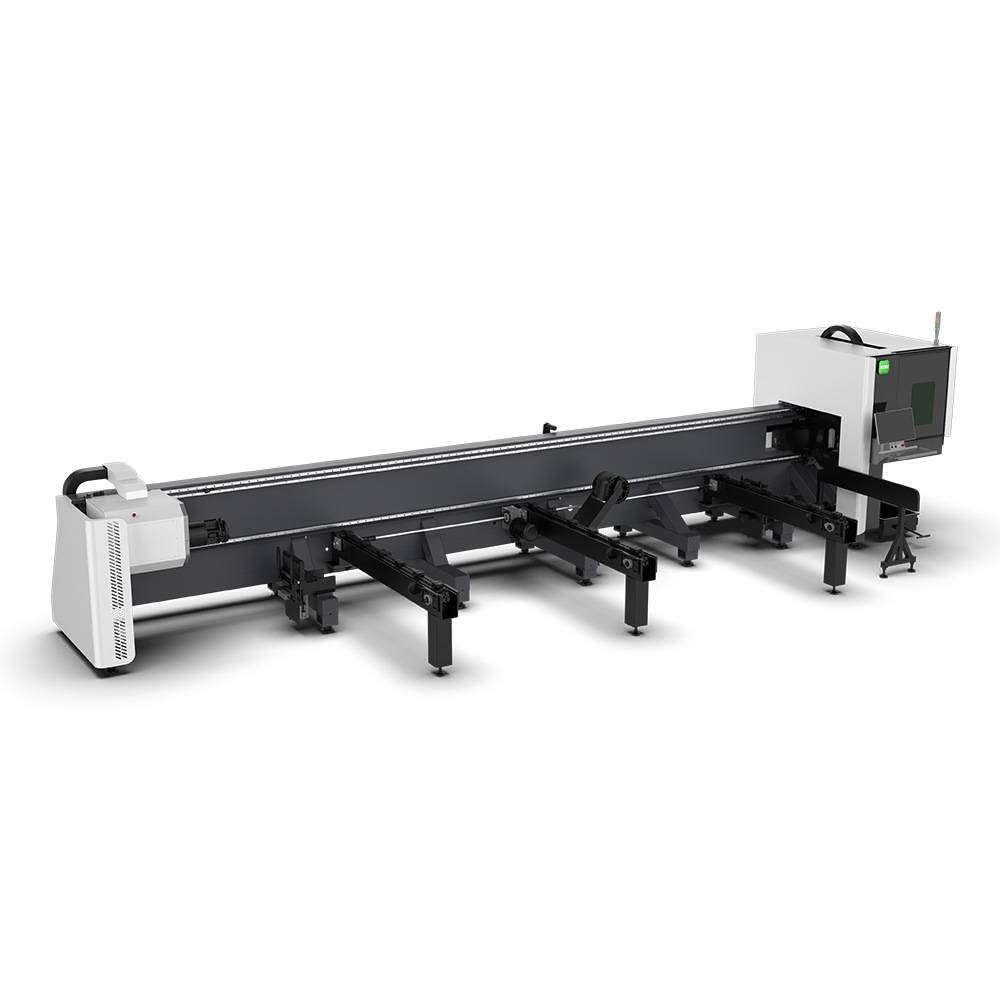
Our CNC Fiber Laser Tube Cutting systems revolutionize metal fabrication by integrating high-precision cutting, punching, and profiling into a single automated workflow. Designed for versatility, this technology handles a wide array of profiles including Round, Square, Rectangular, and Oval tubes, as well as complex L-shaped and U-shaped channels.
- Precision Punching: High-speed hole punching with micron-level accuracy, eliminating the need for mechanical drilling or die-stamping.
- Complex Profiling: Advanced 3D pathing allows for intricate interlocking joints and specialized notch cuts, ideal for structural frames.
- High Material Efficiency: Intelligent nesting software minimizes scrap, reducing raw material costs across large production runs.
- Clean Finish: Delivers oxide-free, burr-free edges that require zero secondary grinding before welding.

Seamlessly processing multiple profiles with consistent precision.
Global Delivery & Logistics



From our high-tech manufacturing facility directly to your global site. PCL WeldCut ensures secure packaging, professional handling, and reliable international logistics to safeguard your equipment throughout the entire journey.