Technical Deployment Report: Fiber Laser Cobot Integration in Quebec Metalworking
The Shift to Fiber Laser Technology in Northern Latitudes
The industrial landscape in Quebec, particularly across the manufacturing hubs of the South Shore and the Saguenay, is currently facing a dual challenge: an acute shortage of high-skill TIG welders and an increasing demand for high-aesthetic, low-distortion components. During my recent field deployment to a Tier-1 sheet metal facility in Lévis, we oversaw the transition from manual GMAW (Gas Metal Arc Welding) to an integrated Fiber Laser Cobot system.
The core of this transition lies in the fundamental physics of Laser Technology. Traditional arc welding relies on a broad thermal envelope. In contrast, fiber lasers—typically operating at the 1070nm wavelength—concentrate energy into a spot size as small as 0.1mm. For sheet metal fabrication welding, this means the Heat Affected Zone (HAZ) is reduced by approximately 70-80% compared to traditional methods. In the Quebec context, where many shops handle 304/316 stainless steel for the food processing and pharmaceutical sectors, minimizing the HAZ isn’t just a matter of strength; it’s about preserving the corrosion resistance and metallurgical integrity of the base metal.
Synergy: Why the ‘Cobot’ Defines the Modern Fiber Laser Platform
One of the most frequent questions I encounter on the shop floor is why we opt for a Fiber Laser Cobot rather than a fixed robotic cell. The answer is spatial flexibility and ease of programming (Lead-Through teaching). In a high-mix, low-volume environment—the bread and butter of Quebec’s SME industrial base—the ability to move the laser source to the workpiece, rather than vice versa, is a logistical game-changer.
The synergy between the Fiber Laser Cobot and modern Laser Technology is realized through the control interface. By mounting a handheld-style laser head onto a collaborative arm (like a UR10e or Fanuc CRX), we eliminate the primary variable of manual laser welding: human inconsistency in travel speed and standoff distance. Even a 2mm deviation in focal length can lead to a “burn-through” or lack of penetration. The cobot maintains a consistent 0.1mm tolerance on the Z-axis, ensuring that the power density remains constant across the entire seam.
Operational Parameters for Sheet Metal Fabrication Welding
In our field tests on 3mm aluminum (5052-H32) and 2mm stainless steel, we observed that Laser Technology allows for “wobble” welding—a technique where the beam oscillates in a circular or zig-zag pattern. This is a critical development for sheet metal fabrication welding because it compensates for imperfect fit-ups.
1. **Power Settings:** For 2mm stainless, we utilized a 1500W continuous wave (CW) output with a 4mm wobble width at 200Hz.
2. **Speed:** Travel speeds reached 40mm/s, roughly four times the speed of a skilled manual TIG operator.
3. **Shielding Gas:** We transitioned from pure Argon to a Nitrogen-heavy mix for the stainless components to increase cooling rates and maintain a bright, silver finish that requires zero post-weld pickling or grinding.
Lessons Learned from the Shop Floor
After three months of heavy-duty operation in a facility prone to the temperature fluctuations typical of Quebec winters, several practical “lessons learned” emerged that aren’t found in the manufacturer’s manual.
1. Managing Gap Tolerance and Fit-up
The biggest hurdle for shops moving into Fiber Laser Cobot territory is the “precision culture” shift. Sheet metal fabrication welding using traditional MIG/TIG is forgiving; a welder can fill a 1mm gap with filler wire easily. Laser Technology is not forgiving. Because the beam is so concentrated, if the gap exceeds 10% of the material thickness, the beam will simply pass through the joint without creating a melt pool (the “blow-through” effect).
*Lesson:* We had to implement laser-cut tab-and-slot designs for all upstream fabrication. If your laser cutter is out of calibration, your laser welder will fail. The cobot is only as good as the fit-up provided to it.
2. Power Stability and Environmental Control
In rural Quebec, industrial power grids can occasionally see voltage sags. Fiber laser sources are sensitive to these fluctuations. During the commissioning of the Fiber Laser Cobot, we noted that the chiller unit—essential for cooling the laser diodes—was struggling with the humidity spikes in the shop during the spring thaw.
*Lesson:* Ensure the laser source is equipped with an industrial-grade voltage stabilizer and that the optics are kept in a pressurized, dust-free housing. We learned the hard way that a single speck of dust on the protective lens can lead to a “thermal runaway” event, shattering the lens and causing $2,000 in downtime within seconds.
3. The ROI of ‘Post-Weld Aesthetics’
For many Quebec fabricators, the cost of the Fiber Laser Cobot is justified not by the welding speed alone, but by the elimination of the grinding department. In sheet metal fabrication welding, particularly for kitchen equipment or architectural panels, grinding and polishing can account for 50% of the total labor cost.
*Lesson:* By fine-tuning the Laser Technology parameters to produce a “flat” bead, we reduced post-weld processing time by 90%. The cobot produces a weld that is essentially “paint-ready.” This allows the shop to reallocate labor from the grinding booth to more value-added assembly tasks, a vital move given the current labor market.
Safety Protocols and CWB Compliance in Canada
Deploying a Fiber Laser Cobot in Quebec requires strict adherence to CSA W117.2 (Safety in welding, cutting, and allied processes). Unlike traditional welding, a laser is a Class 4 radiation hazard. The beam can reflect off a brushed stainless surface and cause permanent blindness to someone 50 meters away.
We implemented a “Laser Zone” with interlocking light curtains and 1064nm-rated OD7+ safety glass. It is imperative that the shop appoints a Laser Safety Officer (LSO). In our deployment, we also worked closely with the CWB (Canadian Welding Bureau) to validate the laser welding procedures (WPDS). While laser welding is relatively new in the CWB framework for structural applications, for non-structural sheet metal fabrication welding, it is rapidly becoming the gold standard for repeatable quality.
Integration with Local Quebec Software Ecosystems
A unique aspect of the Quebec industrial scene is the heavy reliance on localized ERP and CAD/CAM solutions. When integrating the Fiber Laser Cobot, we ensured the robot’s controller could communicate directly with the shop’s existing nesting software. This allows for a “Digital Twin” approach where the weld path is generated directly from the 3D model of the sheet metal part, reducing the “teaching” time for the cobot from hours to minutes.
Conclusion: The Future of Quebec’s Industrial Fabric
The integration of Fiber Laser Cobot systems represents a permanent shift in how we approach sheet metal fabrication welding. By leveraging the precision of Laser Technology, Quebec manufacturers can overcome the limitations of the labor shortage while simultaneously increasing the quality of their output.
However, the technology is not a “plug-and-play” solution. It requires a disciplined approach to upstream fabrication, a robust understanding of laser physics, and a commitment to new safety standards. As a senior engineer, my recommendation to any firm in the province looking to upgrade is this: solve your fit-up issues first. Once your parts are precise, the fiber laser will do the rest, providing a level of throughput that was simply impossible a decade ago.
The data from our Lévis deployment is clear: a 300% increase in seam-inches per hour and a 40% reduction in total energy consumption per part. The math for the Quebec shop floor simply makes sense.
-
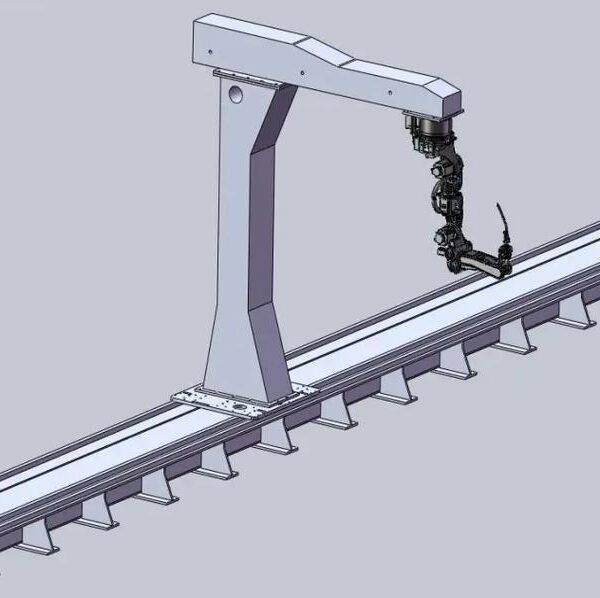

Cantilever Welding Robot solution
-
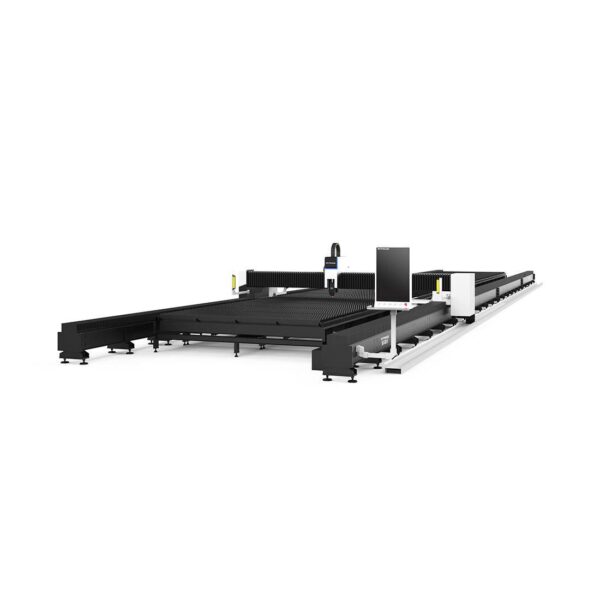

GF laser cutting machine
-
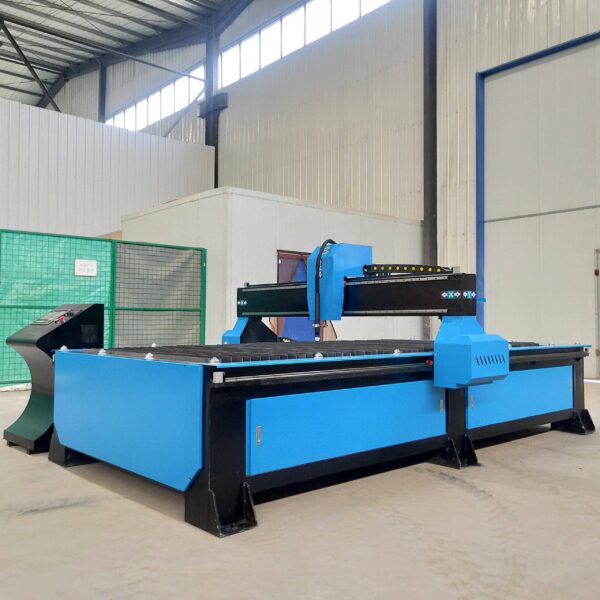
P3015 plasma cutting machine
-

LFP3015 Fiber Laser Cutter
-
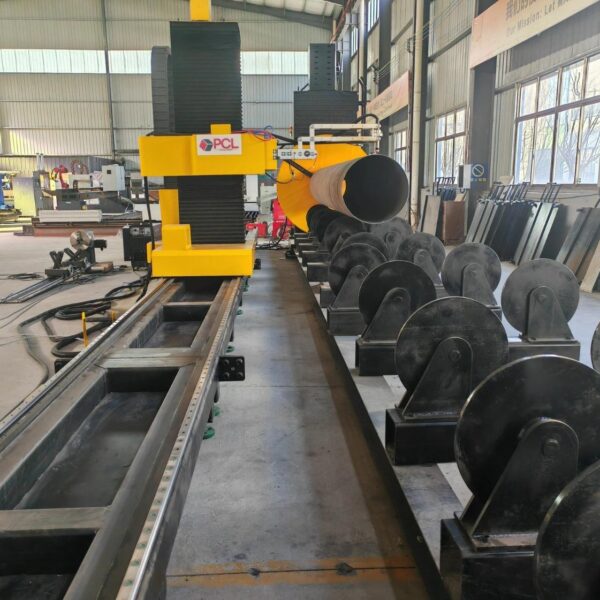
pipe plasma cutting machine
-
LFH 4020 Fiber Laser Cutting Machine
-
LFP4020
-
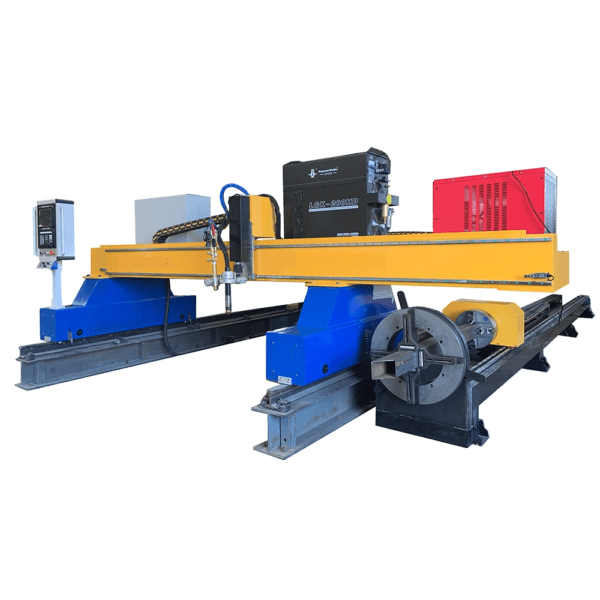
gantry plasma air cutting machine
-
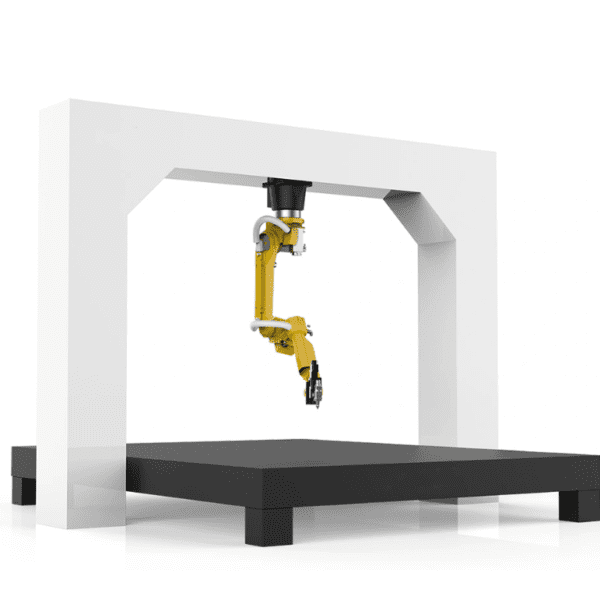
3D robot cutting machine
-
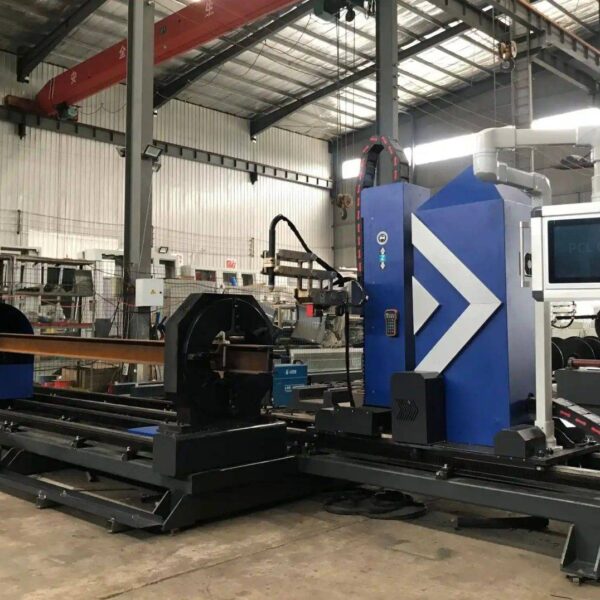
8 axis plasma cutting machine
-
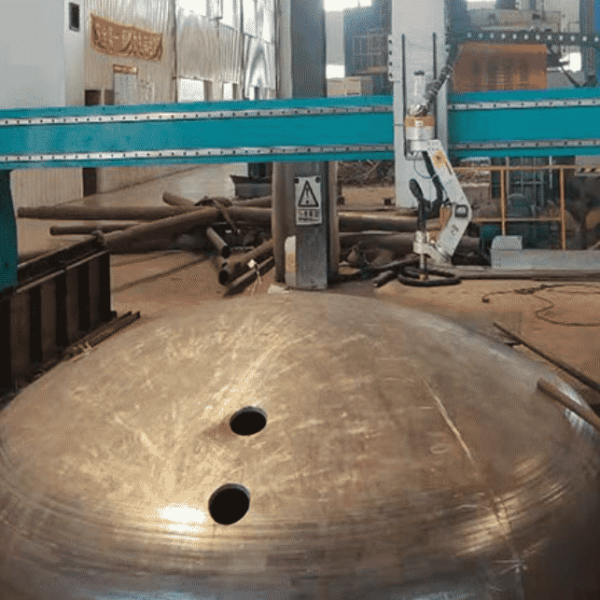
5 axis plasma cutting machine
-

LT360 tube laser cutting machine
-
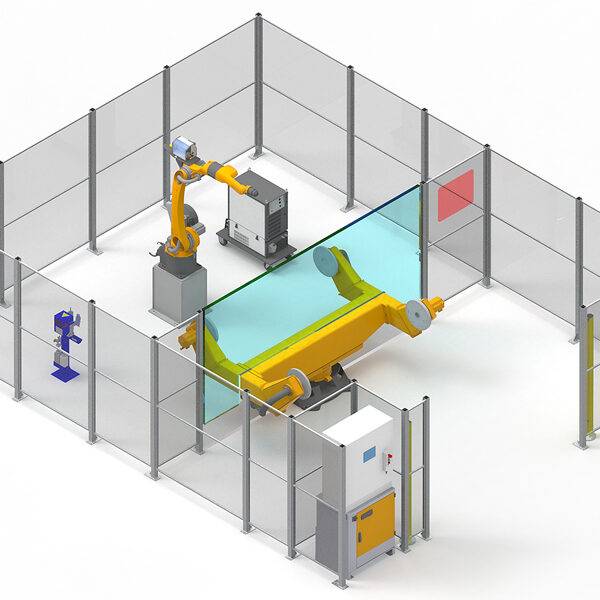
robot welding workstation
-
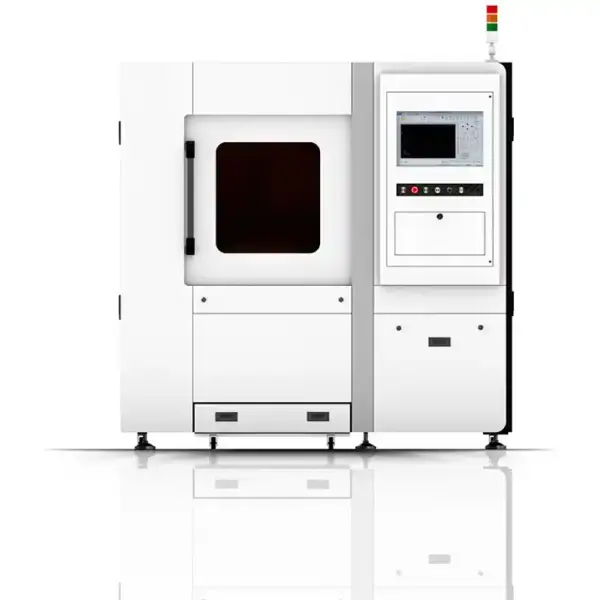
SF6060 fiber laser cutting machine
