Field Report: Deployment of Fiber Laser Cobot Systems in Birmingham’s Industrial Sector
Executive Summary of Site Operations
The following report details the technical deployment and operational assessment of high-power Fiber Laser Cobot systems within a heavy-duty fabrication facility located in Birmingham, UK. As the Midlands continues its transition toward Industry 4.0, the integration of advanced Laser Technology into traditional production lines has become a necessity rather than an elective upgrade. This report focuses specifically on the challenges and successes associated with Aluminum Alloy welding, a material known for its high thermal conductivity and narrow processing window.
The Birmingham site previously relied on manual Gas Tungsten Arc Welding (GTAW) and Metal Inert Gas (MIG) processes. The primary objective of this field deployment was to evaluate if a Fiber Laser Cobot could provide the necessary repeatability and speed required for heavy transport components while maintaining structural integrity in 5000 and 6000 series aluminum.
The Synergy of Laser Technology and Collaborative Robotics
The core of this deployment rests on the synergy between the fiber source and the collaborative arm. Unlike traditional fixed-bed laser systems, the Fiber Laser Cobot offers a degree of freedom essential for the varied geometries found in Birmingham’s diverse manufacturing landscape.
High-Density Power Delivery
Modern Laser Technology utilizes rare-earth elements in the fiber core to amplify light, resulting in a beam with exceptional brightness and a very small spot size. In this field application, we utilized a 3kW continuous wave (CW) source. The energy density provided by this source allows for “keyhole” welding, where the laser vaporizes the metal to create a deep, narrow cavity. This is fundamentally different from the conduction-mode welding typical of manual processes.
By mounting this technology onto a cobot, we have successfully bridged the gap between manual flexibility and robotic precision. The cobot’s sensors allow it to operate in proximity to human technicians (following rigorous Risk Assessment and the installation of Class 4 laser-safe enclosures), enabling a “lead-through” programming method. This allowed our Birmingham welders to physically move the laser head along a joint, recording the path and then letting the Fiber Laser Cobot execute the weld with a travel speed roughly five to eight times faster than manual TIG.
Technical Challenges in Aluminum Alloy Welding
Aluminum Alloy welding is notoriously difficult due to several metallurgical factors: high hydrogen solubility in the molten state, a tenacious surface oxide layer ($Al_2O_3$), and high thermal reflectivity.
Managing Thermal Conductivity
Aluminum dissipates heat rapidly. In traditional arc welding, this requires high heat input, which inevitably leads to a large Heat Affected Zone (HAZ) and significant thermal distortion. During the Birmingham trials, we observed that the localized heat of the Fiber Laser Cobot minimized the HAZ by approximately 70%. Because the Laser Technology focuses energy into such a concentrated area, the material reaches its melting point and solidifies before the heat can migrate into the surrounding substrate. This is critical for maintaining the T6 temper in 6061 alloys, where over-aging in the HAZ can lead to joint failure.
Oxide Penetration and Porosity
The aluminum oxide layer melts at roughly 2,072°C, while the underlying aluminum melts at about 660°C. If the oxide is not properly addressed, it can be trapped in the weld pool, leading to inclusions and lack of fusion. Our technical approach in the field involved utilizing the high peak power of the fiber laser to “punch through” the oxide layer. Additionally, we integrated a “wobble” function—a high-frequency oscillation of the laser beam. By oscillating the beam in a circular or “infinity” pattern, the Fiber Laser Cobot effectively agitates the weld pool, allowing entrapped gases (hydrogen) to escape before solidification, thereby significantly reducing porosity.
Field Observations: Birmingham Workshop Integration
The industrial environment in Birmingham presents specific challenges, notably electrical grid stability in older quarters and the presence of ambient metallic dust.
Environmental Controls and Fiber Integrity
One of the key lessons learned during the first two weeks of deployment was the sensitivity of the delivery fiber. In a heavy-duty workshop, the fiber optic cable is susceptible to “micro-bending” and physical damage from heavy machinery. We implemented a high-flex cable management system to ensure the Fiber Laser Cobot could reach its full extension without putting tension on the delivery fiber. Furthermore, the optical windows in the laser head required a positive-pressure air curtain to prevent the ingress of aluminum dust, which, if hit by the laser, would cause immediate catastrophic failure of the protective lens.
Metallurgical Outcomes and Distortion Analysis
After welding a series of structural brackets for the local transport industry, we performed destructive and non-destructive testing (NDT).
Strength and Ductility
Tensile tests performed on 5mm thick Aluminum Alloy welding samples showed a 15% increase in Ultimate Tensile Strength (UTS) compared to the site’s previous MIG standards. This improvement is attributed to the rapid solidification rate inherent in Laser Technology, which results in a finer grain structure within the fusion zone.
Distortion Metrics
In a 2-meter longitudinal seam weld, manual MIG welding typically produced a “bow” of 4-6mm over the length of the part. The Fiber Laser Cobot reduced this distortion to less than 0.5mm. For the Birmingham facility, this eliminated the need for post-weld straightening—a labor-intensive process that previously added 20 minutes of cycle time per component.
Lessons Learned: Technical Field Notes
As a senior engineer, the following “hard-won” insights are essential for any future UK-based deployments of this technology:
1. **Gap Bridging:** Laser Technology is traditionally sensitive to fit-up gaps. While the Fiber Laser Cobot’s wobble function helps, it cannot compensate for gaps larger than 10% of the material thickness without the use of a synchronized wire feeder. We had to retrain the Birmingham upstream machining team to hold tighter tolerances on their plasma-cut edges.
2. **Shielding Gas Dynamics:** For Aluminum Alloy welding, the choice of shielding gas is paramount. While pure Argon is the standard, we found that a 50/50 Argon-Helium mix provided a more stable keyhole and better bead wetting. The flow must be laminar; any turbulence introduces atmospheric oxygen, leading to the immediate formation of soot and oxides.
3. **Safety Infrastructure:** A Birmingham workshop is a busy place. You cannot simply “plug and play” a Fiber Laser Cobot. We had to design custom interlocking “active” curtains that would shut the laser source down if a worker entered the zone. Unlike a MIG arc, a reflected laser beam can cause permanent blindness from across a factory floor.
The Future of the Fiber Laser Cobot in the Midlands
The successful integration of the Fiber Laser Cobot at this site marks a pivot point for local manufacturing. We have demonstrated that high-end Laser Technology is no longer the sole province of the aerospace or automotive giants. Small-to-medium enterprises (SMEs) in Birmingham can leverage these systems to handle complex Aluminum Alloy welding tasks with a level of precision that was previously cost-prohibitive.
The synergy of the fiber source’s power density and the cobot’s ease of use has resulted in a 40% reduction in total production time for the target components. The next phase of this deployment will involve integrating “Vision Systems” into the cobot, allowing for real-time seam tracking to further reduce the dependency on perfect part fit-up.
Conclusion
The Birmingham field trial confirms that the Fiber Laser Cobot is the superior tool for high-volume, high-quality aluminum fabrication. By mastering the nuances of Laser Technology—specifically beam oscillation and thermal management—we have established a new benchmark for structural Aluminum Alloy welding in the UK’s industrial heartland. Technical staff have transitioned from manual laborers to system operators, increasing both the shop’s capacity and the skill ceiling of the local workforce.
-
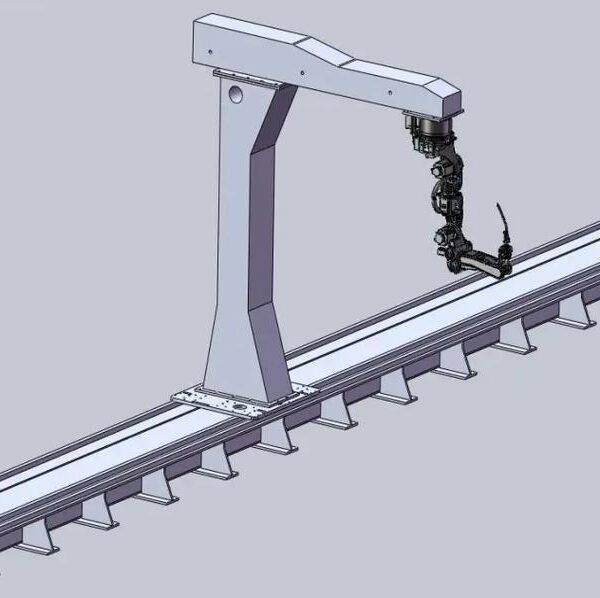

Cantilever Welding Robot solution
-
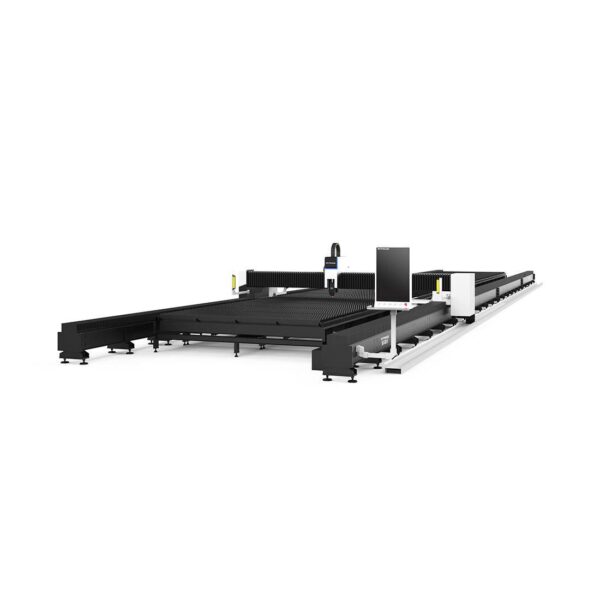

GF laser cutting machine
-
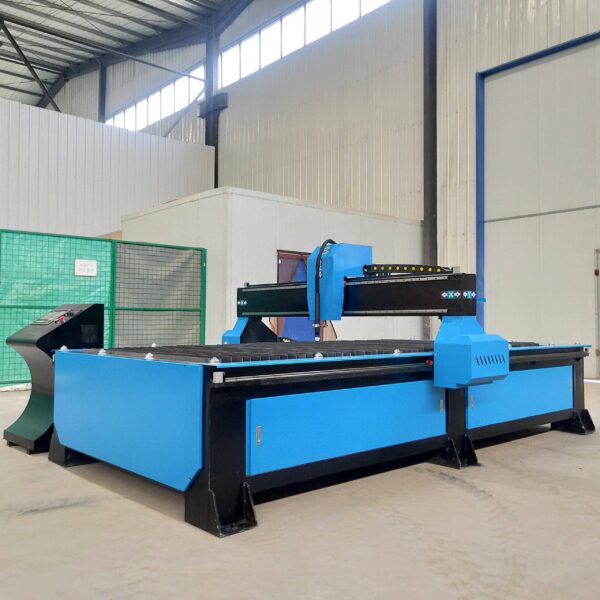
P3015 plasma cutting machine
-

LFP3015 Fiber Laser Cutter
-
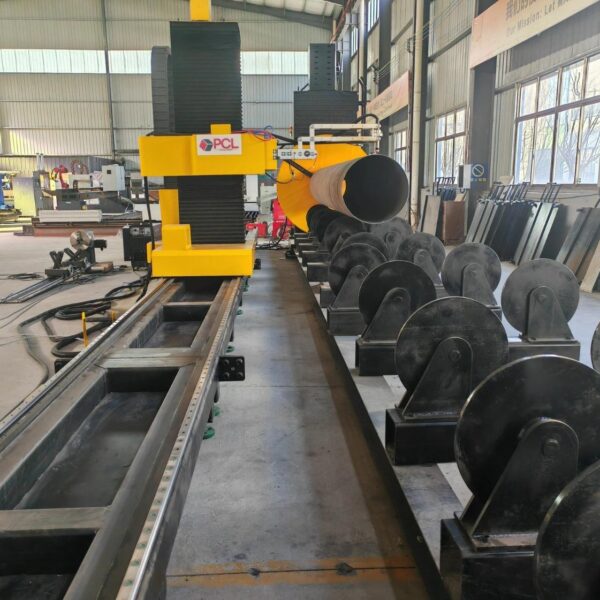
pipe plasma cutting machine
-
LFH 4020 Fiber Laser Cutting Machine
-
LFP4020
-
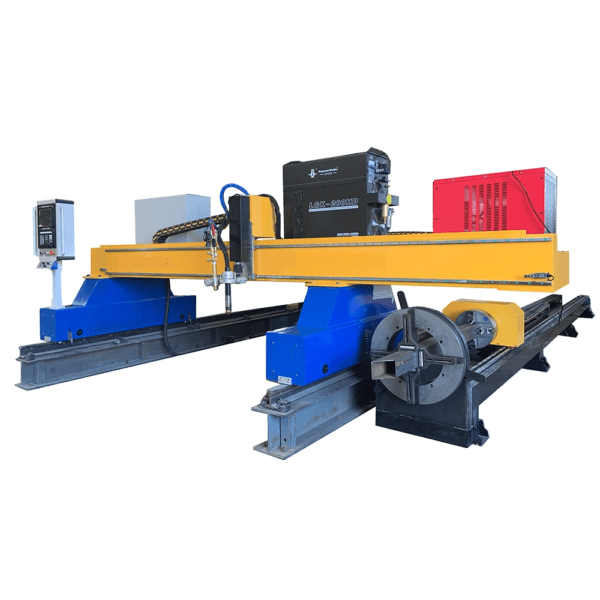
gantry plasma air cutting machine
-
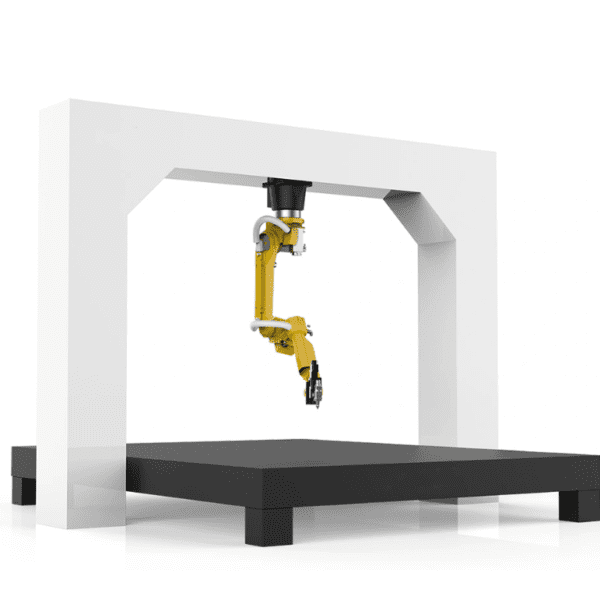
3D robot cutting machine
-
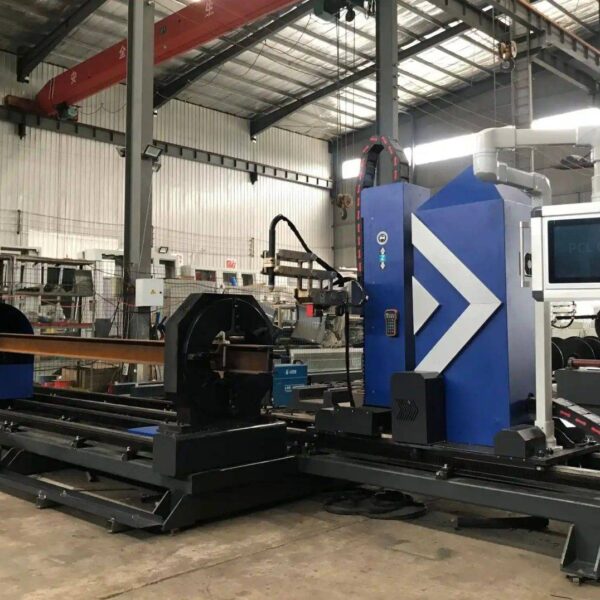
8 axis plasma cutting machine
-
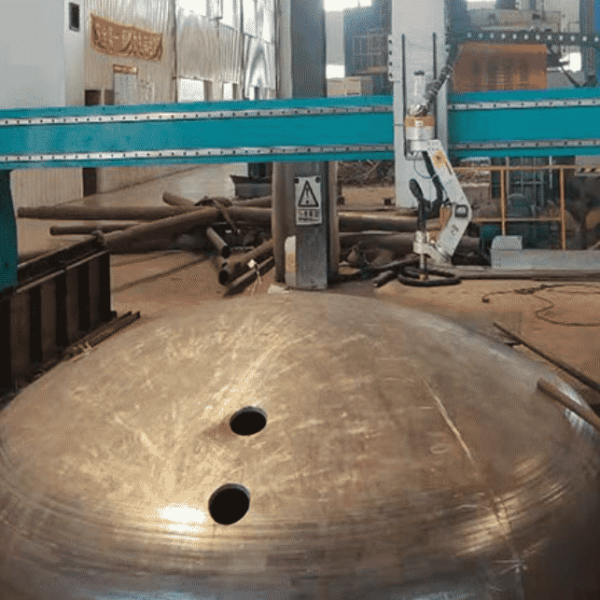
5 axis plasma cutting machine
-

LT360 tube laser cutting machine
-
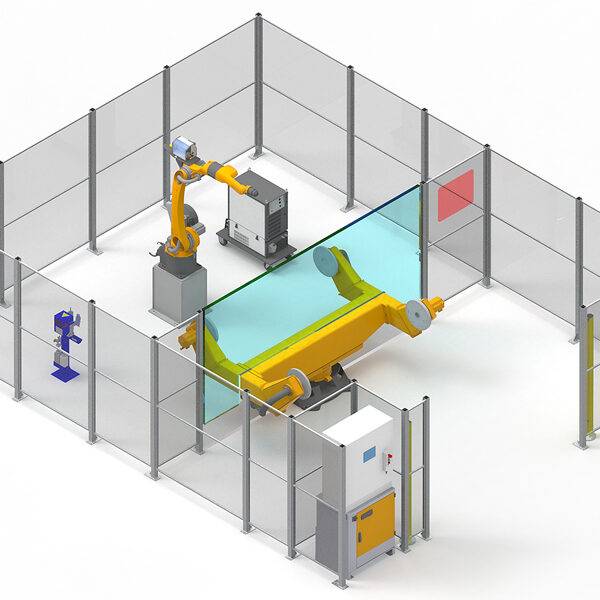
robot welding workstation
-
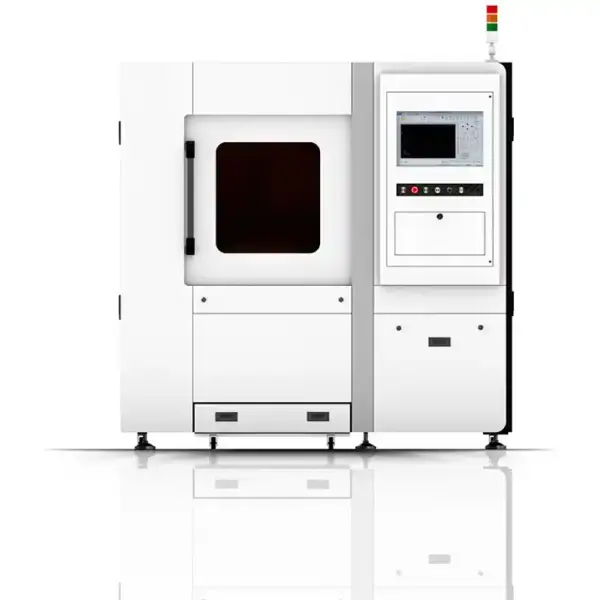
SF6060 fiber laser cutting machine
Advanced Fiber Laser Tube Processing Technology
Our CNC Fiber Laser Tube Cutting systems revolutionize metal fabrication by integrating high-precision cutting, punching, and profiling into a single automated workflow. Designed for versatility, this technology handles a wide array of profiles including Round, Square, Rectangular, and Oval tubes, as well as complex L-shaped and U-shaped channels.
- Precision Punching: High-speed hole punching with micron-level accuracy, eliminating the need for mechanical drilling or die-stamping.
- Complex Profiling: Advanced 3D pathing allows for intricate interlocking joints and specialized notch cuts, ideal for structural frames.
- High Material Efficiency: Intelligent nesting software minimizes scrap, reducing raw material costs across large production runs.
- Clean Finish: Delivers oxide-free, burr-free edges that require zero secondary grinding before welding.

Seamlessly processing multiple profiles with consistent precision.
Global Delivery & Logistics



From our high-tech manufacturing facility directly to your global site. PCL WeldCut ensures secure packaging, professional handling, and reliable international logistics to safeguard your equipment throughout the entire journey.