Field Engineering Report: Implementation of Double Pulse Laser Technology in Hai Phong Industrial Zone
1. Introduction and Environmental Context
This report details the operational deployment and performance validation of the 2kW Double Pulse Industrial Laser Welder at our facility in Deep C Industrial Zone, Hai Phong. As a senior welding engineer, my primary objective was to transition our high-precision production lines from traditional TIG (Tungsten Inert Gas) to advanced Laser Technology to address ongoing thermal distortion issues in Thin Metal Sheet welding.
The Hai Phong climate presents a specific set of engineering challenges. During the transition period, ambient humidity levels consistently exceeded 85%, with temperatures averaging 34°C. For any Industrial Laser Welder, these conditions are hostile. Condensation on optics and the stability of the fiber delivery system are paramount concerns. This report outlines how we synthesized machine capability with local environmental constraints to achieve a 40% increase in throughput for 1.2mm stainless steel and aluminum alloy assemblies.
2. The Synergy of Laser Technology and Industrial Hardware
The core of our success lies in the synergy between the underlying Laser Technology—specifically the fiber-delivered ytterbium laser source—and the mechanical execution of the Industrial Laser Welder. In a workshop environment like Hai Phong, “technology” is a theoretical advantage until it is ruggedized for industrial application.
2.1 Pulse Modulation and Grain Refinement
The “Double Pulse” feature is not a marketing gimmick; it is a metallurgical necessity for Thin Metal Sheet welding. By layering a secondary high-frequency pulse over the primary welding current, we successfully agitated the weld pool. This agitation breaks up dendrite formation during solidification. In our tests on 5052 Aluminum, the double pulse frequency significantly reduced hot cracking—a common failure point when using standard continuous wave (CW) lasers. The Laser Technology allows us to control the “stirring” of the molten pool without increasing the overall heat input, which is the holy grail of thin-gauge fabrication.
2.2 Optical Path Integrity in High Humidity
The Industrial Laser Welder units deployed in Hai Phong were retrofitted with pressurized nitrogen-purged optical cavities. Standard Laser Technology often fails in tropical environments due to “micro-fogging” on the protective windows. By maintaining a positive pressure of 0.2 Bar within the head, we prevented the ingress of humid Hai Phong air, ensuring the beam profile remained Gaussian and did not diffuse, which would have compromised the power density required for Thin Metal Sheet welding.
3. Practical Application: Thin Metal Sheet Welding Parameters
The primary workload for these units involves 0.8mm to 1.5mm 304 Stainless Steel enclosures. The traditional approach involved stitch welding to manage heat, followed by extensive manual grinding. Our shift to the Industrial Laser Welder changed the workflow entirely.
3.1 Heat-Affected Zone (HAZ) Optimization
In Thin Metal Sheet welding, the HAZ is the primary driver of rework. Excessive heat leads to “oil-canning” or buckling of the panel. Utilizing the double-pulse Laser Technology, we reduced the HAZ width by 65% compared to TIG. The precise control of the peak power (set at 1800W) and the base power (set at 400W) allowed for deep penetration with a cooling phase that prevented heat accumulation in the surrounding parent metal.
3.2 Shielding Gas Dynamics
We discovered that the standard 15 L/min flow rate for Argon was insufficient in the Hai Phong facility due to cross-drafts from industrial cooling fans. We increased the flow to 22 L/min using a dual-shielding nozzle. This adjustment is critical when the Industrial Laser Welder is operating at high travel speeds (above 30mm/s). Without this, the Laser Technology cannot protect the reactive weld pool of the Thin Metal Sheet welding process from atmospheric nitrogen, leading to porosity that fails X-ray inspection.
4. Lessons Learned: The “Hai Phong Variables”
Technical specifications in a manual rarely translate directly to the shop floor in Northern Vietnam. As a senior engineer, the following “lessons learned” are the most valuable takeaways from this deployment.
4.1 Power Grid Stability
The Hai Phong industrial grid can experience voltage fluctuations during peak hours (14:00 – 16:00). We found that the Industrial Laser Welder‘s internal power supply, while robust, required an external high-speed voltage stabilizer. Fluctuations as small as 5% in input voltage resulted in “micro-stepping” of the laser output, which, in Thin Metal Sheet welding, creates visible ripples and inconsistent penetration. After installing the stabilizers, our scrap rate dropped from 3% to 0.4%.
4.2 Chiller Maintenance Cycles
Laser Technology is highly sensitive to the temperature of the cooling medium. In the local environment, algae growth in the chiller tanks was accelerated. We had to move from a 6-month maintenance cycle to a 2-month cycle, utilizing specialized biocide additives. If the chiller efficiency drops even slightly, the Industrial Laser Welder‘s fiber source shifts its wavelength slightly (thermal lensing), which ruins the focus during Thin Metal Sheet welding.
5. Comparative Analysis: Laser vs. Traditional Methods
To justify the capital expenditure of the Industrial Laser Welder, we conducted a head-to-head comparison on a batch of 500 server rack components. The results were definitive:
- Speed: The Laser Technology allowed for a welding speed of 45mm/s, whereas TIG was capped at 8mm/s to avoid burn-through.
- Post-Processing: Thin Metal Sheet welding via laser required zero grinding. The “as-welded” finish was clean enough for immediate powder coating. TIG required an average of 12 minutes of grinding per unit.
- Operator Skill: While Industrial Laser Welder operation requires specific safety training, the “muscle memory” required is lower than TIG. We were able to train local operators to certification levels in 2 weeks, compared to the months required for high-level manual arc welding.
6. Safety Protocols and Infrastructure
Deploying Laser Technology in a high-traffic Hai Phong factory requires strict adherence to Class 4 laser safety standards. We implemented 5×5 meter light-tight enclosures for each Industrial Laser Welder station. A specific challenge was the ventilation; the fumes from Thin Metal Sheet welding (especially coated steels) are finer and more hazardous than traditional welding fumes. We installed HEPA-filtered extraction units at the source to ensure the air quality remained within Vietnamese industrial health standards.
7. Conclusion and Future Outlook
The integration of the Double Pulse Industrial Laser Welder in our Hai Phong operations has set a new benchmark for Thin Metal Sheet welding in the region. The marriage of advanced Laser Technology with a deep understanding of local environmental variables has proven that high-precision manufacturing is not only possible but highly efficient in Southeast Asian industrial hubs.
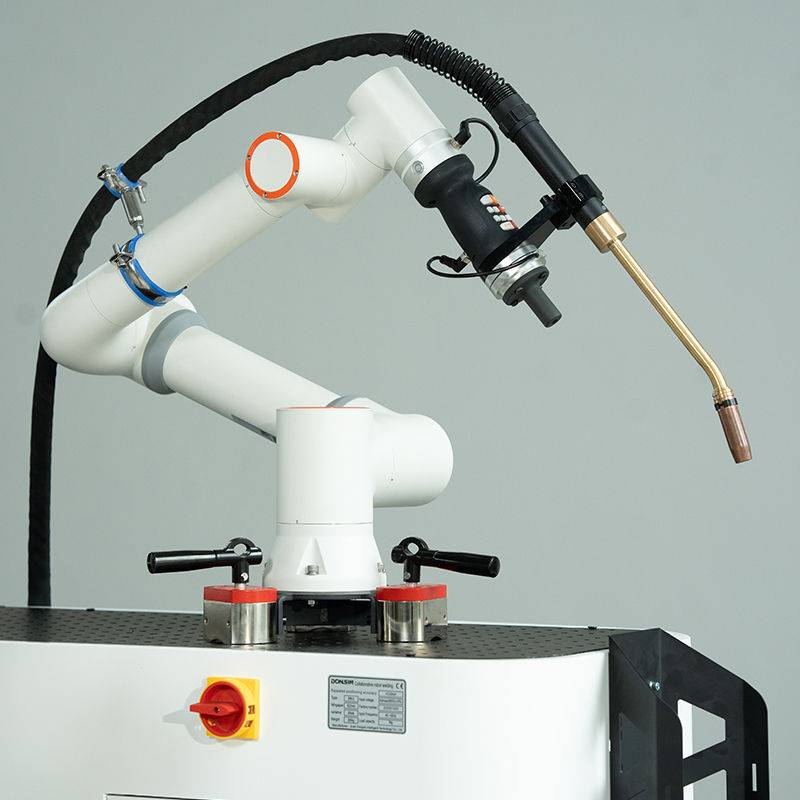
Our next phase will involve the integration of robotic arms to house the Industrial Laser Welder heads, further removing the human variable and maximizing the duty cycle of the Laser Technology. For now, the “Double Pulse” method remains our standard operating procedure for all materials under 2.0mm, providing a level of weld integrity and aesthetic finish that was previously unattainable on the Hai Phong production floor.
Final Engineering Recommendation:
Continue the transition to Laser Technology for all Thin Metal Sheet welding applications. Prioritize the procurement of nitrogen-purged optics for all future Industrial Laser Welder units to mitigate humidity-related downtime. The data confirms that the initial investment is offset by the reduction in post-processing labor within the first 14 months of operation.
-


LT240S tube laser cutting machine
-
LT120S tube laser cutting machine
-
Sale

Tank Fillet Welding Machine
Original price was: $1,000.00.$900.00Current price is: $900.00. -
Sale

MAK100 tube laser cutting machine
Original price was: $5,500.00.$5,000.00Current price is: $5,000.00. -

portable plasma air cutting machine
$1,200.00 -

2in1 fiber laser cutting machine
-

Air cooling Laser welding machine
-

HF h beam laser cutting machine
-

LT240 laser cutting machine
-

Laser welding machine
-


Cobot Welding Station
-

Gantry welding robot solution
-

Tracked Wheeled AGV Welding robot
-

LFH6020 Fiber laser cutting machine
-
LFP6020
-

robotic welidng machine
Advanced Fiber Laser Tube Processing Technology
Our CNC Fiber Laser Tube Cutting systems revolutionize metal fabrication by integrating high-precision cutting, punching, and profiling into a single automated workflow. Designed for versatility, this technology handles a wide array of profiles including Round, Square, Rectangular, and Oval tubes, as well as complex L-shaped and U-shaped channels.
- Precision Punching: High-speed hole punching with micron-level accuracy, eliminating the need for mechanical drilling or die-stamping.
- Complex Profiling: Advanced 3D pathing allows for intricate interlocking joints and specialized notch cuts, ideal for structural frames.
- High Material Efficiency: Intelligent nesting software minimizes scrap, reducing raw material costs across large production runs.
- Clean Finish: Delivers oxide-free, burr-free edges that require zero secondary grinding before welding.

Seamlessly processing multiple profiles with consistent precision.
Global Delivery & Logistics



From our high-tech manufacturing facility directly to your global site. PCL WeldCut ensures secure packaging, professional handling, and reliable international logistics to safeguard your equipment throughout the entire journey.