Field Report: Implementation of Double Pulse All-in-one Cobot Station in Bursa Automotive Tooling Sector
1. Site Context and Engineering Objectives
Bursa remains the industrial heartbeat of Turkey’s automotive sector, housing major OEMs and an extensive network of Tier-1 die and mold manufacturers. This report details the field commissioning and performance evaluation of an All-in-one Cobot Station at a mid-sized facility specializing in the refurbishment of injection molds and stamping dies. The primary engineering challenge was the transition from manual GTAW (TIG) to semi-automated GMAW-P (Pulsed MIG) for Tool Steel welding, specifically targeting H13 and P20 grades.
The objective was to reduce the thermal distortion and cracking associated with manual repair while maintaining the flexibility required for low-volume, high-complexity geometry. Traditional industrial robots were discarded due to floor space constraints and the high cost of safety integration. The solution was the deployment of Collaborative Robotics integrated into a unified hardware footprint.
2. The All-in-one Cobot Station: Technical Architecture
In the context of this Bursa workshop, the “All-in-one” designation is not a marketing term but a functional requirement. The station integrates the power source, the cobot controller, the wire feeder, and the cooling system into a single mobile chassis. This compact footprint allowed us to move the station between different die-sets without reconfiguring the workshop’s safety perimeter.
Synergy with Collaborative Robotics
The true synergy between an All-in-one Cobot Station and Collaborative Robotics lies in the “human-in-the-loop” workflow. Tool steel repair is rarely a “set-and-forget” operation. It requires constant inspection of the weld pool and interpass cleaning. Because the cobot is collaborative (equipped with sensitive force-torque sensors), the operator in Bursa could work directly alongside the arm, performing tactile inspections and cleaning slag or oxides without triggering a hard-stop safety reset. This reduced cycle times by approximately 35% compared to a caged robotic cell.
3. Technical Deep-Dive: Tool Steel Welding Parameters
Tool Steel welding is fraught with metallurgical risks, primarily the formation of untempered martensite and the risk of hydrogen-induced cracking (HIC). Our approach focused on leveraging the Double Pulse (MIG-DP) capability of the station to refine the grain structure and manage the Heat-Affected Zone (HAZ).
Double Pulse Waveform Modulation
For the H13 hot-work tool steel dies, we utilized a 1.2mm martensitic stainless-steel filler wire. The Double Pulse setting was configured with a base frequency of 1.5 Hz to 2.5 Hz. The logic here is straightforward: the high-pulse phase provides the necessary penetration and fluidization of the puddle, while the low-pulse phase allows the puddle to partially solidify, effectively “shaking” the weld pool. This oscillation helps in degassing and grain refinement, which is critical when dealing with the high carbon content of tool steels.
Heat Input Management
Calculated heat input was maintained between 0.6 and 0.8 kJ/mm. In Bursa’s ambient humidity, we mandated a pre-heat of 300°C using induction blankets. The All-in-one Cobot Station played a critical role here—its integrated software allowed us to sync the cobot’s travel speed precisely with the wire feed speed to ensure the heat input remained within a +/- 5% tolerance window, something manual welders struggled to achieve over a 400mm weld path.
4. Collaborative Robotics in a “Brownfield” Environment
Implementing Collaborative Robotics in an established Bursa workshop requires addressing the “Brownfield” reality: uneven floors, proximity to other machines, and varying power quality. The All-in-one Cobot Station we deployed featured built-in voltage stabilization, which proved vital during peak afternoon loads when neighboring CNC machines caused significant grid fluctuations.
The collaborative nature of the arm allowed us to use “Lead-Through Programming.” Instead of writing complex G-code, the senior welder simply moved the cobot arm by hand to define the start and end points of the die-cladding path. This bridged the gap between the welder’s craft knowledge and robotic precision.
5. Field Observations and “Lessons Learned”
The deployment in Bursa provided several hard-won lessons that are often omitted from technical manuals. Success in Tool Steel welding with a cobot is as much about the environment as it is about the code.
Grounding and Electromagnetic Interference (EMI)
One immediate issue was signal interference. The high-frequency start of a nearby TIG station was causing the cobot’s sensors to trigger false collisions. Lesson Learned: Ensure the All-in-one Cobot Station is grounded independently of the workshop’s main structural steel. We switched to a dedicated copper grounding rod driven 2 meters into the shop floor, which eliminated the EMI issues.
TCP Calibration and Thermal Drift
When welding pre-heated tool steel at 300°C, the radiant heat is significant. Over a four-hour shift, we noticed a minor drift in the Tool Center Point (TCP). Lesson Learned: We implemented a “thermal recalibration” routine every 60 minutes. The cobot would automatically touch off on a fixed reference pin to compensate for the thermal expansion of the torch neck and the arm’s joints. This is crucial for maintaining the 0.5mm arc-gap required for consistent pulse performance.
Wire Feeding Friction
The All-in-one Cobot Station uses a compact wire feeder. We found that the standard 3-meter torch cable was prone to micro-kinking when the cobot reached extreme joint articulations. Lesson Learned: Switch to high-quality, Teflon-lined liners even for steel wires to minimize friction. Consistent wire tension is the only way to ensure the Double Pulse waveform remains stable. Any “chatter” in the wire feed results in porosity in the tool steel deposit.
6. Metallurgy and Quality Control Results
Post-weld analysis of the H13 dies processed in Bursa showed a marked improvement over manual methods. Macro-etching revealed a significantly narrower HAZ (Heat-Affected Zone)—down from 4.2mm in manual GTAW to 1.8mm with the All-in-one Cobot Station. Hardness testing (Rockwell C) showed a consistent 52-54 HRC in the as-welded state, with minimal soft-spotting at the overlap zones.
The use of Collaborative Robotics allowed for a multi-pass strategy where the cobot maintained a constant interpass temperature of 250°C. By automating the travel speed, we avoided the localized overheating common in manual welding, which often leads to “sink” marks in the mold cavity after final machining.
7. Conclusion for Engineering Management
The deployment of the All-in-one Cobot Station in Bursa demonstrates that Collaborative Robotics has matured beyond simple “pick-and-place” tasks. In the demanding realm of Tool Steel welding, the synergy of mobility, integrated pulse control, and human-collaborative safety allows for a level of precision that manual welding cannot match and traditional robotics cannot fit.
For shops looking to replicate these results, the focus must remain on the trifecta of heat management, rigid grounding, and the recognition that the cobot is a tool for the welder, not a replacement. The success in Bursa was not just the machine, but the integration of the machine into the specific thermal requirements of H13 and P20 tool steels.
Report Prepared by: Senior Welding Engineer
Location: Bursa, Turkey
Status: Field Commissioning Complete – Phase 1
-


LT240S tube laser cutting machine
-
LT120S tube laser cutting machine
-
Sale

Tank Fillet Welding Machine
Original price was: $1,000.00.$900.00Current price is: $900.00. -
Sale

MAK100 tube laser cutting machine
Original price was: $5,500.00.$5,000.00Current price is: $5,000.00. -

portable plasma air cutting machine
$1,200.00 -

2in1 fiber laser cutting machine
-

Air cooling Laser welding machine
-

HF h beam laser cutting machine
-

LT240 laser cutting machine
-

Laser welding machine
-


Cobot Welding Station
-

Gantry welding robot solution
-

Tracked Wheeled AGV Welding robot
-

LFH6020 Fiber laser cutting machine
-
LFP6020
-

robotic welidng machine
Advanced Fiber Laser Tube Processing Technology
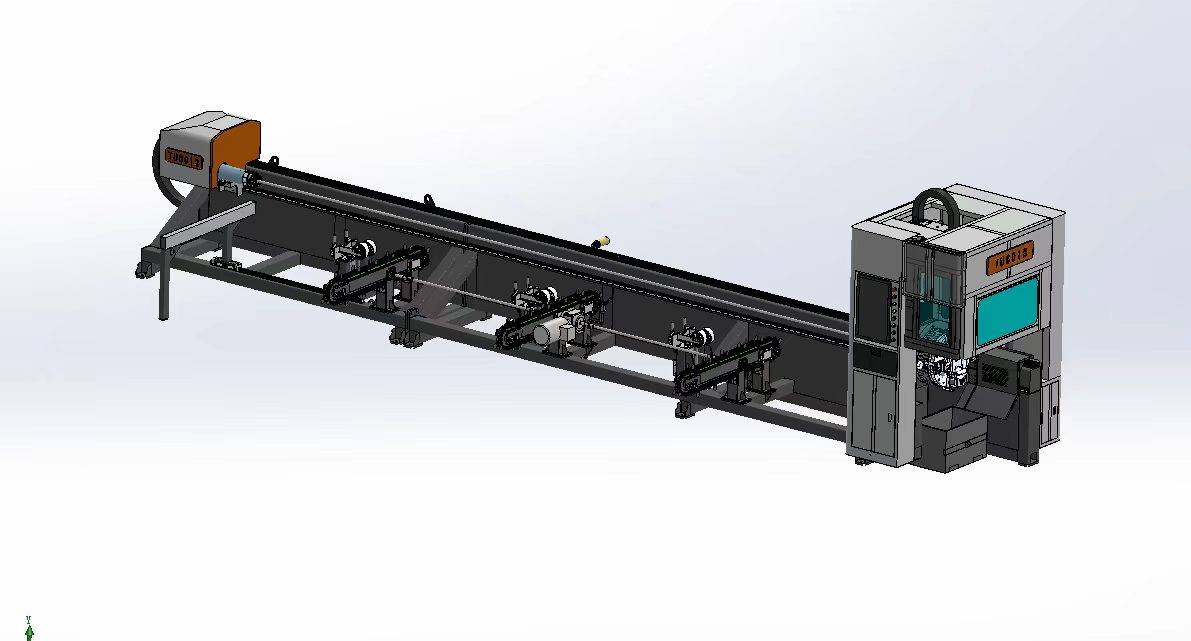
Our CNC Fiber Laser Tube Cutting systems revolutionize metal fabrication by integrating high-precision cutting, punching, and profiling into a single automated workflow. Designed for versatility, this technology handles a wide array of profiles including Round, Square, Rectangular, and Oval tubes, as well as complex L-shaped and U-shaped channels.
- Precision Punching: High-speed hole punching with micron-level accuracy, eliminating the need for mechanical drilling or die-stamping.
- Complex Profiling: Advanced 3D pathing allows for intricate interlocking joints and specialized notch cuts, ideal for structural frames.
- High Material Efficiency: Intelligent nesting software minimizes scrap, reducing raw material costs across large production runs.
- Clean Finish: Delivers oxide-free, burr-free edges that require zero secondary grinding before welding.

Seamlessly processing multiple profiles with consistent precision.
Global Delivery & Logistics



From our high-tech manufacturing facility directly to your global site. PCL WeldCut ensures secure packaging, professional handling, and reliable international logistics to safeguard your equipment throughout the entire journey.