Field Report: Deployment of Deep Penetration Fiber Laser Cobot – Paris Industrial District
1.0 Introduction and Site Overview
The following report outlines the technical findings and operational integration of a high-power Fiber Laser Cobot system at a specialized fabrication facility in the Saint-Denis sector of Paris, France. The objective was the transition from manual Gas Metal Arc Welding (GMAW) to automated laser processing for high-volume Galvanized Pipe welding.
In the Parisian market, where floor space is at a premium and labor costs for certified high-pressure welders are rising, the implementation of Laser Technology coupled with collaborative robotics (cobots) represents a significant shift in production logic. This report focuses on the metallurgical challenges of zinc-coated substrates and the synergistic performance of the Fiber Laser Cobot in achieving deep penetration welds without the typical porosity associated with galvanized materials.
2.0 The Synergy of Fiber Laser Cobot and Modern Laser Technology
The core of this deployment is the integration of a 2kW continuous wave (CW) fiber source into a 6-axis collaborative arm. Unlike traditional stationary laser cells, the Fiber Laser Cobot offers the flexibility required for the complex geometries found in European HVAC and structural piping systems.
2.1 Precision and Power Density
The Laser Technology utilized here relies on a 1064nm wavelength delivered via a 50-micron transport fiber. This allows for a power density that manual TIG or MIG simply cannot replicate. In the Paris workshop, we utilized a “wobble” head configuration. This allows the beam to oscillate in specific patterns (circular, zig-zag, or figure-eight), which is critical when dealing with the fit-up tolerances common in Galvanized Pipe welding.
2.2 The Cobot Advantage
The “Cobot” aspect is not merely about safety; it is about repeatability in the vertical-down and overhead positions. Manually maintaining a consistent 0.5mm standoff distance on a curved pipe surface is exhausting for a human welder. The Fiber Laser Cobot maintains this focal point with a precision of ±0.03mm, ensuring that the Laser Technology is always operating at the peak of its power density curve.
3.0 Technical Deep-Dive: Galvanized Pipe Welding Challenges
The primary hurdle in this project was the vaporization of the zinc coating. Zinc vaporizes at approximately 906°C, while steel melts at around 1500°C. When utilizing high-intensity Laser Technology, the zinc at the interface of the lap or butt joint turns to gas instantaneously. If the weld pool solidifies too quickly, this gas is trapped, leading to gross porosity or “blow-back” that can damage the laser optics.
3.1 Keyhole Mode vs. Conduction Mode
For this Paris-based application, we opted for a deep penetration “keyhole” strategy. By utilizing the Fiber Laser Cobot to maintain a high travel speed (approx. 2.5 meters per minute), we create a stable keyhole that allows the zinc vapor to escape ahead of the solidification front. This is a delicate balance; too slow, and the zinc pressure builds up and explodes through the melt pool; too fast, and the penetration depth is insufficient for structural certification.
3.2 Shielding Gas Dynamics
We moved away from pure Argon to an Argon-Helium mix (70/30) to increase the heat input at the surface, facilitating better zinc outgassing. The Fiber Laser Cobot‘s integrated gas nozzle was redesigned on-site to provide a leading-edge purge, which effectively “sweeps” the zinc vapor away from the beam path before it can interfere with the Laser Technology‘s delivery.
4.0 Lessons Learned: Field Observations from the Paris Workshop
Engineering transitions of this scale rarely happen without friction. Over the three-week deployment, several “hard-won” lessons were documented regarding the Fiber Laser Cobot and its interaction with the local infrastructure.
4.1 Power Stability and Grounding
The electrical grid in older industrial sections of Paris can experience fluctuations. We noted that the Laser Technology was sensitive to these micro-spikes, leading to inconsistent penetration. The installation of a dedicated power conditioner and a verified local ground for the Fiber Laser Cobot was mandatory to stabilize the beam quality. As a senior engineer, I cannot overstate the importance of checking the “dirty” power of old facilities before commissioning high-end fiber sources.
4.2 Optics Maintenance in High-Zinc Environments
Even with optimal extraction, Galvanized Pipe welding produces a fine white powder (zinc oxide). This dust is the enemy of Laser Technology. We implemented a mandatory “50-weld check” where the protective cover slide of the laser head is inspected. We found that using a positive-pressure cross-hair air knife significantly extended the life of the optics, reducing downtime by 15%.
4.3 Fixturing and Tolerance
The Fiber Laser Cobot is highly precise, but it is not “sentient.” In the Paris workshop, the initial pipe stock had a variance in roundness that exceeded 1.0mm. Laser Technology requires tight fit-ups (ideally <10% of material thickness). We had to recalibrate the shop's pipe cutting and deburring stations to ensure that the Galvanized Pipe welding could be performed without the need for excessive filler wire, which would have slowed down the cycle time.
5.0 Performance Metrics and Results
After optimizing the parameters, the results were quantified against the previous manual GMAW process. The Fiber Laser Cobot demonstrated a 400% increase in throughput for the standard 50mm diameter galvanized structural tubes.
5.1 Metallurgical Quality
Cross-sectional analysis (macro-etch) showed a significant reduction in the Heat Affected Zone (HAZ). In Galvanized Pipe welding, a large HAZ often leads to a massive loss of corrosion resistance around the joint. The concentrated energy of the Laser Technology localized the heat so effectively that the zinc coating remained intact up to 2mm from the weld bead, a result impossible to achieve with arc welding.
5.2 Tensile Strength
Destructive testing conducted at a local Paris lab confirmed that the weld joints exceeded the base metal strength. The deep penetration achieved by the 2kW fiber source ensured that the root of the joint was fully fused, eliminating the “lack of fusion” defects that often plague automated systems not properly dialed in for Laser Technology.
6.0 Safety and Human-Machine Interaction
In a French regulatory environment (governed by local health and safety codes), the “Cobot” designation is critical. However, because we are using Class 4 Laser Technology, the “collaborative” nature is limited by the need for a light-tight enclosure. We designed a modular “Paris-Cell”—a compact, ventilated box that fits around the Fiber Laser Cobot, allowing operators to work nearby without specialized PPE, provided they do not enter the safety interlock zone.
7.0 Conclusion
The integration of the Fiber Laser Cobot at the Paris site has proven that Laser Technology is no longer reserved for high-end automotive cleanrooms. By specifically addressing the vaporization physics of Galvanized Pipe welding and implementing a rigorous maintenance schedule for the optics, we have achieved a production standard that far exceeds traditional methods.
The primary takeaway for the engineering team is the necessity of “Process-First” thinking. The robot is merely a carrier; the success of the weld depends entirely on the management of the keyhole dynamics and the mitigation of zinc oxide contamination. We recommend further rolling out this Fiber Laser Cobot configuration across other EU facilities, provided the material prep and power stability issues identified in Paris are addressed during the pre-commissioning phase.
Report End.
Senior Welding Engineer, Field Operations.
-


LT240S tube laser cutting machine
-
LT120S tube laser cutting machine
-
Sale

Tank Fillet Welding Machine
Original price was: $1,000.00.$900.00Current price is: $900.00. -
Sale

MAK100 tube laser cutting machine
Original price was: $5,500.00.$5,000.00Current price is: $5,000.00. -

portable plasma air cutting machine
$1,200.00 -

2in1 fiber laser cutting machine
-

Air cooling Laser welding machine
-

HF h beam laser cutting machine
-

LT240 laser cutting machine
-

Laser welding machine
-


Cobot Welding Station
-

Gantry welding robot solution
-

Tracked Wheeled AGV Welding robot
-

LFH6020 Fiber laser cutting machine
-
LFP6020
-

robotic welidng machine
Advanced Fiber Laser Tube Processing Technology
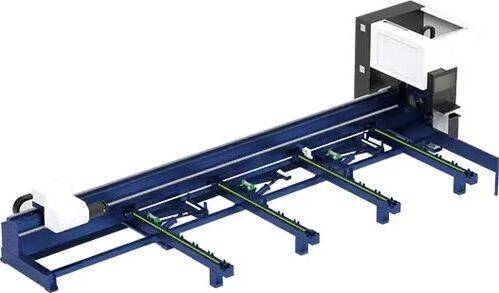
Our CNC Fiber Laser Tube Cutting systems revolutionize metal fabrication by integrating high-precision cutting, punching, and profiling into a single automated workflow. Designed for versatility, this technology handles a wide array of profiles including Round, Square, Rectangular, and Oval tubes, as well as complex L-shaped and U-shaped channels.
- Precision Punching: High-speed hole punching with micron-level accuracy, eliminating the need for mechanical drilling or die-stamping.
- Complex Profiling: Advanced 3D pathing allows for intricate interlocking joints and specialized notch cuts, ideal for structural frames.
- High Material Efficiency: Intelligent nesting software minimizes scrap, reducing raw material costs across large production runs.
- Clean Finish: Delivers oxide-free, burr-free edges that require zero secondary grinding before welding.

Seamlessly processing multiple profiles with consistent precision.
Global Delivery & Logistics



From our high-tech manufacturing facility directly to your global site. PCL WeldCut ensures secure packaging, professional handling, and reliable international logistics to safeguard your equipment throughout the entire journey.