Technical Assessment: Field Deployment of MAG Cobot Welder in Ho Chi Minh City
This report details the technical findings from a 14-day deployment and integration phase of an air-cooled MAG Cobot Welder within a structural steel fabrication facility located in the Thu Duc district of Ho Chi Minh City (HCMC). As the manufacturing sector in Vietnam shifts toward higher precision and throughput, the transition from manual Metal Active Gas (MAG) welding to collaborative robotic systems is no longer optional for maintaining Tier-2 supplier status. The objective of this field assignment was to validate the efficiency of integrated Arc Welding Solutions when applied to high-volume Structural Steel welding under tropical environmental constraints.
Site Overview and Environmental Constraints
The facility in HCMC presents a specific set of challenges that dictate the performance parameters of any automated system. With ambient temperatures averaging 32°C to 36°C and relative humidity often exceeding 80%, the thermal management of an air-cooled MAG Cobot Welder becomes the primary technical bottleneck. Unlike water-cooled systems, air-cooled torches rely on the surrounding atmosphere for heat dissipation, which is significantly less efficient in the stagnant, humid air of a standard Vietnamese workshop.
Our initial assessment focused on the duty cycle. For Structural Steel welding involving thick plates (8mm to 12mm), the thermal load on the torch is substantial. We observed that while the power source was rated for 60% duty cycle at 300A, the air-cooled torch required more aggressive “rest” periods within the cobot’s programming to prevent contact tip deformation and premature liner wear.
System Architecture: The MAG Cobot Welder in Action
The core of the installation is a 6-axis collaborative arm integrated with a high-speed inverter power source. The “MAG Cobot Welder” nomenclature refers specifically to the synergy between the cobot’s motion control and the MAG process’s short-circuit or spray transfer modes. In HCMC, we utilized a 1.2mm ER70S-6 solid wire with an 80/20 Argon-CO2 gas mixture.
Integration with Comprehensive Arc Welding Solutions
Success in this deployment was not merely a result of the hardware but the implementation of overarching Arc Welding Solutions. This includes the software interface that allows a manual welder to transition into a “cobot operator” role with minimal friction. In the HCMC workshop, we utilized a “Lead-through” programming method. This allows the welder to physically move the cobot arm to the start and end points of a fillet weld on a structural I-beam.
The Arc Welding Solutions software then calculates the travel speed, wire feed speed, and voltage based on a pre-defined weld procedure specification (WPS). This synergy ensures that even in a high-turnover labor market, the “tribal knowledge” of a senior welder can be digitized into a repeatable program. We found that the cobot’s ability to maintain a consistent torch angle and Contact Tip to Work Distance (CTWD) outperformed manual welders by a margin of 15% in terms of bead aesthetics and 22% in penetration depth consistency.
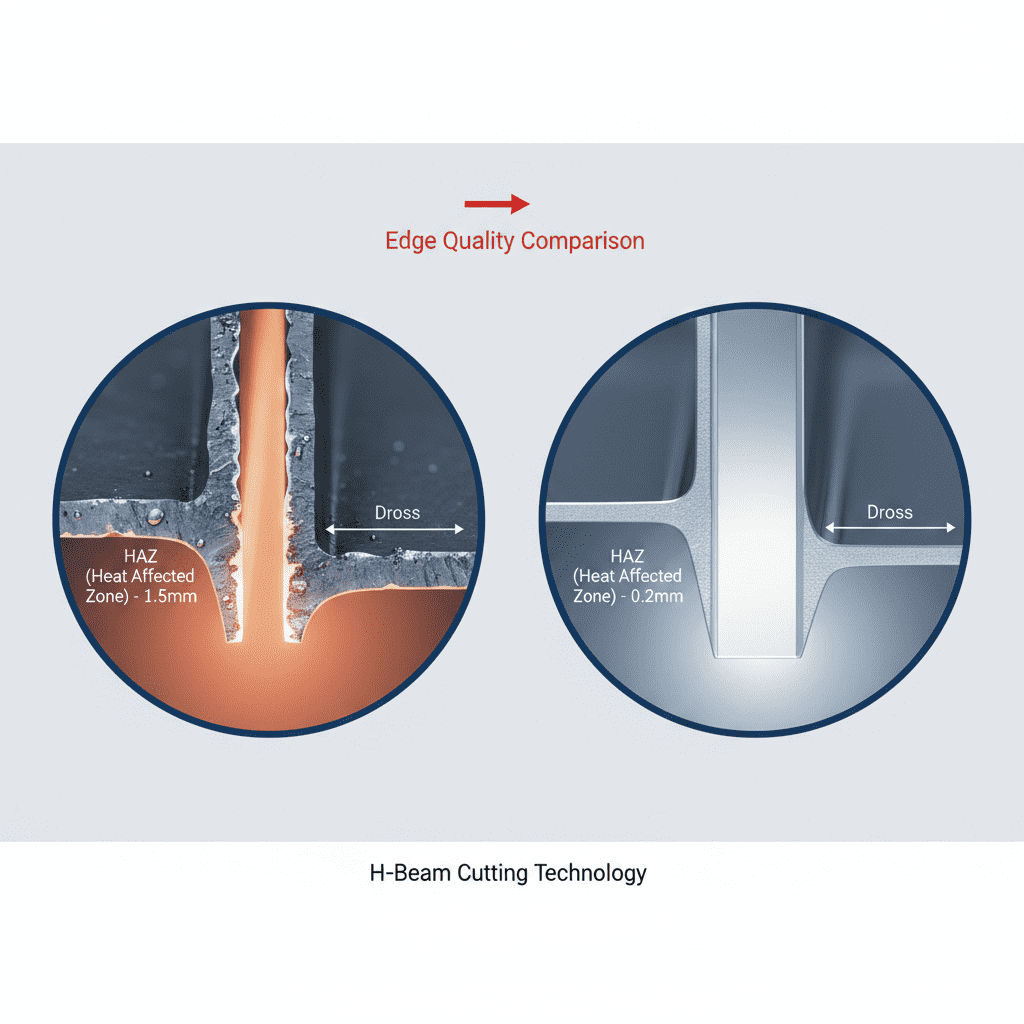
Structural Steel Welding: Performance Metrics
The primary workload for this project involved the fabrication of support trusses and structural frames. Structural Steel welding requires deep penetration and high deposition rates. We targeted a travel speed of 350mm/min for a 6mm fillet weld, which is significantly faster than the average manual welder can sustain over an 8-hour shift in the HCMC heat.
Weld Quality and Defect Analysis
Upon X-ray and ultrasonic testing (UT) of the first batch of trusses, we identified a zero-defect rate regarding porosity and slag inclusions. This is a direct result of the MAG Cobot Welder’s steady hand. In manual welding, the high humidity in HCMC often leads to slight inconsistencies in gas shielding as the operator adjusts their stance. The cobot, however, maintains a perfect shielding envelope.
However, we did encounter an issue with “Cold Lap” during the first two days. This was traced back to the air-cooled torch’s heat-induced resistance changes. As the torch heated up, the voltage drop across the cable changed slightly. We corrected this by fine-tuning the Arc Welding Solutions software to include “Thermal Compensation” parameters, which automatically adjusted the voltage based on the cumulative “Arc-on” time.
Thermal Management of Air-Cooled Torches
A significant portion of my time as a senior engineer was spent addressing the “Air-Cooled” limitation. In Ho Chi Minh City, an air-cooled torch is essentially operating at its limit from the moment the arc is struck.
Lessons Learned: Interpass Cooling and Airflow
We implemented a dual-cooling strategy. First, we installed high-velocity industrial fans directed specifically at the cobot’s parking station. Second, we optimized the “Arc Welding Solutions” logic to include a “Cleaning and Cooling” cycle every four welds. While the cobot used the pneumatic torch cleaner to remove spatter, the air-cooled neck was given 45 seconds of forced-air cooling. This small adjustment increased the lifespan of the contact tips by 300% compared to the initial trial run.
Field Adjustments and Lessons Learned
Engineering in Vietnam requires an understanding of local logistics and infrastructure. The power grid in certain industrial zones in HCMC can experience voltage fluctuations. We observed that the MAG Cobot Welder’s control system was sensitive to these spikes.
1. Power Conditioning
We had to install a dedicated voltage regulator for the cobot controller. Without it, the “Arc Welding Solutions” software would occasionally throw a “Communication Error” during high-amperage Structural Steel welding sequences. Lesson learned: Never assume the factory grid is stable enough for high-precision collaborative electronics.
2. Wire Feed Consistency
Due to the high humidity, the 15kg wire spools were prone to “flash rusting” if left on the machine overnight. This rust creates friction in the liner, causing the cobot to stall. We solved this by implementing enclosed wire feeders and using silica gel desiccants within the wire hub. For Structural Steel welding, where wire feed speed is critical for penetration, any drag in the line results in a “cold” weld that will fail inspection.
3. Operator Psychology
A technical report is incomplete without mentioning the human element. In HCMC, there was initial resistance from the manual welding team, fearing replacement. We shifted the narrative to “The Cobot as a Tool.” By teaching the manual welders how to optimize the Arc Welding Solutions parameters, they became “Welding Technicians.” This increased morale and led to better maintenance of the MAG Cobot Welder, as the team felt ownership over the technology.
The Synergy of Automation in HCMC
The integration of the MAG Cobot Welder into the HCMC structural steel sector proves that high-end Arc Welding Solutions can thrive in challenging environments if properly adapted. The synergy between the cobot’s precision and the robust nature of MAG welding provides a solution to the local shortage of high-skill welders.
The most important takeaway for other engineers is that “Air-Cooled” does not mean “Low Performance.” It simply means “Managed Performance.” By accounting for the HCMC climate within the software and the physical workflow, we achieved a deposition rate that manual teams could only match for short bursts, never for full shifts.
Conclusion and Path Forward
The deployment was a success. The Structural Steel welding output increased from 12 frames per day to 18, with a significant reduction in post-weld grinding and cleanup. For future installations in Southeast Asia, I recommend the following:
- Always specify high-duty cycle air-cooled torches if water-cooling is not feasible due to maintenance constraints.
- Ensure the Arc Welding Solutions package includes a “Simple Mode” for local operators and an “Expert Mode” for the engineering staff.
- Integrate environmental sensors to monitor humidity, as this directly affects the MAG process’s ionization potential and gas coverage efficiency.
Ho Chi Minh City is ready for this level of automation. The MAG Cobot Welder is the right tool at the right time for Vietnam’s industrial expansion.
-
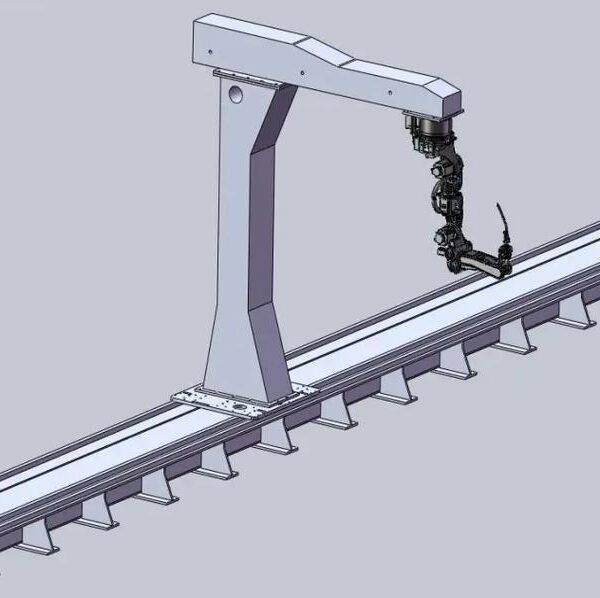

Cantilever Welding Robot solution
-
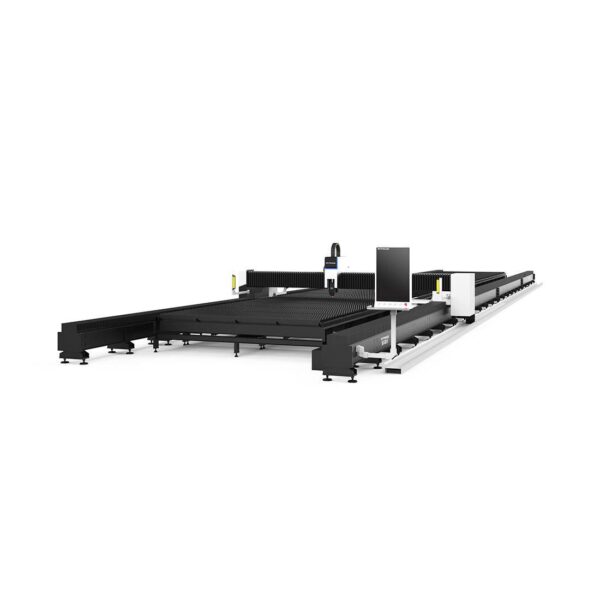

GF laser cutting machine
-
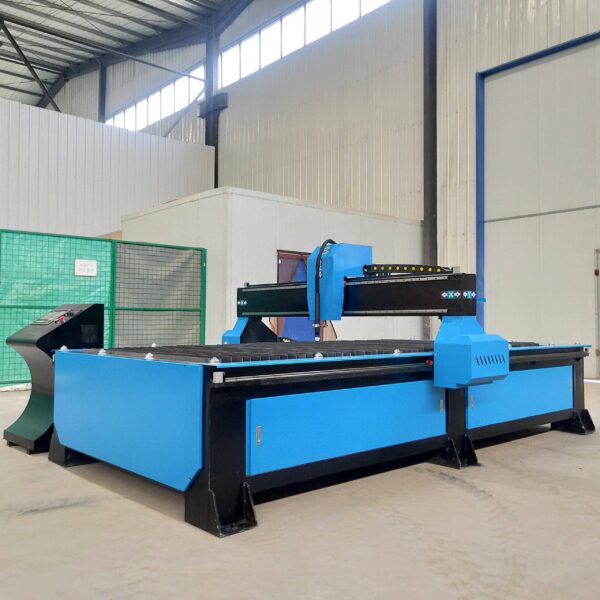
P3015 plasma cutting machine
-

LFP3015 Fiber Laser Cutter
-
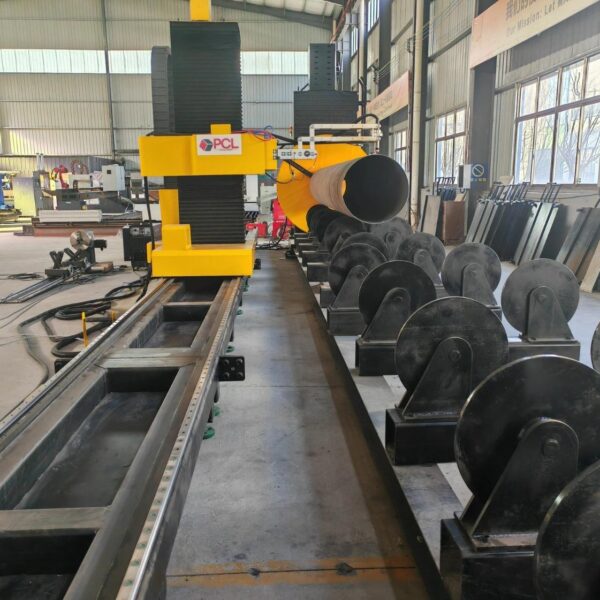
pipe plasma cutting machine
-
LFH 4020 Fiber Laser Cutting Machine
-
LFP4020
-
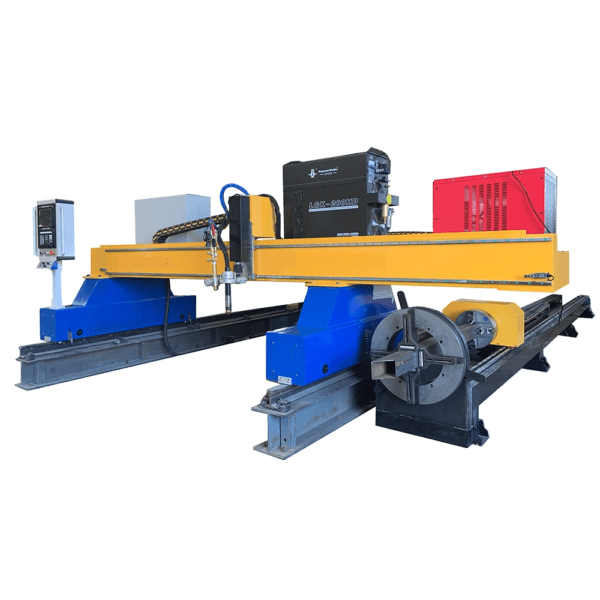
gantry plasma air cutting machine
-
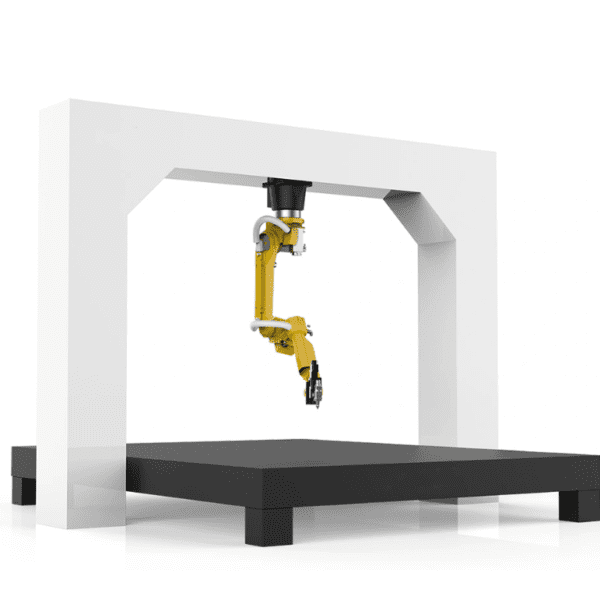
3D robot cutting machine
-
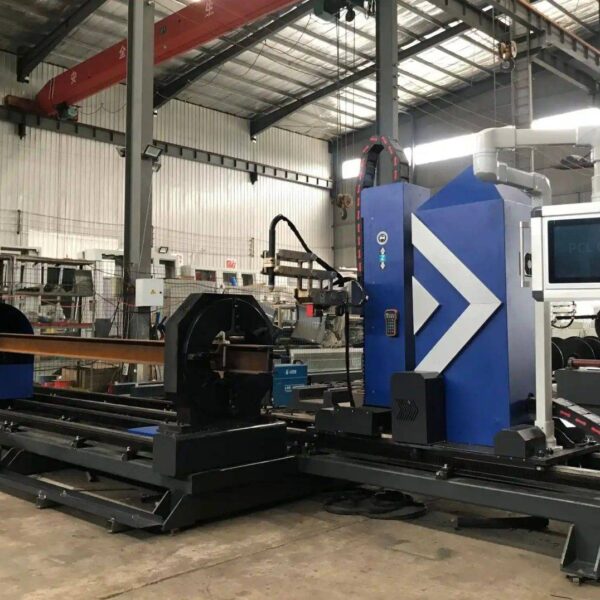
8 axis plasma cutting machine
-
5 axis plasma cutting machine
-

LT360 tube laser cutting machine
-
robot welding workstation
-
SF6060 fiber laser cutting machine
Advanced Fiber Laser Tube Processing Technology
Our CNC Fiber Laser Tube Cutting systems revolutionize metal fabrication by integrating high-precision cutting, punching, and profiling into a single automated workflow. Designed for versatility, this technology handles a wide array of profiles including Round, Square, Rectangular, and Oval tubes, as well as complex L-shaped and U-shaped channels.
- Precision Punching: High-speed hole punching with micron-level accuracy, eliminating the need for mechanical drilling or die-stamping.
- Complex Profiling: Advanced 3D pathing allows for intricate interlocking joints and specialized notch cuts, ideal for structural frames.
- High Material Efficiency: Intelligent nesting software minimizes scrap, reducing raw material costs across large production runs.
- Clean Finish: Delivers oxide-free, burr-free edges that require zero secondary grinding before welding.

Seamlessly processing multiple profiles with consistent precision.
Global Delivery & Logistics



From our high-tech manufacturing facility directly to your global site. PCL WeldCut ensures secure packaging, professional handling, and reliable international logistics to safeguard your equipment throughout the entire journey.