Field Report: Deployment of 3000W Laser Welding Cobot in Gurgaon Industrial Sector
1. Introduction and Project Scope
This report details the field implementation and performance evaluation of a 3000W Laser Welding Cobot system at a Tier-1 automotive fabrication facility in Gurgaon, Haryana. The primary objective was to transition a critical assembly line from conventional Gas Metal Arc Welding (GMAW) to advanced Laser Technology to address throughput bottlenecks in Thick Plate Steel welding. The target components consist of 8mm to 12mm structural steel frames, which traditionally require multi-pass MAG welding, leading to significant thermal distortion and extensive post-weld grinding.
2. The Synergy: Laser Technology and the Collaborative Interface
The integration of a 3000W fiber laser source with a 6-axis collaborative robot (cobot) represents a paradigm shift for Gurgaon’s high-density manufacturing hubs. Unlike traditional high-power industrial robots that require massive floor space and light curtains, the Laser Welding Cobot allows for a smaller footprint and a more flexible workflow. However, the core of this efficiency lies in the Laser Technology itself.
At 3000W, the energy density is sufficient to achieve deep penetration in Thick Plate Steel welding through “keyhole” mode rather than simple conduction-limited welding. In the Gurgaon facility, we observed that the high power density allowed for a 70% reduction in heat input compared to MIG. This is critical because excessive heat in thick sections often leads to grain growth in the Heat Affected Zone (HAZ), compromising the structural integrity of the frame. By utilizing the cobot’s precision, we maintained a consistent focal point distance, ensuring that the Laser Technology was utilized at its peak irradiance throughout the entire weld path.
3. Process Parameters for Thick Plate Steel Welding
3.1 Penetration and Power Modulation
For the 10mm S355 structural steel plates used in this project, we bypassed the need for V-groove preparation in several joints. Using a square butt configuration, the 3000W Laser Welding Cobot achieved full penetration in a single pass at a travel speed of 1.2 meters per minute. We utilized a continuous wave (CW) mode with a 150-micron fiber core. The primary “lesson learned” here was the management of the “wobble” function. For Thick Plate Steel welding, a circular wobble pattern with a 2.5mm width and 180Hz frequency was necessary to bridge fit-up tolerances common in Indian fabricated parts.
3.2 Shielding Gas and Plasma Suppression
One specific challenge in the Gurgaon environment is the high ambient humidity during the monsoon transition. Humidity affects the ionization of the shielding gas. We moved from standard Argon to a 70/30 Argon-Helium mix for the thicker sections. The Laser Technology interacts with the metal vapor to create a plasma plume; without proper cross-jet air knives and optimized shielding gas flow (set at 25 L/min), this plume can attenuate the laser beam, leading to inconsistent penetration in thick plates.
4. Real-World Challenges in the Gurgaon Workshop
4.1 Thermal Management and Chiller Load
Gurgaon’s ambient temperatures often exceed 40°C. During the field test, we noted that the internal chiller for the 3000W laser source was cycling at its upper limit. A Laser Welding Cobot is only as reliable as its cooling circuit. We had to implement an external heat exchanger to ensure the deionized water temperature remained at a constant 22°C. Failure to maintain this led to a “thermal lensing” effect in the laser head optics, which shifted the focal point by nearly 2mm—enough to ruin a 12mm Thick Plate Steel welding run.

4.2 Power Grid Stability
The industrial power grid in the Gurgaon-Manesar belt is prone to voltage fluctuations. High-power Laser Technology is sensitive to these shifts. We observed that even minor dips caused the laser’s power output to fluctuate by ±5%, leading to intermittent “lack of fusion” defects. The installation of a dedicated Servo Stabilizer and a high-capacity UPS was mandatory to protect the cobot’s controller and the laser’s diode modules.
5. Collaborative Programming and Path Optimization
The “Cobot” aspect of the Laser Welding Cobot was leveraged through lead-through programming. In a workshop where skilled welding engineers are often stretched thin, the ability to manually move the arm to define the weld path on complex 10mm plate geometries saved approximately 14 hours of programming time compared to a standard industrial robot.
However, we found that “hand-guiding” alone isn’t sufficient for Thick Plate Steel welding. We integrated a laser line secondary sensor to compensate for part misalignment. In the Gurgaon facility, where raw material cutting (often via plasma or oxy-fuel) may have tolerances of +/- 1.0mm, the Laser Welding Cobot must have active seam tracking. The Laser Technology is so precise that if the beam is off by 0.5mm, the joint fails. The synergy between the cobot’s adaptive software and the laser’s power modulation is what makes this viable for heavy fab.
6. Metallurgical Observations and Lessons Learned
6.1 Reduction in Post-Weld Processing
One of the most significant results of the 3000W deployment was the near-elimination of post-weld straightening. In Thick Plate Steel welding, manual MIG usually causes the plates to “butterfly” (angular distortion) due to the high volume of weld metal deposited. The Laser Welding Cobot uses a much narrower bead profile. In our Gurgaon field test, we measured a 90% reduction in angular distortion on the 10mm baseplates. This saved the client roughly 45 minutes of hydraulic press time per assembly.
6.2 Safety and Environmental Considerations
Operating a Class 4 laser in a collaborative environment requires strict adherence to safety protocols. We established a “Laser-Controlled Area” (LCA) with interlocked panels. Even though it is a Laser Welding Cobot, the “collaborative” nature is limited to the programming and setup phase; during the 3000W firing, the operator must be outside the enclosure or wearing OD7+ rated goggles. We learned that the standard welding curtains used for MIG are entirely transparent to the 1070nm wavelength of the fiber laser. Upgrading to certified laser barriers was a non-negotiable step for site compliance.
7. Final Technical Assessment
The deployment of the 3000W Laser Welding Cobot in Gurgaon demonstrates that Laser Technology is no longer restricted to thin-gauge electronics or medical devices. It is a robust solution for Thick Plate Steel welding provided the environmental factors—specifically cooling and power stability—are controlled.
Key takeaways for future deployments:
- Wire Feed Integration: For Thick Plate Steel welding, always use a synchronized wire feeder. It bridges gaps and helps control the metallurgy of the weld pool, especially when dealing with high-carbon structural steels.
- Optic Maintenance: In the dusty environment of Gurgaon industrial zones, the cover slide of the laser head must be checked every 4 hours. Even a speck of dust will catch the 3000W beam and crack the lens.
- Wobble Parameters: Don’t rely on a static beam. A “figure-8” or “circular” wobble is mandatory for plates thicker than 6mm to ensure sidewall fusion.
8. Conclusion
The field application was successful. By marrying the flexibility of a Laser Welding Cobot with the raw power of 3000W Laser Technology, we achieved a 4x increase in production speed on 10mm steel frames. The transition from manual processes to automated laser welding in the Gurgaon sector is not just a trend but a technical necessity for firms looking to compete on a global quality scale. The cost-to-benefit ratio, despite the high initial CAPEX, is justified by the drastic reduction in rework and gas consumption.
Report Prepared By:
Senior Welding Engineer
Gurgaon Field Office
-
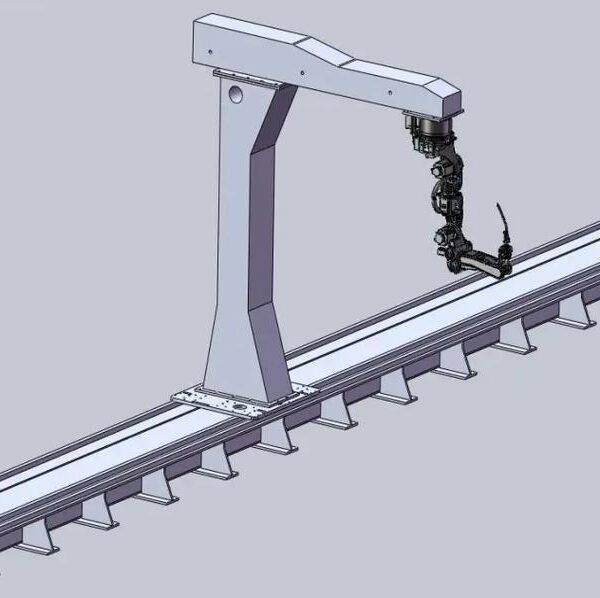

Cantilever Welding Robot solution
-
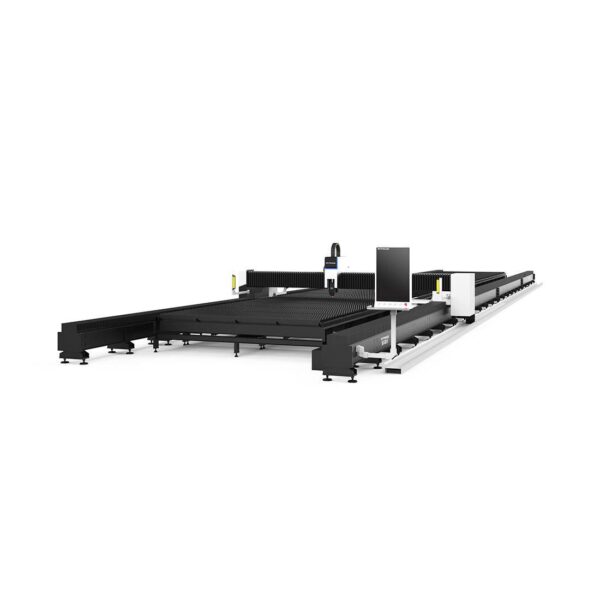

GF laser cutting machine
-
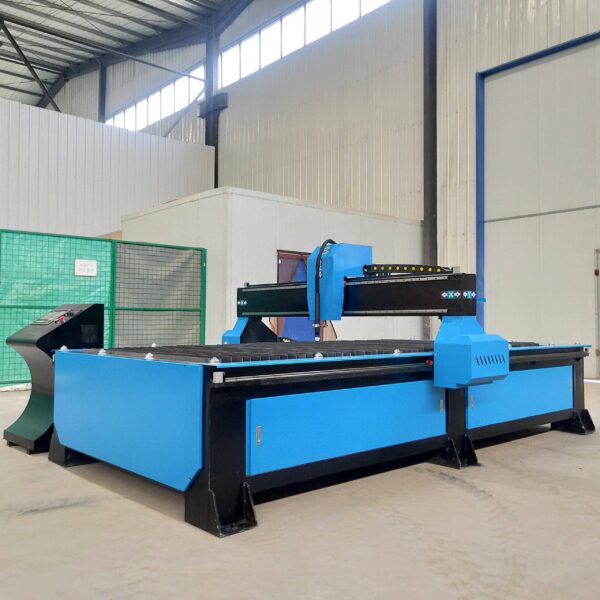
P3015 plasma cutting machine
-

LFP3015 Fiber Laser Cutter
-
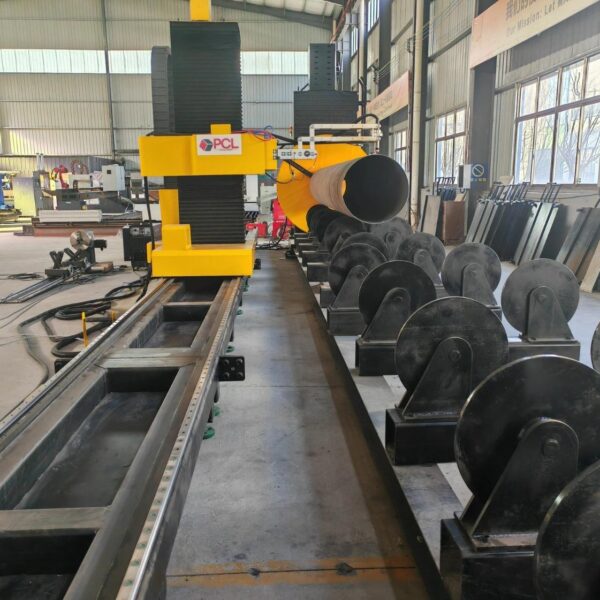
pipe plasma cutting machine
-
LFH 4020 Fiber Laser Cutting Machine
-
LFP4020
-
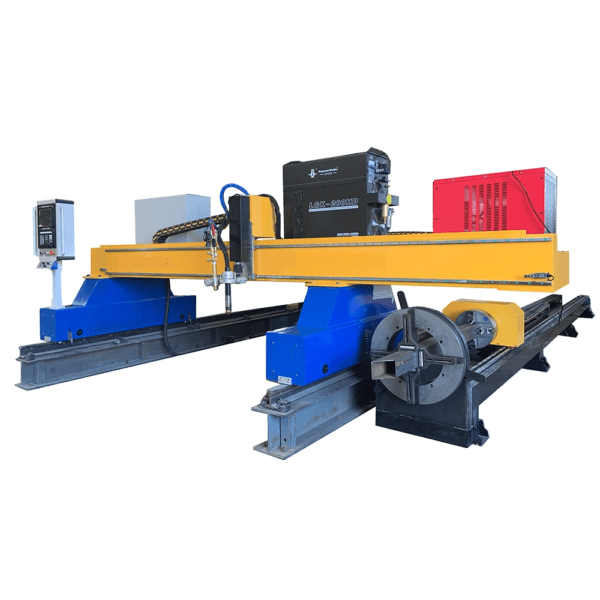
gantry plasma air cutting machine
-
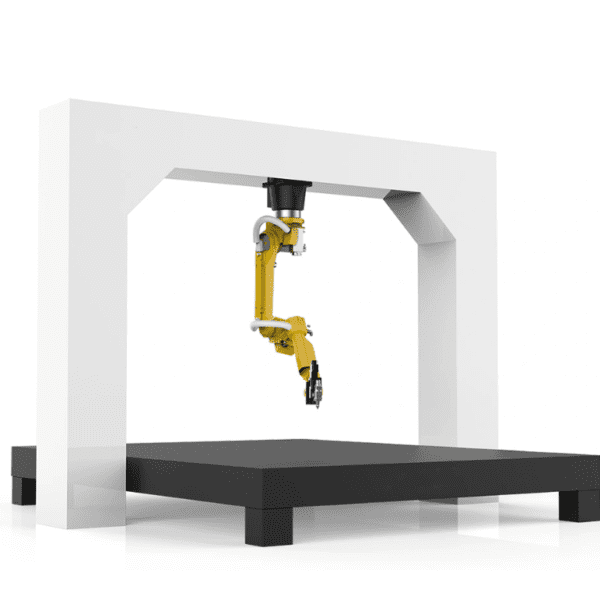
3D robot cutting machine
-
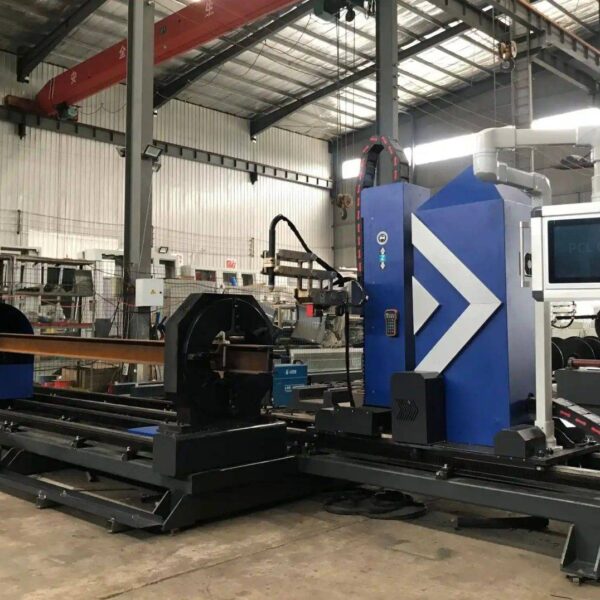
8 axis plasma cutting machine
-
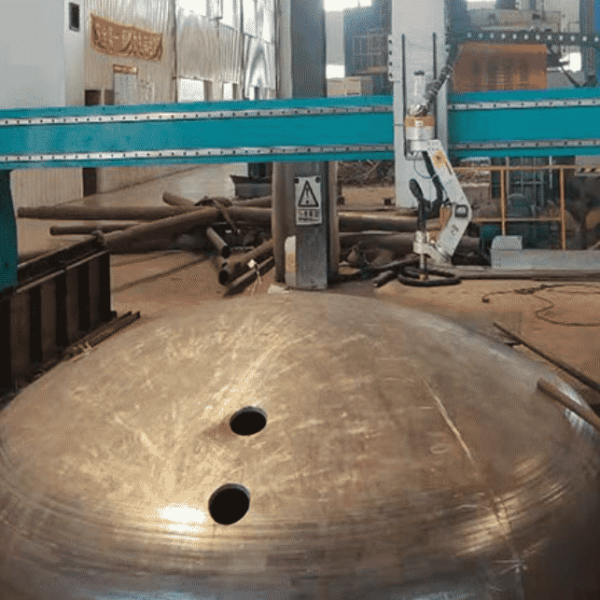
5 axis plasma cutting machine
-

LT360 tube laser cutting machine
-
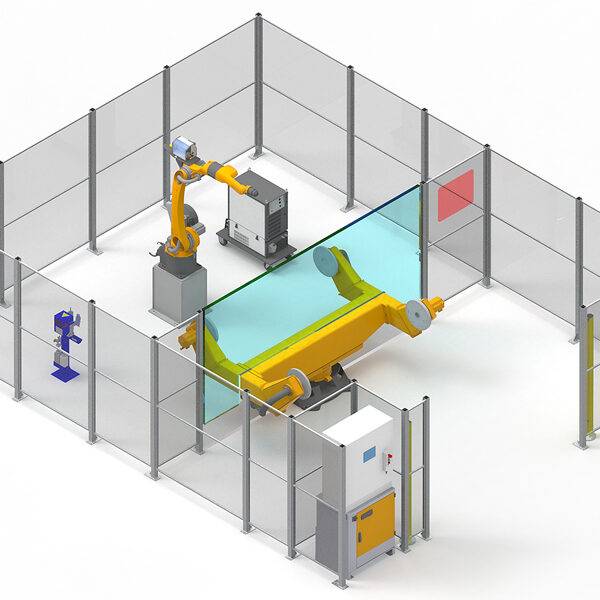
robot welding workstation
-
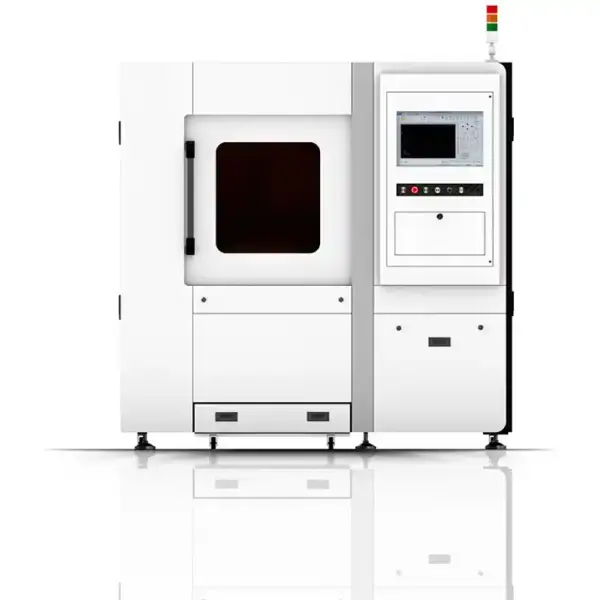
SF6060 fiber laser cutting machine
Advanced Fiber Laser Tube Processing Technology
Our CNC Fiber Laser Tube Cutting systems revolutionize metal fabrication by integrating high-precision cutting, punching, and profiling into a single automated workflow. Designed for versatility, this technology handles a wide array of profiles including Round, Square, Rectangular, and Oval tubes, as well as complex L-shaped and U-shaped channels.
- Precision Punching: High-speed hole punching with micron-level accuracy, eliminating the need for mechanical drilling or die-stamping.
- Complex Profiling: Advanced 3D pathing allows for intricate interlocking joints and specialized notch cuts, ideal for structural frames.
- High Material Efficiency: Intelligent nesting software minimizes scrap, reducing raw material costs across large production runs.
- Clean Finish: Delivers oxide-free, burr-free edges that require zero secondary grinding before welding.

Seamlessly processing multiple profiles with consistent precision.
Global Delivery & Logistics



From our high-tech manufacturing facility directly to your global site. PCL WeldCut ensures secure packaging, professional handling, and reliable international logistics to safeguard your equipment throughout the entire journey.