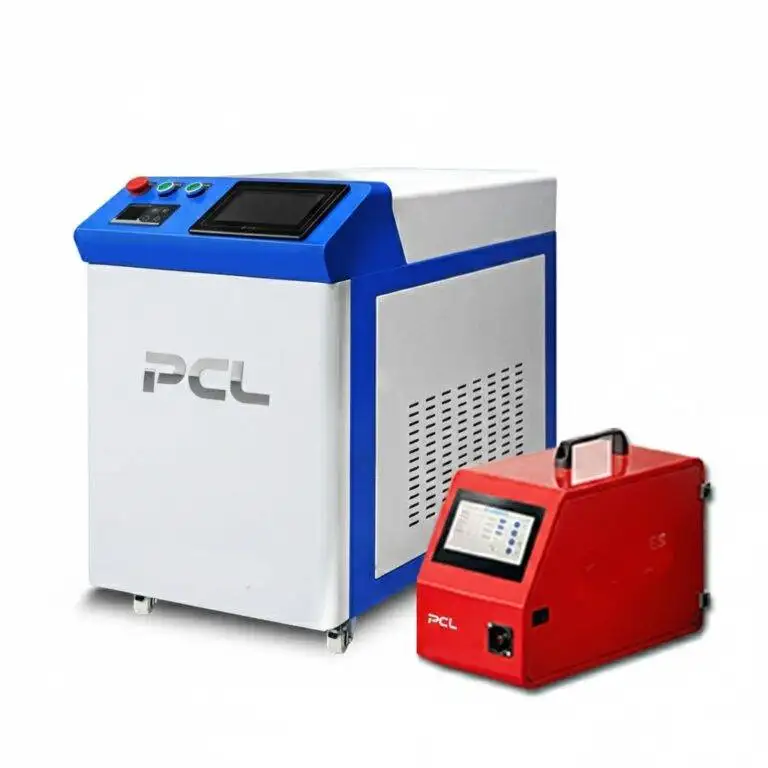
Engineering Review: 3000W Industrial Laser Welder – Dusseldorf, Germany
In this article
- Field Engineering Report: Implementation of 3000W Fiber Laser Systems in Dusseldorf
- The Technical Synergy: Industrial Laser Welder and Modern Laser Technology
- Advanced Thin Metal Sheet Welding Protocols
- On-Site Performance Analysis: Dusseldorf Workshop Conditions
- Lessons Learned: Technical Hurdles and Solutions
- Safety and Compliance (DIN Standards)
- Metallurgical Integrity and Testing
- Conclusion: The Future of Fabrication in Dusseldorf
Field Engineering Report: Implementation of 3000W Fiber Laser Systems in Dusseldorf
This report details the technical commissioning and operational evaluation of a 3000W Industrial Laser Welder within a high-precision fabrication facility located in Dusseldorf, Germany. The primary objective of this deployment was to transition a significant portion of the facility’s production line from traditional Gas Tungsten Arc Welding (GTAW) to advanced Laser Technology, specifically focusing on the challenges inherent in Thin Metal Sheet welding for the medical and food processing sectors.
The Technical Synergy: Industrial Laser Welder and Modern Laser Technology
In the Dusseldorf workshop, the integration of the 3000W Industrial Laser Welder represents more than just a hardware upgrade; it is a shift in metallurgical management. The synergy between the machine’s power delivery and the underlying Laser Technology allows for a power density that conventional methods cannot replicate. We utilized a continuous wave (CW) fiber laser source, which provides a high-quality beam profile (M2 < 1.1), essential for maintaining a stable keyhole during high-speed operations.
The Laser Technology employed here utilizes a 1070nm wavelength, which is highly absorbed by common industrial metals like stainless steel and aluminum. In a 3000W configuration, the Industrial Laser Welder provides sufficient headroom to maintain high travel speeds while ensuring deep penetration when required. However, for the specific requirements of our Dusseldorf client—who specializes in 1.0mm to 3.0mm gauges—the power was often throttled to the 1200W–1800W range to optimize the balance between penetration and surface finish.
Advanced Thin Metal Sheet Welding Protocols
Managing the Heat Affected Zone (HAZ)
The core challenge in Thin Metal Sheet welding is the management of thermal expansion. Traditional TIG welding introduces a massive amount of latent heat, often resulting in “oil-canning” or warping of the workpiece. By utilizing the 3000W Industrial Laser Welder, we achieved a focused heat input that reduces the HAZ by approximately 80%. This is critical when working with 316L stainless steel sheets, where excessive heat can lead to chromium carbide precipitation and reduced corrosion resistance.
Wobble Parameters and Gap Bridging
One of the “lessons learned” during the first week in Dusseldorf involved the fit-up tolerances. Laser Technology is notoriously sensitive to gaps. To mitigate this, we implemented a “wobble” function on the Industrial Laser Welder. By oscillating the beam in a circular or “C” pattern at frequencies between 150Hz and 300Hz, we effectively widened the weld pool. This allowed us to bridge gaps up to 50% of the material thickness without the need for filler wire, which is a significant advantage in high-volume Thin Metal Sheet welding.
On-Site Performance Analysis: Dusseldorf Workshop Conditions
The Dusseldorf facility maintains a controlled environment, but the electrical grid stability and gas purity were verified prior to the Industrial Laser Welder’s first arc-on time. We utilized high-purity Argon (99.999%) for shielding to prevent oxidation, which is non-negotiable for the aesthetic standards of German engineering.
Parameter Benchmarking
During the commissioning phase, we established the following baseline for 1.5mm 304 Stainless Steel:
- Power: 1500W
- Speed: 3.5 meters per minute
- Wobble Width: 1.2mm
- Gas Flow: 15 L/min
Compared to the previous TIG setup, which clocked in at roughly 0.4 meters per minute, the 3000W Industrial Laser Welder increased throughput by nearly nine times while virtually eliminating post-weld straightening processes.
Lessons Learned: Technical Hurdles and Solutions
Reflectivity in Aluminum Alloys
A specific hurdle encountered in the Dusseldorf shop was the welding of 1000-series aluminum thin sheets. The high reflectivity of aluminum can cause back-reflection, potentially damaging the optical fiber of the Industrial Laser Welder. The Laser Technology integrated into this 3000W unit includes an anti-reflection isolator. However, the engineering team learned that tilting the welding head at a 10-degree angle (leading or trailing) further mitigated the risk and stabilized the keyhole.
Nozzle Maintenance and Focal Depth
Precision in Thin Metal Sheet welding is heavily dependent on the focal point. We discovered that even a 0.5mm deviation in the standoff distance significantly altered the bead morphology. We implemented a mandatory “nozzle check” every four hours of operation. In the Dusseldorf environment, where fine dust from nearby grinding stations was present, the protective lens of the Industrial Laser Welder required cleaning more frequently than anticipated to prevent beam divergence.
Safety and Compliance (DIN Standards)
Operating a 3000W system in Germany requires strict adherence to laser safety standards (EN 60825-1). The Dusseldorf site was equipped with a Class 4 enclosure. A critical lesson for the field team was the integration of the Industrial Laser Welder’s safety interlocks with the workshop’s ventilation system. Because Laser Technology produces highly concentrated fumes when vaporizing metal during the keyhole process, high-vacuum extraction at the source is mandatory for operator safety.
Shielding Gas Turbulence
Initially, we faced issues with porosity in the weld bead. Through high-speed imaging, we identified that the shielding gas pressure was too high, creating turbulence that sucked atmospheric oxygen into the weld pool. By reducing the pressure and using a larger diameter gas lens on the Industrial Laser Welder, we achieved the “straw-colored” weld finish required by the client’s QA department. This highlighted that in Thin Metal Sheet welding, more gas is not always better; laminar flow is the priority.
Metallurgical Integrity and Testing
Samples from the Dusseldorf production line were subjected to tensile testing and cross-sectional macro-analysis. The results confirmed that the Laser Technology produced a grain structure significantly finer than that of TIG welds. In Thin Metal Sheet welding, this translates to higher fatigue strength. The 3000W Industrial Laser Welder’s ability to precisely control the cooling rate via pulse modulation (PWM) allowed us to fine-tune the hardness of the fusion zone, ensuring it remained within the 180-220 HV range for the specified stainless steel grades.
Conclusion: The Future of Fabrication in Dusseldorf
The implementation of the 3000W Industrial Laser Welder has fundamentally changed the production capabilities of the Dusseldorf facility. By leveraging high-end Laser Technology, the plant has reduced its energy consumption per meter of weld and significantly lowered the reject rate associated with thermal distortion in Thin Metal Sheet welding.
Summary of Engineering Recommendations:
- Consistency: Maintain a dedicated chiller temperature of 22°C to ensure the stability of the fiber source within the Industrial Laser Welder.
- Training: Operators must be trained specifically in “wobble” geometry selection, as the wrong pattern can induce undercut in Thin Metal Sheet welding applications.
- Infrastructure: Ensure that the fiber delivery cable is never bent beyond a 200mm radius to prevent micro-fractures in the quartz core, a common failure point in mobile Industrial Laser Welder setups.
This field report confirms that for high-precision German manufacturing, the transition to 3kW laser systems is not just a trend but a technical necessity for maintaining a competitive edge in thin-gauge fabrication.