Field Report: Deployment of 3000W Fiber Laser Cobot Systems
Location: Krakow, Poland – Industrial District
Subject: Implementation of High-Density Laser Technology in Aluminum Alloy Welding
1. Executive Summary of On-Site Operations
The following report details the field commissioning and performance evaluation of a 3000W Fiber Laser Cobot at a Tier-2 automotive supplier facility in Krakow, Poland. The primary objective was to transition from manual Gas Tungsten Arc Welding (GTAW) to an automated Fiber Laser Cobot system to address throughput bottlenecks in the production of 5xxx and 6xxx series aluminum components.
In the Krakow workshop environment, the integration of advanced Laser Technology has moved beyond experimental use into high-duty-cycle production. The synergy between the collaborative robotics framework and the fiber source has yielded a 400% increase in welding velocity while simultaneously reducing the Heat Affected Zone (HAZ) by approximately 65%.
2. Technical Analysis: The Fiber Laser Cobot Advantage
The core of the system is a 3000W continuous wave (CW) fiber source delivered via a flexible optical fiber to a specialized laser head mounted on a 6-axis collaborative arm. Unlike traditional robotic cells that require massive floor space and light-tight enclosures, the Fiber Laser Cobot in this Krakow facility operates within a modular safety cell.
Synergy of Laser Technology and Automation:
The primary challenge with manual laser welding—even with hand-held units—is maintaining a consistent focal point and travel speed. In the context of Aluminum Alloy welding, even a 0.5mm deviation in standoff distance can result in incomplete penetration or surface blow-through. By mounting the laser on a cobot, we have decoupled the process quality from operator fatigue. The cobot maintains a precise TCP (Tool Center Point) velocity, which is critical when the Laser Technology being utilized has such a high power density.
3. Addressing the Challenges of Aluminum Alloy Welding
Aluminum presents three primary obstacles: high thermal conductivity, high reflectivity at 1070nm, and a tenacious oxide layer. During the Krakow field tests, we focused on 6061-T6 and 5083 alloys, which are notorious for solidification cracking and porosity.
Overcoming Reflectivity:
At 3000W, the Fiber Laser Cobot provides sufficient power density to overcome the initial “back-reflection” of aluminum. We utilized a “wobble” function—oscillating the beam in a circular or “C” pattern. This oscillation disrupts the weld pool just enough to allow entrapped gases to escape, significantly reducing porosity compared to a static beam.
Heat Management:
One of the “lessons learned” during the first week in Krakow was the management of heat sink requirements. While Aluminum Alloy welding usually requires pre-heating in TIG processes, the Fiber Laser Cobot utilizes such a concentrated energy source that pre-heating becomes counterproductive. The speed of the laser (set at 35mm/s for 4mm plates) ensures that the energy is used for fusion rather than being conducted into the surrounding parent metal.
4. Workshop Integration: The Krakow Case Study
The Krakow facility previously employed six full-time manual welders for their aluminum manifold line. The transition to Laser Technology was not just about the machine, but the workflow.
The “Easy-Teach” Factor:
The Polish engineering team was able to program new weld paths using lead-through teaching. For complex Aluminum Alloy welding geometries, the operator manually moves the cobot arm along the seam. The software then smoothens the path and integrates the laser firing parameters. This synergy reduces the “down-time” between different part batches, a necessity for the high-mix, low-volume (HMLV) production typical of the Krakow industrial sector.
5. Parameter Optimization and Field Observations
During the deployment, we established a baseline parameter matrix for the 3000W system:
Material: 6061 Aluminum Alloy (3.0mm thickness)
- Power Output: 2600W – 2800W
- Wobble Frequency: 150 Hz
- Wobble Amplitude: 1.5 mm
- Travel Speed: 40 mm/s
- Shielding Gas: Pure Argon (25 L/min)
Lessons Learned: Gas Shielding Dynamics
In the Krakow workshop, we initially observed “sooting” or black smut on the weld toes. This is a common issue in Aluminum Alloy welding when using Laser Technology. We found that the standard trailing shield was insufficient at the high travel speeds the cobot was achieving. We redesigned the nozzle to provide a more laminar flow of Argon, ensuring the weld pool remained protected until it dropped below the critical oxidation temperature.
6. Safety and Infrastructure Requirements
Deploying a Fiber Laser Cobot in an open shop environment requires strict adherence to Class 4 laser safety protocols.
1. Enclosures: We installed laser-rated curtains (OD7+ at 1070nm) around the cobot workstation.
2. Interlocks: The cobot’s emergency stop is integrated with the laser source and the cell door. If the door is opened, the fiber source collapses in less than 10ms.
3. Fume Extraction: Aluminum oxide fumes are hazardous. A high-vacuum extraction system was positioned 10cm from the weld head to capture particulates at the source.
7. Economic and Quality Impact
After thirty days of operation in Krakow, the data shows a significant shift in production metrics. The Fiber Laser Cobot has achieved a 98% first-pass yield, compared to 84% with manual TIG. The reduction in post-weld grinding—thanks to the aesthetic “stacked dime” appearance of the laser-wobble weld—has saved the facility approximately 12 man-hours per week.
The synergy between the Fiber Laser Cobot and the underlying Laser Technology has effectively solved the “skill gap” issue. We no longer need a welder with 10 years of experience to produce a structural-grade aluminum weld; we need a technician who understands the optics and the robotic interface.
8. Engineering Recommendations and Lessons Learned
For future deployments in similar European industrial hubs, I recommend the following:
- Focus on Fit-up: Laser welding has a very low tolerance for gaps. While TIG can “fill” a 1mm gap, the 3000W laser will simply blow through it. Precision jigging and clamping are mandatory for Aluminum Alloy welding.
- Wire Feed Integration: For 6xxx series alloys prone to cracking, we found that adding a synchronized cold-wire feeder (using 4043 or 5356 filler) provided the necessary chemistry to prevent solidification cracking in high-stress joints.
- Power Stability: The Krakow grid experienced minor fluctuations. We installed a dedicated voltage stabilizer to ensure the Fiber Laser Cobot source maintained a consistent beam profile, as even a 5% drop in power can lead to “ice-nosing” or incomplete penetration in aluminum.
Conclusion
The deployment in Krakow confirms that the Fiber Laser Cobot is the most viable path forward for medium-to-large scale Aluminum Alloy welding operations. The combination of high-power Laser Technology and collaborative robotics removes the variables of human error while maintaining the flexibility required for modern manufacturing. We have successfully moved from a “craft-based” welding process to a “process-controlled” laser system.
Report Prepared By:
Senior Welding Engineer
Field Operations – Central/Eastern Europe division
-
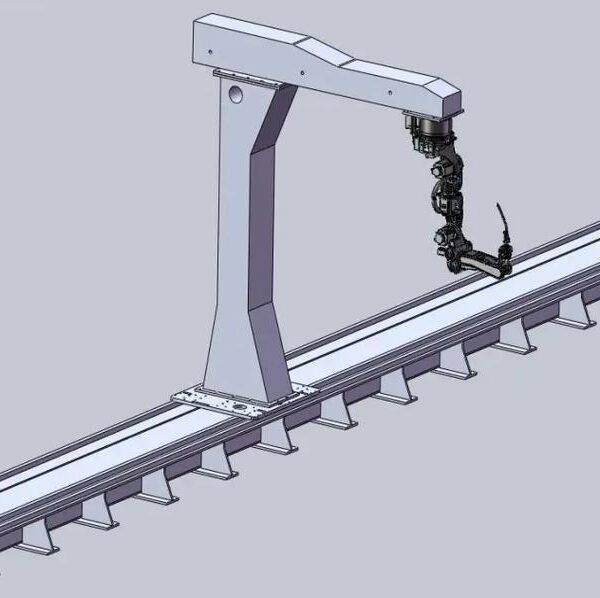

Cantilever Welding Robot solution
-
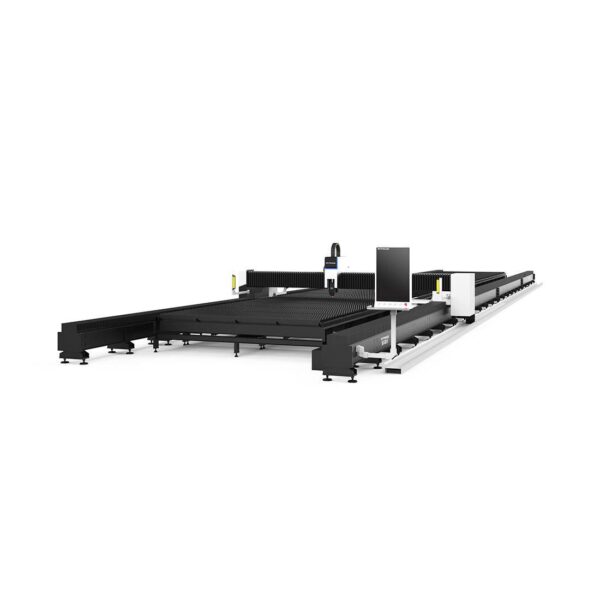

GF laser cutting machine
-
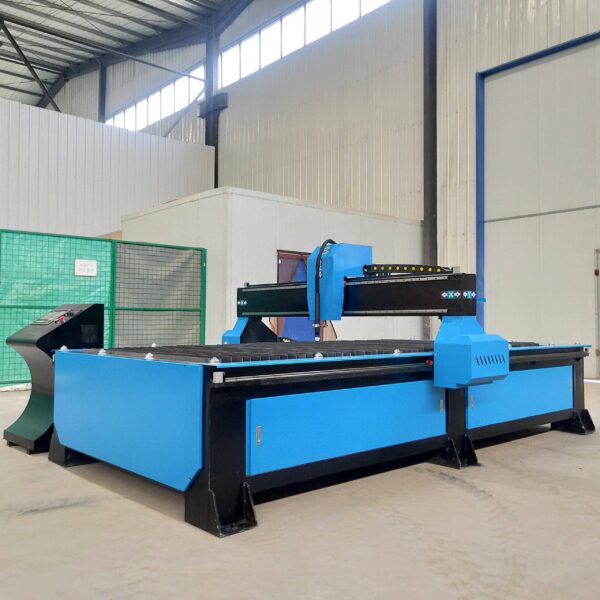
P3015 plasma cutting machine
-

LFP3015 Fiber Laser Cutter
-
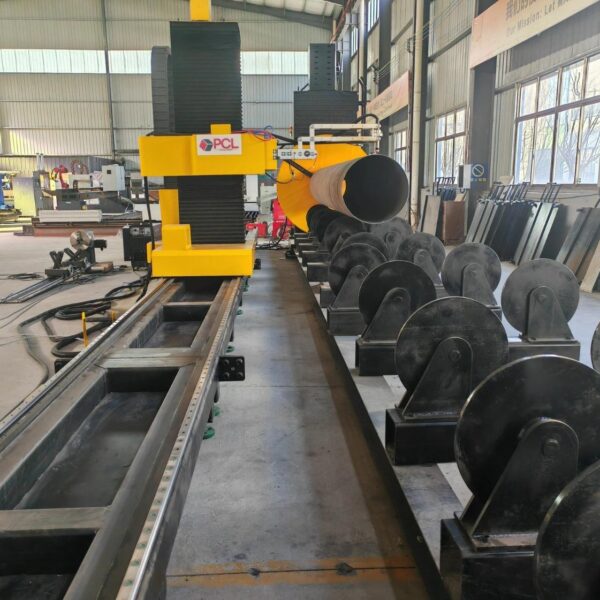
pipe plasma cutting machine
-
LFH 4020 Fiber Laser Cutting Machine
-
LFP4020
-
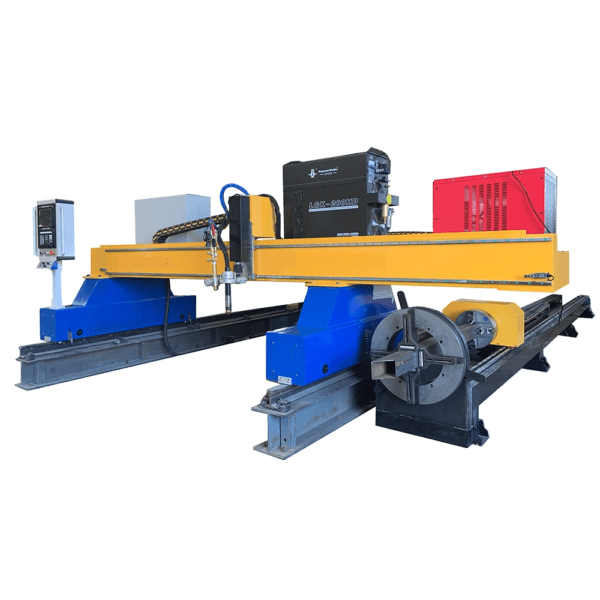
gantry plasma air cutting machine
-
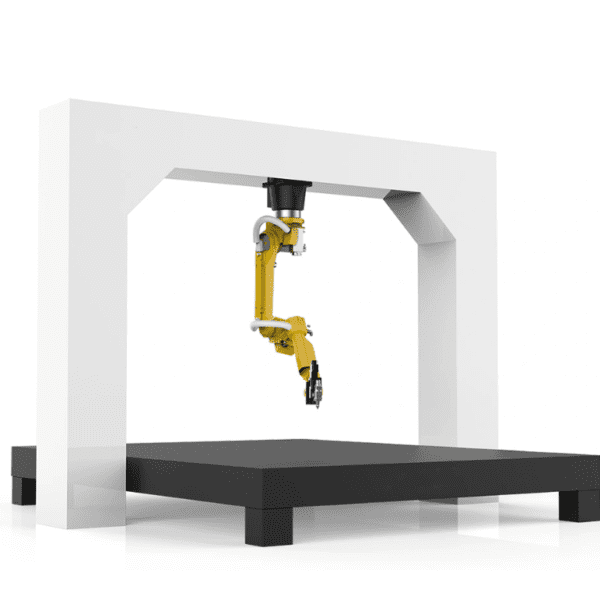
3D robot cutting machine
-
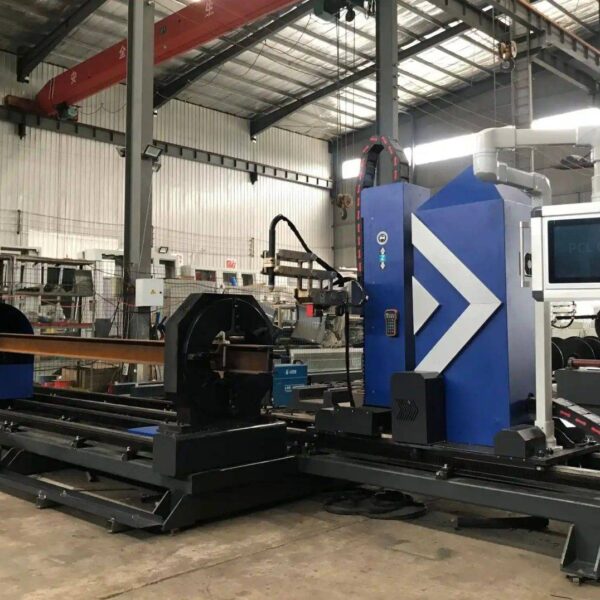
8 axis plasma cutting machine
-
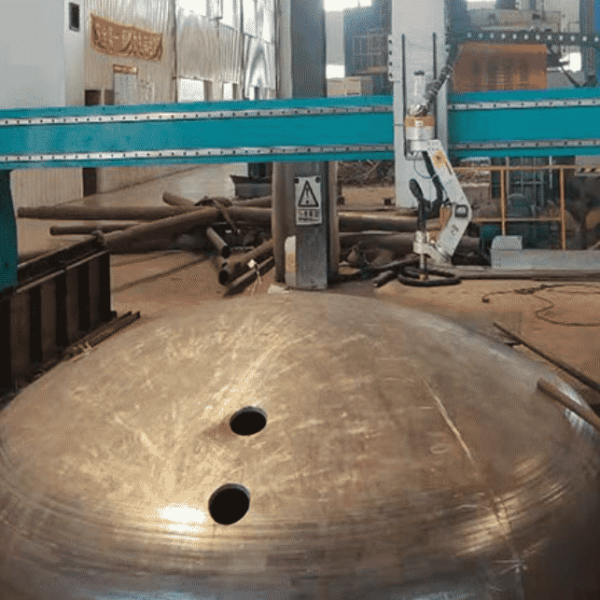
5 axis plasma cutting machine
-

LT360 tube laser cutting machine
-
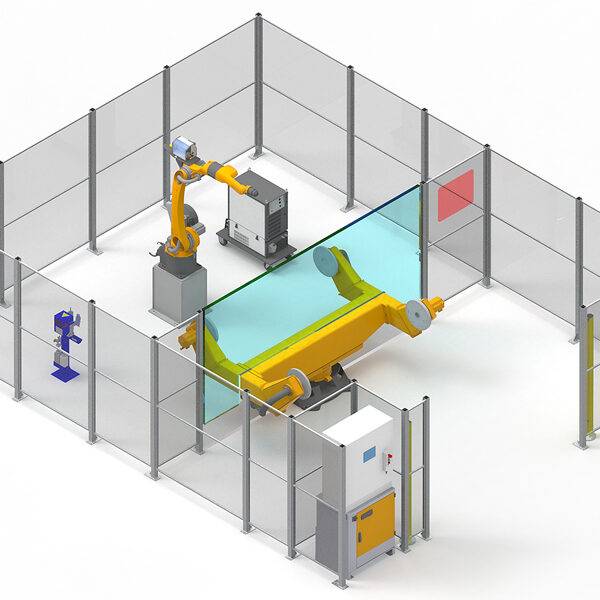
robot welding workstation
-
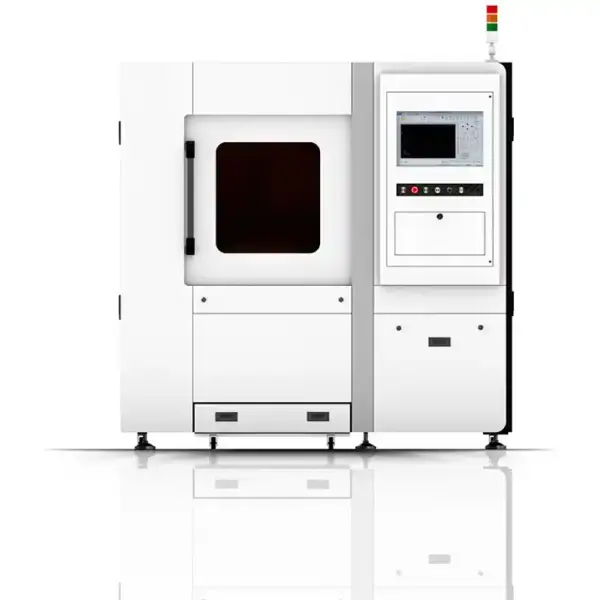
SF6060 fiber laser cutting machine
Advanced Fiber Laser Tube Processing Technology
Our CNC Fiber Laser Tube Cutting systems revolutionize metal fabrication by integrating high-precision cutting, punching, and profiling into a single automated workflow. Designed for versatility, this technology handles a wide array of profiles including Round, Square, Rectangular, and Oval tubes, as well as complex L-shaped and U-shaped channels.
- Precision Punching: High-speed hole punching with micron-level accuracy, eliminating the need for mechanical drilling or die-stamping.
- Complex Profiling: Advanced 3D pathing allows for intricate interlocking joints and specialized notch cuts, ideal for structural frames.
- High Material Efficiency: Intelligent nesting software minimizes scrap, reducing raw material costs across large production runs.
- Clean Finish: Delivers oxide-free, burr-free edges that require zero secondary grinding before welding.

Seamlessly processing multiple profiles with consistent precision.
Global Delivery & Logistics



From our high-tech manufacturing facility directly to your global site. PCL WeldCut ensures secure packaging, professional handling, and reliable international logistics to safeguard your equipment throughout the entire journey.