Technical Field Report: Implementation of 3000W Cobot Welding Machine in Abu Dhabi Structural Fabrication
1.0 Executive Summary
This report details the field performance, integration parameters, and metallurgical outcomes of the 3000W Cobot Welding Machine deployed at a Tier-1 structural steel facility in the Mussafah Industrial Area, Abu Dhabi, UAE. The primary objective was to transition high-volume mild steel welding sequences from manual Gas Metal Arc Welding (GMAW) to an automated framework utilizing Collaborative Robotics. Over a 90-day assessment period, the system demonstrated a 40% increase in arc-on time while maintaining stringent weld quality standards required for regional infrastructure projects.
2.0 Equipment Specification and Site Conditions
2.1 Hardware Configuration
The unit under review is a 3000W fiber-laser-based Cobot Welding Machine integrated with a six-axis industrial arm designed for collaborative environments. The 3000W power rating was specifically selected to handle mild steel welding on plate thicknesses ranging from 4mm to 12mm, providing sufficient power density for deep penetration while maintaining high travel speeds.
2.2 Abu Dhabi Environmental Constraints
Operating high-precision collaborative robotics in the UAE presents specific challenges. During the July-August cycle, ambient workshop temperatures peaked at 48°C (118°F) with relative humidity exceeding 85%. These conditions necessitated a secondary external chilling circuit for the 3000W laser source and a pressurized, filtered cabinet for the control logic to prevent dust ingress from local sandstorms, which can compromise the sensitive encoders of the cobot arm.
3.0 The Synergy of Cobot Welding Machine and Collaborative Robotics
3.1 Defining the Collaborative Workflow
In the context of this Abu Dhabi workshop, the transition to a Cobot Welding Machine was not intended to replace the skilled workforce but to augment it. Unlike traditional industrial robots that require extensive safety celling and complex PLC programming, collaborative robotics allows the welding engineer to stand side-by-side with the machine. We utilized “lead-through” programming, where a senior welder physically moves the torch head to define the weld path. This effectively captured the “tribal knowledge” of our most experienced welders and translated it into repeatable digital code.
3.2 Human-Machine Interface (HMI) in a Multilingual Environment
A significant “lesson learned” in the UAE market is the necessity of an intuitive HMI. Our workforce is diverse, with varying levels of English proficiency. The 3000W Cobot Welding Machine utilized a visual, icon-based interface. By simplifying the interaction between the operator and the collaborative robotics software, we reduced the setup time for new mild steel assemblies from four hours (traditional CNC) to fifteen minutes.
4.0 Technical Analysis: Mild Steel Welding Performance
4.1 Metallurgical Observations
The application focused on S235JR and S355J2+N mild steel grades. Using the 3000W fiber laser source, we observed a significantly narrower Heat Affected Zone (HAZ) compared to traditional GMAW. At a travel speed of 1.2 meters per minute on 6mm mild steel welding joints, the HAZ was measured at 0.8mm, representing a 65% reduction in thermal distortion. This is critical for Abu Dhabi structural projects where post-weld straightening is a costly and time-consuming bottleneck.
4.2 Weld Profile and Penetration
The 3000W output allowed for a keyhole welding mode on 8mm butt joints without the need for edge preparation (beveling). This drastically reduced the consumption of filler wire and shielding gas (Industrial Grade Argon/CO2 mix). Penetration was consistent at 98.5% across a 50-meter test run, verified through ultrasonic testing (UT) and macro-etching samples.
5.0 Operational Lessons Learned
5.1 Managing Mill Scale on Mild Steel
One of the primary technical hurdles encountered was the variability of mill scale on locally sourced mild steel. While manual welders can adjust their technique on the fly to “burn through” scale, a Cobot Welding Machine requires a consistent surface. We found that the 3000W laser was sensitive to the carbon-rich scale, which occasionally caused spatter and lens contamination.
Engineering Solution: We implemented a mandatory mechanical wire brushing of the weld zone. This increased prep time by 5% but reduced weld defects by 30%, proving that collaborative robotics demands higher upstream discipline than manual processes.
5.2 Thermal Management of the Arm
Continuous 3000W operation generates significant back-reflection and ambient heat. We observed that the joints of the cobot arm would occasionally drift after four hours of continuous mild steel welding due to thermal expansion.
Engineering Solution: We integrated a thermal recalibration routine every two hours. The operator triggers a 30-second “home position check” to reset the zero-point, ensuring that the collaborative robotics system maintains its +/- 0.05mm repeatability despite the Abu Dhabi heat.
6.0 Productivity and Economic Impact
6.1 Cycle Time Reductions
For a standard support bracket involving twelve 150mm fillet welds on 10mm mild steel:
- Manual GMAW: 14 minutes (including positioning and slag removal).
- 3000W Cobot: 3.5 minutes.
The Cobot Welding Machine allowed for a “dual-station” setup. While the cobot welded station A, the operator loaded station B. This leapfrogging technique is where the true value of collaborative robotics is realized; it transforms the welder into a high-level production supervisor.
6.2 Consumable Efficiency
Shielding gas consumption was reduced by 22% due to the precision of the automated gas solenoid and the higher travel speeds. In a region like Abu Dhabi, where industrial gas logistics can be influenced by extreme weather and demand, this efficiency has a direct impact on the bottom line.
7.0 Safety and Compliance
Deploying collaborative robotics in a UAE workshop requires adherence to ISO 10218-2 and ISO/TS 15066 standards. Because the 3000W Cobot Welding Machine uses a Class 4 laser, we could not rely solely on the cobot’s force-limiting features. We installed localized laser-safe shielding (OD7+ rated) and utilized area scanners that slow the robot to a “safe speed” if an operator enters the immediate 1.5-meter radius, and a “full stop” if they enter the 0.5-meter radius. This hybrid safety approach is mandatory for high-power laser applications in open shop floors.
8.0 Conclusion
The integration of the 3000W Cobot Welding Machine has proven successful for mild steel welding in the Abu Dhabi industrial sector. The synergy between high-power laser delivery and the flexibility of collaborative robotics addresses the region’s need for high-quality, high-speed fabrication while mitigating the challenges of a harsh climate and a transitioning workforce.
The primary takeaway for future deployments is that the “collaborative” nature of the machine is its greatest asset; by empowering the welder to control the automation, we achieved a level of consistency that neither a human nor a fully caged robot could provide in isolation. For the upcoming Q4 projects, I recommend expanding the cobot fleet to include circular seam welding for oil and gas piping components, provided the environmental cooling systems are upgraded accordingly.
Report Compiled By:
Senior Welding Engineer
Abu Dhabi Field Office
Date: October 2023
-
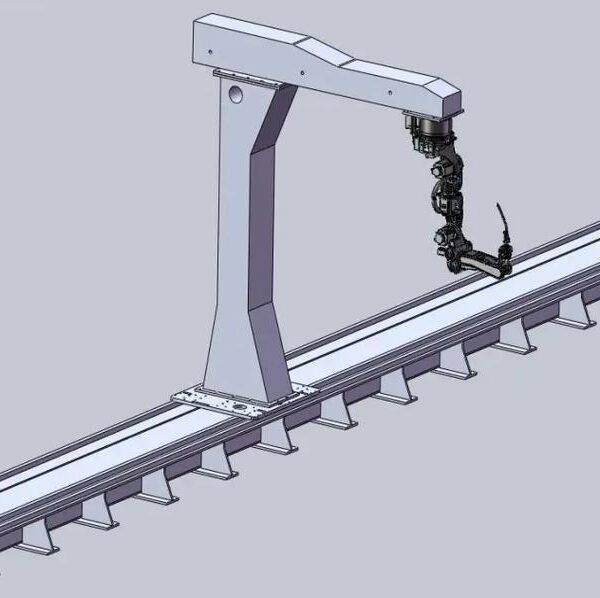

Cantilever Welding Robot solution
-
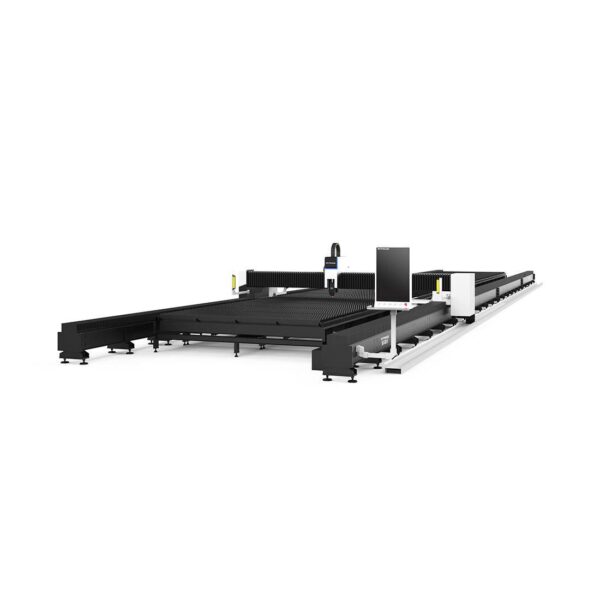

GF laser cutting machine
-
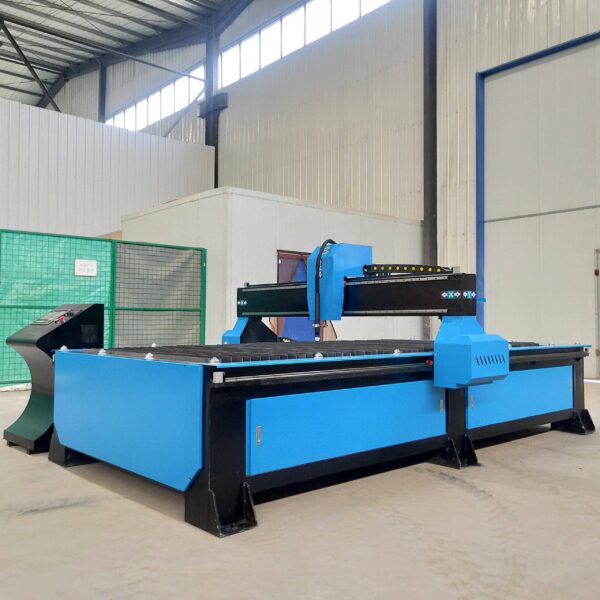
P3015 plasma cutting machine
-

LFP3015 Fiber Laser Cutter
-
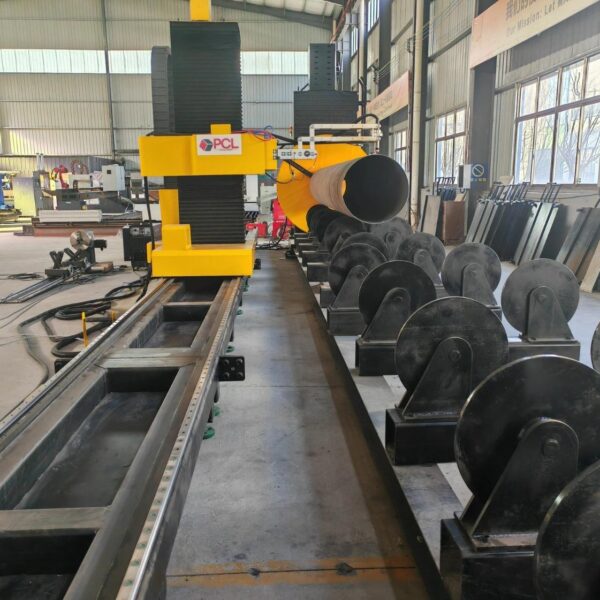
pipe plasma cutting machine
-
LFH 4020 Fiber Laser Cutting Machine
-
LFP4020
-
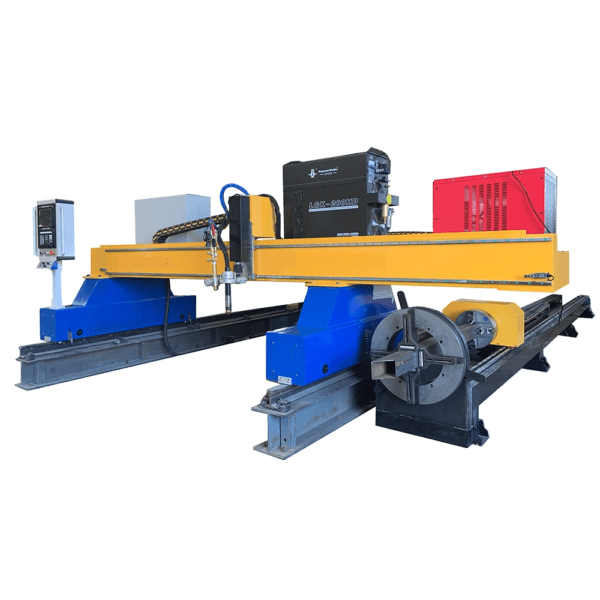
gantry plasma air cutting machine
-
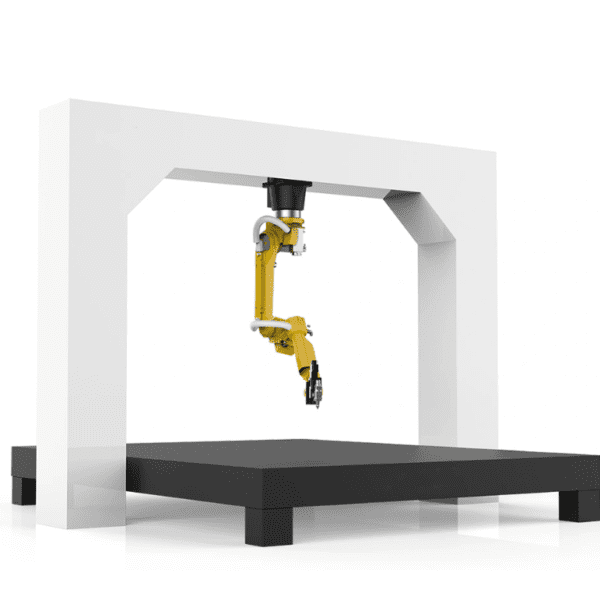
3D robot cutting machine
-
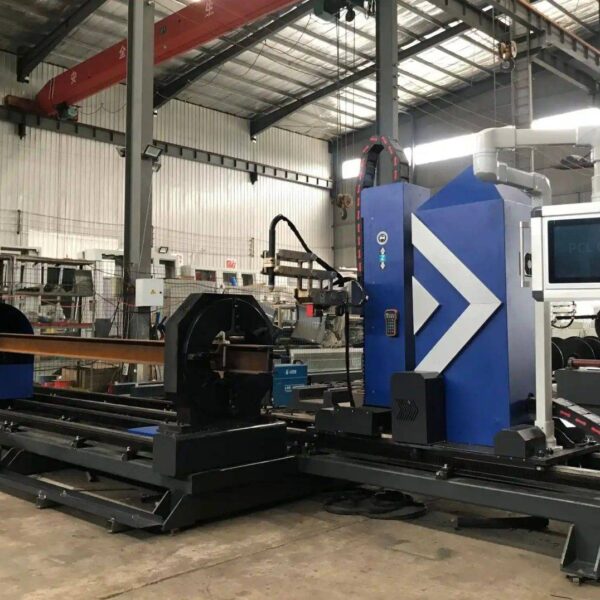
8 axis plasma cutting machine
-
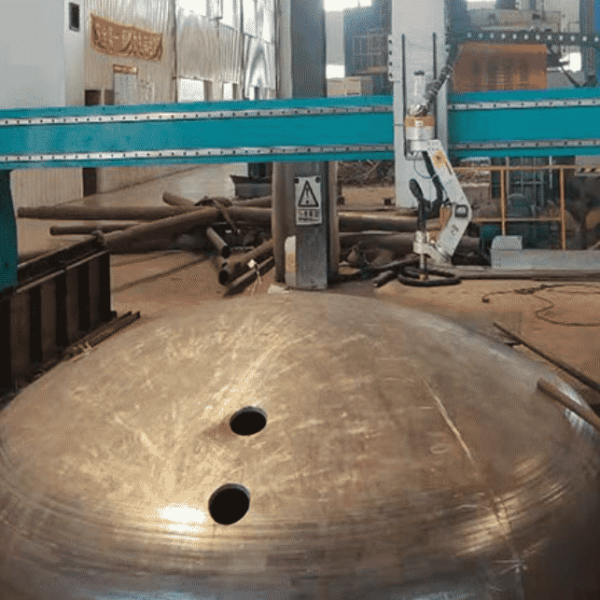
5 axis plasma cutting machine
-

LT360 tube laser cutting machine
-
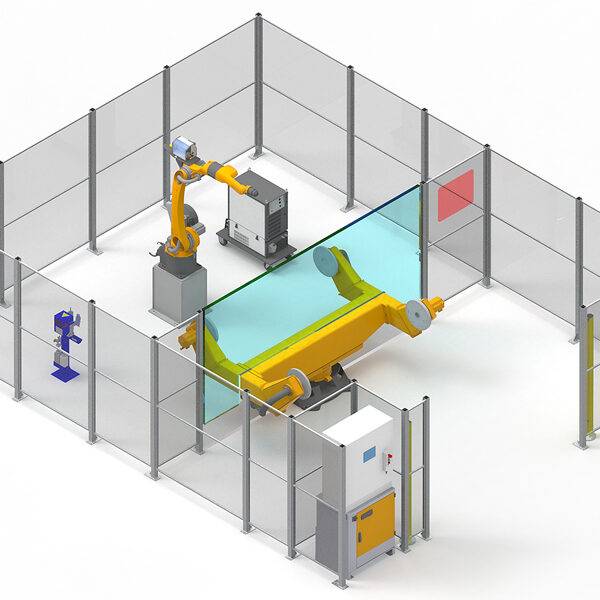
robot welding workstation
-
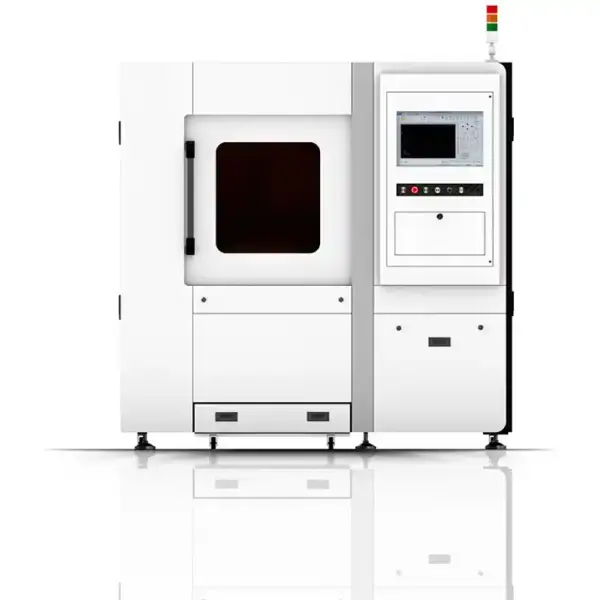
SF6060 fiber laser cutting machine
Advanced Fiber Laser Tube Processing Technology
Our CNC Fiber Laser Tube Cutting systems revolutionize metal fabrication by integrating high-precision cutting, punching, and profiling into a single automated workflow. Designed for versatility, this technology handles a wide array of profiles including Round, Square, Rectangular, and Oval tubes, as well as complex L-shaped and U-shaped channels.
- Precision Punching: High-speed hole punching with micron-level accuracy, eliminating the need for mechanical drilling or die-stamping.
- Complex Profiling: Advanced 3D pathing allows for intricate interlocking joints and specialized notch cuts, ideal for structural frames.
- High Material Efficiency: Intelligent nesting software minimizes scrap, reducing raw material costs across large production runs.
- Clean Finish: Delivers oxide-free, burr-free edges that require zero secondary grinding before welding.

Seamlessly processing multiple profiles with consistent precision.
Global Delivery & Logistics



From our high-tech manufacturing facility directly to your global site. PCL WeldCut ensures secure packaging, professional handling, and reliable international logistics to safeguard your equipment throughout the entire journey.