Field Engineering Report: Commissioning of 3000W All-in-one Cobot Station
Location: Ambattur Industrial Estate, Chennai, India
This report outlines the technical deployment and operational integration of a 3000W All-in-one Cobot Station at a Tier-2 automotive component manufacturer in Chennai. The primary objective was the transition from manual Metal Active Gas (MAG) welding to automated fiber laser welding for high-volume Mild Steel welding components. As a senior engineer on-site, the focus was not merely on installation, but on the practical synergy between Collaborative Robotics and high-density power sources in a high-humidity, high-ambient-temperature environment.
1. The All-in-one Cobot Station: Hardware Integration
The unit deployed is a consolidated 3000W fiber laser system. Unlike traditional industrial robots that require massive external controllers, separate chillers, and sprawling safety enclosures, the All-in-one Cobot Station integrates the laser source, the dual-cycle water chiller, the wire feeder, and the control logic into a single mobile footprint. In the cramped floor conditions typical of older Chennai workshops, this footprint reduction was the first critical win.
Thermal Management in Tropical Environments
Chennai’s ambient temperature frequently exceeds 40°C with humidity levels often peaking above 85%. For a 3000W laser source, thermal stability is the primary failure point. The All-in-one Cobot Station’s internal refrigeration unit was pushed to its threshold. During the first 72 hours of testing, we identified that standard factory ventilation was insufficient. We had to relocate the station to a bay with improved cross-ventilation and install an external voltage stabilizer to handle the local grid’s frequent brownouts, which were causing the chiller to trip.
Key Specification Note:
- Power Source: 3000W Fiber Laser (Continuous Wave).
- Cooling: Integrated dual-circuit (Optics/Laser source).
- Protection: IP54 rated cabinet, essential for the dust levels found in Chennai’s industrial belts.
2. Collaborative Robotics in the Production Workflow
The shift to Collaborative Robotics represents a paradigm shift for the local workforce. Traditional automation requires specialized PLC programmers. However, the collaborative nature of this station allows the welding operator—someone with 15 years of manual experience but zero coding knowledge—to lead the torch.
Hand-Guiding and Lead-Through Programming
In this Chennai facility, we implemented “Lead-Through” programming. The operator physically moves the cobot arm to the start and end points of the weld seam on the Mild Steel workpieces. The system records these spatial coordinates. This drastically reduces the “Programming-to-Production” time. During the commissioning week, we reduced the setup time for a new jig from four hours (standard industrial robot) to twenty-five minutes.
Safety and Proximity
The Collaborative Robotics element is defined by the torque sensors in each joint. In the tight quarters of the Chennai plant, workers are constantly moving. The cobot’s ability to operate without heavy physical fencing—using instead laser scanners and pressure-sensitive stop-states—allowed us to integrate the station directly into the existing assembly line. This “fenceless” operation is what makes the All-in-one Cobot Station truly effective in brownfield industrial sites.
3. Technical Application: Mild Steel Welding Optimization
The core of this deployment was Mild Steel welding, specifically focusing on 3mm to 6mm gauge plates used in heavy-duty brackets. Mild steel, while forgiving in manual arc welding, requires precise parameter control when utilizing a 3000W laser source to avoid burn-through or excessive porosity.
Managing the Heat Affected Zone (HAZ)
One of the primary advantages of the All-in-one Cobot Station over manual MIG welding is the drastic reduction in the Heat Affected Zone. In Chennai’s humid air, rapid cooling of a large HAZ can lead to surface oxidation and localized brittleness. By utilizing the 3000W laser, we achieved high travel speeds (up to 20mm/s on 4mm MS plate), which localized the heat input. The result was a bead profile that required zero post-weld grinding, a significant labor saving for the client.
Wobble Parameters and Gap Bridging
Mild Steel welding in many Indian SMEs often suffers from inconsistent fit-up. The parts provided by the stamping department had gaps ranging from 0.5mm to 1.2mm. A static laser beam would fail here. We utilized the cobot’s integrated “Wobble” function—oscillating the beam in a circular pattern at 150Hz. This allowed the melt pool to bridge the gaps without blowing through the material.
Lessons Learned: Gas Shielding
A major technical hurdle was the gas shielding. We initially used a standard Argon/CO2 mix. However, at 3000W, we noted excessive spatter. Switching to pure Nitrogen for certain thin-gauge MS applications or high-flow Argon for thicker sections proved necessary. In the Chennai heat, gas regulators also showed signs of freezing during high-duty cycle runs; we had to install heated regulators to ensure consistent flow rates.
4. Synergy: All-in-one Station + Collaborative Robotics
The real-world success of this installation stems from the synergy between the hardware and the movement logic. When you combine an All-in-one Cobot Station with Collaborative Robotics, you aren’t just buying a tool; you are buying a flexible workstation.
The “Operator-Plus” Model
In the Chennai plant, we moved away from the “One Machine, One Operator” model. Because the cobot handles the strenuous Mild Steel welding path with 0.05mm repeatability, the operator is now free to perform fit-up on a second jig or conduct visual QC on the finished pieces. This multitasking increased the station’s output by 120% compared to the manual stations it replaced.
5. Field Observations and Lessons Learned
The following technical insights were gathered during the final sign-off phase:
Lesson 1: The “Chennai Humidity” Factor
Optical cleanliness is paramount. We found that the humid air in the workshop caused slight condensation on the protective lens during cold starts. We implemented a mandatory “Warm-up” cycle for the chiller and a lens inspection protocol every 4 hours. Without this, the 3000W beam would have cracked the protective glass within a day.
Lesson 2: Joint Geometry and Jigging
While Collaborative Robotics makes programming easy, it doesn’t fix bad jigging. We had to reinforce the client’s existing Mild Steel jigs. Laser welding is less forgiving of “bounce” or vibration than manual MIG. Even a 1mm shift during the cobot’s travel would ruin the weld. We moved to pneumatic clamping to match the cobot’s precision.
Lesson 3: Grounding and Electrical Noise
The All-in-one station contains sensitive electronics. In an environment with heavy stamping presses and overhead cranes, electromagnetic interference (EMI) is high. We had to ensure a dedicated copper-plate earth pit was installed specifically for the cobot to prevent “ghost” errors in the touch-screen interface.
6. Conclusion
The deployment of the 3000W All-in-one Cobot Station in Chennai demonstrates that high-power laser welding is no longer reserved for clean-room environments. By leveraging Collaborative Robotics, we have successfully deskilled the operation of a complex laser system, allowing local welders to produce world-class Mild Steel welding results. The key to success was not just the 3000W of power, but the integration of the unit into the local environmental and labor context of the Chennai industrial landscape.
End of Report.
Senior Welding Engineer
-


Cantilever Welding Robot solution
-


GF laser cutting machine
-

P3015 plasma cutting machine
-

LFP3015 Fiber Laser Cutter
-

pipe plasma cutting machine
-
LFH 4020 Fiber Laser Cutting Machine
-
LFP4020
-

gantry plasma air cutting machine
-

3D robot cutting machine
-

8 axis plasma cutting machine
-

5 axis plasma cutting machine
-

LT360 tube laser cutting machine
-

robot welding workstation
-

SF6060 fiber laser cutting machine
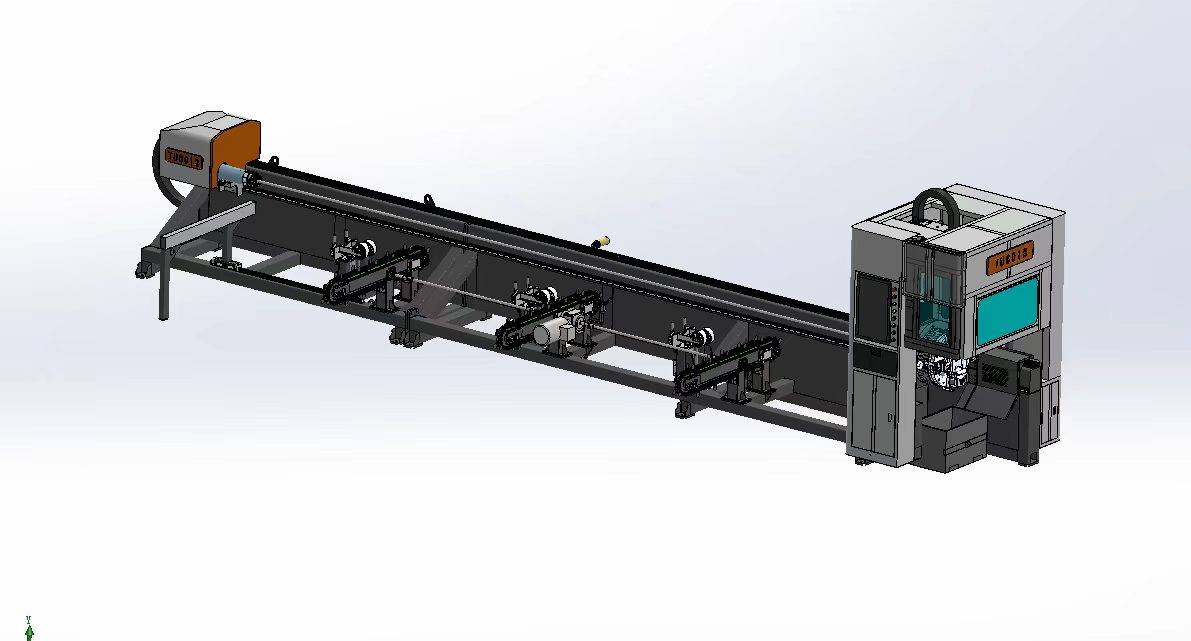
Advanced Fiber Laser Tube Processing Technology
Our CNC Fiber Laser Tube Cutting systems revolutionize metal fabrication by integrating high-precision cutting, punching, and profiling into a single automated workflow. Designed for versatility, this technology handles a wide array of profiles including Round, Square, Rectangular, and Oval tubes, as well as complex L-shaped and U-shaped channels.
- Precision Punching: High-speed hole punching with micron-level accuracy, eliminating the need for mechanical drilling or die-stamping.
- Complex Profiling: Advanced 3D pathing allows for intricate interlocking joints and specialized notch cuts, ideal for structural frames.
- High Material Efficiency: Intelligent nesting software minimizes scrap, reducing raw material costs across large production runs.
- Clean Finish: Delivers oxide-free, burr-free edges that require zero secondary grinding before welding.

Seamlessly processing multiple profiles with consistent precision.
Global Delivery & Logistics



From our high-tech manufacturing facility directly to your global site. PCL WeldCut ensures secure packaging, professional handling, and reliable international logistics to safeguard your equipment throughout the entire journey.