Engineering Review: 1500W Collaborative Arc Welding System – Dubai, UAE
In this article
- Field Evaluation: 1500W Collaborative Arc Welding System Deployment
- Project Overview and Site Conditions
- Synergy Between Collaborative Systems and Automated Welding
- Redefining the Workflow
- Technical Integration of the 1500W Power Source
- Performance in Structural Steel Welding
- Weld Procedure Specification (WPS) Compliance
- Lessons Learned: The Dubai Field Experience
- Environmental Mitigation
- The “Collaborative” Learning Curve
- Grounding and EMI Challenges
- Economic and Safety Impact
- ROI in the UAE Market
- Safety Enhancements
Field Evaluation: 1500W Collaborative Arc Welding System Deployment
Project Overview and Site Conditions
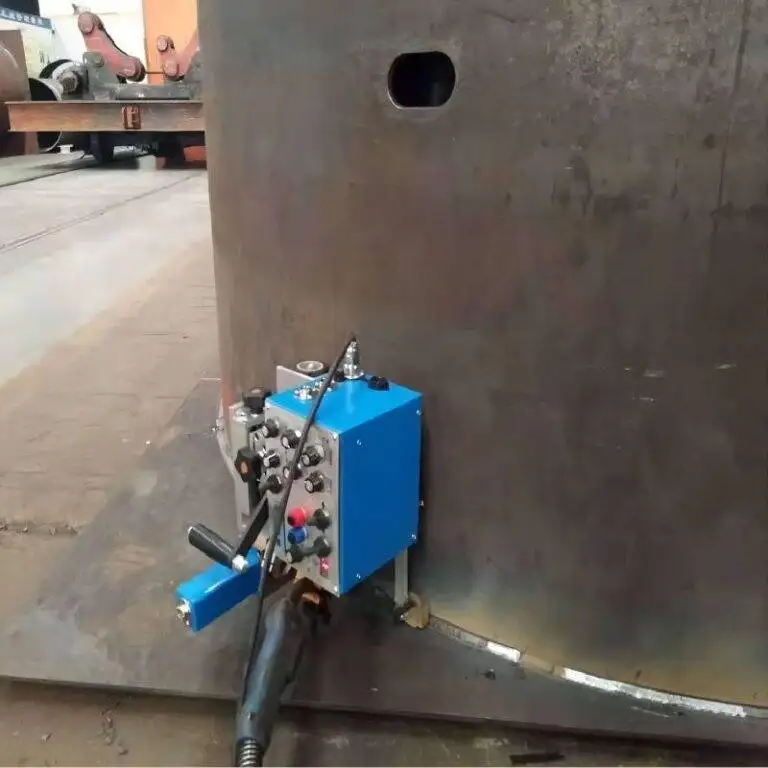
The following report details the technical deployment and performance validation of a 1500W Collaborative Arc Welding System within a structural steel fabrication facility located in the Jebel Ali Industrial Area, Dubai, UAE. The primary objective was to transition high-volume repetitive joins from manual processes to a semi-autonomous workflow to meet the aggressive delivery schedules required for upcoming infrastructure projects in the region.
Operating in Dubai presents unique environmental challenges. During the evaluation period, ambient workshop temperatures averaged 42°C (107°F) with relative humidity fluctuating between 55% and 75%. These conditions are critical for Automated Welding systems, as they push the thermal limits of both the power source duty cycles and the electronic control units of the collaborative arm. Our focus remained on the reliability of the 1500W output under sustained load and the precision of the arc in non-climate-controlled environments.
Synergy Between Collaborative Systems and Automated Welding
Redefining the Workflow
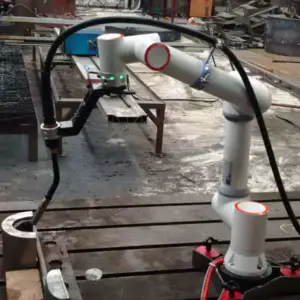
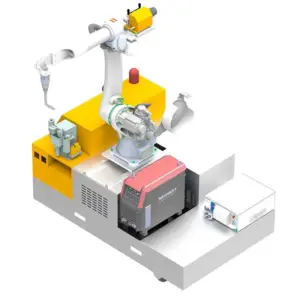
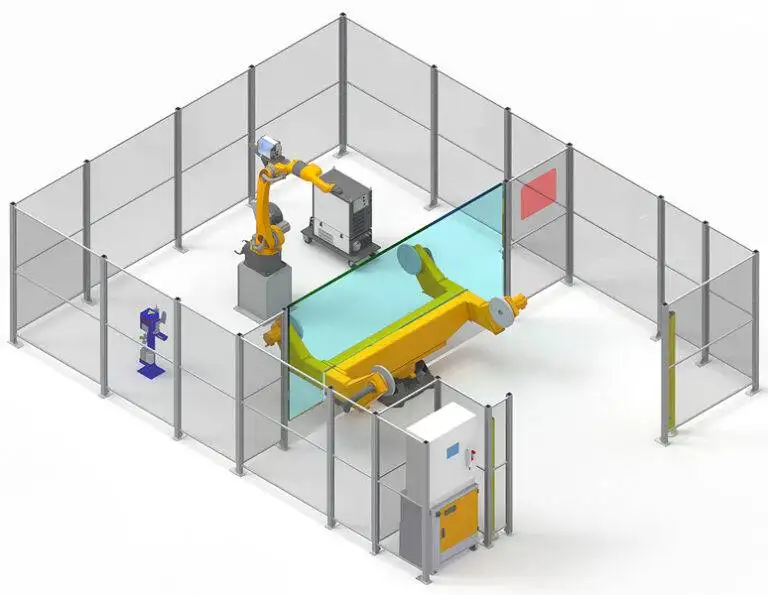
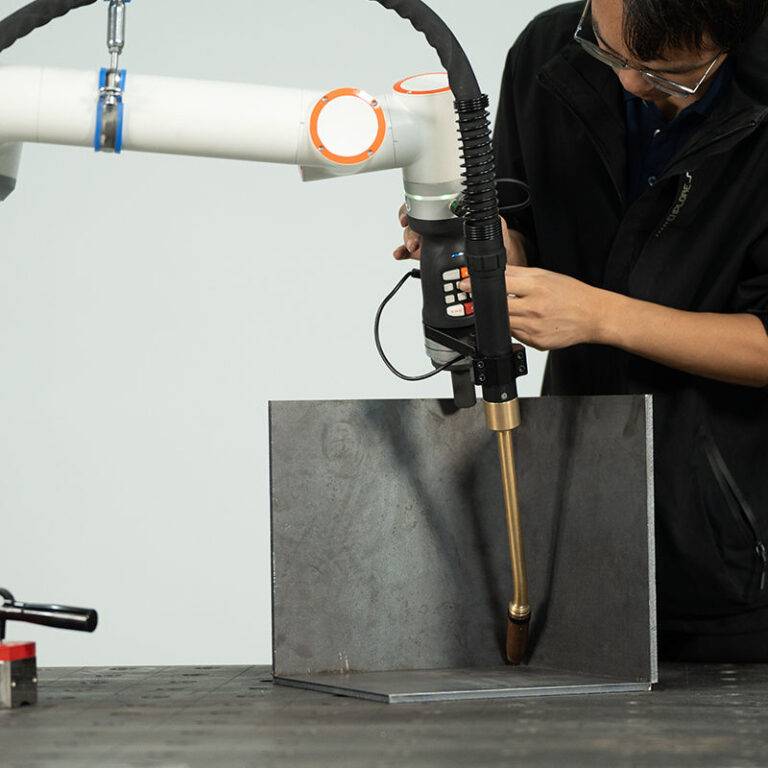
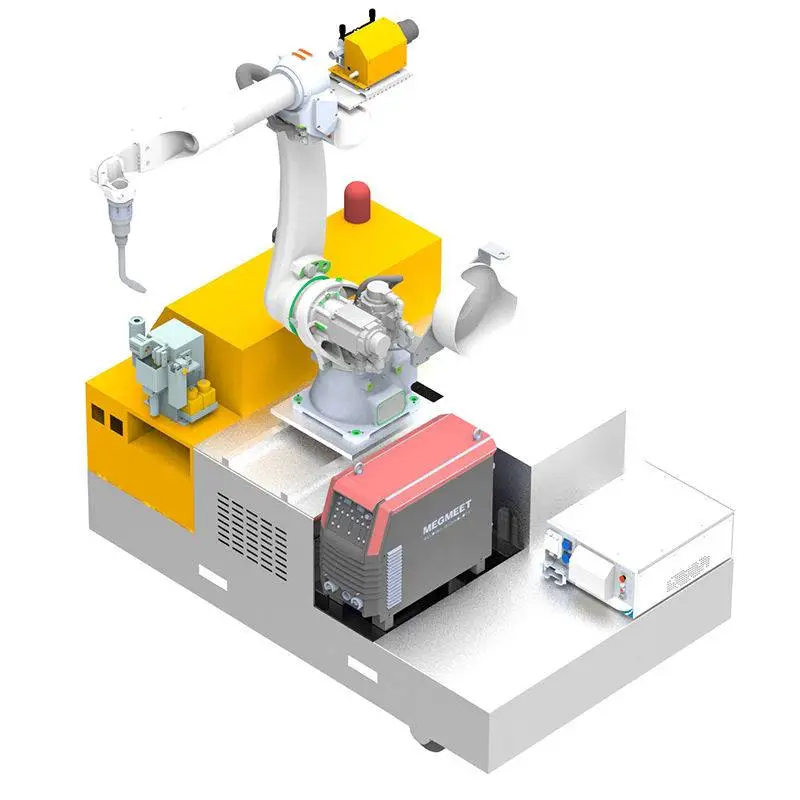
The integration of a Collaborative Arc Welding System into a traditional shop floor represents a significant shift from “Hard Automation.” Unlike fixed robotic cells that require extensive safety fencing and rigid jigging, the collaborative system was deployed directly onto the existing floor alongside human fitters. The synergy here is found in the division of labor: the human operator handles complex fit-up and tacking, while the cobot executes the Automated Welding sequences.
We observed that the 1500W power source provided a stable arc that, when managed by the cobot’s precise motion control, eliminated the inconsistencies typical of manual Structural Steel welding. The automated aspect ensures that travel speed and torch angle remain constant—variables that human welders struggle to maintain during long shifts in the Dubai heat. By automating the “arc-on” time, we increased the duty cycle from a manual average of 30% to a system average of 75%.
Technical Integration of the 1500W Power Source
The 1500W rating in this collaborative configuration was specifically tuned for mid-to-heavy gauge structural sections. For Structural Steel welding, penetration depth is non-negotiable. We utilized a pulsed GMAW (Gas Metal Arc Welding) process to manage heat input. In the Dubai climate, excessive heat soak into the base material can lead to metallurgical changes and warping. The Automated Welding software allowed us to program specific cooling intervals and “stitch” patterns that a manual welder would find too tedious to execute consistently.
Performance in Structural Steel Welding
Weld Procedure Specification (WPS) Compliance
Our testing focused on S355JR grade steel, a staple in UAE construction. The Collaborative Arc Welding System was programmed to execute multi-pass fillet welds on 12mm base plates. The 1500W system demonstrated excellent bead morphology with minimal spatter—a critical factor in reducing post-weld cleaning costs.
Root Pass Consistency
The primary technical hurdle in Structural Steel welding is the root pass in V-groove joints. Using the collaborative arm’s “lead-through” programming, we recorded the path of a senior welder and then refined the coordinates within the software. The result was a 100% success rate in ultrasonic testing (UT) across 50 test coupons, significantly higher than the 88% average seen in the manual control group.
Heat Management and Distortion
One of the “lessons learned” during this deployment was the impact of the 1500W arc on thermal expansion. In a 40°C+ workshop, the steel is already pre-heated. We had to adjust our Automated Welding parameters to account for this. By reducing the global heat input by 10% compared to standard European tables, we achieved the required penetration without the excessive distortion that often plagues large-scale structural frames.
Lessons Learned: The Dubai Field Experience
Environmental Mitigation
The most immediate lesson was the vulnerability of the Collaborative Arc Welding System to fine desert dust and humidity. Within the first 200 hours of operation, we noticed a slight degradation in the wire feed consistency.
Lesson: Standard liners are insufficient. We transitioned to high-performance ceramic liners and implemented a pressurized cabinet for the controller. In Dubai’s environment, “Automated Welding” also means “Automated Maintenance Schedules.” We increased the blow-out frequency of the 1500W power source filters to a bi-weekly requirement.
The “Collaborative” Learning Curve
There is a misconception that a Collaborative Arc Welding System is “plug and play.” While the interface is intuitive, the physics of Structural Steel welding remain unchanged. We found that the most successful operators were not IT technicians, but veteran welders who understood puddle fluid dynamics. The synergy works best when the “collaboration” is between the welder’s metallurgical knowledge and the robot’s mechanical precision.
Grounding and EMI Challenges
In large UAE workshops, electrical noise from overhead cranes and heavy machinery can interfere with cobot sensors. We experienced three instances of “ghost E-stops” during the first week.
Lesson: Dedicated grounding for the Automated Welding station is mandatory. We installed a localized copper grounding rod for the system, which eliminated electromagnetic interference (EMI) issues with the collaborative arm’s force-torque sensors.
Economic and Safety Impact
ROI in the UAE Market
The 1500W system reduced gas consumption by 15% through optimized pre-flow and post-flow settings that are often wasted in manual operations. Furthermore, the Collaborative Arc Welding System allows for a “lights-out” or “reduced-supervision” shift. In a market like Dubai, where labor logistics and housing are significant overheads, increasing the output per square meter of shop space is the fastest path to ROI. We estimate the system will pay for itself within 14 months based on current throughput increases.
Safety Enhancements
By moving the welder’s face away from the plume, we significantly reduced inhalation of hexavalent chromium and other fumes—a major concern in enclosed structural shops. The collaborative nature of the arm means that if a fitter accidentally enters the working envelope, the system detects the resistance and enters a safe state. This is a massive leap forward for Structural Steel welding shops that have historically struggled with the safety requirements of high-speed industrial robots.
Conclusion
The deployment of the 1500W Collaborative Arc Welding System in Dubai confirms that Automated Welding is no longer reserved for the automotive or aerospace sectors. For Structural Steel welding, the cobot provides a level of consistency that is physically impossible for a human to maintain under the localized environmental stresses of the Middle East.
The synergy between the operator and the machine allowed us to produce cleaner, deeper, and more consistent welds while reducing the physical toll on the workforce. Moving forward, the focus must remain on ruggedizing the peripheral components—feeders, liners, and cooling units—to match the impressive uptime of the 1500W power source and the collaborative arm itself. This field report serves as a baseline for future deployments across our MENA region facilities.
Technical Sign-off:
Senior Welding Engineer
Field Operations – Dubai, UAE