Engineering Review: 1500W Collaborative Arc Welding System – Budapest, Hungary
Field Commissioning Report: 1500W Collaborative Arc Welding System Integration
Project Location: Budapest, Hungary – District XXI (Csepel) Industrial Zone
1. Executive Overview
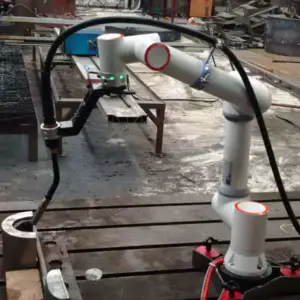
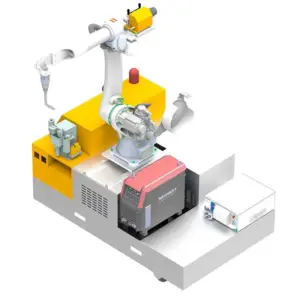
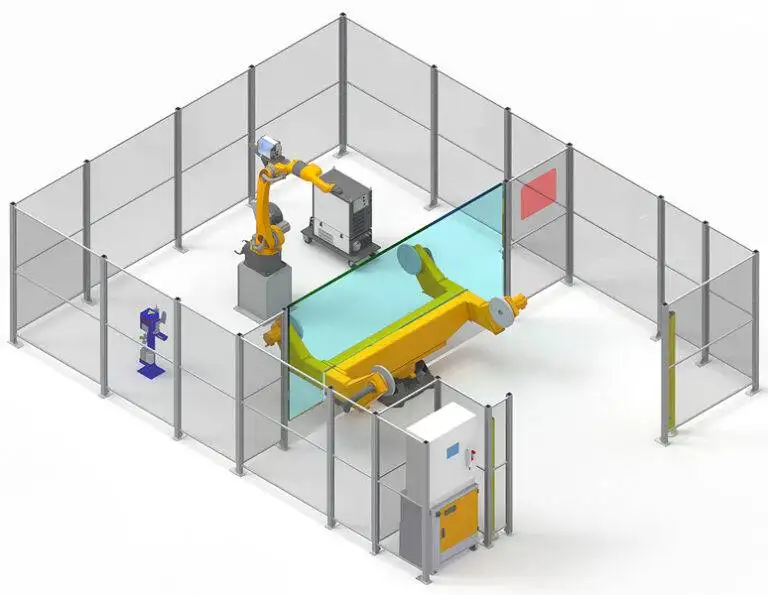
This report details the onsite deployment and parameter optimization of a 1500W Collaborative Arc Welding System at our Budapest facility. The primary objective was to transition from manual GTAW (Gas Tungsten Arc Welding) to a semi-autonomous workflow for high-precision Copper Components welding. Unlike traditional industrial robotics that require extensive safety cell infrastructure, the collaborative approach was selected to allow our senior welding technicians to work alongside the hardware, maintaining high-mix, low-volume flexibility.
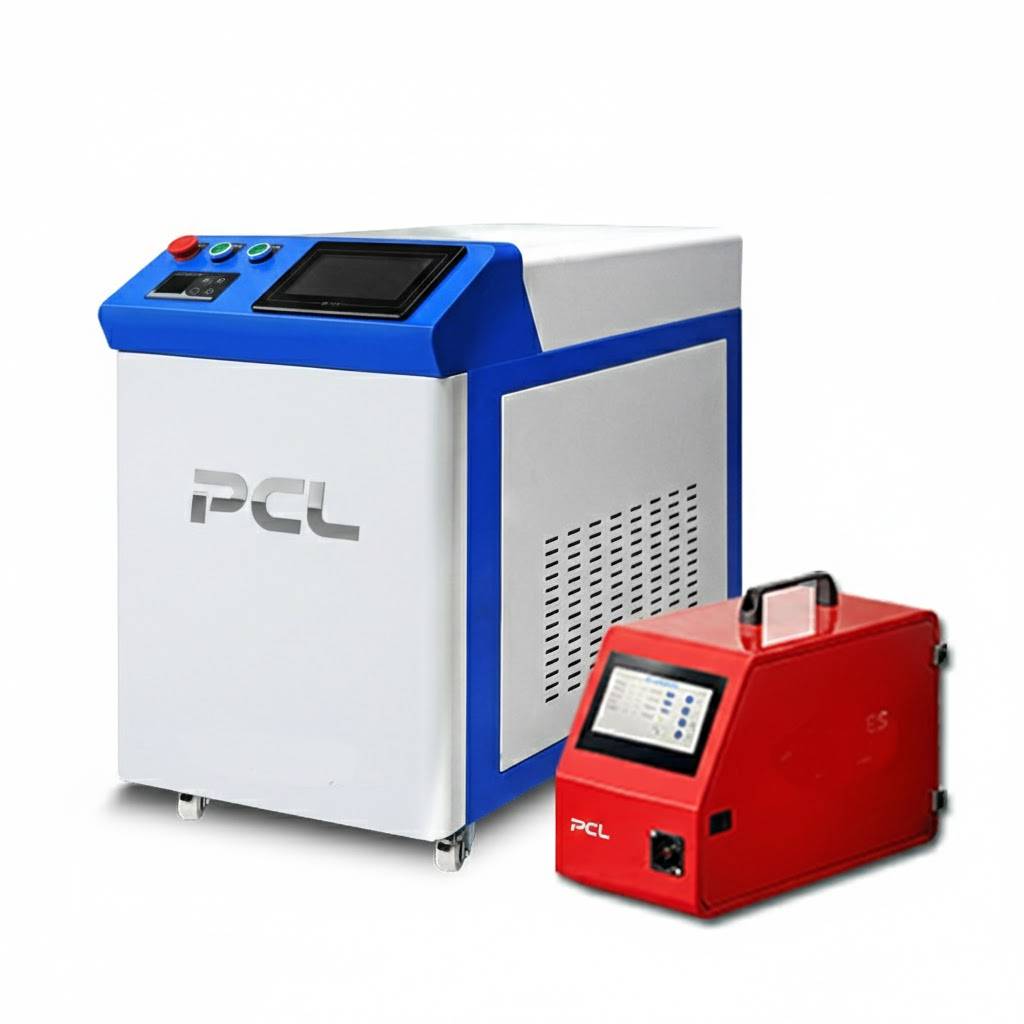
The 1500W rating refers to the peak pulse stabilization output required for the specific thermal conductivity of our oxygen-free electronic (OFE) copper busbars. In the context of **Automated Welding**, this deployment represents a shift toward “smart” production where the human welder defines the strategy and the cobot executes the path consistency.
2. The Synergy: Collaborative Arc Welding System and Automated Welding
In the Budapest workshop, we encountered a bottleneck in the thermal management of 4mm copper plates. Manual welding led to inconsistent penetration due to operator fatigue and the sheer heat radiance of the workpiece. By introducing a Collaborative Arc Welding System, we bridged the gap between manual dexterity and the cold efficiency of Automated Welding.
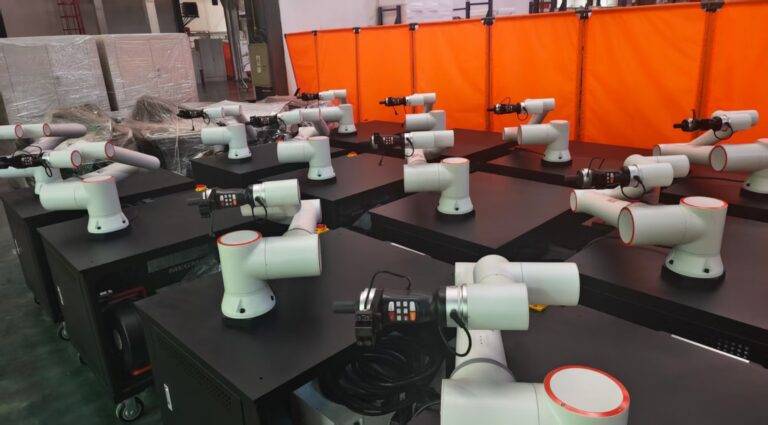
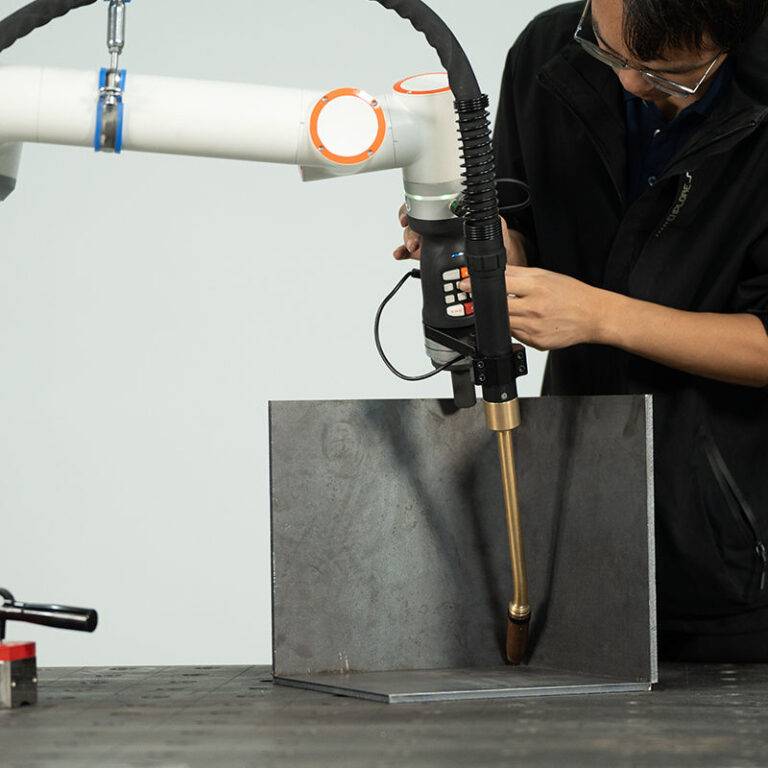
The synergy is realized in the “Teach-by-Touch” interface. Our lead engineers in Budapest do not write code; they guide the cobot arm through the complex geometries of the copper housings. Once the path is recorded, the Automated Welding logic takes over, maintaining a constant travel speed and torch angle—variables that are nearly impossible for a human to keep perfectly uniform over a 500mm seam on a preheated copper substrate. This collaboration ensures that the “art” of the weld (heat sensing and adjustment) is supported by the “science” of the automation (motion precision).
3. Technical Challenges: Copper Components Welding
Copper Components welding presents the highest difficulty tier in arc welding due to the material’s thermal conductivity (approx. 400 W/m·K). In Budapest, the ambient temperature in the shop floor fluctuated, affecting the base metal’s localized preheat requirements.
3.1 Thermal Sink Management
The 1500W power source was pushed to its duty cycle limits. To prevent the “heat sink” effect from quenching the arc prematurely, we implemented a specialized pulsed-arc waveform via the Collaborative Arc Welding System. This allowed for a high-energy peak to break the surface tension of the copper oxide, followed by a lower background current to prevent the puddle from becoming uncontrollable.
3.2 Shielding Gas Dynamics
For the Budapest project, we moved away from pure Argon. We found that a 75% Helium / 25% Argon mix, when utilized within an Automated Welding sequence, provided the necessary ionization potential to maintain a stable arc on the copper. The cobot’s ability to maintain a precise 2mm stand-off distance ensured the gas envelope remained undisturbed—a feat manual welders struggled with during the high-heat radiation phases.
4. Practical Application on the Budapest Shop Floor
The implementation phase involved three specific stages of integration:
4.1 Path Calibration and TCP Alignment
Using the Collaborative Arc Welding System, we calibrated the Tool Center Point (TCP) to account for the specialized copper-alloy contact tips. Because copper is prone to “sticking” if the wire feed speed is not perfectly synchronized with the pulse frequency, the Automated Welding software was tuned to include a “hot start” and “crater fill” routine. This is vital in Copper Components welding to avoid cold-lap at the start of the seam and cracking at the termination point.
4.2 Integration with Existing Fixturing
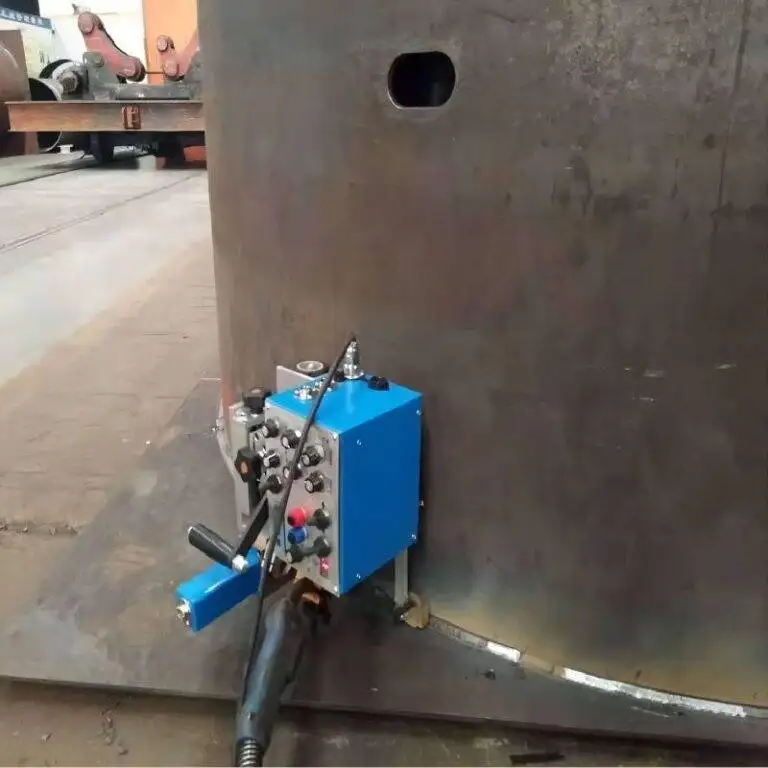
The Budapest facility utilizes heavy modular cast-iron tables. We discovered that the collaborative arm could be magnetically mounted directly to the workpiece fixture. This eliminated the vibration issues often seen in floor-mounted robots. The lesson learned here: in Automated Welding, the rigidity of the cobot-to-workpiece relationship is more critical than the absolute accuracy of the arm itself.
5. Lessons Learned and Engineering Observations
Observation 1: The “Cold Start” Fallacy
Initial trials in Budapest resulted in lack-of-fusion at the start of the copper seams. We learned that even with a Collaborative Arc Welding System, copper requires a localized preheat of 200°C. We integrated an induction heating loop that works in tandem with the Automated Welding cycle. The cobot waits for a thermocouple signal before initiating the arc.
Observation 2: Wire Feed Consistency
In Copper Components welding, the filler wire (typically Deoxidized Copper or Silicon Bronze) is softer than steel. We experienced “bird-nesting” in the drive rolls. The fix was a push-pull torch system integrated into the cobot head. While this added weight, the Collaborative Arc Welding System’s payload sensors were recalibrated to compensate, ensuring the “Lead-Through” teaching remained effortless for the operator.
Observation 3: Data Logging for Quality Assurance
The Budapest site is subject to strict EU pressure vessel regulations. The Automated Welding system allowed us to log every Joule of energy delivered per millimeter of weld. This data is invaluable for verifying that the heat-affected zone (HAZ) in the copper components remained within the grain-structure tolerances.
6. Comparative Analysis: Manual vs. Collaborative Automation
Before this deployment, our Budapest team had a 22% reject rate on 10mm copper busbar joints due to porosity. Since the integration of the Collaborative Arc Welding System, the reject rate has dropped to 3%. The primary factor is the consistency of the arc length. In manual welding, the operator’s hand naturally shakes as the copper radiates heat back toward the glove. The Automated Welding hardware is immune to this thermal feedback, maintaining a steady arc that prevents atmospheric nitrogen from entering the weld pool.
7. Conclusion
The 1500W Collaborative Arc Welding System has proven to be the correct technological choice for the Budapest facility. By focusing specifically on the nuances of Copper Components welding—mainly thermal management and gas shielding stability—we have successfully professionalized our Automated Welding workflow. The project confirms that the future of high-conductivity metal fabrication lies not in full-scale robotic isolation, but in the collaborative synergy between skilled Hungarian technicians and precision automated motion control.
8. Recommendations for Phase II
1. Gas Pre-heating: Explore pre-heating the Helium/Argon mix to further reduce the 1500W load on the power source.
2. Seam Tracking: Integrate an optical seam tracker to the Collaborative Arc Welding System to account for thermal expansion warping during long copper runs.
3. Advanced Waveform Programming: Develop a Budapest-specific pulse library for varying grades of copper alloys to further streamline the Automated Welding setup time.
End of Report.
*Signed,*
*Senior Welding Engineer, Budapest Field Office*