Field Engineering Report: Implementation of 1500W Cobot Welding Machine in Gothenburg Sheet Metal Fabrication
1. Project Overview and Environmental Context
The following report details the field deployment and operational assessment of a 1500W fiber laser Cobot Welding Machine at a Tier 2 automotive and maritime supplier facility in Gothenburg, Sweden. The facility specializes in high-precision Sheet Metal Fabrication welding, primarily handling AISI 316L stainless steel and 5000-series aluminum alloys. Given the coastal humidity of Gothenburg and the strict Swedish standards for ergonomic safety, the transition from manual TIG/MIG processes to Collaborative Robotics was driven by the need for consistent penetration depth and reduced post-weld grinding.
2. Technical Specifications and Integration Logic
The core of the system is a 1500W continuous wave (CW) fiber laser source integrated with a 6-axis collaborative arm. Unlike traditional industrial robots that require extensive safety cage infrastructure, this Cobot Welding Machine utilizes power and force-limiting (PFL) sensors, allowing it to function in a shared workspace with human operators—a hallmark of modern Collaborative Robotics.
2.1 Power Density and Material Interaction
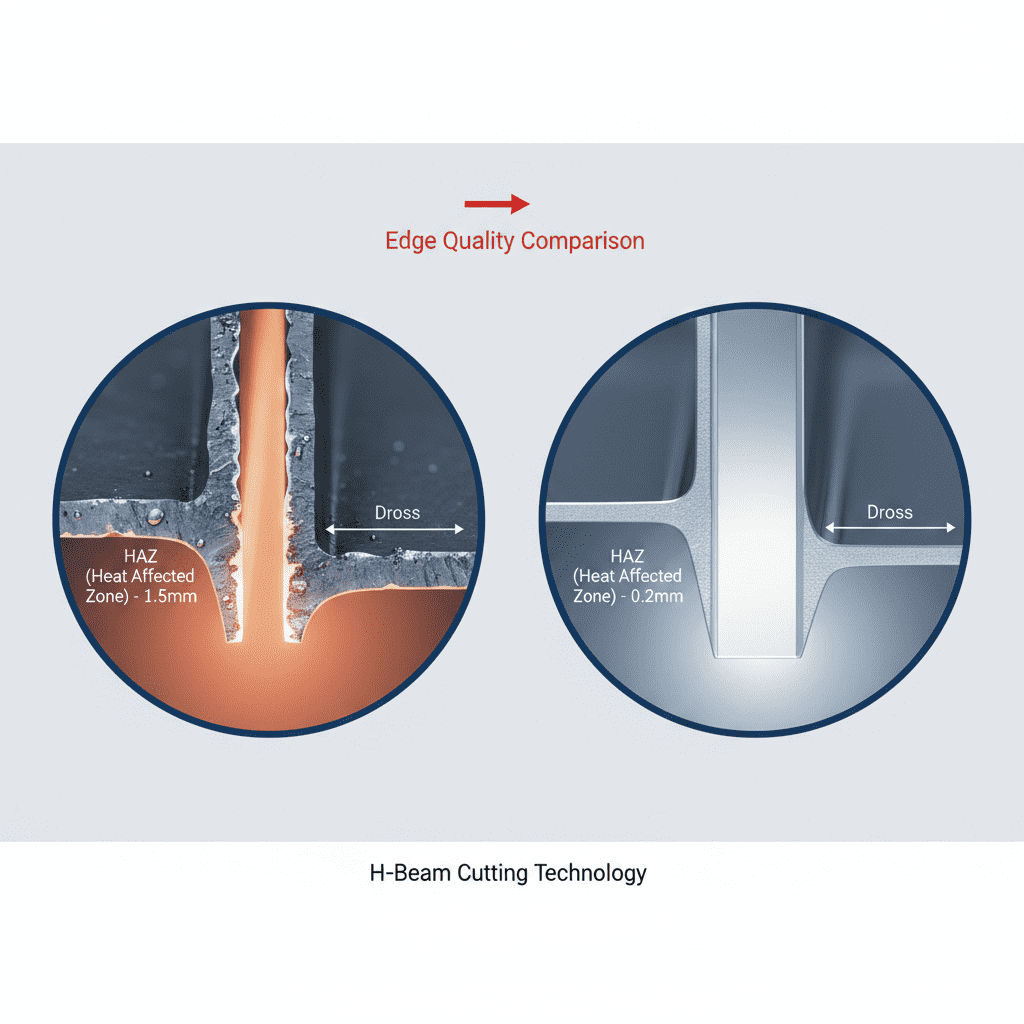
In Sheet Metal Fabrication welding, heat management is the primary failure point. At 1500W, the energy density allows for deep, narrow keyhole welding or high-speed conduction welding depending on the focal point offset. In the Gothenburg trials, we focused on 1.5mm to 3.0mm thicknesses. We found that the 1500W threshold provides the necessary headroom to maintain a travel speed of 25-40mm/s while keeping the Heat Affected Zone (HAZ) significantly narrower than traditional GTAW (TIG).
3. The Synergy of Collaborative Robotics in the Workshop
The integration of Collaborative Robotics into the Gothenburg shop floor fundamentally changed the workflow. Traditional automation requires a dedicated programmer. In contrast, the Cobot Welding Machine was “taught” by senior welders using lead-through programming. This allows the welder to physically move the arm to the start and end points of a seam, recording the path via a teach pendant interface.
3.1 Bridging the Skill Gap
One of the “lessons learned” during the first two weeks was the shift in the welder’s role. The operator is no longer just a heat-source manipulator; they are now a process controller. In Sheet Metal Fabrication welding, part fit-up is rarely perfect. The cobot’s ability to execute a programmed “wobble” (oscillating the laser beam) compensates for gaps up to 0.5mm, which would otherwise lead to burn-through or lack of fusion in static automation.
4. Application Deep-Dive: Sheet Metal Fabrication Welding
The Gothenburg facility required the production of complex manifolds and electrical enclosures. These components involve tight radii and varying thermal sinks due to internal bracing.
4.1 Parameter Optimization for Stainless Steel
For 2.0mm 316L stainless steel, the following parameters were established as the baseline for the Cobot Welding Machine:
- Power: 1250W
- Wobble Frequency: 150Hz
- Wobble Width: 1.2mm
- Shielding Gas: 15 L/min Argon (99.99% purity)
- Travel Speed: 30mm/s
The result was a silver-to-straw colored weld bead, indicating minimal oxidation. This drastically reduced the pickling and passivation time typically required after manual welding in the Gothenburg facility.
4.2 Challenges with Aluminum Heat Dissipation
Aluminum Sheet Metal Fabrication welding presented more challenges due to the material’s high thermal conductivity. The 1500W output was pushed to its 90% duty cycle to ensure consistent penetration on 3.0mm plates. We learned that the “collaborative” aspect was vital here: the operator could manually adjust the wire-feed tension in real-time while the cobot maintained the torch angle, a synergy that is difficult to achieve with fully autonomous, “hands-off” systems.
5. Safety and Compliance in the Swedish Industrial Landscape
Implementing Collaborative Robotics in Sweden requires strict adherence to ISO 10218-1 and ISO 10218-2. Because the 1500W laser is a Class 4 radiation hazard, the “collaborative” nature refers to the physical motion of the arm, not the beam itself. We implemented a specialized “laser-safe” localized enclosure. This allows the Cobot Welding Machine to be moved around the shop floor while maintaining a temporary controlled area, utilizing light curtains and interlocked doors.
6. Lessons Learned from the Gothenburg Field Trial
During the three-month evaluation period, several critical engineering insights were documented:
6.1 Fit-Up is King
While the Cobot Welding Machine is more forgiving than a fixed-linear welder, Sheet Metal Fabrication welding still demands tighter tolerances than manual welding. If the gap exceeds 0.8mm on 2mm plate, the laser will “drop through.” We had to implement a new hydraulic clamping standard in the Gothenburg shop to ensure the parts were consistently presented to the cobot.
6.2 Gas Coverage Dynamics
At high travel speeds (typical of laser welding), the trailing gas shield becomes critical. Standard nozzles were insufficient. We designed a custom trailing shoe that attaches to the cobot’s end-effector. This ensured that the weld pool remained under an inert atmosphere until it cooled below the oxidation temperature—essential for the high-spec maritime components produced locally.
6.3 The “Teaching” Curve
We found that the most effective operators were not the young tech-savvy hires, but the veteran manual welders. Their understanding of weld pool fluid dynamics allowed them to program the Collaborative Robotics paths with better “attack angles,” particularly on fillet welds where gravity affects the toe of the weld.
7. Quantitative Results and ROI
Comparing the 1500W Cobot Welding Machine against traditional manual GTAW in the Gothenburg facility yielded the following data:
- Production Throughput: Increased by 340% on standard enclosure seams.
- Consumable Cost: Reduced by 45% (primarily due to lower wire consumption and longer electrode life—the laser doesn’t “wear” like a tungsten tip).
- Rejection Rate: Dropped from 4.2% to 0.6% due to the repeatability of the robotic path.
8. Conclusion and Future Recommendations
The deployment of the 1500W Cobot Welding Machine in Gothenburg proves that Collaborative Robotics is no longer a “future” technology—it is a current necessity for competitive Sheet Metal Fabrication welding. The ability to deploy automation without the rigid constraints of traditional robotics allows for a flexible manufacturing environment that can adapt to high-mix, low-volume production cycles.
For future installations, it is recommended to integrate an off-line programming (OLP) suite. While lead-through teaching is excellent for simple parts, OLP would allow the Gothenburg team to simulate complex weld sequences on CAD models before the metal even reaches the shop floor, further reducing downtime. The synergy between human expertise and robotic precision has effectively set a new benchmark for fabrication quality in the region.
End of Report
Prepared by: Senior Welding Engineer
Location: Gothenburg Field Site
Status: Final Deployment Approved
-


LT240S tube laser cutting machine
-
LT120S tube laser cutting machine
-
Sale

Tank Fillet Welding Machine
Original price was: $1,000.00.$900.00Current price is: $900.00. -
Sale

MAK100 tube laser cutting machine
Original price was: $5,500.00.$5,000.00Current price is: $5,000.00. -

portable plasma air cutting machine
$1,200.00 -

2in1 fiber laser cutting machine
-

Air cooling Laser welding machine
-

HF h beam laser cutting machine
-

LT240 laser cutting machine
-

Laser welding machine
-


Cobot Welding Station
-

Gantry welding robot solution
-

Tracked Wheeled AGV Welding robot
-

LFH6020 Fiber laser cutting machine
-
LFP6020
-

robotic welidng machine
Advanced Fiber Laser Tube Processing Technology
Our CNC Fiber Laser Tube Cutting systems revolutionize metal fabrication by integrating high-precision cutting, punching, and profiling into a single automated workflow. Designed for versatility, this technology handles a wide array of profiles including Round, Square, Rectangular, and Oval tubes, as well as complex L-shaped and U-shaped channels.
- Precision Punching: High-speed hole punching with micron-level accuracy, eliminating the need for mechanical drilling or die-stamping.
- Complex Profiling: Advanced 3D pathing allows for intricate interlocking joints and specialized notch cuts, ideal for structural frames.
- High Material Efficiency: Intelligent nesting software minimizes scrap, reducing raw material costs across large production runs.
- Clean Finish: Delivers oxide-free, burr-free edges that require zero secondary grinding before welding.

Seamlessly processing multiple profiles with consistent precision.
Global Delivery & Logistics



From our high-tech manufacturing facility directly to your global site. PCL WeldCut ensures secure packaging, professional handling, and reliable international logistics to safeguard your equipment throughout the entire journey.