Field Report: Deployment of 1500W All-in-one Cobot Station for Copper Component Fabrication
1. Project Overview and Site Conditions
The following report details the technical commissioning and operational evaluation of a 1500W All-in-one Cobot Station at a specialized maritime electrical facility in Rotterdam, Netherlands. The facility primarily produces high-current busbars and heat exchange manifolds. Historically, these components were joined using manual TIG (Tungsten Inert Gas) welding, which presented significant challenges regarding heat input control, operator fatigue, and inconsistent penetration depth in high-conductivity materials.
The objective of this deployment was to transition from manual processes to a system leveraging Collaborative Robotics to enhance weld repeatability while maintaining the flexibility required for high-mix, low-volume production characteristic of the Rotterdam maritime sector.
2. Technical Specifications: The All-in-one Cobot Station
The All-in-one Cobot Station deployed features a continuous wave (CW) 1500W fiber laser source integrated with a 6-axis collaborative arm. Unlike traditional industrial robotic cells that require extensive safety fencings and dedicated floor space, this station is self-contained. It includes the laser source, water chiller, wire feeder, and control interface within a single mobile chassis.
2.1 Integration of Collaborative Robotics
In the Rotterdam workshop, space is at a premium. The use of Collaborative Robotics allowed us to place the station directly into the existing assembly line flow. The cobot’s sensors detect external force resistance, enabling it to operate safely alongside human technicians. During the setup phase, we utilized the “lead-through” programming feature, where the welding engineer manually moves the arm to define the weld path. This drastically reduced the commissioning time for complex geometries on Copper Components welding tasks compared to traditional G-code programming.
3. Addressing Copper Components Welding Challenges
Welding copper is notoriously difficult due to its high thermal conductivity (approx. 400 W/m·K) and low laser absorption rate at standard near-infrared wavelengths. In Rotterdam, we were working specifically with C11000 Electrolytic Tough Pitch (ETP) copper.
3.1 Overcoming Reflectivity and Heat Sink Issues
At 1500W, the power density must be precisely managed to breach the “keyhole” threshold. Initially, the copper reflects nearly 95% of the laser energy. To counteract this, we implemented a high-frequency wobble strategy. The All-in-one Cobot Station control software allows for a circular wobble pattern with a frequency of 250Hz and a width of 1.5mm. This oscillation stabilizes the molten pool and ensures that the energy is distributed evenly, preventing the “cold start” defects common in manual copper welding.
3.2 Thermal Management in the Rotterdam Workshop
The Rotterdam facility operates at a high ambient humidity. This necessitated a strict shielding gas protocol to prevent hydrogen embrittlement and porosity. We utilized a 99.999% High-Purity Argon gas at a flow rate of 25L/min. The Collaborative Robotics arm was fitted with a custom trailing gas lens to ensure the weld bead remained shielded until the temperature dropped below the oxidation threshold of copper.
4. Synergy Between the Station and the Robotics Arm
The true advantage of the All-in-one Cobot Station lies in the hardware-software synergy. In a manual environment, the welder must compensate for the massive heat sink of the copper by slowing down or increasing amperage on the fly—a process prone to human error.
In our Rotterdam application, the Collaborative Robotics system maintained a constant Travel Speed (TS) of 12mm/s. Because the 1500W laser source is communicated directly through the cobot’s controller, we could implement “Ramping.” At the start of the Copper Components welding cycle, the power peaks at 1450W to overcome reflectivity, then scales back to 1100W as the base material pre-heats, preventing burn-through at the end of the joint. This level of precision is virtually impossible to achieve consistently with manual laser welding.
5. Lessons Learned and Field Observations
5.1 Tool Center Point (TCP) Calibration
One critical lesson learned during the Rotterdam deployment was the impact of thermal expansion on TCP. When welding Copper Components welding, the heat radiation from the workpiece can cause minor thermal expansion in the cobot’s final joint or the laser head itself. We found that after three hours of continuous operation, the TCP drifted by 0.3mm.
Lesson: Implement a mandatory TCP check every 50 cycles to maintain the focal point exactly 1mm below the material surface for optimal keyhole stability.
5.2 Wire Feed Consistency
Using a 1500W All-in-one Cobot Station for copper often requires filler wire (typically Deoxidized Copper or Silicon Bronze) to manage joint fit-up variations. We observed that the wire feeder integration in the collaborative setup must be perfectly synchronized with the arm’s acceleration. If the wire pushes before the laser has initiated the keyhole, it acts as a heat sink and can “freeze” the nozzle to the workpiece. We adjusted the software lag time to 150ms to ensure the laser “pre-ignites” the surface before wire deposition begins.
5.3 Surface Preparation
Copper oxide is the enemy of laser welding. Even with the power of a 1500W station, surface impurities led to spatter that contaminated the laser protective window. In Rotterdam, we moved from a simple solvent wipe to a mechanical stainless-steel brush prep immediately (within 2 hours) before welding. This significantly reduced the maintenance downtime for the All-in-one Cobot Station.
6. Quantitative Performance Metrics
After four weeks of operation in the Rotterdam site, the data indicates the following:
- Cycle Time Reduction: 65% compared to manual TIG for the same busbar assembly.
- Post-Weld Processing: 80% reduction in grinding and polishing due to the aesthetic, low-spatter finish of the laser process.
- Scrap Rate: Dropped from 12% (manual) to 1.5% (cobot-assisted).
7. Safety and Collaborative Environment
The Collaborative Robotics aspect was initially met with skepticism by the local workforce. However, the All-in-one Cobot Station served as a “force multiplier.” Rather than replacing the welder, the senior welder now acts as a “Station Supervisor,” focusings on part fit-up and quality oversight while the cobot handles the high-radiation, high-heat task of Copper Components welding. The ergonomic benefit of removing the operator from the immediate vicinity of the 1070nm laser reflection cannot be overstated.
8. Conclusion
The deployment of the 1500W All-in-one Cobot Station in Rotterdam confirms that Collaborative Robotics is no longer just for light assembly or pick-and-place. In the demanding realm of Copper Components welding, the precision, repeatability, and integrated nature of this station provide a viable solution to the thermal challenges of the material. Success depends not just on the laser power, but on the meticulous calibration of the wobble parameters and the integration of the robotic pathing with real-time laser power modulation.
Recommendation: Future installations should include an integrated laser-based seam tracker to further enhance the “All-in-one” capability, particularly for large-scale maritime busbars where part tolerances can vary by >0.5mm.
Report Filed By: Senior Welding Engineer, Rotterdam Site Office.
-


LT240S tube laser cutting machine
-
LT120S tube laser cutting machine
-
Sale

Tank Fillet Welding Machine
Original price was: $1,000.00.$900.00Current price is: $900.00. -
Sale

MAK100 tube laser cutting machine
Original price was: $5,500.00.$5,000.00Current price is: $5,000.00. -

portable plasma air cutting machine
$1,200.00 -

2in1 fiber laser cutting machine
-

Air cooling Laser welding machine
-

HF h beam laser cutting machine
-

LT240 laser cutting machine
-

Laser welding machine
-


Cobot Welding Station
-

Gantry welding robot solution
-

Tracked Wheeled AGV Welding robot
-

LFH6020 Fiber laser cutting machine
-
LFP6020
-

robotic welidng machine
Advanced Fiber Laser Tube Processing Technology
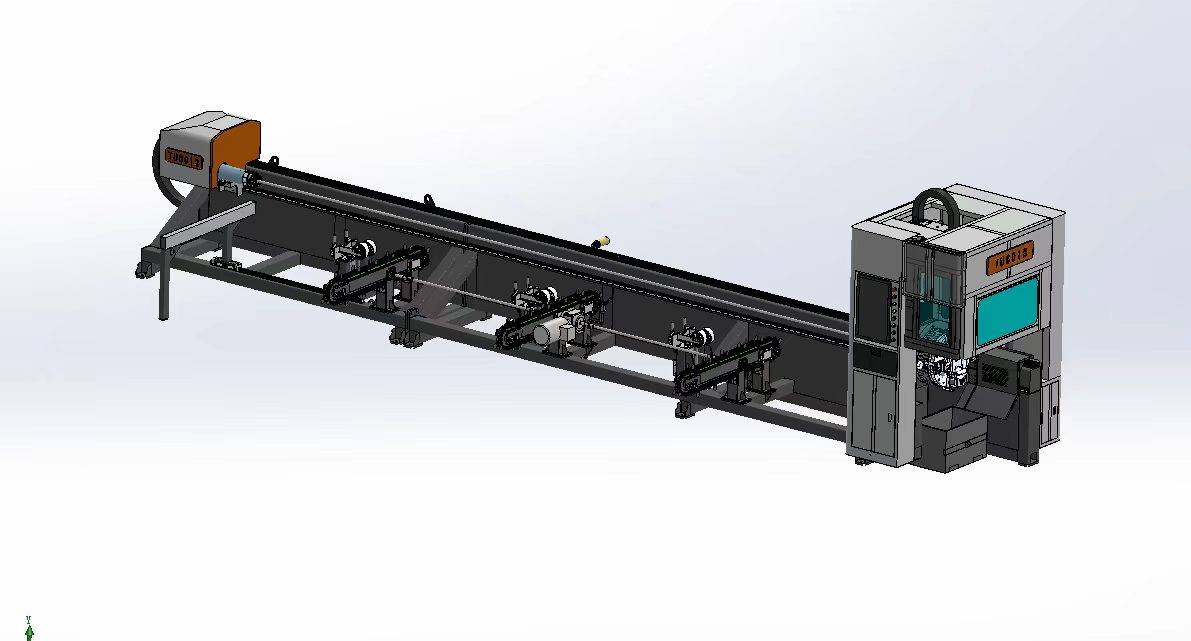
Our CNC Fiber Laser Tube Cutting systems revolutionize metal fabrication by integrating high-precision cutting, punching, and profiling into a single automated workflow. Designed for versatility, this technology handles a wide array of profiles including Round, Square, Rectangular, and Oval tubes, as well as complex L-shaped and U-shaped channels.
- Precision Punching: High-speed hole punching with micron-level accuracy, eliminating the need for mechanical drilling or die-stamping.
- Complex Profiling: Advanced 3D pathing allows for intricate interlocking joints and specialized notch cuts, ideal for structural frames.
- High Material Efficiency: Intelligent nesting software minimizes scrap, reducing raw material costs across large production runs.
- Clean Finish: Delivers oxide-free, burr-free edges that require zero secondary grinding before welding.

Seamlessly processing multiple profiles with consistent precision.
Global Delivery & Logistics



From our high-tech manufacturing facility directly to your global site. PCL WeldCut ensures secure packaging, professional handling, and reliable international logistics to safeguard your equipment throughout the entire journey.
One thought on “Engineering Review: 1500W All-in-one Cobot Station – Rotterdam, Netherlands”
Fast shipping to our facility. The setup was straightforward for our team.