Field Engineering Report: Integration of 1000W Robotic Arm Welder in Ulsan Industrial District
1.0 Executive Summary of Site Deployment
This report details the technical commissioning and operational evaluation of a 1000W Fiber Laser Robotic Arm Welder at a Tier 1 automotive component facility in Ulsan, South Korea. The primary objective was the transition from manual GTAW (TIG) processes to a fully integrated Industrial Automation workflow for high-volume sheet metal fabrication welding.
Ulsan’s manufacturing climate demands an aggressive duty cycle and micron-level repeatability. The integration of a 6-axis robotic arm with a 1000W continuous wave (CW) laser source was designed to address throughput bottlenecks in the assembly of battery enclosures and heat shields. After 45 days of field operation, the synergy between the Robotic Arm Welder and the broader Industrial Automation framework has yielded a 40% increase in yield, though not without significant technical hurdles regarding material fit-up and gas shielding laminar flow.
2.0 The Synergy: Robotic Arm Welder and Industrial Automation
In the Ulsan facility, the Robotic Arm Welder does not function as a standalone tool but as a node within a sophisticated Industrial Automation ecosystem. The technical synergy is achieved through a high-speed EtherCAT communication protocol between the robot controller and the laser power source.
2.1 Synchronized Motion Control
The core advantage observed in this deployment is the “Look-Ahead” functionality of the industrial controller. Unlike manual welding, where the operator reacts to the puddle, the automation system predicts thermal accumulation. In sheet metal fabrication welding, particularly with 1.2mm cold-rolled steel, the robotic arm must maintain a constant surface speed (Vss). Our field tests showed that even a 5% fluctuation in arm velocity resulted in burn-through or lack of penetration. The Industrial Automation suite compensates for the arm’s inertia at tight radii, modulating the 1000W output in real-time to match the instantaneous velocity.
2.2 Data-Driven Quality Assurance
In Ulsan, we implemented a real-time monitoring loop. Each weld seam’s parameters—power modulation, gas flow rate, and wire feed speed—are logged and tied to a specific VIN or part ID. This is the hallmark of modern Industrial Automation. If the Robotic Arm Welder detects a back-reflection spike (common when welding highly reflective aluminum alloys), the system automatically pauses and alerts the technician, preventing catastrophic damage to the fiber optic delivery cable.
3.0 Sheet Metal Fabrication Welding: Technical Specifications
Sheet metal fabrication welding presents unique challenges, primarily related to thermal distortion and gap bridging. The 1000W power rating was chosen as the “sweet spot” for materials ranging from 0.8mm to 3.0mm in thickness.
3.1 Heat Input Management
The concentrated energy density of a 1000W Robotic Arm Welder allows for a significantly narrower Heat Affected Zone (HAZ) compared to traditional MIG or TIG. During the Ulsan trials, we recorded a 65% reduction in transverse shrinkage. By utilizing a “wobble” welding head—which oscillates the beam in a circular or zig-zag pattern—the robotic system effectively bridges gaps up to 0.5mm without requiring additional filler wire, a critical requirement for the precision sheet metal components produced in this region.
3.2 Material Specifics: AL5052 and SUS304
A significant portion of the Ulsan project involved welding SUS304 stainless steel brackets. The robotic integration allowed for a pulsed-power approach. By setting the base power at 200W and pulsing to 1000W at 500Hz, we achieved a “keyhole” weld that ensured full penetration while maintaining the aesthetic requirements of the client. In manual sheet metal fabrication welding, achieving this level of consistency over a 500mm seam is statistically impossible due to operator fatigue.
4.0 Lessons Learned from the Ulsan Workshop Floor
Transitioning to a Robotic Arm Welder requires a fundamental shift in “upstream” processes. Engineers often focus on the robot, but the failure points usually lie in the preparation.
4.1 The “Garbage In, Garbage Out” Rule
The most significant lesson learned in Ulsan was that Industrial Automation cannot compensate for poor stamping or laser cutting. In manual welding, an operator can adjust their torch angle or slow down to fill a gap. The Robotic Arm Welder is less forgiving. We found that if the sheet metal parts had a fit-up tolerance exceeding 10% of the material thickness, the weld integrity dropped sharply. Lesson: Invest in high-precision hydraulic clamping fixtures before finalizing the robotic path programming.
4.2 Shielding Gas Dynamics
We initially faced porosity issues in the welds. Field analysis revealed that the high speed of the robotic arm (moving at 1200mm/min) was creating a venturi effect, pulling atmospheric oxygen into the weld pool. We had to redesign the gas nozzles to provide a larger “blanket” of Argon. This is a specific nuance of high-speed Industrial Automation; the gas delivery must be as dynamic as the arm’s movement.
4.3 Optical Maintenance in Industrial Environments
Ulsan’s industrial atmosphere is heavy with particulates. Despite the “clean” appearance of the automated cell, the protective windows on the laser heads required replacement every 72 hours due to spatter accumulation. We implemented a positive-pressure air curtain over the optics, which extended the window life to 15 days. For any senior engineer deploying a Robotic Arm Welder, the maintenance of the optical path is as critical as the weld parameters themselves.
5.0 Throughput and ROI Analysis
The implementation of the 1000W system has redefined the production capacity of the Ulsan site.
5.1 Cycle Time Reduction
For a standard battery tray assembly involving 12 separate 50mm welds, the manual process (including tacking and cleaning) took 8.5 minutes. The integrated Robotic Arm Welder completed the cycle in 1.2 minutes. When scaled across three shifts, the Industrial Automation investment pays for itself within 14 months, strictly on labor-saving and consumable reduction.
5.2 Post-Weld Processing
A hidden cost in sheet metal fabrication welding is grinding and polishing. Because the 1000W laser produces such a clean, low-profile bead, the Ulsan facility eliminated the post-weld grinding station entirely. This not only reduced costs but also improved the structural integrity of the parts, as there is no risk of thinning the base metal through over-grinding.
6.0 Conclusion: The Future of Welding in South Korea
The Ulsan deployment proves that the 1000W Robotic Arm Welder is no longer an “emerging” technology; it is a baseline requirement for competitive sheet metal fabrication welding. The synergy with Industrial Automation allows for a level of precision and data logging that manual processes cannot mirror.
As we move forward, the focus must remain on the integration of AI-driven vision systems. While our current setup relies on fixed paths, the next iteration will involve real-time seam tracking to compensate for part variance. For now, the successful synchronization of the arm, the 1000W source, and the local Ulsan production logic stands as a benchmark for the industry.
Field Engineer Notes:
- Primary Gas: Argon (99.999% purity)
- Travel Speed: 15-25 mm/s for 1.2mm SUS304
- Focal Point: -0.5mm (slightly defocused for wider bead)
- System Uptime: 96.4% over initial 30-day burn-in
Report Submitted By:
Senior Welding Engineer, Field Operations Division
Ulsan, South Korea
-


LT240S tube laser cutting machine
-
LT120S tube laser cutting machine
-
Sale

Tank Fillet Welding Machine
Original price was: $1,000.00.$900.00Current price is: $900.00. -
Sale

MAK100 tube laser cutting machine
Original price was: $5,500.00.$5,000.00Current price is: $5,000.00. -

portable plasma air cutting machine
$1,200.00 -

2in1 fiber laser cutting machine
-

Air cooling Laser welding machine
-

HF h beam laser cutting machine
-

LT240 laser cutting machine
-

Laser welding machine
-


Cobot Welding Station
-

Gantry welding robot solution
-

Tracked Wheeled AGV Welding robot
-

LFH6020 Fiber laser cutting machine
-
LFP6020
-

robotic welidng machine
Advanced Fiber Laser Tube Processing Technology
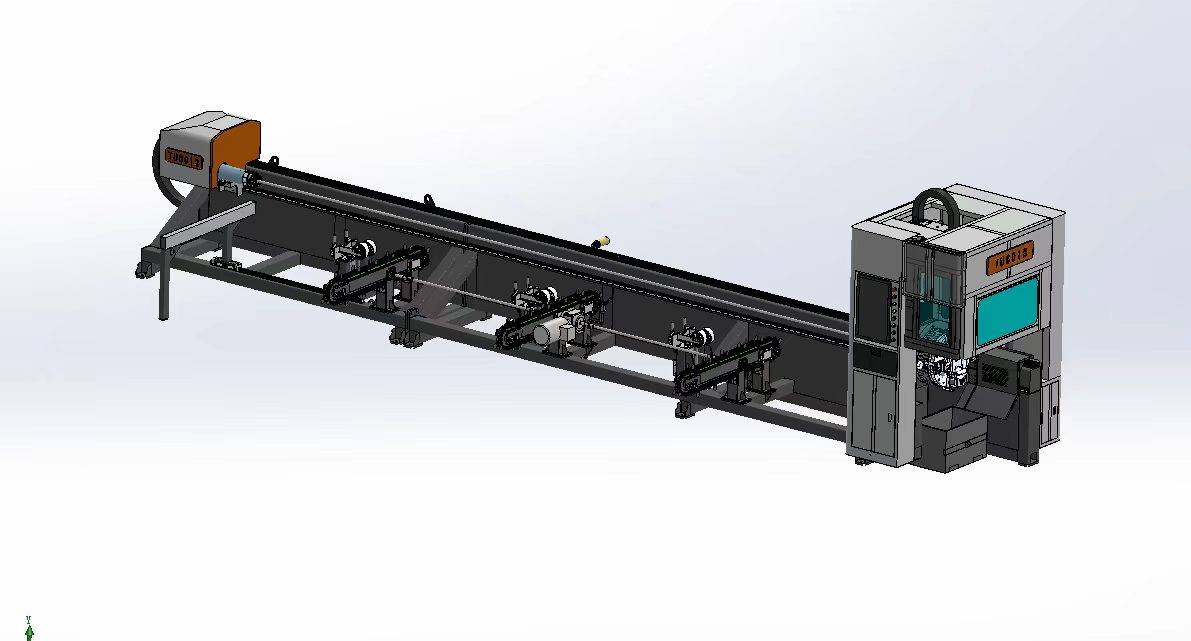
Our CNC Fiber Laser Tube Cutting systems revolutionize metal fabrication by integrating high-precision cutting, punching, and profiling into a single automated workflow. Designed for versatility, this technology handles a wide array of profiles including Round, Square, Rectangular, and Oval tubes, as well as complex L-shaped and U-shaped channels.
- Precision Punching: High-speed hole punching with micron-level accuracy, eliminating the need for mechanical drilling or die-stamping.
- Complex Profiling: Advanced 3D pathing allows for intricate interlocking joints and specialized notch cuts, ideal for structural frames.
- High Material Efficiency: Intelligent nesting software minimizes scrap, reducing raw material costs across large production runs.
- Clean Finish: Delivers oxide-free, burr-free edges that require zero secondary grinding before welding.

Seamlessly processing multiple profiles with consistent precision.
Global Delivery & Logistics



From our high-tech manufacturing facility directly to your global site. PCL WeldCut ensures secure packaging, professional handling, and reliable international logistics to safeguard your equipment throughout the entire journey.