Field Engineering Report: Integration of 1000W Robotic Arm Welder in Hai Phong Electronics Cluster
1.0 Site Overview and Project Scope
This report details the commissioning and optimization of a 1000W Robotic Arm Welder at our Tier-2 automotive supplier facility in Hai Phong, Vietnam. The objective was the transition from manual TIG stations to a fully integrated Industrial Automation cell dedicated to high-conductivity copper components welding.
Hai Phong’s industrial climate presents specific challenges, notably high ambient humidity (averaging 80%+) and seasonal temperature fluctuations. As a senior engineer, the focus was not merely on the equipment’s mechanical assembly but on the synergy between the Robotic Arm Welder and the broader automation ecosystem to ensure the 1,000-watt power source remained stable under continuous duty cycles.
2.0 Technical Specification: The Robotic Arm Welder
The core of the cell is a 6-axis high-precision Robotic Arm Welder integrated with a 1000W continuous wave (CW) fiber laser source. While 1000W is often considered the entry point for industrial laser welding, it is the “Goldilocks” zone for the specific thin-gauge copper components welding we are performing in the Hai Phong plant.

2.1 Kinematic Precision and Tool Center Point (TCP) Calibration
In copper applications, the margin for error in focal position is less than ±0.5mm. We utilized a laser-based TCP calibration tool to ensure the robotic arm maintained consistent stand-off distances. During the first week of testing, we identified a 0.8mm drift caused by thermal expansion of the arm’s fourth axis during long shifts. We mitigated this by introducing a “warm-up” routine into the PLC logic, ensuring the arm reaches operational temperature before the first production weld is struck.
3.0 Industrial Automation: The Ecosystem Integration
A Robotic Arm Welder is only as efficient as the Industrial Automation framework surrounding it. In the Hai Phong facility, we moved away from standalone operation toward a “Smart Cell” architecture.
3.1 PLC and Sensor Fusion
The automation logic utilizes a Siemens S7-1500 PLC to coordinate the robotic arm, the rotary indexing table, and the nitrogen gas shielding manifold. One of the primary lessons learned here was the necessity of “Handshake Verification.” In previous manual setups, the welder visually confirmed part seating. Our Industrial Automation setup now uses inductive proximity sensors to verify that copper components are clamped within a 0.1mm tolerance before the “Cycle Start” signal is sent to the Robotic Arm Welder. This has reduced scrap rates from 12% in manual trials to less than 0.5% in automated runs.
3.2 Environmental Management and Chiller Sync
In the coastal environment of Hai Phong, condensation on the laser optics is a critical failure point. We integrated the chiller unit directly into the Industrial Automation loop. The system now monitors the dew point inside the enclosure. If the internal humidity exceeds 60%, the automation pauses the Robotic Arm Welder and triggers an air-purge cycle. This prevented several potential lens fractures during the monsoon transition in late Q3.
4.0 Copper Components Welding: The Metallurgical Challenge
Copper components welding is notoriously difficult due to the material’s high thermal conductivity and low absorption rate at the 1070nm wavelength. A 1000W source requires specific beam manipulation to be effective.
4.1 Beam Wobble Parameters
To overcome the “heat sink” effect of the copper busbars, we implemented a circular wobble pattern via the Robotic Arm Welder’s scanning head.
- Wobble Frequency: 150 Hz
- Wobble Amplitude: 1.2 mm
- Travel Speed: 15 mm/s
This configuration allows for a wider weld pool, which assists in degassing and reduces the likelihood of porosity—a common issue when welding OFHC (Oxygen-Free High Conductivity) copper.
4.2 Managing Back-Reflection
One of the senior-level “lessons learned” on this site was the management of back-reflection. Copper acts as a mirror for 1000W laser light. We adjusted the Robotic Arm Welder to a 10-degree “Lead Angle” rather than a 90-degree perpendicular approach. This ensures that reflected energy does not travel back up the fiber, which would trigger a safety shutdown of the laser source and potentially damage the delivery cable.
5.0 Synergy: Local Workforce and Automation Performance
The synergy between the Robotic Arm Welder and Industrial Automation in Hai Phong isn’t just about hardware; it’s about the localized interface. We customized the HMI (Human-Machine Interface) into Vietnamese, allowing local operators to monitor real-time laser power and gas flow rates.
By automating the copper components welding process, we have removed the human variability factor. Manual welding of copper requires an elite skill level that is difficult to scale. The Robotic Arm Welder provides a repeatable heat input that manual TIG cannot match, especially when the ambient temperature in the shop reaches 38°C. The automation cell maintains a 45-second cycle time, whereas manual welding fluctuated between 3 and 7 minutes per part depending on operator fatigue.
6.0 Lessons Learned and Future Recommendations
6.1 Power Stability and Grid Fluctuations
Hai Phong’s industrial grid can experience micro-surges. During the first month, we saw inconsistent penetration in our copper components welding. We diagnosed this as a voltage drop affecting the 1000W source’s output. Lesson Learned: Always install a dedicated Industrial Automation grade UPS or high-speed voltage regulator for robotic laser cells in this region. Once the regulator was installed, weld depth stabilized to within ±0.05mm.
6.2 Shielding Gas Quality
We initially used standard industrial-grade Nitrogen. However, we found that even trace amounts of moisture were causing oxidation on the copper surfaces. We upgraded to a 99.999% purity Argon/Helium mix and redesigned the nozzle on the Robotic Arm Welder to provide a laminar flow. The result was a “bright and shiny” weld bead that required zero post-weld cleaning, significantly increasing the throughput of the Industrial Automation line.
6.3 Maintenance Intervals in High Humidity
The standard maintenance schedule provided by the OEM was insufficient for Hai Phong. We have increased the frequency of “Optical Health Checks” to a weekly basis. The high humidity promotes faster degradation of seals. We now proactively replace the protective windows every 200 hours of arc-on time, rather than waiting for the “Power Loss” alarm.
7.0 Conclusion
The implementation of the 1000W Robotic Arm Welder for copper components welding in Hai Phong has been a technical success. The integration into a robust Industrial Automation framework has mitigated the environmental risks inherent to the region. We have achieved a 300% increase in production capacity while simultaneously improving joint integrity. Moving forward, we recommend replicating this cell design for the upcoming EV battery tray line, provided the same power regulation and humidity control protocols are strictly followed.
Report End.
Senior Welding Engineer, Hai Phong Project Office
-
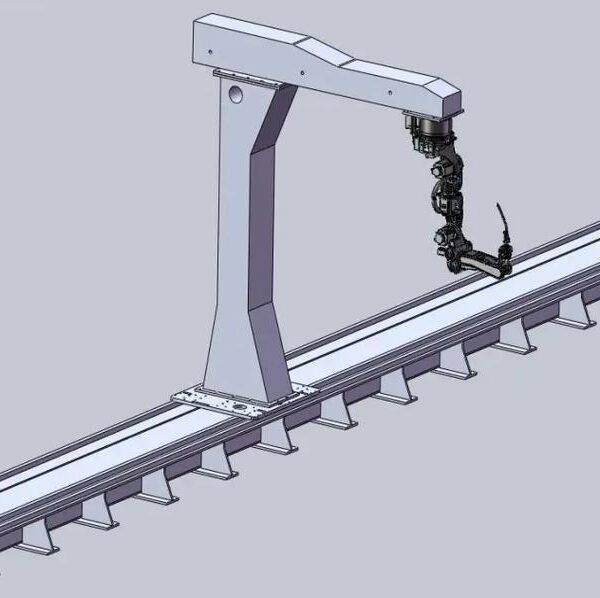

Cantilever Welding Robot solution
-
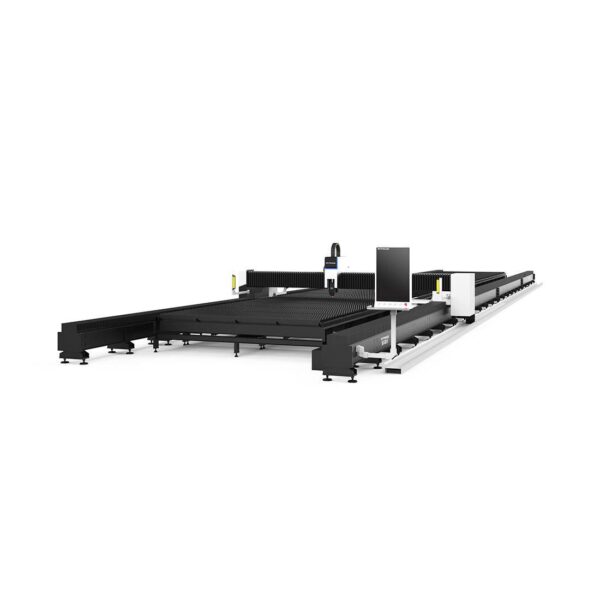

GF laser cutting machine
-
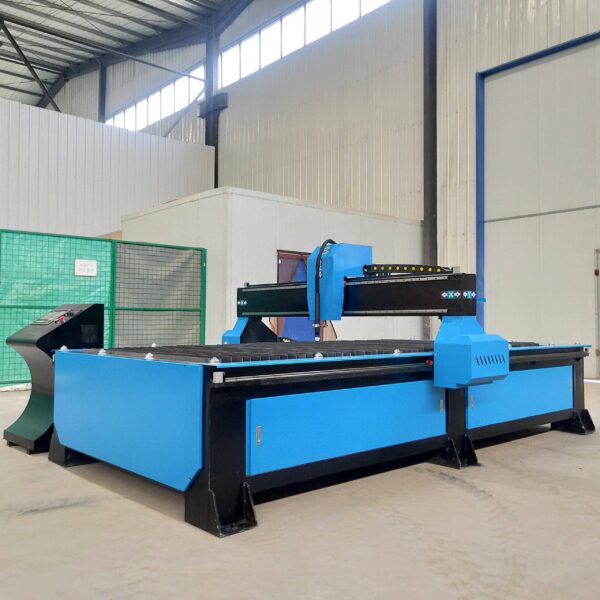
P3015 plasma cutting machine
-

LFP3015 Fiber Laser Cutter
-
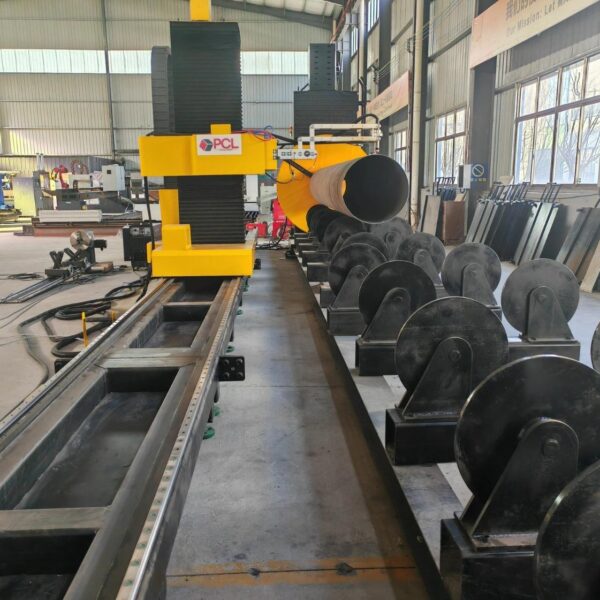
pipe plasma cutting machine
-
LFH 4020 Fiber Laser Cutting Machine
-
LFP4020
-
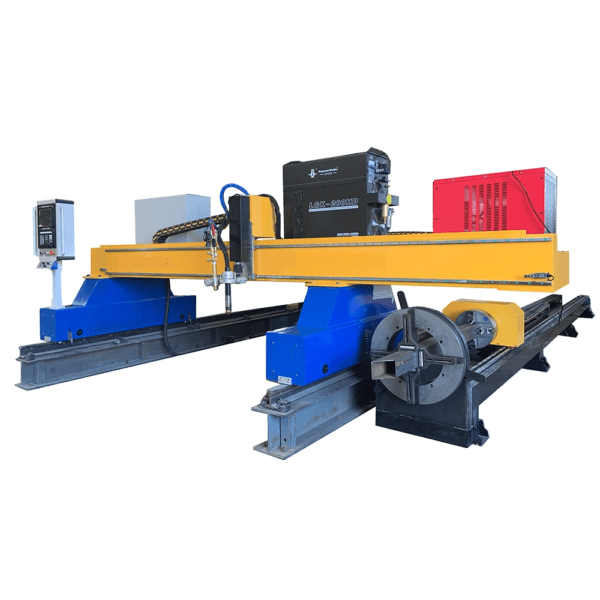
gantry plasma air cutting machine
-
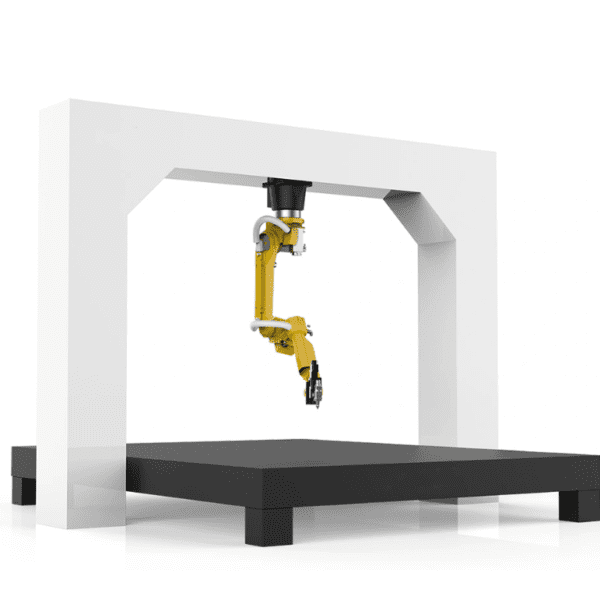
3D robot cutting machine
-
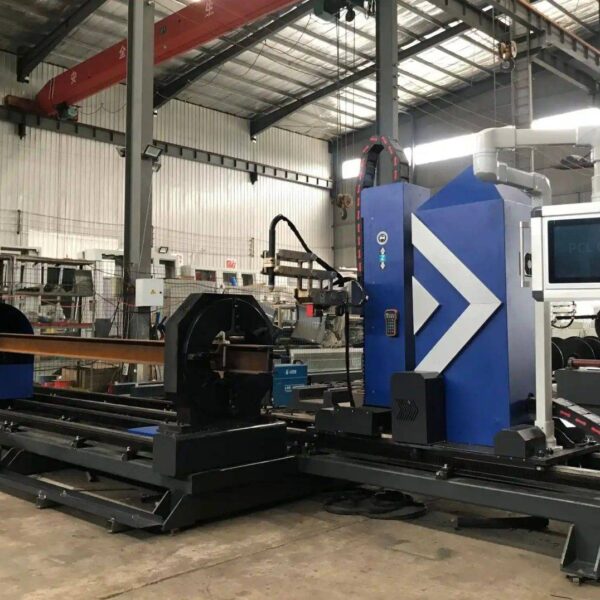
8 axis plasma cutting machine
-
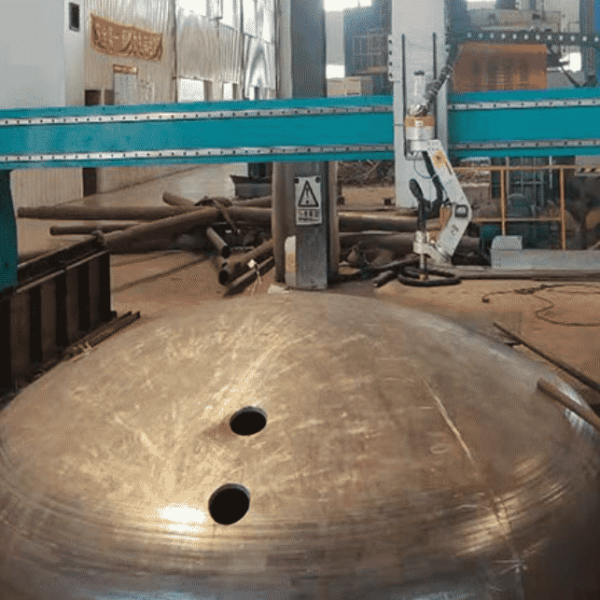
5 axis plasma cutting machine
-

LT360 tube laser cutting machine
-
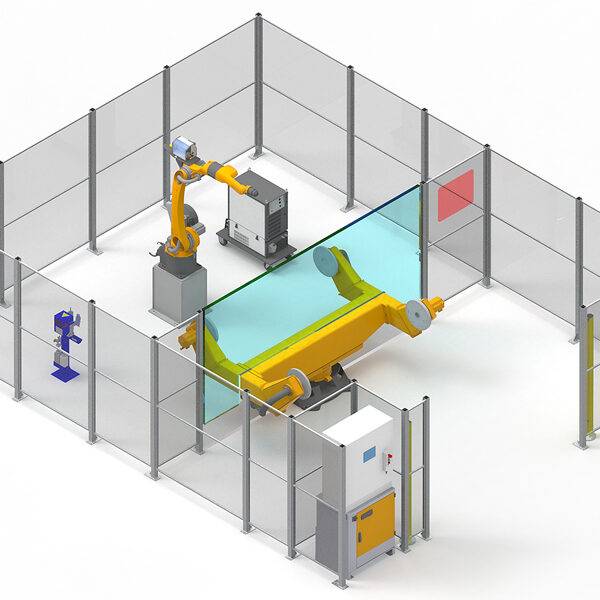
robot welding workstation
-
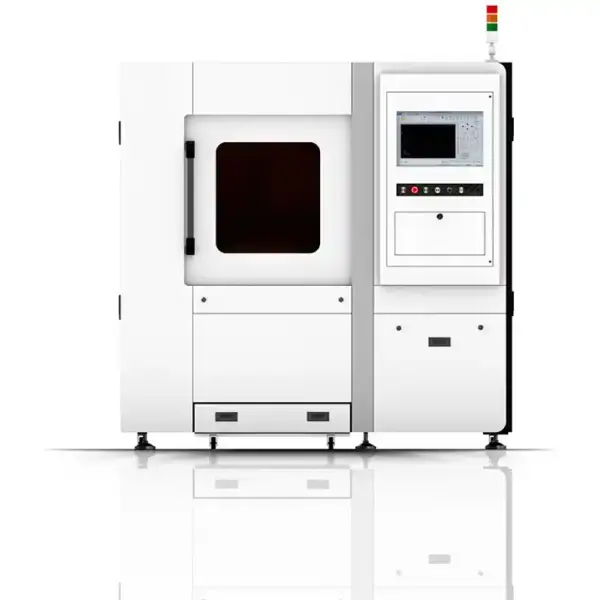
SF6060 fiber laser cutting machine
Advanced Fiber Laser Tube Processing Technology
Our CNC Fiber Laser Tube Cutting systems revolutionize metal fabrication by integrating high-precision cutting, punching, and profiling into a single automated workflow. Designed for versatility, this technology handles a wide array of profiles including Round, Square, Rectangular, and Oval tubes, as well as complex L-shaped and U-shaped channels.
- Precision Punching: High-speed hole punching with micron-level accuracy, eliminating the need for mechanical drilling or die-stamping.
- Complex Profiling: Advanced 3D pathing allows for intricate interlocking joints and specialized notch cuts, ideal for structural frames.
- High Material Efficiency: Intelligent nesting software minimizes scrap, reducing raw material costs across large production runs.
- Clean Finish: Delivers oxide-free, burr-free edges that require zero secondary grinding before welding.

Seamlessly processing multiple profiles with consistent precision.
Global Delivery & Logistics



From our high-tech manufacturing facility directly to your global site. PCL WeldCut ensures secure packaging, professional handling, and reliable international logistics to safeguard your equipment throughout the entire journey.
One thought on “Engineering Review: 1000W Robotic Arm Welder – Hai Phong, Vietnam”
The nesting software is very intuitive. Saved us a lot of aluminum waste.