Field Evaluation: 1000W Fiber Laser Cobot Integration
Project Overview: Madrid Workshop Deployment
This report summarizes the technical deployment and commissioning of a 1000W Fiber Laser Cobot at a mid-sized precision fabrication facility in Madrid, Spain. The facility specializes in HVAC ducting and architectural stainless steel components. Prior to this integration, the site relied heavily on manual TIG (GTAW) processes. The primary objective was to transition 70% of their thin metal sheet welding workflows to an automated laser solution to mitigate thermal distortion and increase throughput.
Madrid’s industrial climate presents specific challenges, particularly regarding high ambient workshop temperatures during summer months, which impact the duty cycle of laser chillers. Our focus was to evaluate the synergy between Laser Technology and collaborative robotics under these specific environmental and operational constraints.
Technical Synergy: The Fiber Laser Cobot Architecture
The core of the system is a 1000W continuous wave (CW) fiber laser source coupled with a 6-axis collaborative robot. Unlike traditional industrial robots, the Fiber Laser Cobot provides a unique advantage in a Madrid-sized urban workshop where floor space is at a premium. The absence of massive safety cages—replaced by laser-safe curtains and area scanners—allows for a flexible “island” manufacturing layout.
Laser Technology Parameters
The 1000W power rating was selected specifically for thin metal sheet welding (ranging from 0.5mm to 3.0mm). At this power density, the 1070nm wavelength of the fiber laser provides an absorption rate in stainless steel that far exceeds CO2 counterparts. During the Madrid trials, we utilized a “wobble” head configuration. This laser technology allows the beam to oscillate in various patterns (circular, zigzag, or figure-eight), which effectively broadens the weld pool. This is critical for compensating for the slight fit-up inconsistencies often found in sheet metal fabrication.
Cobot Motion Control and Path Precision
The cobot’s repeatability—measured at ±0.03mm—is the lynchpin of the system. In thin metal sheet welding, a deviation of even 0.2mm can lead to a “missed” seam or burn-through. We programmed the cobot to maintain a consistent stand-off distance of 120mm (the focal point of the F150 lens). The integration of the laser’s trigger mechanism into the cobot’s I/O allows for millisecond-accurate ramping of power at the start and end of each seam, preventing the “crater” defects common in manual laser operations.
Advanced Applications in Thin Metal Sheet Welding
The primary workload in the Madrid shop involves 1.2mm and 1.5mm 304L stainless steel. Traditional TIG welding at these gauges requires high operator skill to manage heat input and prevent warping. By deploying laser technology, we moved from a heat-conduction welding regime to a deep-penetration (keyhole) or partial-keyhole regime, even at 1000W.
Managing Thermal Distortion
The Heat Affected Zone (HAZ) produced by the Fiber Laser Cobot is approximately 75% smaller than that of GTAW. In Madrid, where the client produces long, 2-meter seams for kitchen ventilation hoods, the reduction in distortion was immediately evident. We recorded a longitudinal shrinkage reduction of 60%, virtually eliminating the need for post-weld straightening—a significant labor cost in this region.
Gap Bridging and Fit-up
One “lesson learned” during the first week was the sensitivity of laser technology to gaps. While TIG can bridge a 1.0mm gap with filler rod, a 1000W fiber laser struggles if the gap exceeds 10% of the material thickness. We solved this by implementing a cold-wire feeder integrated directly into the cobot’s tool head. This allows the Fiber Laser Cobot to add filler material dynamically, bridging gaps up to 0.8mm on 1.5mm sheets without sacrificing the speed advantages of the laser.
Environmental and Operational Observations: Madrid Site
Chiller Performance and Ambient Heat
In July, Madrid workshop temperatures can reach 38°C. The 1000W Fiber Laser Cobot requires a dual-circuit water chiller (one for the laser source, one for the optics). We observed that the chiller struggled when placed in a corner with poor airflow.
Lesson Learned:
We repositioned the cooling unit to a high-flow zone and increased the coolant concentration to prevent bio-growth. For laser technology to remain stable, the optics must be kept at a constant 25°C to prevent thermal lensing, which shifts the focal point and ruins the weld penetration.
Power Grid Stability
The Madrid industrial park where the site is located experienced minor voltage fluctuations. Fiber lasers are sensitive to “dirty” power. We installed a dedicated voltage stabilizer to ensure the 1000W output remained consistent. Any drop in power during thin metal sheet welding results in an immediate loss of the “keyhole,” leading to a superficial weld that fails a bend test.
Operational Efficiency and ROI
The transition to the Fiber Laser Cobot has redefined the shop’s output.
- Speed: Manual TIG on 1.2mm SS was clocked at 8cm/min. The cobot-driven laser tech maintains 60cm/min.
- Consumables: We eliminated the need for tungsten grinding and significantly reduced Argon consumption by using a localized trailing shield gas nozzle.
- Labor: A junior operator now oversees two cobot stations, whereas before, two senior welders were required for the same volume of thin metal sheet welding.
Critical Lessons Learned and Engineering Recommendations
1. Optical Hygiene is Non-Negotiable
In a busy Madrid workshop, airborne dust is a constant. We found that the protective window of the Fiber Laser Cobot required cleaning every 4 hours of arc-on time. Failure to do so led to “burn-in” on the lens, which cost the client €150 per replacement window. We implemented a pressurized “air knife” system to keep the optics clear of welding fumes and dust.
2. Jigging and Fixturing
The success of laser technology in automation depends 90% on the fixture. Because the cobot follows a pre-programmed path, the parts must be held in the exact same spatial coordinate every time. We moved from manual C-clamps to pneumatic toggle clamps to ensure the thin metal sheet welding seams were repeatable within a 0.1mm tolerance.
3. The “Wobble” Parameter
We discovered that for 1.5mm galvanized steel (common in Madrid HVAC), a circular wobble pattern with a 1.2mm width and 150Hz frequency was optimal. This specific application of laser technology allowed the zinc vapors to escape the weld pool before solidification, significantly reducing porosity—a common failure point in thin metal sheet welding of coated steels.
4. Safety Protocol Shift
The local Madrid workforce was accustomed to TIG helmets. The 1000W fiber laser operates at a wavelength (1070nm) that is invisible and can cause permanent retinal damage even from reflections. We had to enforce a strict “Class 4” safety zone. This included installing laser-rated viewing windows (OD7+) in the curtains so supervisors could monitor the Fiber Laser Cobot without entering the cell.
Conclusion
The integration of the 1000W Fiber Laser Cobot in the Madrid facility has proven that the synergy between high-precision laser technology and collaborative robotics is the most viable path for modernizing thin metal sheet welding. While the initial setup requires a more disciplined approach to fixturing and optical maintenance compared to traditional welding, the 7x increase in travel speed and the elimination of thermal distortion provide an undeniable competitive edge. Future deployments should prioritize chiller airflow and standardized pneumatic fixturing from the outset to maximize the 1000W source’s duty cycle.
Report Filed By:
Senior Welding Engineer
Madrid Field Office
-


LT240S tube laser cutting machine
-
LT120S tube laser cutting machine
-
Sale

Tank Fillet Welding Machine
Original price was: $1,000.00.$900.00Current price is: $900.00. -
Sale

MAK100 tube laser cutting machine
Original price was: $5,500.00.$5,000.00Current price is: $5,000.00. -

portable plasma air cutting machine
$1,200.00 -

2in1 fiber laser cutting machine
-

Air cooling Laser welding machine
-

HF h beam laser cutting machine
-

LT240 laser cutting machine
-

Laser welding machine
-


Cobot Welding Station
-

Gantry welding robot solution
-

Tracked Wheeled AGV Welding robot
-

LFH6020 Fiber laser cutting machine
-
LFP6020
-

robotic welidng machine
Advanced Fiber Laser Tube Processing Technology
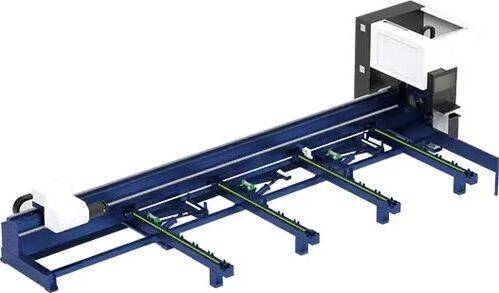
Our CNC Fiber Laser Tube Cutting systems revolutionize metal fabrication by integrating high-precision cutting, punching, and profiling into a single automated workflow. Designed for versatility, this technology handles a wide array of profiles including Round, Square, Rectangular, and Oval tubes, as well as complex L-shaped and U-shaped channels.
- Precision Punching: High-speed hole punching with micron-level accuracy, eliminating the need for mechanical drilling or die-stamping.
- Complex Profiling: Advanced 3D pathing allows for intricate interlocking joints and specialized notch cuts, ideal for structural frames.
- High Material Efficiency: Intelligent nesting software minimizes scrap, reducing raw material costs across large production runs.
- Clean Finish: Delivers oxide-free, burr-free edges that require zero secondary grinding before welding.

Seamlessly processing multiple profiles with consistent precision.
Global Delivery & Logistics



From our high-tech manufacturing facility directly to your global site. PCL WeldCut ensures secure packaging, professional handling, and reliable international logistics to safeguard your equipment throughout the entire journey.